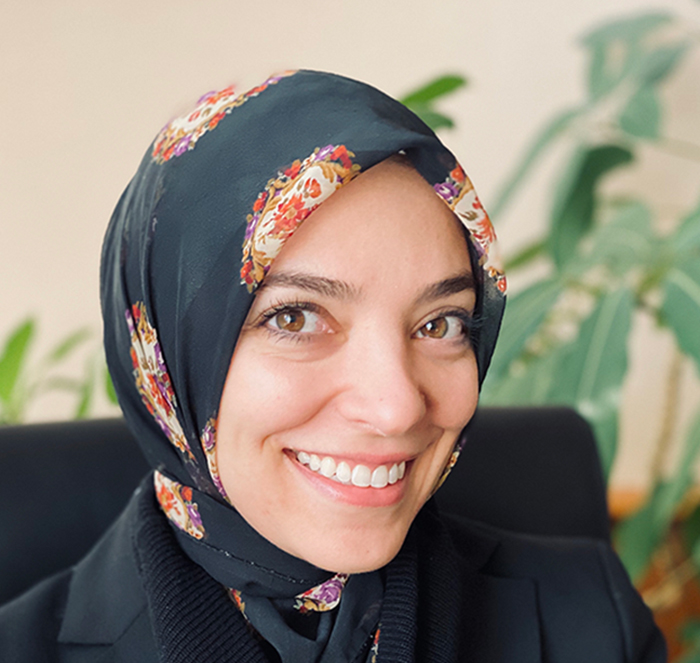
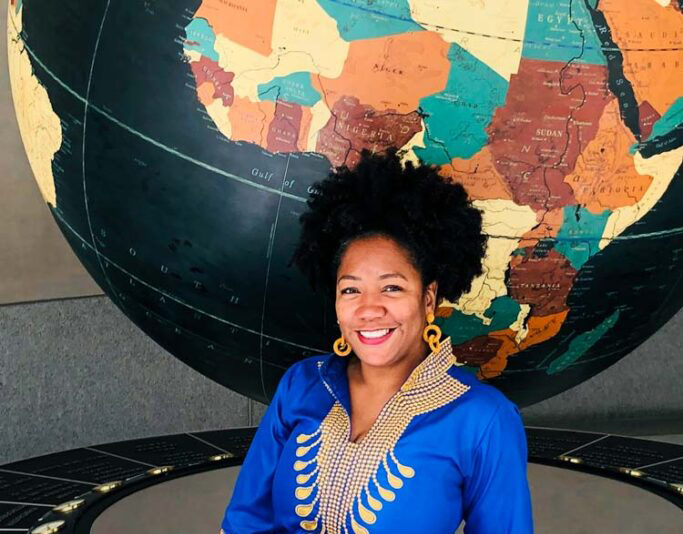
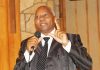
Halla Elrashidi has been appointed as the new Taxpayer Rights Advocate at the Minnesota Department of Revenue. Photo: Courtesy Mitchell Hamline School of Law
Halla Elrashidi has been appointed as the new Taxpayer Rights Advocate at the Minnesota Department of Revenue. Photo: Courtesy Mitchell Hamline School of LawHalla Elrashidi has been appointed as the new Taxpayer Rights Advocate at the Minnesota Department of Revenue. Photo: Courtesy Mitchell Hamline School of Law
Halla Elrashidi is the new Minnesota Taxpayer Rights Advocate, according to a Thursday news release from Minnesota Revenue. The Taxpayer Rights Advocate Office was established in 1990 as a place for taxpayers to receive an independent review of their tax situation “while promoting and upholding the department’s mission of fair and equitable application of tax laws,” the news release said.
She succeeds Sarah Bronson who has taken up an appointment as an assistant commissioner at the department.
Elrashidi is an attorney and joined the department in 2018 as an individual tax attorney in the Appeals and Legal Services Division. Previously she has worked as a staff attorney and pro bono attorney fellow with Mid-Minnesota Legal Aid, which provides free legal aid to low income, the disabled and senior citizens in 20 central Minnesota cities.
Elrashidi is also an adjunct professor at Mitchell Hamline School of Law in St. Paul where she received her J.D. She received her bachelors of arts from the University of Minnesota.
The Taxpayer Rights Advocate Office at the Minnesota Department of Revenue “works on behalf of taxpayers to try to remove obstacles, flaws or ambiguities that exist in Minnesota’s tax policies, processes, procedures and state tax law,” while providing individual assistance to taxpayers who are unable to resolve their tax disputes through normal channels in the department.
“We’re fortunate to have Halla’s experience and expertise in this position that advocates for those who may not have the means, know-how, or ability to navigate our tax system,” Revenue Commissioner Robert Doty said in a statement.
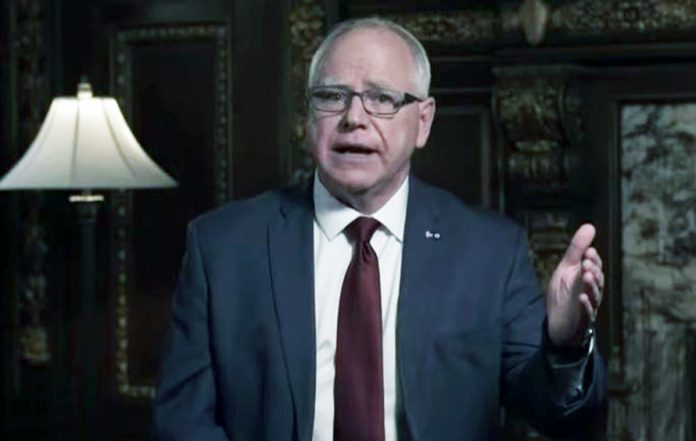
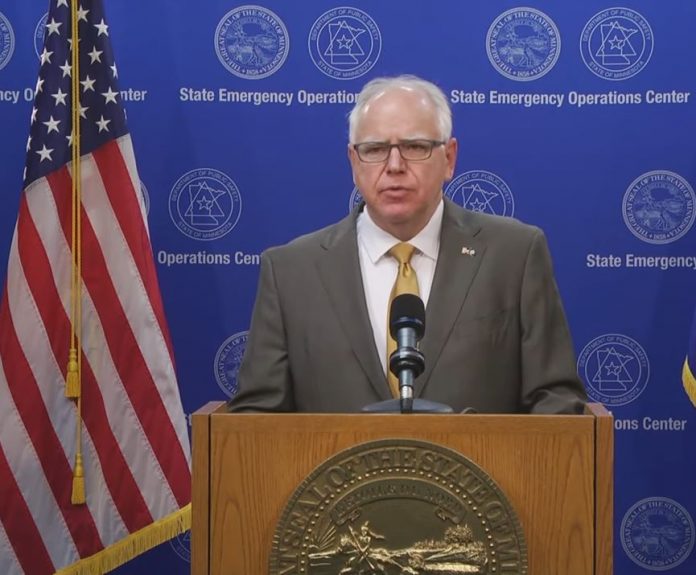
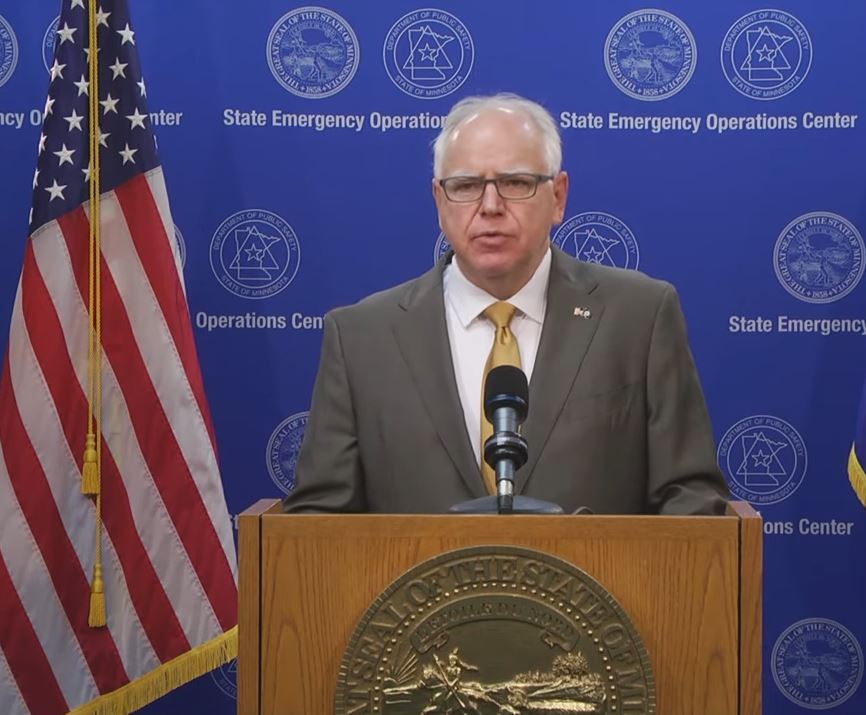
Governor Walz during a statewide televised address as he announced new four-week restrictions to curb rising COVID-19 cases and deaths. Photo: YouTube Screengrab
Governor Walz during a statewide televised address as he announced new four-week restrictions to curb rising COVID-19 cases and deaths. Photo: YouTube Screengrab
Minnesota Gov. Tim Walz last night (Nov. 18) in a statewide-televised address unveiled new restrictions that go into effect on Friday, November 20 aimed at curbing the skyrocketing numbers of Covid-19.
“Much has been asked of you. And I need to ask a little more,” Gov. Walz said during the televised address.
Bars and restaurants will close for four weeks and can only offer takeout and delivery while gyms, bowling alleys, theaters, and museums will be required to close their doors completely during the four-week period. Youth and high school sports are also being paused during the four-week period. College sports are not affected by the new order, as are professional sports.
The governor’s new tough measures come in the wake of the new Minnesota Department of Health data that shows hospitals, including their ICUs are at capacity mostly with coronavirus patients as hospitalizations and deaths climb. Hospital administrators have been urging the governor to invoke the new measures so the hospital systems can cope. Thousands of medical staff have also been infected with Mayo Clinic announcing that 900 of their staff have been infected creating a staffing nightmare.
Most COVID-19 outbreaks since June have been traced to bars and restaurants, wedding receptions, gyms and sporting events. Bars and restaurants alone accounted for 3,200 cases since June while wedding receptions contributed 950 of the climbing numbers.
Minnesotans are also required to adhere to restrictions on private gatherings by restricting gatherings to those from their immediate household.
To continue operating
Retail stores, places of worship will continue to operate under previous guidelines because state health officials have said previously that these sett8ngs are not contributing to the spread because Minnesotans spend less time there and they wear masks.
Salons can also continue operating under the existing COVID-19 guidelines.
Governor Walz hailed the new COVID-19 vaccinations announced recently by Pfizer and Moderna saying they should give people hope that restrictions like the ones he announced will become unnecessary in the near future.
“We’ve got a light at the end of the tunnel. I believe with every fiber of my being that there’s an incredibly strong possibility, more like a probability, that we will be vaccinating people before the end of this four-week pause in our long-term care facilities and our frontline health care providers,” he said. “We can do this, Minnesota. We can get this right.”
Those caught violating the governor’s executive orders could face a $1,000 fine or up to 90 days in jail.
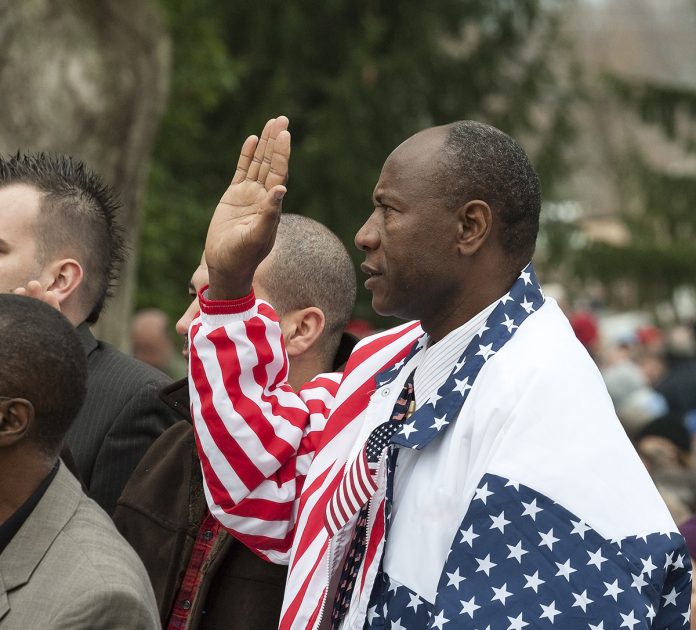
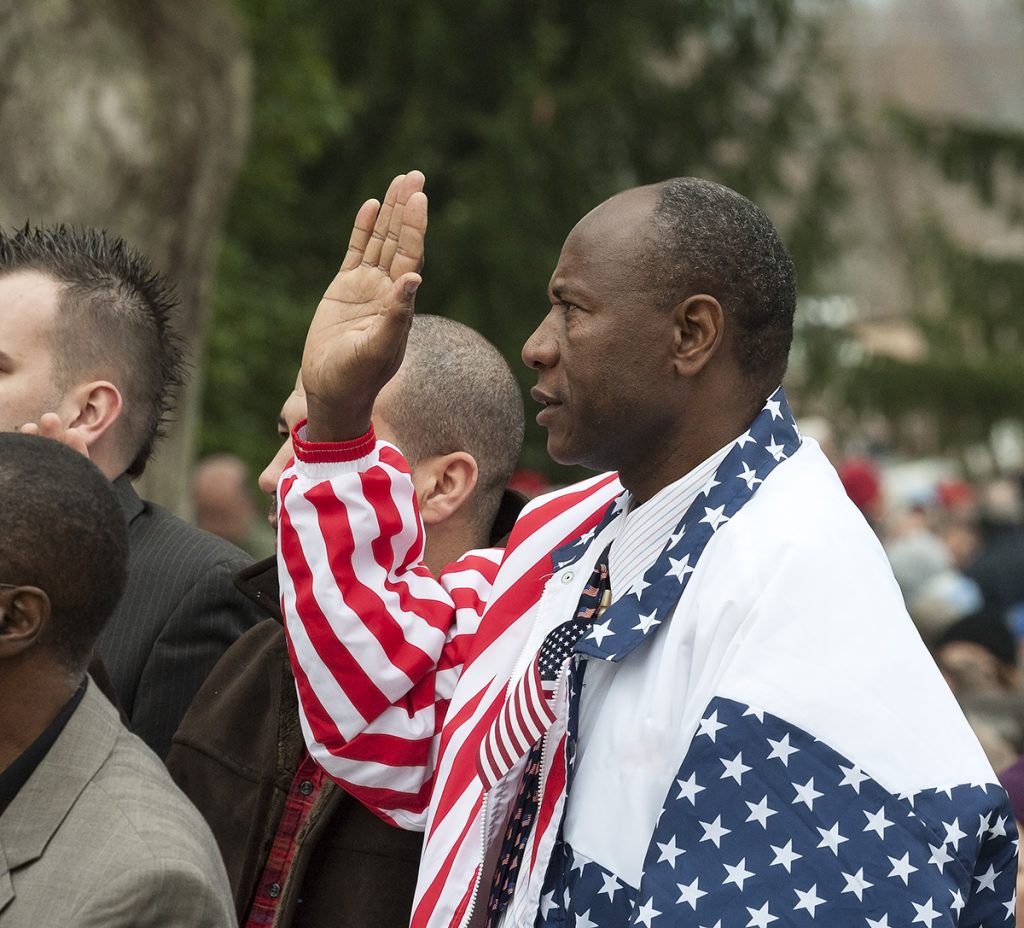
An unidentified man taking the oath of allegiance at U.S. naturalization swearing in ceremony at Gettysburg,PA. Photo: Bill Dowling/Shutterstock
An unidentified man taking the oath of allegiance at U.S. naturalization swearing in ceremony at Gettysburg,PA. Photo: Bill Dowling/ShutterstockAn unidentified man taking the oath of allegiance at U.S. naturalization swearing in ceremony at Gettysburg,PA. Photo: Bill Dowling/Shutterstock
Individuals who apply for naturalization on or after Dec. 1, 2020 will be taking a revised U.S. citizenship test that will require them to learn 28 more civics items and answer twice as many questions as before, the U.S. Citizenship and Immigration Services (USCIS) announced on November 13.
In a prepared statement, USCIS Deputy Director for Policy Joseph Edlow said, “Naturalization allows immigrants to become fully vested members of American society, with the same rights and responsibilities as citizens by birth, and offering a fair test, which prepares naturalization applicants for these responsibilities, is of upmost importance to our agency.”
For those 65 years old or older and have at least 20 years of lawful permanent resident status, the current guidelines will still apply. For these applicants, they will be asked 10 questions and must score six out of 10 to pass.
Those aged 50 or older and are green card holders for at least 20 years can request to have the citizenship interview conducted in their native language.
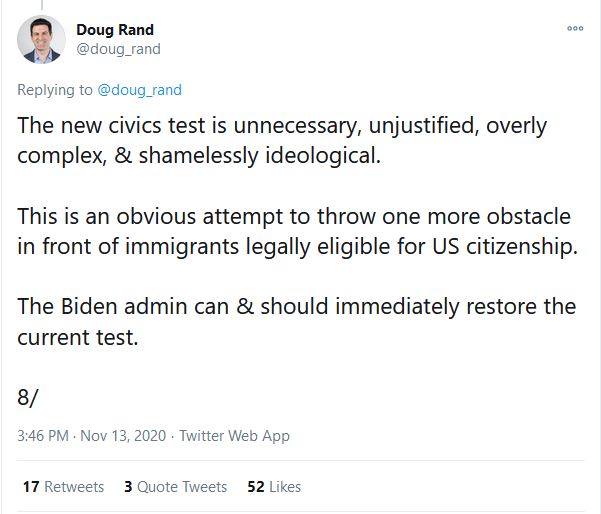
Doug Rand, a former immigration policy adviser to the Obama administration tweeted that the new test is “unnecessary, unjustified, overly complex, & shamelessly ideological.” The twitter thread went on to say, “This is an obvious attempt to throw one more obstacle in front of immigrants legally eligible for U.S. citizenship.” Rand then went on to say that, incoming President-elect Biden should reinstate the 2008 test once he takes office.
The civics test and study guide can be found at the USCIS’s Citizenship Resource Center at this link.
Immigration advocates are urging those eligible for naturalization to submit their applications before the new test takes effect on December 1, 2020.
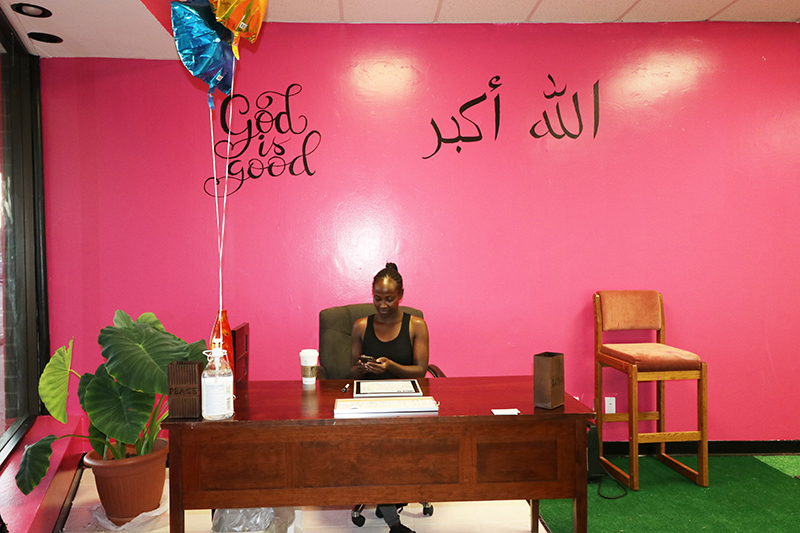
Miriam Mongare, a Kenyan American fitness trainer and businesswoman on October 2020 launched her dream business, a women-only gym in Bloomington, Minnesota. Photo: Courtesy
Miriam Mongare, a Kenyan American fitness trainer and businesswoman on October 2020 launched her dream business, a women-only gym in Bloomington, Minnesota. Photo: Courtesy
The COVID-19 the pandemic has forced most business across the United States to scale down or close doors altogether. But for Miriam Mongare, the pandemic has provided opportunities to finally open her dream business to serve the needs of her community.
In October, Mongare, who immigrated from Kenya 10 years ago, launched Miriam Fitness, a women-only gym, in Bloomington, Minn.
“I always loved working out as a form of therapy,” Mongare said.
The 29-year-old credits her early adoption to healthy living to her mother. As an adult, Mongare began expanding her knowledge of health and fitness by completing courses at her local community college.
Mongare is one of thousands of entrepreneurs who have somehow found ways to defy the coronavirus pandemic and start new businesses. Since the pandemic forced the country into a shutdown in March, an estimated 100,000 businesses had closed their doors for good by the end of September, Fortune Magazine reported. But a Mshale analysis of U.S. Census data shows that the number of people applying for new business licenses in 2020 increased by 32 percent from last year.
After completing health and fitness training in 2016, Mongare began to feel confident in her knowledge and fitness routine. She started working as a personal trainer.
“I wanted others to feel the same way I felt when I was training,” she said.
As the years went by, Mongare was able to grow a substantial clientele. She expanded her personal training to group workout sessions, renting space at a local gym to hold classes. She also enlisted the deejaying services of her sister Anne, who performs by the name of DJ Mochi, to create an upbeat environment to motivate her students.
Earlier this year when the pandemic began and new measures to restrict the spread of the coronavirus began to be implemented across the country, the gym Mongare operated out of was forced to close. Left without a dedicated workspace, she moved her workout sessions outside to public spaces and local parks.
Miriam Mongare, Kenyan American fitness trainer and businesswoman, leads a socially distanced exercise class at her newly opened gym. Miriam Fitness opened its doors on October 2020. Photo: Cynthia Simba/Mshale
“I always dreamt of opening a space but I didn’t think it would be a reality,” she said.
Still, the idea of opening an entire gym overwhelmed her. She wasn’t sure where to begin logistically. Due to her background as an immigrant Mongare also experienced a feeling of imposter syndrome, a psychological phenomenon that causes people to doubt their abilities. It’s very common in people working or studying in environments that aren’t traditionally associated with people from their background.
But all those fears Mongare had melted away soon as temperatures began to drop and made holding her fitness classes outside impossible. She began to look for space to continue her fitness classes, confident that she could run her own gym. It also helped that she could fund her business with money she had saved from working at various healthcare facilities, and as a personal trainer. A month after searching through various properties and locations she noticed a vacant building on 98th and Lyndale in Bloomington.
“I just went for it,” she said.
Mongare immediately contacted the leasing manager and began the process of renting the space.
At the beginning of October, her dream of owning a gym became a reality as Miriam Fitness opened its doors to new and old clients. The gym offers monthly memberships with socially-distanced group classes, one-on-one personal training, and classes for two. It also has a dedicated space for prayer.
One such a client is Arnett Ogamba, who learned about Mongare’s group training sessions from social media. She credits her elevated energy levels and new love for personal fitness to Mongare’s classes.
“I’ve grown to love working out,” she said. “When I started, within three weeks I felt happier and lighter.”
Ogamba has been training with Mongare for the past three months and attends group classes three days a week.
“I love it,” she said.
And Reem Alemam had been training with Mongare for over eight months.
“I’ve been coming here since March,” she said.
Alemam said she enjoyed training with Mongare because of her consistency and dedication to her clients. She also appreciated the female-only environment and credited Mongare for her weight loss.
“With women it’s more comfortable,” she said. “She’s a godsend.”
To anyone wanting to live a more active lifestyle but is hesitant Mongare offers some simple words of encouragement.
“Just go for it,” she advised.
Miriam Fitness is open five days a week from 7 a.m. to 7 p.m. in Bloomington.
Governor Walz of Minnesota during a live briefing on COVID-19 on Tuesday, November 10, 2020. The governor announced new restrictions to curb rising coronavirus cases. Photo: MN Governor YouTube Screengrab
Governor Walz of Minnesota during a live briefing on COVID-19 on Tuesday, November 10, 2020. The governor announced new restrictions to curb rising coronavirus cases. Photo: MN Governor YouTube ScreengrabGovernor Walz of Minnesota during a live briefing on COVID-19 on Tuesday, November 10, 2020. The governor announced new restrictions to curb rising coronavirus cases. Photo: MN Governor YouTube Screengrab
Governor’s new restrictions also include private gatherings
Minnesota Governor Tim Walz today announced new restrictions aimed at combating the rising coronavirus cases in the state. The new restrictions mostly affect the hospitality industry but also on private gatherings in people’s homes. The state announced 4,900 new COVID-19 cases as of Tuesday.
The new restrictions are effective Friday, November 13.
The Minnesota Department of Health in their Tuesday briefing said most of the new cases were those in the 20-34 age group.
Bars and restaurants must now close at 10 p.m. but can provide take-out until 4 a.m. Also impacted will be wedding receptions and funerals which will have a 50 person limit starting November 27 and will go down to a 25 person limit starting December 11. However, nothing changes for the wedding ceremony or funeral; those will remain at 50 percent of the capacity of the building it is being held at or 250 people.
In not restricting the ceremonial part of weddings or funerals, health officials said the ceremonies themselves are not a major source of transmission as are the social gatherings that take place afterwards.
Outbreaks in bars and restaurants went up significantly in October, according to MDH data, up to 57 in October when it was just 18 in September.
“This is where we can have the biggest impact in the shortest amount of time without the massive disruption,” Walz said.
The new restrictions also affect private residences. There will be a 10-person limit on indoor and outdoor private social gatherings that include a maximum of three households.
In summary:
Bars and Restaurants – Effective Nov. 13
Must close at 10 p.m. but can offer takeout until 4 a.m.
Indoor and outdoor capacity at 50 percent and no more than 150 people
All customers must be seated AND counter area is completely closed
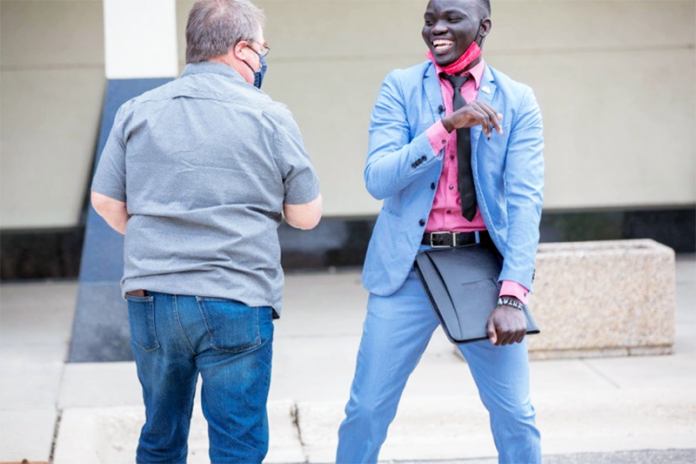
Oballa shares a joke with Austin Mayor Tom Stiehm shortly after announcing his election bid. Photo: Courtesy.
Oballa shares a joke with Austin Mayor Tom Stiehm shortly after announcing his election bid. Photo: Courtesy.
Six years ago, a 21-year-old Ethiopian refugee named Oballa Oballa walked into the mayor’s office in Austin, Minn., and asked what he could do for his new community. On Nov. 3, Oballa – who has lived in the United States for only seven years – made history by becoming the first Black person to be elected to the city council of the small city of about 25,000 residents, located 100 miles south of the Twin Cities, near the border with Iowa.
Oballa also became the first person of color and first refugee to be elected to the council in the history of the city, which spans more than 150 years. Since his election, Oballa has been fielding calls from journalists and people wondering how such a young person pulled off such a difficult feat. But to him, it’s not surprising that he ended up in government, he said. His interest in politics and leadership goes back to his early school days.
“All my years as student, I have always wanted to be a leader,” he said during a phone conversation.
Oballa spent the early part of those school years at Dadaab, a refugee camp in eastern Kenya that is home to more than 200,000 refugees. His family fled there in 2003 from Gambela, Ethiopia, after government forces began massacring his people. Oballa didn’t start formal schooling until he was 11 years old, but once he started, there was no stopping him. During his school years he was a class monitor (president), and a school prefect, the equivalent of a cabinet secretary in student government. He would later rise to become the head boy, a title given to the most senior male student official.
That leadership spirit continued soon after Oballa’s family resettled as refugees in the United States in 2013. He was 20 years old, but still didn’t have a high school diploma. He immediately enrolled at Job Corps in the Twin Cities and “worked so hard” and completed his high school credits in eight months. He soon moved to Austin to begin higher studies at Riverland Community College.
Oballa is one of at least 30 African immigrants and first-generation American citizens of African descent who were candidates in the 2020 U.S. elections. The number may seem insignificant, given that there are more that there are 2.1 million African-born immigrants in the United States, but it is worth noting because Africans haven’t always been active in American politics.
African immigrants have been coming to the United States for at least 60 years. The earliest of them arrived with the sole purpose of getting higher education and going back to take part in building their newly independent countries. They included people like Barack Obama, the man whose eponymous American-born son would become the first black president of the United States. But as governments turned authoritarian, economies stagnated, and wars began to break out in some countries, more Africans began to stay.
By 1970, there were an estimated 80,000 African immigrants living the United States. They made up only 0.8 percent of the total immigrant population, according to a Pew Research Center study that analyzed U.S. Census data. Since then, their population has grown so exponentially that in 2017 it claimed 4.8% of the total foreign-born persons. Most of that growth occurred between 2000 and 2013, when the population of African immigrants increased by a whopping 41 percent.
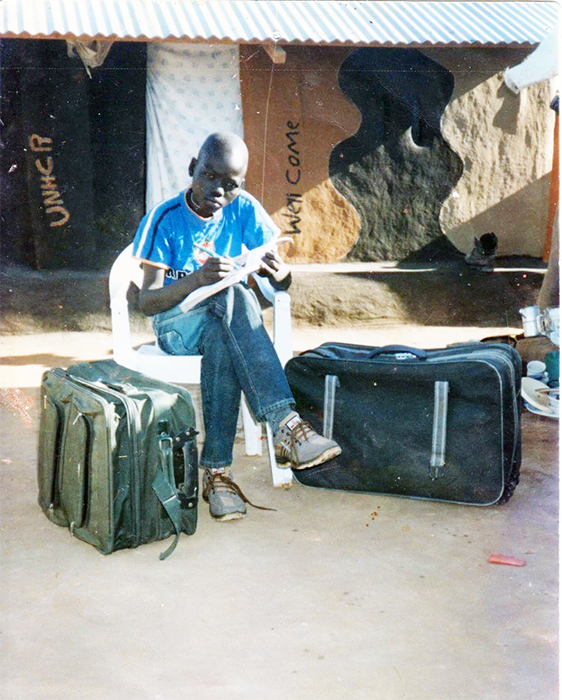
Oballa Oballa, aged 11, on the day he arrived at Dadaab refugee camp in Kenya in 2006. Mr. Oballa was elected to the Austin, Minn. City Council on November 3, 2020 becoming that city’s first elected Black councilmember. Photo: Courtesy
Still, African immigrants mostly stayed away from active U.S. politics. Even today, there are Africans who have lived in America for decades but who follow the politics of their countries more than they do local affairs in the United States. It is not uncommon to find Africans who travel to the continent to vote and even run for office. But as the increasing number of African immigrants and their descendants in American politics shows, that is changing.
In Colorado’s congressional District 2, Rep. Joe Neguse, whose parents are from Eritrea, easily won re-election for his second term in the U.S. House of Representatives. Also, in Colorado, Naquetta Ricks, who was born in Liberia, was elected to represent District 40 in the state legislature. Another Liberian, Nathan Biah, was elected to represent District 3 in the Rhode Island state legislature. And pharmacist Oye Owolewa became the first Nigerian-American to be elected to represent Washington, D.C. in the U.S. Congress.
But Minnesota is the epicenter of the recent resurgence of African immigrants in U.S. politics. The most prominent African-born lawmaker is Rep. Ilhan Omar, a refugee from Somalia, who was first elected in 2018 to represent Minnesota’s District 5 in the U.S. Congress. The African immigrant community in Minneapolis was instrumental in her election. But the community’s political achievement in electing Omar has been overshadowed by racist and Islamophobic attacks on her by President Donald Trump, who attempted to make her election a rallying cry in his desperate bid to win Minnesota.
“We’re going to win the state of Minnesota because of her,” Trump said in September. “She’s telling us how to run our country. How did you do where you came from? How is your country doing?”
The president’s strategy, however, backfired by motivating Omar’s constituents to register and vote in large numbers.
‘Africans really stepped up’
“Africans really stepped up,” said Sizi Goyah, a Liberian-born high school mathematics teacher who ran unsuccessfully for a city council seat in the Brooklyn Center suburb of Minneapolis. “Nigerians, Somalis, Liberians, Kenyans, Ethiopians – everyone came together to show that Africans are here and they are not going to be intimidated.”
In the end, Omar got the last laugh by getting re-elected with 64 percent, more than twice the votes of her Republican opponent. Trump, on the other hand, lost Minnesota.
“The irony of Trump saying he would win Minnesota because of [Omar] is that her race once again shattered turnout records,” Jeremy Slevin, Omar’s spokesman, tweeted after the elections. “If anything, he lost Minnesota because of Ilhan’s district.”
Trump’s Democratic Party opponent, Joe Biden, received 80 percent of vote in Omar’s district, by far the most of any of Minnesota’s eight congressional districts.
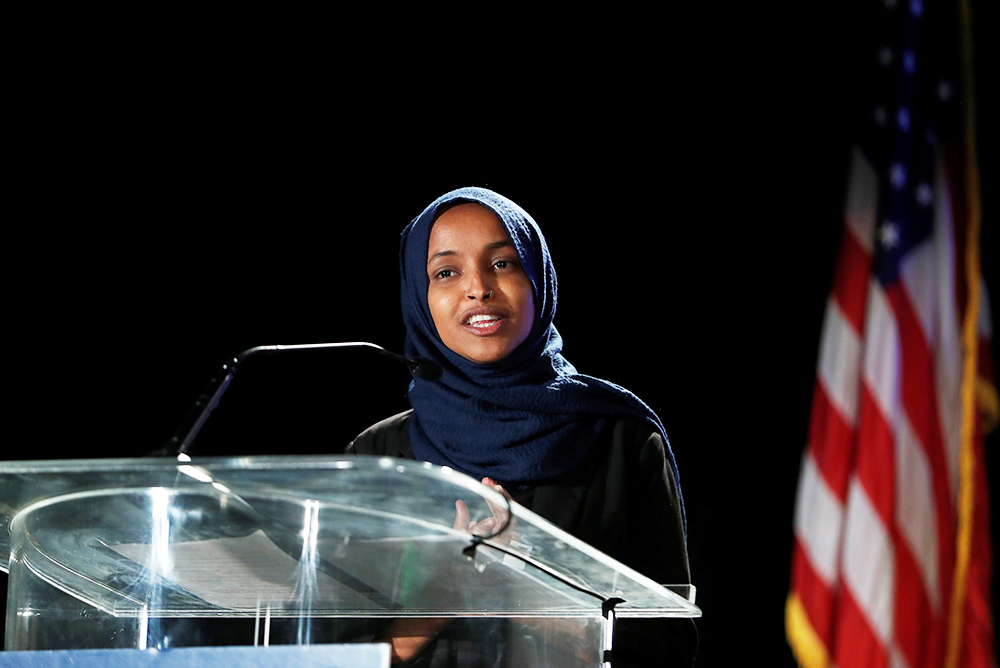
Democratic incumbent Rep. Ilhan Omar speaks at the DFL election night watch party, St. Paul, Minnesota, U.S., Nov. 3, 2020. Omar was a target of President Trump who pinned his hopes of carrying Minnesota by criticizing her. She comfortably won reelection. Photo: Alex Gakos/Shutterstock
This year, Africans in Minnesota didn’t just come to vote. They also ran for office in record numbers, and a handful of them were elected. Esther Agbaje, a 34-year old Nigerian-American lawyer, was elected to represent District 59B in the state legislature. Omar Fateh, a Somali-American, won a seat in the state senate. Fateh and Agbaje will join Mohamud Noor, and Hodan Hassan, both of whom are of Somali origin and were re-elected.
What makes Minnesota stand out is the large concentration of African immigrants in the Minneapolis-St. Paul metro area. The state has the fastest growing black population in the United States. The Migration Policy Institute estimates there are over 130,000 African immigrants in the state. Most of them are refugees from Somalia and Liberia. There are also significant numbers of Nigerians, Kenyans and Ethiopians. But Goyah thinks there is another reason why Africans in Minnesota have been so successful in creating a political force.
“People ask why we live and thrive in this cold place, but the hearts of the people of this state are so warm,” Goyah said.
He explained that although systemic racism still exists as evidenced by the killing of George Floyd in June by a Minneapolis police officer, the people of Minnesota are always willing to listen and learn from their mistakes. That mentality is why white Minnesotans are willing to take in refugees and mentor those among them who have political ambitions, he said. It’s that welcoming nature of Minnesotans that helped Oballa make history.
Because Oballa lives in a predominantly white city and too far to benefit from the votes of the large African community in the Twin Cities, he decided to earn the trust of the people of Austin. He began by visiting the mayor’s office soon after he arrived six years ago.
“He came in and said, ‘I am here,’” said Tom Stiehm, the mayor, “and I said ‘So what?’”
Stiehm didn’t ask that to be rude. He just didn’t know how to respond. He couldn’t remember any of the city’s residents ever walking into his office so confidently and declaring that he wanted to help. Certainly, none of the city’s immigrants, who make up 23 percent of its population, had ever done what Oballa did.
Oballa remembers vividly the incident that sent him to the mayor’s office. Soon after moving to Austin, he asked his African immigrant friends – many of whom had lived in Austin for as long as 10 years – if they knew the name of their mayor. They didn’t. He asked if they knew who their councilmember was. They didn’t know that either.
‘How could you live in a city and not know who the people making decisions for you are?’
“I was so shocked,” Oballa remembered. “How could you live in a city and not know who the people making decisions for you are?”
Oballa, who didn’t own a car at that time, walked to City Hall and asked to see the mayor. An assistant asked him if he had an appointment.
“I didn’t know I needed an appointment to see the mayor,” he said, laughing, “because in Africa when you want to see your representative, you just show up and if you have to wait all day to see the official, you wait”
He made an appointment.
“After talking to him for a while, I realized that this is the kind of person we’ve been looking for,” Stiehm said.
The city government had always been looking for ways to engage immigrant communities beyond just providing them with essential services, said Stiehm. But they hadn’t made much progress because most immigrants weren’t usually involved in matters of government.
“I am not an immigrant so it’s difficult for me to know what their specific needs are,” Stiehm said. “Oballa came in at just the right time.”
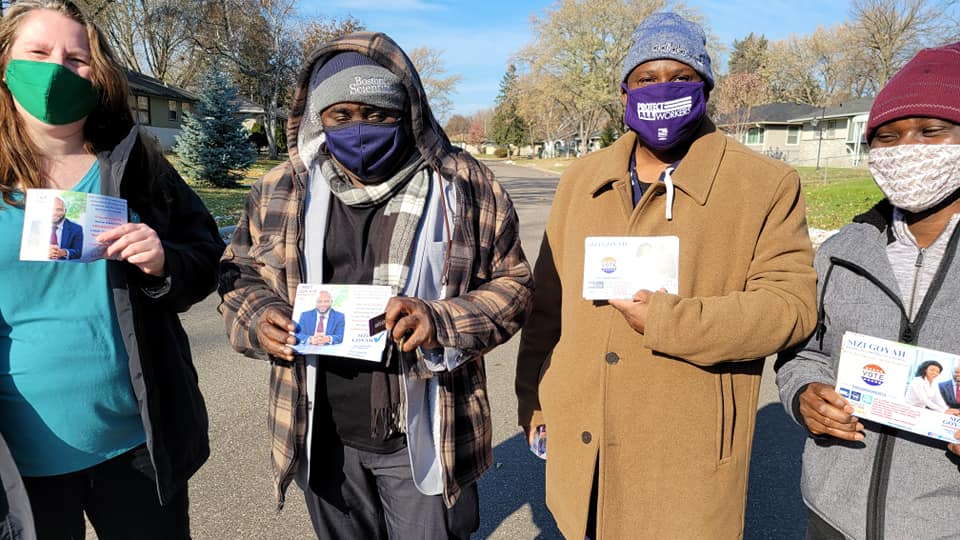
Supporters of Sizi Goyah as they canvassed for him in Brooklyn Center, Minnesota during the just concluded general elections. Photo: Courtesy
Oballa made it a habit to volunteer at City Hall. He became an unofficial liaison to the African immigrant community. Stiehm got so impressed that in 2017 he appointed Oballa to the city’s Human Rights Commission (HRC), a nine-member body set up to “eliminate unfair discriminatory practices that are contrary to the public policies of the State of Minnesota.”
“The secret to Oballa’s success is that he works so incredibly hard,” said Jason Baskin, a city council member who served with him on the HRC. “He gets more done in one day than most people do in a month.”
Baskin remembers how important Oballa’s hard work was when Baskin ran for office in two years ago. One day Oballa overheard him wondering how he was going to distribute lawn signs to voters. Oballa volunteered to help.
“I’m thinking, ‘He’s going to take a handful of signs,’” Baskin said, “but by the end of the day 90 percent of them were up because he rallied his college friends to help.”
When Baskin got elected, he and Oballa became even closer. He and the mayor began to encourage Oballa to run for office. But there was one hurdle: Oballa was not a U.S. citizen. He continued to be active as a volunteer at City Hall. When his citizenship application was approved in 2019, he declared his intention to run for the city council.
“Once I got my citizenship, I had no excuse,” Oballa said. “Austin had given me so much. I wanted to give back.”
Baskin describes Oballa as a selfless person, who didn’t run to amass “a bunch of power,” but because he genuinely cares about people. He said Oballa is going to be a role model, not just for people of color, but all Americans.
‘Sometime a lot of us who were born here take for granted the magic of America’
“Sometime a lot of us who were born here take for granted the magic of America,” Baskin said. “When Oballa talks about what’s possible in America, he reminds us that this is a country where living the dream is still possible. When you go around town and hear old white ladies talking about how good he is, it’s just so powerful.”
Oballa said he wanted to take advantage of every opportunity that had been extended to him, so he could be a role model to his child.
“I want my 3-month-old baby to grow up knowing that the dream is still alive, but that you have to get out of your comfort zone and reach out to people of other backgrounds.”
Stiehm, the mayor, thinks Oballa is destined to do more than just inspire his child.
“People who know him know that the city council is only the beginning of this young man’s journey,” Stiehm said. “He’s gonna go far.”
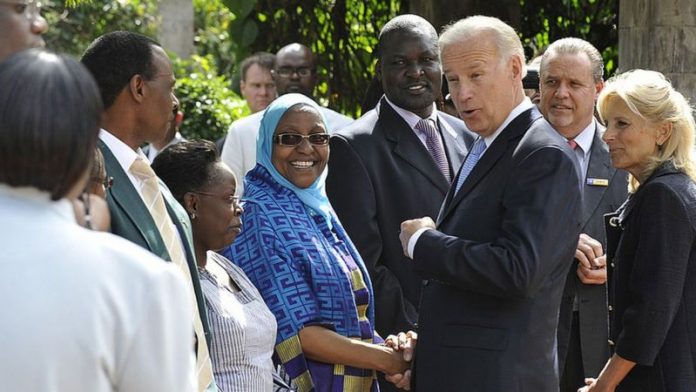
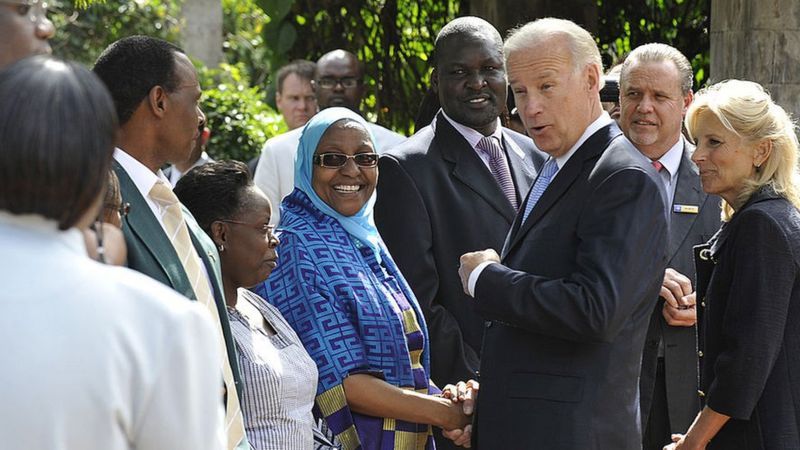
President-elect Joe Biden visited Kenya when he was vice-president, here meeting those affected by the 1998 bombing of the US embassy. Photo: AFP
President-elect Joe Biden visited Kenya when he was vice-president, here meeting those affected by the 1998 bombing of the US embassy. Photo: AFPPresident-elect Joe Biden visited Kenya when he was vice-president, here meeting those affected by the 1998 bombing of the US embassy. Photo: AFP
Though still not certain, Joseph Biden and Kamala Harris will likely be elected president and vice president of the United States. A Biden administration’s approach to Africa will depend on policy but also on who the president appoints to his cabinet and senior positions. Important will be the secretary of state, the assistant secretary of state for Africa, and the administrator of U.S. Agency for International Development (USAID). In some administrations, the National Security Council (NSC) has played a central role, though not under President Trump. The NSC will likely revert to the prominent role it played under President Obama. If it does, the NSC director for Africa will be important.
As for policy, the campaign published “The Biden-Harris Agenda for the Diaspora.” It provides a broad outline of the likely African preoccupations of a Biden administration. The document is specifically addressed to those Africans and of African descent living in the United States. As such, it begins with an affirmation of diaspora values: family, opportunity, and a desire to contribute to American growth and prosperity. The document includes familiar policy prescriptions with respect to the economy, health, and education. But it also includes specifics on issues of particular concern to Africans in the United States: immigration and U.S. policy toward Africa.
On immigration, the document promises a rollback of Trump’s initiatives and a renewed commitment to family unification and diversity. It also promises the reestablishment of the United States as a place of refuge and advocates a roadmap to citizenship for the undocumented. With the exception of the citizenship roadmap, these goals can be achieved by the president through his executive authority, and a President Biden is likely to do so. They could not be blocked by a hostile Republican majority in the Senate, if one were to emerge.
As for U.S. relations with Africa, the campaign document promises a change in tone, the restoration of “mutually respectful engagement,” and the revival and reinvigoration of diplomacy. The implication is no more disparaging presidential tweets. It reaffirms American support for African democracy and economic growth. It specifically endorses a continuation of President Obama’s Young African Leaders Initiative and looks for diversity in the U.S. diplomatic service. These goals, too, can be largely achieved through presidential executive authority.
This is a short, concise campaign document addressed to a specific group of actual or potential voters. Nevertheless, the campaign was careful not to over-promise. There is no reference to an increase in U.S. federal spending on African aid and development. Nor are there commitments to deeper U.S. involvement in Africa’s security challenges. Still, the broad goals outlined in this admittedly campaign document—combined with high-quality personnel appointments—have the potential to transform for the better the tone of Washington’s relations with Africa.
This story is republished under the Creative Commons License.
Minnesota health officials are sounding the alarm over increasing COVID-19 cases. Photo: Shutterstock
Minnesota health officials are sounding the alarm over increasing COVID-19 cases. Photo: ShutterstockMinnesota health officials are sounding the alarm over increasing COVID-19 cases. Photo: Shutterstock
Minnesota has reported its single biggest increase of COVID-19 cases according to the Minnesota Department of Health with 3,956 new cases as of today (Nov. 5). It is the third consecutive day of record increases in the state.
The new number brings the state’s cumulative total to 164,865 since the pandemic started. Out of that number, 15,435 are health care workers.
As the cases rise, the number of COVID-19 patients in the ICU is increasing according to the Minnesota Hospital Association. “As of today, one in five ICU patients is a COVID-19 patient,” said the association’s Dr. Rahul Korrane.
ICU beds in the Twin Cities are at 98% capacity and 92% in greater Minnesota, according to the latest media broef9ing from the Minnesota Department of Health. As of Wednesday afternoon, 887 patients were hospitalized with COVID-19, including 219 patients in intensive care due to breathing problems or other complications from the coronavirus.
State health officials did acknowledge patients that are not COVID-19 related occupy most ICU beds but the climbing numbers of coronavirus is straining the hospital system capacity.
“As we’ve been saying, hospitalizations lag a bit behind case growth and sadly, mortality lags behind hospitalizations, so as these numbers continue to go up, we’re concerned about capacity in a lot of different contexts,” said Jan Malcolm, the state’s health commissioner. “We absolutely acknowledge that these numbers strain many of our critical systems in our society.”
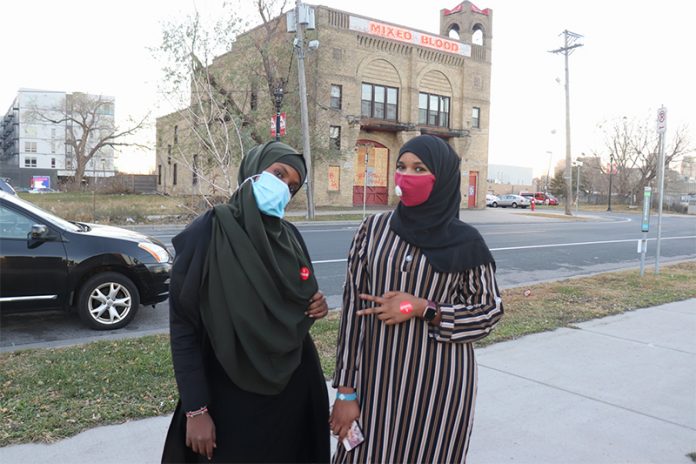
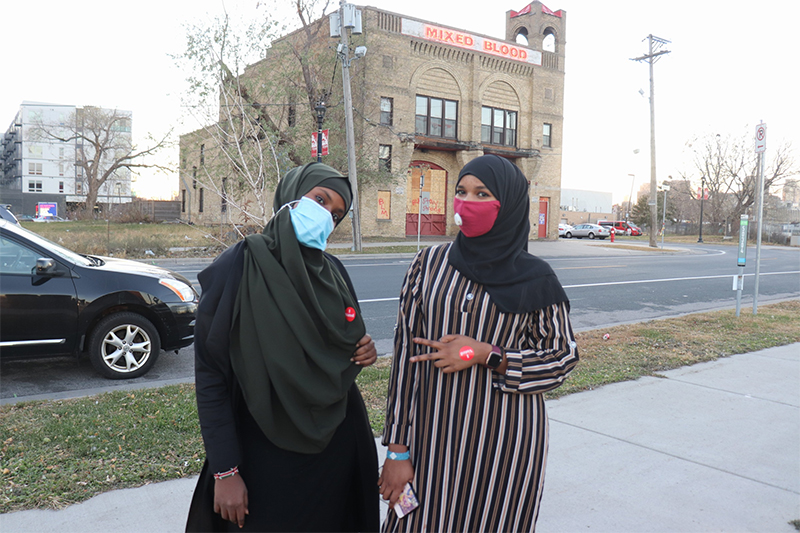
20 year old Fosiya Aden and 19 year old Nasra Ahmed voted for the first time on Tuesday at the Brian Coyle Community Center in Minneapolis. Photo: Tom Gitaa/Mshale
20 year old Fosiya Aden and 19 year old Nasra Ahmed voted for the first time on Tuesday at the Brian Coyle Community Center in Minneapolis. Photo: Tom Gitaa/Mshale20 year old Fosiya Aden and 19 year old Nasra Ahmed voted for the first time on Tuesday at the Brian Coyle Community Center in Minneapolis. Photo: Tom Gitaa/Mshale
The African immigrant community’s bid to expand its share of elected officials in the state had some bright spots and disappointing losses in equal measure. One of the bright spots was in the Minnesota legislature where the ranks of African immigrant legislators doubled to four from the previous two.
Here is the breakdown on how Tuesday night came in:
US House of Representatives
Ilhan Omar racked up a major victory as voters in the Fifth congressional district overwhelmingly chose her over Republican lacy Johnson and Legal Marijuana Now party’s Michael Moore. Rep. Omar received 252,939 votes to Johnson’s 101,470 and Moore’s 37,295.
Minnesota Legislature
Esther Agbaje as was expected easily won House Seat 59B by getting 75 percent of 23,329 votes cast. A heavily Democratic district includes parts of north Minneapolis and downtown Minneapolis.
On the Minnesota Senate side, Omar Fateh also easily cruised to victory as expected receiving a whopping 89 percent of the 36,633 votes cast in Senate District 62, a heavily Democratic district.
The two newcomers join incumbents Hodan Hassan and Mohamud Noor who retained their seats easily with Hassan receiving 90 percent of the 15,674 votes cast. Rep. Noor was unopposed in his bid but the 17,000 voters who showed up to cast their ballot in the district for other races did vote for him.
Austin City Council
For city council races where African immigrant candidates were running, Oballa Oballa who we profiled here recently was one of two bright spots for the community in council races. Oballa received a convincing 57 percent of the vote to become the city’s first Black mayor.
Brooklyn Center City Council
Two Liberian-Americans were on the ballot bidding for the two available council seats. Many had hoped one of them would make it in the four-person race to fill the two seats. In the final tally, Alfreda Daniels came close coming third behind the two eventual winners.
Kris Lawrence-Anderson
5,070
28.74%
Marquita Butler
5,111
28.97%
Alfreda Daniels
4,344
24.62%
Sizi G Goyah
2,966
16.81%
Brooklyn Park City Council
The disappointment in council races was most pronounced in Brooklyn Park albeit not unexpected. Kenyan-American Henry Momanyi in the West District barely squeaked through in the primary in August to appear on Tuesday’s ballot against the incumbent Susan Pha, and the outcome in that primary repeated itself on Tuesday. Susan Pha easily trounced Momanyi receiving 74 percent of the vote to Momanyi’s 24 percent.
Benjamin Osemenam ran a more competitive race in the East District by receiving almost 40 percent of the vote against the incumbent Lisa Jacobson’s almost 60%.
East District
Lisa Jacobson
7,547
59.90%
Benjamin Osemenam
5003
39.71%
West District
Susan Pha
6,781
73.96%
Henry N. Momanyi
2,329
25.40%
Also worth mentioning is the Central District race where Boyd Morson who is African American beat the DFL endorsed Christian Eriksen 52 percent to 47 percent. Morson who considers himself an adopted Liberian has strong connections with the large African immigrant community in the city and will be considered an ally in the council.
Hennepin County Commissioner Outcome Implications for Brooklyn Park
The mayor’s seat was not on the ballot on Tuesday but the city’s Republican mayor Jeff Lunde was running for an open seat on the Hennepin County Board of Commissioners representing District 1. Lunde was able to beat the favored De’Vonna Pittman by 1,496 votes.
This will now create an open seat for mayor as Lunde takes his seat on the state’s largest county board.
Jeff Lunde
36,744
50.83%
De’Vonna Pittman
35,248
48.76%
Hennepin County Board of Commissioners District 5
Kenyan-American Boni Njenga in his first run for office was unable to dislodge the incumbent Debbie Goettel who cruised to an easy victory beating Njenga 73 percent to his 26 percent.
Debbie Goettel
56,633
73.33%
Boni Njenga
20,015
25.92%
Champlin City Council
Kenyan-American Sam Mwangi lost in his bid to represent the city’s Fourth ward in the council. After the final tally, he managed to garner 36 percent of the vote to the incumbent Ryan Sabas 63 percent.
Edina City Council
Two Kenya-Americans were running in this affluent city whose demographics have been changing. We featured them pre-election and you can read more about them here. Janet Kitui was running for the second time and improved on her performance from the last time but was unable to make it while Ukasha Dakane also came up short.
Seven candidates were running to fill two seats and included Cargill executive James Pierce. Pierce was the eventual top vote getter receiving almost 24 percent in that crowded field. His election to the council is noteworthy as it could be the largest haul of votes a Black candidate has ever received in this tony first ring suburb.
Parinaz Kassemi
1,950
3.74%
Janet Kitui
5,158
9.89%
James Pierce
12,378
23.72%
Rhonda Bland
8,954
17.16%
Carolyn Jackson
10,761
20.62%
Joshua Ahlberg
9,092
17.43%
Ukasha Dakane
3,635
6.97%
New Brighton City Council
In a race that was under the radar (even to Mshale), Abdullahi Abdulle, a Somali immigrant gave African immigrants a reason to smile when it comes to city council races. In a race that had six candidates to fill two seats, Abdulle was the top vote getter receiving 25 percent in the largely white district. Abdulle first moved to the United States in 2010 as a recipient of the Diversity Visa lottery, according to Sahan Journal. President Trump has been trying to eliminate the program as part of his attempt to restrict legal and illegal immigration. He previously served on the Minnesota National Guard.
Pam Stegora Axberg
3,923
20.70%
Brian Imholte
1,802
9.51%
Jeffrey Nelson
2,239
11.82%
Paul Jacobsen
3,867
20.41%
Abdullahi Abdulle
4,801
25.34%
Larry Justin
2,215
11.69%
Ramsey County District Judge
Nigerian American attorney Ngozi Akubuike’s bid to become a county judge came up short when she received 65,132 votes (33 percent) of the votes cast. She was reportedly the first African immigrant to run for county judge in the state.
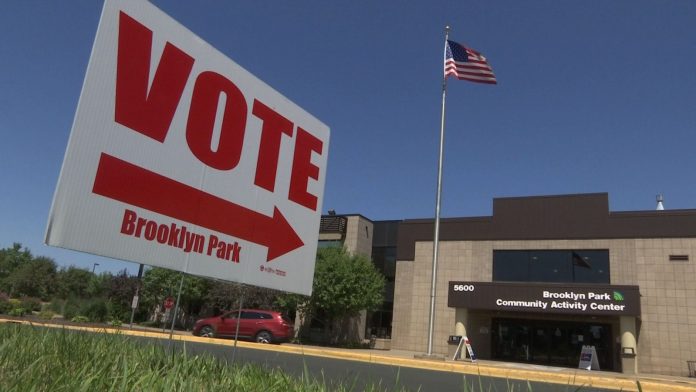
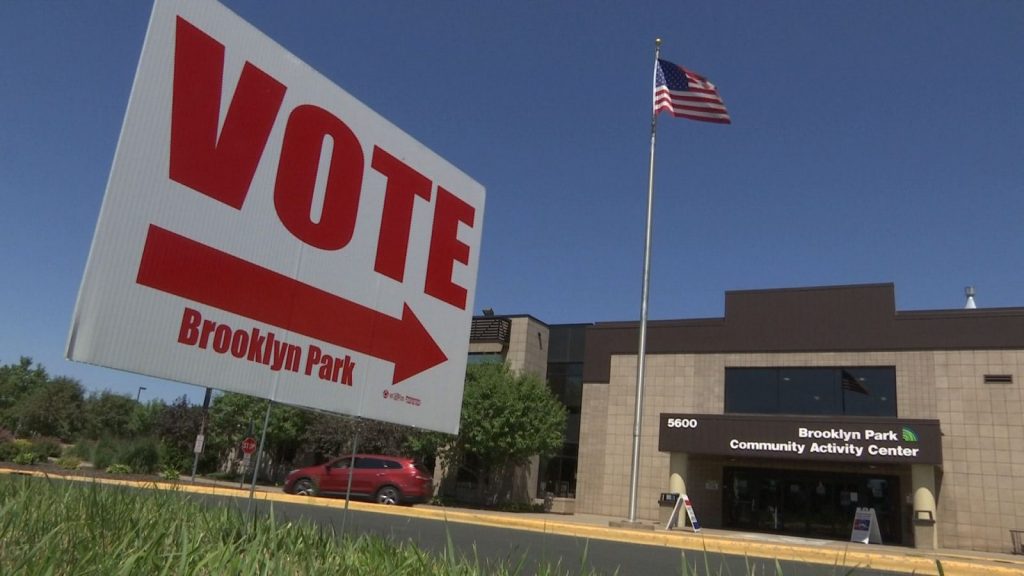
A sign directs voters in Brooklyn Park to a voting location. Photo: Courtesy CCX
A sign directs voters in Brooklyn Park to a voting location. Photo: Courtesy CCXA sign directs voters in Brooklyn Park to a voting location. Photo: Courtesy CCX
A federal appeals court late Thursday ruled that Minnesota ballots received after Election Day on November 3, even if postmarked November 3, should not to be counted, but set aside to allow for any legal challenges that might arise.
Court documents say that in order for an absentee ballot to count, “election officials must receive absentee ballots delivered by hand by 3 p.m., and those delivered by mail by 8 p.m. Ballots received after those times ‘shall be marked as received late by the county auditor or municipal clerk and must not be delivered to the ballot board.”
Top Democratic elected officials including Senator Amy Klobuchar have on Friday morning advised all Minnesota voters that still have absentee ballots in their possession not to mail them but to instead bring their ballots in person to an early voting center or drop-off location.
If you mail your absentee ballot at this point there is no way it will get to your county elections office on time and might not be counted.
Alternatively, if you have already mailed your ballot but by Monday, November 2 when you track at it at https://mnvotes.sos.state.mn.us/AbsenteeBallotStatus.aspx it does not show as received, you should go in person on November 3 and vote in person. Election judges can look up to see you requested an absentee ballot which they can invalidate and allow you to vote in person.
More information? Visit the Minnesota Secretary of State website: mnvotes.org.
Minnesota law requires that absentee ballots be received by Election Day. But that deadline was extended through a settlement Secretary of State Steve Simon reached with a citizens group that sued earlier this year. That settlement was approved by a judge and it allowed election officials to count ballots received through November 10 as along as they were postmarked by November 3. Republicans immediately challenged the settlement and it is what the 8th Circuit Court ruled on late Thursday.
Minnesota GOP Chairwoman Jennifer Carnahan applauded the ruling by saying “We applaud the Eighth Circuit Court of Appeals for upholding the integrity of the election and affirming Election Day as November 3rd.”
The following is what DFL Party Chairman Ken Martin said in a statement to media after the ruling:
“Today’s ruling by the 8th Circuit Court of Appeals is an attack on democracy brought about by a Republican Party desperate to stifle the voices of Minnesotans across our state. This absurd and misguided opinion will toss out the rules that have been in place since before voting began in September. Now, with just five days before Election Day, and Republicans surely heading for defeat at the polls, the Republican Party is responsible for potentially disenfranchising thousands of Minnesotans who were prepared to vote by mail in the coming days.
“I urge the people of Minnesota to return any outstanding mail-in ballots in-person as soon as possible. The reason the Republican Party is attacking your right to vote is because of the power of that vote to change our state and country. The Republicans are so desperate to win they are willing to trample on our most fundamental right as Americans – the right to vote. Despite their disgusting maneuvers, this ruling cannot and will not stop the people of Minnesota from holding Republicans accountable for failing us during this pandemic.”
De'Vonna Pittman of New Hope is running to fill an open seat in Hennepin County Board of Commissioners District 1. Photo: Pittman Campaign
De'Vonna Pittman of New Hope is running to fill an open seat in Hennepin County Board of Commissioners District 1. Photo: Pittman CampaignDe’Vonna Pittman of New Hope is running to fill an open seat in Hennepin County Board of Commissioners District 1. Photo: Pittman Campaign
Author, entrepreneur, and public servant De’Vonna Pittman is vying for a seat on Hennepin County’s Board of Commissioners representing District 1. The district includes the cities of Brooklyn Center, Brooklyn Park, Crystal, New Hope, Osseo and Robbinsdale.
Pittman, a DFL endorsed candidate, has spent nearly two decades working in public service for Hennepin County. First starting as a clerk to the Board of Commissioners and now as a Disparity Reduction Coordinator. Her current role in the County is focused on identifying and solving issues within the County’s various systems.
Beyond her professional background Pittman has personal experience navigating Hennepin County’s systems as a resident.
“I have experienced many of the issues that residents face,” she said.
After moving to Minnesota over two decades ago, as a single parent Pittman struggled to find affordable housing and reliable transportation. She was able to utilize the various resources Hennepin County offers to help establish a comfortable life in her new home of Minnesota.
These included opportunities for employment and resources for her to further her studies. Completing a Bachelors degree in Criminal Justice Metropolitan State University and later obtaining a Master of Science in Law Enforcement Leadership from the University of Saint Thomas.
These lived experiences coupled with her professional background have motivated her to seek a more direct role in how funds to manage Hennepin County’s various resources are managed.
“I’m so committed to the opportunities that I see every day,” she said.
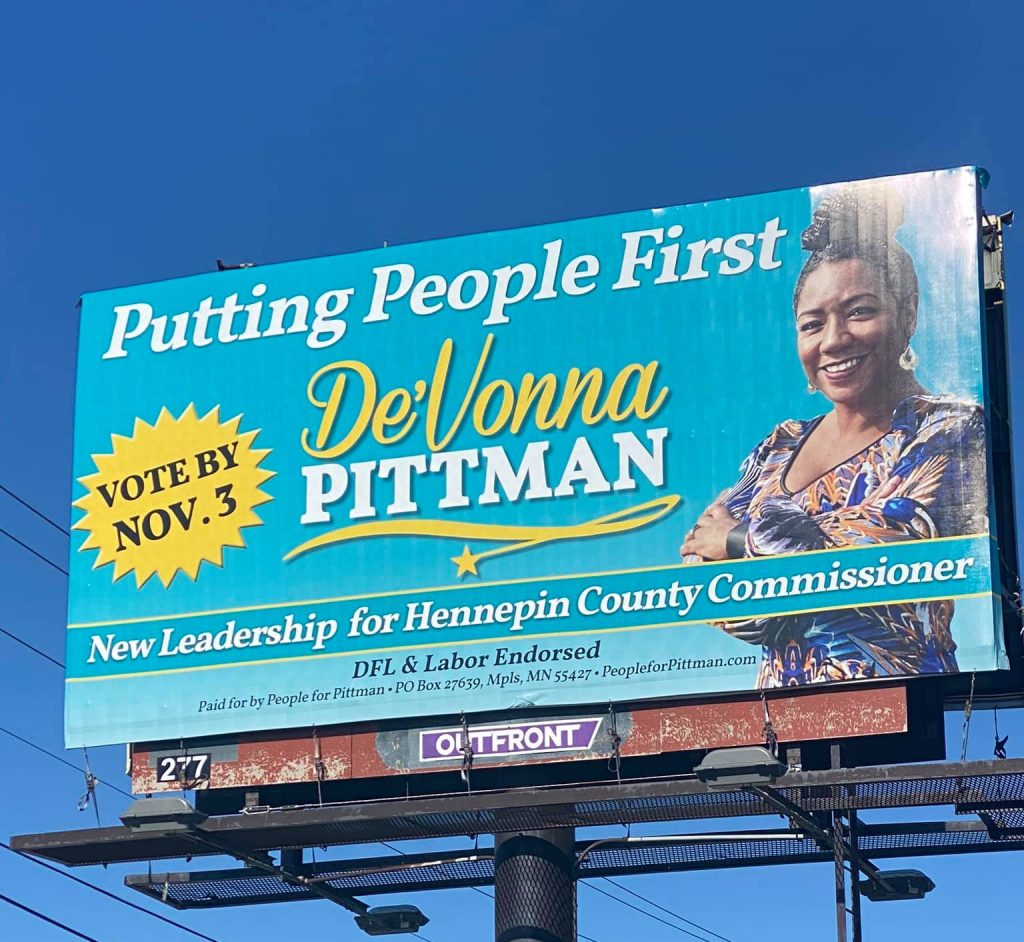
A billboard in the west metro advertises De’Vonna Pittman’s candidacy for the Hennepin County Board of Commissioners. Election Day is November 3, 2020.
Pittman is running on a platform to address issues in transportation, affordable housing, and workforce development. Of the challenges listed she considers affordable housing to be the most critical.
“The homelessness and affordable housing issues are so important,” Pittman said. In the state’s largest county, affordable housing and homelessness remain as key challenges to address, with thousands of individuals not having adequate shelter and others struggling to maintain their places of resident.
Pittman wants to ensure that individuals and families are able to have more affordable housing options. She also wants to make sure that eviction ordinances are maintained throughout the pandemic and that landlords are able to receive compensation for housing tenants that are unable to pay rent.
If elected into office, voters can expect to meet a leader that actively listens to their needs before making decisions. “I want to spend the first 90 days listening,” she said.
In the past two decades Pittman has lived in Hennepin County she’s witnessed a lot of changes.
“Since I’ve lived in the district I’ve seen lots of diversity,” she said. “The population is growing in a good way”.
As Hennepin County continues to grow and expand Pittman wants to ensure that the Board of Commissioners is able to reflect and adequately provide for positive change.
Hennepin County has seven commissioners representing the county’s seven different districts with each serving four year terms. The board oversees a 2.5-billion-dollar budget to manage the county’s systems which include, health care, transportation, law enforcement, housing, libraries, and infrastructure.
Pittman is running to fill an open seat. Outgoing District 1 Commissioner Mike Opat is not seeking reelection. After nearly thirty years as a commissioner, Mike Opat announced an early departure from his position on Tuesday. He will leave his post on November 7 two months before his term ends.
DeVonna Pittman lives in New Hope with her family.
Voting for the November elections is underway. With Election Day just days away, any outstanding mail in ballots should be dropped off physically to early voting centers, drop boxes or brought to your polling place on Election Day.