Seun Kuti, seen here performing at the One Africa Music Fest in New York last month, will be performing a Thanksgiving Eve concert on Wednesday, November 23 at the Cedar Cultural Center in Minneapolis. Photo: Courtesy AfroPop
Seun Kuti, seen here performing at the One Africa Music Fest in New York last month, will be performing a Thanksgiving Eve concert on Wednesday, November 23 at the Cedar Cultural Center in Minneapolis. Photo: Courtesy AfroPopSeun Kuti, seen here performing at the One Africa Music Fest in New York last month, will be performing a Thanksgiving Eve concert on Wednesday, November 23 at the Cedar Cultural Center in Minneapolis. Photo: Courtesy AfroPop
A last minute booking with the Cedar Cultural Center in Minneapolis brings back Seun Kuti and Egypt 80 for a surprise performance on Wednesday, November 23rd. It’s the day before Thanksgiving and a perfect way to prepare for a day of thankfulness.
Although some are still reeling from the elections of November 8th, we can be thankful the results don’t compare to the political climate and ruling party under which Seun Kuti’s father lived. In fact, it was politics that often set the tone for Fela Kuti’s protest music.
Seun learned from his father and now brings his father’s band into our current lives. Seun’s music will surely speak to both the past of Nigeria and to the current milieu that we face with President-elect Trump.
The lyrics to one of his latest songs, Gimme My Vote Back, ought to ignite a spirit of unity in the audience. His music alone holds such power and persuasion a sold-out crowd can be expected.
“I give them my votes
Them no give me democracy
Business now the priority
Instead of the working majority
I give them my votes
And them abuse it
New government
New excuses…”
Wed, November 23, 2016
Doors: 7:00 pm / Show: 7:30 pm
Cedar Cultural Center – Global Roots
$30 Advance / $35 Day of Show
Venue Information:
Cedar Cultural Center – Global Roots
416 Cedar Ave S
Minneapolis, MN, 55454 www.thecedar.org
US President-elect Donald Trump giving his acceptance speech after winning the presidency on November 8, 2016. Photo: ABC Screen Grab
US President-elect Donald Trump giving his acceptance speech after winning the presidency on November 8, 2016. Photo: ABC Screen GrabUS President-elect Donald Trump giving his acceptance speech after winning the presidency on November 8, 2016. Photo: ABC Screen Grab
Two days after Donald Trump’s victory, immigration experts told reporters to keep a close eye on the president-elect’s transition team and his appointments to key government positions, for clues as to what to expect from his administration once he is sworn in on Jan. 20, 2017.
“We’re hearing a lot of questions and, honestly, a little bit of panic,” said Sally Kinoshita, deputy director of Immigrant Legal Resource Center.
But, she said, it’s important to put the election in context.
“When you look at the popular vote [which Democratic candidate Hillary Clinton won], “the majority of Americans did not vote for Trump and his anti-immigrant rhetoric,” Kinoshita said on a national press call organized by New America Media and Ready California, a coalition of nonprofits that serve immigrant communities.
“This election,” she cautioned, “is not a reflection of Americans in general and their views of immigrants.”
What the polls got wrong
The election of Donald Trump came as a surprise to pollsters, who had estimated Clinton’s chances of winning at 70 percent and up.
“From a historical standpoint, the polling was wrong for the following reasons: Turnout in urban centers [that traditionally vote Democratic] was slightly lighter than expected; and turnout in rural areas was higher than expected,” explained Anthony Williams, special project director of the Miami-based public opinion research firm Bendixen & Amandi International.
This had the effect of “flipping three states that nobody thought were in play: Pennsylvania, Michigan and Wisconsin, and, to a certain extent, Florida,” he said.
But a look at the total numbers shows that Trump prevailed in the Electoral College, not because of a swell of enthusiasm for the Republican candidate, but because of a lack of enthusiasm for Clinton.
Trump’s vote total was roughly equal to GOP candidate John McCain’s total in 2008, and he got fewer votes than GOP candidate Mitt Romney got in 2012.
Clinton, meanwhile, got about 60 million votes – six million fewer than Barack Obama got in 2012, and 10 million fewer than Obama got in 2008.
While there was “very little evidence” of an insidious effort at voter suppression in this election, said Williams, there were “other forms of voter suppression, not the least of which was the overwhelming sense that it was over.
“You could make the argument,” he said, “that the perception of [Clinton’s] victory suppressed turnout [in urban areas that would have voted for Clinton].”
An increase in Hispanic, Asian voters and Senators
“The notion that there was a Hispanic wave was real,” noted Williams. “In Nevada, the increase in Hispanic turnout was the difference in the election.”
But Williams said that in other states, such as Florida, there were not enough Latino voters to overcome the increase in the rural, white voter turnout.
Christine Chen, executive director APIAVote, also saw an increased level of voter participation of Asian Americans and Pacific Islanders (AAPIs), over two-thirds of whom are first-generation immigrants.
Based on early voter turnout, she said, the AAPI vote doubled in Florida, Arizona, Virginia and North Carolina, and tripled in Georgia.
Two Asian American women were elected to the U.S. Senate, joining Mazie Hirono of Hawaii: Tammy Duckworth of Illinois, who is Thai Chinese, and Kamala Harris of California, who is African American and Indian.
In Nevada, Catherine Cortez Masto became the first Latina ever elected to the U.S. Senate.
A challenging time ahead
The election of Trump, a candidate who made fear and xenophobia a central part of his campaign, has spurred advocates to pledge to fight for the dignity of all families.
“There’s no doubt we are entering a challenging period. The election was divisive and damaging. We saw hate crimes, hateful rhetoric,” said Kamal Essaheb, national director of policy and advocacy for National Immigration Law Center.
“President-Elect Trump has called for unity in his election night speech, but obviously his actions are going to have to speak louder,” Essaheb said.
The most important thing to do now, he said, is to make sure immigrants are prepared and know their rights.
One thing to keep in mind, he said, are the limits of presidential power.
“The Constitution protects everyone,” Essaheb said. “Law enforcement has to show you [a warrant to enter your house]. You have the right to remain silent. You have the right to call an attorney.”
“There are things he can do that will be harmful,” said Essaheb. But, he said, “Trump cannot take away the Constitution. He cannot take away the people’s rights.”
Another thing he can’t take away are state and local laws, such as California’s AB 60, which allows undocumented immigrants to get a driver’s license. “State and city-level policies did not change on Tuesday night,” Essaheb said. “The same opportunities are there; the imperative to act is higher.”
Trump has said that he would repeal Deferred Action for Childhood Arrivals (DACA), the executive action taken by President Obama in 2012 that gives certain undocumented immigrants who came here as children access to a work permit.
He has said that he would eliminate federal funding to so-called “sanctuary cities” whose policies limit cooperation between local police and federal immigration authorities.
He has talked about stepping up deportations, with “zero tolerance for criminal aliens.”
He has also talked about building a wall, something that experts say is neither practical nor feasible.
He has even hinted at a path to legalization for undocumented immigrants, Essaheb noted, saying that once we enforce our laws, we can start to have a conversation about the people who are already here.
What families can do now
Although it is hard to know exactly what to expect under a Trump administration, there are some steps families can take now to stay safe and plan for their future.
Sally Kinoshita of Immigrant Legal Resource Center noted that Trump is not president until Jan. 20, 2016. Until then, the DACA program remains in effect.
It takes several months for DACA applications to be processed, Kinoshita said, so if people have not applied for DACA, it might be too late.
Trump has said he would get rid of the program; the earliest this would happen is his first day in office.
Renewals, which take eight weeks to be processed, would be much less of a risk, said Kinoshita. Some people are renewing their DACA now while Obama is in office, in order to get a two-year work permit.
Anyone planning to renew DACA now should know that the price for DACA increases to $495 on Dec. 23, 2016. Loans are available through the Mission Asset Fund, Self-Help Federal Credit Union, the Mexican Consulate or local service providers.
Because there is expected to be an increase in enforcement, prioritizing those with criminal records, she said, people should avoid brushes with the law.
“Something like a DUI or a drug conviction can have permanent immigration consequences,” Kinoshita said.
Those who live in California can get certain felonies reduced to misdemeanors under Prop 47.
Kinoshita encouraged all immigrants to go to a qualified legal services provider to be screened for other forms of immigration relief.
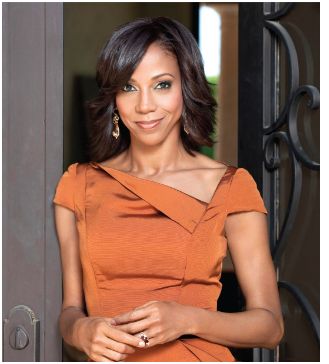
Actress and singer Holly Robinson Peete will keynote the Women of Color expo in Minneapolis on Saturday, November 12, 2016. Photo: Courtesy Rae Mackenzie Group
Actress and singer Holly Robinson Peete will keynote the Women of Color expo in Minneapolis on Saturday, November 12, 2016. Photo: Courtesy Rae Mackenzie GroupActress and singer Holly Robinson Peete will keynote the Women of Color expo in Minneapolis on Saturday, November 12, 2016. Photo: Courtesy Rae Mackenzie Group
The GATHERING! Women of Color Expo founded by veteran power marketer Sharon Smith-Akinsanya will be held Saturday and Sunday November 12 and 13 from 10am to 6pm on both days.
Its a star studded event featuring national and local acts. Actress and singer Holly Robinson Peete is the featured keynote speaker on Saturday. National and local musical acts ranging from Grammy winners Sounds of Blackness to gospel sensation Deitrick Haddon.
Founder Sharon Smith-Akinsanya said in a statement that the expo will be “showcasing the best that Twin Cities has to offer that helps to make it a great place to live, work and play.”
Robin Hickman of the Twin Cities, creator of Soulful Dolls will host a meet and greet. The Emmy nominated Hickman is well known locally for her work on helping young women recognize their own beauty and not the one portrayed on mainstream media. She also has a NAACP Image Awards nomination under her belt.
The full schedule for the two day attraction can be found on the GATHERING! website here.
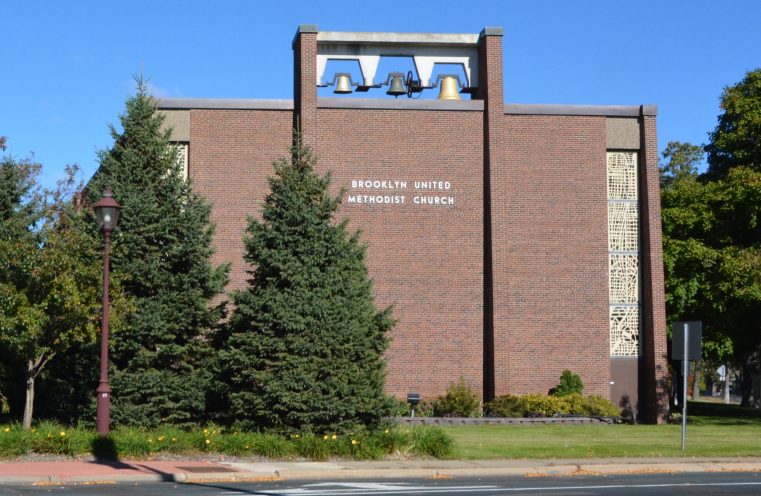
West African Family Community Services run by the Greater Minneapolis Council of Churches was housed here at the Brooklyn United Methodist Church in Brooklyn Center, Minnesota. GMCC announced the closure of the center on October 28, 2016 setting off a firestorm within the West African community in Minnesota. GMCC relocated the center to this location in 2015 after many years in north Minneapolis. Photo: Courtesy Brooklyn United
West African Family Community Services run by the Greater Minneapolis Council of Churches was housed here at the Brooklyn United Methodist Church in Brooklyn Center, Minnesota. GMCC announced the closure of the center on October 28, 2016 setting off a firestorm within the West African community in Minnesota. GMCC relocated the center to this location in 2015 after many years in north Minneapolis. Photo: Courtesy Brooklyn UnitedWest African Family Community Services run by the Greater Minneapolis Council of Churches was housed here at the Brooklyn United Methodist Church in Brooklyn Center, Minnesota. GMCC announced the closure of the center on October 28, 2016 setting off a firestorm within the West African community in Minnesota. GMCC relocated the center to this location in 2015 after many years in north Minneapolis. Photo: Courtesy Brooklyn United
Editor’s note: The following is an open letter to the media signed by Fr. James N. Wilson II, a West African Immigrant and Priest in Charge, Holy Trinity Episcopal Church and a member of the Advisory Committee of the West African Family Community Services.
Other signers: Hector Nanka Bruce, Dr. Richard Oni, Henry Dolopei, Dr. Jonathan Rose, Susan Blood, Dr. Fatima T. Lawson and Rita Apaloo
The West African Community is greatly devastated by the decision of the Greater Minneapolis Council of Churches (GMCC) to close the West African Family Community Services (WAFCS). The WAFCS program was unique with great success stories. It provided culturally specific West African food 210 to 275 families per month. Its computer literacy program served 25 to 30 students every six weeks with immediate employment successes and a long waiting list of African Immigrants. And the voluntary legal and immigration services served 11 to 13 families with more families with immigration challenges.
Despite these success stories, the GMCC, under the leaderships of Interim President and CEO Curt Peterson and Board Chairman John Ratelle, closed the much-needed West African Family Community Services on October 28, 2016.
The West African Immigrants Community in the Twin Cities comprises 15 West African Countries: Cameroon, Nigeria, Benin, Niger, Togo, Ghana, Ivory Coast, Liberia, Sierra Leone, Guinea, Guinea Bissau, Burkina Faso, Gambia, Mali, and Senegal, about 75 ethnic groups and over 25 languages. From 1989 to 2000, the Twin Cities became the home of West Africans many of whom were uprooted from their home countries as the result of civil conflicts.
The Greater Minneapolis Council of Churches (GMCC), a religious organization, under the leadership of the Rev. Dr. Gary Reierson, used the stories of the influx of West African Refugees and Immigrants in the Twin Cities to create the “Second Century Service Campaign” that appealed to the conscience of generous financial givers. GMCC used the funds from the “Second Century Service Campaign’ to build a “Center for Families” building next to fellowship Baptist Church in North Minneapolis. GMCC’s two reasons for building the Center were to provide services to West Africans and foster mutual cultural relations between Africans and African Americans. The Center opened its doors in February 2006 and provided services to the wider Twin Cities community. In 2015, GMCC sold the Center for Families Building that was built to house the West African Community and relocated the West African Community services at the Brooklyn United Methodist Church in Brooklyn Center with the promise of buying another building for the West Africans to continue the West African services to the community. The promise was not fulfilled and the GMCC made the decision to close the center.
On September 13 and 21, 2016, the Advisory Committee of the West African family & Community Services (WAFCS) appealed to Curt Peterson Interim President and CEO of GMCC and the GMCC Board respectively not to close WAFCS. But Curt and GMCC turned down our appeals. Curt Peterson said the GMCC’s decision to close the West African Family & Community Services program is due to financial losses and difficulties. He also said “there is a similar program at CEAP across the street that offers food services that is financially stronger than GMCC and should be able to provide the services for West Africans.”
The GMCC’s decision to close WAFCS program was received with shock, disappointment and displeasure with a biblical and moral reminder:
“When a stranger sojourns with you in your land, you shall not do him/her wrong. You shall treat the stranger who sojourns with you as the native among you, and you shall love him/her as yourself, for you were strangers in the land of Egypt: I am the Lord your God.” (Leviticus 19:33-34). Similarly, “You shall not wrong a sojourner or oppress him/her, for you were sojourners in the land of Egypt.” (Exodus 22:21).
West African Immigrants are sojourners, most of whom were uprooted from their home countries by civil wars and now found a new home in the Twin Cities.
The GMCC’s decision to close the West African Immigrants program comes at a time the culture of xenophobia, anti-Muslims, and anti-immigrants is being perpetuated by some Americans thus denigrating Immigrants in the Country of Immigrants. Moreover, GMCC closed the West African Center under the false impression that it is facing financial crisis when its financial balance sheet shows $4,728,739 total liabilities and Net Assets as at July 31, 2016.
The decision to close the West African program is profoundly impacting and hurting the West African Community. Where will the West African Community find the culturally specific food and services that were provided by the West African Family Community Services? Former GMCC staff told us that one million dollars were allocated to continue the West African services. The Advisory Community is asking the GMCC the following questions: How much was the Center for Families sold for? Where are the proceeds from the sale of the building? Where is the one million dollars allocated for the West African Community? These questions are yet to be answered.
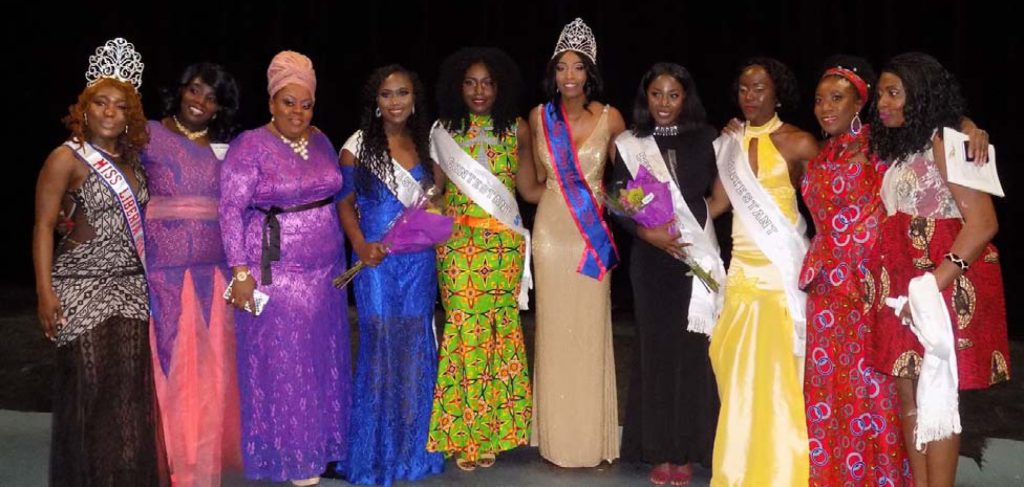
Aurelia Sancho-McGill, who won Miss Liberia 1974 in Liberia crowns Miss Liberia Minnesota 2016 during the pageant in Hopkins, Minnesota on Saturday, October 29, 2016. Photo: Amie Dibba/Mshale
Aurelia Sancho-McGill, who won Miss Liberia 1974 in Liberia crowns Miss Liberia Minnesota 2016 during the pageant in Hopkins, Minnesota on Saturday, October 29, 2016. Photo: Amie Dibba/MshaleAurelia Sancho-McGill, who won Miss Liberia 1974 in Liberia crowns Miss Liberia Minnesota 2016 during the pageant in Hopkins, Minnesota on Saturday, October 29, 2016. Photo: Amie Dibba/MshaleKoisey Hiama, the new Miss Liberia Minnesota 2016 was presented with a $4,000 scholarship check from the Kifa Foundation during the pageant in Hopkins, Minnesota on Saturday, October 29, 2016. Photo: Amie Dibba/MshaleKoisey Hiama, who was crowned Miss Liberia Minnesota on Saturday, October 29 2016 poses with the other contestants and organizers at the conclusion of the pageant. Photo: Amie Dibba/Mshale
HOPKINS, Minn. (Mshale) – Koisey Hiama was crowned Miss Liberia Minnesota over the weekend at the Hopkins Center for the Performing Arts. Miss Liberia 1975, Aurelia Sancho-McGill, was on hand to crown Ms. Hiama.
Among the talents contestants were judged on included spoken word and singing.
The Kofa Foundation organized and hosted the pageant and its executive director, Decontee Kofa, presented the new Miss Liberia Minnesota with a $4,000 scholarship check.
Hiama will now represent Minnesota at the Miss Liberia USA 2017 pageant in Philadelphia.
A section of the interim Sunrise Minto Credit Union board when they appeared on KDR TV to discuss the impending credit union. (L to R) Tom Motanya, Ibrahim Oenga, Moses Makori and KDR TV host Benard Omweri. Photo: Courtesy KDRTV
A section of the interim Sunrise Minto Credit Union board when they appeared on KDR TV to discuss the impending credit union. (L to R) Tom Motanya, Ibrahim Oenga, Moses Makori and KDR TV host Benard Omweri. Photo: Courtesy KDRTV A section of the interim Sunrise Minto Credit Union board when they appeared on KDR TV to discuss the impending credit union. (L to R) Tom Motanya, Ibrahim Oenga, Moses Makori and KDR TV host Benard Omweri. Photo: Courtesy KDRTV
Starting 2017 or early 2018, when Kenyan-Americans in Minnesota and eventually the rest of the United States need to obtain a mortgage, or send money to their kin in Kenya, they will have the option of walking into a credit union they own and do the sending from there.
They will also be able to do the typical transactions they now do with commercial banks or other credit unions, such as checking and savings accounts, car loans and mortgages inside a yet to be identified site that hopefully will be Brooklyn Park or surrounding northwest suburbs that Mshale typically refers to as the African suburbs.
The credit union will be known as Sunrise Minto with a distinct mission to tailor services specific to the Kenyan-American experience.
Minto is the Kisii word for home or our home. The Kisii community which hails from western Kenya is the single largest among the Kenyan communities in Minnesota. Mshale’s internal working numbers estimates the community at 70% of Kenyans in the state.
According to the National Credit Union Administration (NCUA), there are nearly 6,000 federally insured credit unions in the U.S., with more than $1.2 trillion in assets. NCUA is the federal agency that regulates credit unions and also insures depositors’ money to the tune of $250,000 per depositor per credit union. NCUA is what the Federal Deposit Insurance Corporation (FDIC) is to commercial banks where it guarantees the safety of deposits in member banks, currently up to $250,000 per depositor per bank.
Unlike banks, credit unions are owned by all of its members, who pay anywhere from $5 to $25 to become members. In the rest of the world they are referred to as SACCOS (Savings and Credit Cooperative Society). Credit unions usually focus on helping their members save and borrow and receive affordable financial services.
The SACCO tradition is well developed in Kenya and many Kenyan-Americans grew up with that tradition. Some of the largest SACCOS in Africa are based in Kenya and have a presence in practically the entire country.
Before Sunrise Minto Credit Union can be a reality however, it has to go through the stringent protocols that the National Credit Union Administration has set to obtaining a Federal Credit Union Charter.
One of the key requirements the NCUA has set is for a proposed credit union to show interest from potential members to ensure viability. This requires organizers of the proposed credit union to gather names and signatures from a minimum of 3,000 potential members. Those potential members then have to indicate how much they plan for example to put into a savings account in the proposed credit union after they have paid their share capital to be owners. To own a share of the credit union thus becoming an owner, one usually signs up to buy a share by paying $5-$25, depending on the credit union.
Over the course of the last six months, an interim board consisting of influential Kenyan-Americans has slowly been going about the onerous task of gathering the required signatures from Kenyans in Minnesota and Texas and selling the vision of the credit union.
“We believe we have the numbers that will satisfy NCUA,” Dr. Ibrahim Oenga, the interim president of the board of Sunrise Minto told Mshale during an interview.
There is an estimated 20,000 plus Kenyans in Minnesota alone making them the fourth largest after Somalis, Ethiopians and Liberians according to Mshale estimates and census data.
“We are targeting Minnesota to begin with as this where the idea was born,” Oenga said. “We are getting a very good response and believe we will hit the target by the end of November.”
Oenga, a Kenyan-trained lawyer and current Assistant professor at the University of Wisconsin’s College of Management has indicated he does not plan to stay in the board past the interim period once a charter is issued by NCUA.
Once Minto wins a charter from NCUA and is operational, he envisions an eminent persons board of respected community members and “of course an experienced professional management team to run the credit union regardless of race and national origin as the NCUA requires.”
First Branch
Once NCUA issues a charter, the interim board’s vision is to have the first branch of sunrise Minto be established in Minnesota.
“We do expect the first branch to be in Minnesota followed by Texas, then New Jersey and the other states that have many Kenyans,” Tom Motanya told Mshale during the interview. He is Sunrise Minto’s marketing director.
On whether Sunrise Minto will be a basic or full service credit union, Motanya said “We are working on establishing a full service credit union.”
According to the NCUA, a basic credit union offers basic products, such as regular share accounts and small consumer loans. It defines regular share accounts to include savings accounts. Small consumer loans would include personal loans, car loans and home improvement loans. Basic credit unions are also allowed by the NCUA to offer debt consolidation services.
A full service credit union on the other hand in addition to offering the services a basic credit union offers, is allowed by the NCUA to also offer services such as cash operation, check cashing, share drafts, ATMs, debit and credit cards, mortgage loans and credit counseling.
According to the NCUA, a full service credit union charter is only issued if “organizers can clearly demonstrate the amount of management expertise, staffing, fixed assets, and funds required to properly administer and cover the costs associated with these services, including all of the required back office functions associated with the services requested.”
A full service credit union requires a manager with financial services experience, according to the NCUA. On Sunrise Minto’s interim board is Moses Makori, a certified auditor and former senior banker. He is currently a senior systems accountant with the federal government and would appear primed to fill that role if needed as per the NCUA requirements. Motanya is also an accountant with international experience.
Also on the board is Geoffrey Gichana who is the Director of Management Information Systems for Minto. A certified Project Management Professional (PMP); he has a masters in Management Information Systems and is an IT practitioner. He is the president of Mwanyagetinge and his inclusion in the board might be due to the premium the NCUA places on back office operations. In its guide to organizers of new credit unions, NCUA stresses that a full service credit union requires a “more complex computer system (such as hardware and software) to support the special programs, including share drafts, ATMs, debit and credit cards and cash operations.”
While new credit unions can utilize third parties or entities known as credit union service organizations (CUSOs) to perform these critical back office operations, Sunrise Minto will still be responsible for performing the due diligence required in selecting them.
Signups
“It is a lot of work but we are well on the way to meeting a lot of the requirements that NCUA has,” Oenga said.
Motanya said in just a span of two months, the interim board has managed to sign up over 1,500 which is 50% of NCUA’s requirement.
“Our goal is to sign up and survey 5,000 instead of the 3,000 they need,” Motanya said. No money is required from those signing up. They are signing up to indicate their intention to become members and use Minto’s services should it get a charter from NCUA. Upon NCUA granting Minto a charter, then the 5,000 initial signers and new interested members can pay their new member dues.
The NCUA estimates the annual cost of operating a credit union at $76,000 to $300,000 depending on options that Sunrise Minto organizers might choose to go with it. For example, if Minto organizers choose to not operate ATMs in the initial stages and also choose to share a branch with another existing credit union, their initial startup costs would put them on the lower end of the NCUA estimates which can get the first Minnesota branch going with as little as $100,000.
“Once we get the charter, the initial startup capital will be the shares that members would sign up with,” Motanya said. Adding that even at the higher end of the NCUA estimates, the number of Kenyan-Americans in Minnesota are more than enough to get the first branch going. ”
Others who round up the interim board include Lynet Okemwa who is in charge of social media and Kefa Otiso, a professor at Bowling Green State University where he teaches Urban and Economic Geography. Otiso is also the founder of 9-year old Kenya Scholars and Studies Association.
Should Sunrise Minto be granted a charter by the NCUA it will become among the just over 600 institutions that are classified as Minority Depository Institutions of which as of 2016 are listed by the FDIC and the NCUA as numbering 617.
Minority Credit Unions
A “minority” is defined as any “Black American, Asian American, Hispanic American, or Native American” as defined in Section 308 of the Financial Institutions Reform, Recovery, and Enforcement Act of 1989. The MDIs have over 4 million members as of April 2016 with assets of almost $40 billion, according to data from the FDIC and NCUA that Mshale accessed.
Among the largest of these MDIs is the Suitland, Maryland based Andrew Federal Credit Union with 118,000 members and assets of $1.1 billion. Andrews’ membership is primarily African American according to data it supplied to NCUA. Hispanic American credit unions have the most representation on the MDIs with multiple unions with assets surpassing half a billion dollars.
None of the 617 MDIs are headquartered in Minnesota and Sunrise Minto seems poised to become the only one.
According to the NCUA, it submits an annual report to Congress on efforts to preserve and encourage minority depository institutions.
Sunrise Minto Credit Union website can be found here.
BOBO: She was the leader of the Kipipiri 4. Once she did her hair, she would walk majestically and gracefully across the village without uttering a word. This was a message to the village women that at midnight they were going to visit the men deep in the forest. Her hair was twisted and curled in a complex design to form a route map to the caves that only her 2nd in command would interpret. Never did they get lost or caught. Photo: Courtesy Osborne Macharia
BOBO: She was the leader of the Kipipiri 4. Once she did her hair, she would walk majestically and gracefully across the village without uttering a word. This was a message to the village women that at midnight they were going to visit the men deep in the forest. Her hair was twisted and curled in a complex design to form a route map to the caves that only her 2nd in command would interpret. Never did they get lost or caught. Photo: Courtesy Osborne MachariaBOBO: She was the leader of the Kipipiri 4. Once she did her hair, she would walk majestically and gracefully across the village without uttering a word. This was a message to the village women that at midnight they were going to visit the men deep in the forest. Her hair was twisted and curled in a complex design to form a route map to the caves that only her 2nd in command would interpret. Never did they get lost or caught. Photo: Courtesy Osborne Macharia
The Mau Mau Uprising was a revolt against British colonial rule in Kenya and lasted eight years(1952-1960). It accelerated Kenya’s path to independence .
The impetus for the revolt revolved around Issues like the expulsion of Kikuyu tenants from settler farms, loss of land to white settlers, poverty, and lack of true political representation for Africans. The Kikuyu were the single largest ethnic community and occupied some of the prime agricultural lands.
Wives of the Mau Mau Generals is the latest project by photographer and digital artist, Osborne Macharia.
Macharia describes his latest project as the story of a special unit of 4 women in a small village within Kipipiri Forest in Central Kenya.
They were the wives to 4 of the Mau Mau generals and just like their men, they too had leadership roles. This women would be endowed in the most unique hair styles whenever a full moon was approaching. To the ordinary folk this was normal but to the villagers of Kipipiri their hair style was symbolic.
The Miss Liberia Minnesota pageant is set for Saturday, October 29 2016. Photo: Courtesy Kofa Foundation
The Miss Liberia Minnesota pageant is set for Saturday, October 29 2016. Photo: Courtesy Kofa FoundationThe Miss Liberia Minnesota pageant is set for Saturday, October 29 2016. Photo: Courtesy Kofa Foundation
The 2016 Miss Liberia Minnesota Scholarship Pageant will begin at 6 p.m. on October 29 at the Hopkins Center for the Arts in Downtown Hopkins.
Seven Liberian women will compete to be crowned Miss Liberia Minnesota 2016 according to the Pageant’s official website. Contestants are required to be between 18 and 26 with a minimum GPA of 2.5 if they are students. Contestants’ academic achievements, leadership abilities, and volunteer service will be highlighted during the pageant. The traditional Swimwear segment will be replaced with an Active Gear segment.
The winner of Miss Liberia Minnesota will move on to compete in the 2017 Miss Liberia USA Pageant in Philadelphia.
The Kofa Foundation is hosting the pageant. The foundation is a nonprofit organization whose stated mission is to, “provide services to and advocate for survivors, surviving family members, and communities affected by an infectious disease”. The Kofa Foundation provides scholarships, training, travel opportunities and more to their winners.
Pageant tickets are free for children age 7 or younger, $15 for those age 8-17, $35 if purchased in advance, $40 at the door and $50 for VIP tickets.
Miss Liberia Minnesota Pageant
Saturday, October 29 2016 @ 6PM
Hopkins Center for the Arts
1111 Mainstreet, Hopkins, MN 55343
Advance Tickets: $15, $35 or $40 at the door. VIP @ $50
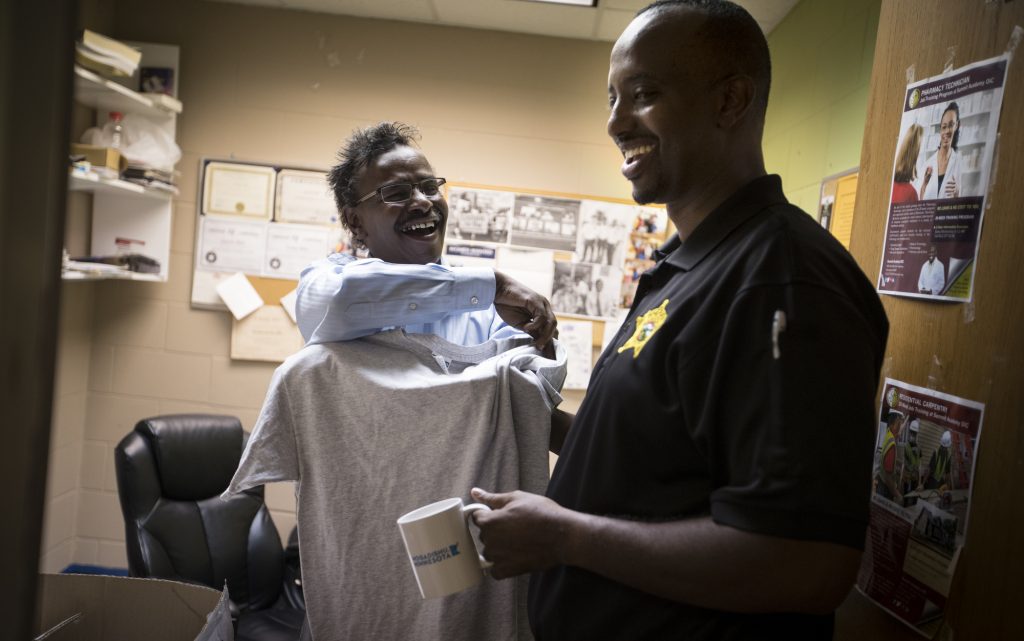
“I am the sister. I am the mother. I am the aunt, and I am the friend. I am strict with them. I want them to learn fast and be responsible.” Yasmin Muridi, family engagement specialist for St. Paul School District. Photo: Renee Jones Schneider/Star Tribune
“I am the sister. I am the mother. I am the aunt, and I am the friend. I am strict with them. I want them to learn fast and be responsible.” Yasmin Muridi, family engagement specialist for St. Paul School District. Photo: Renee Jones Schneider/Star TribuneAbdi Mohamed, community liaison for the Hennepin County Sheriff’s office, has done outreach in 43 cities in Minnesota and elsewhere.”I am busy,” he said at Brian Coyle Community Center in Minneapolis. “I go out every day.” Photo: Courtesy Star Tribune“I am the sister. I am the mother. I am the aunt, and I am the friend. I am strict with them. I want them to learn fast and be responsible.” Yasmin Muridi, family engagement specialist for St. Paul School District. Photo: Courtesy Star Tribune
This story is courtesy of the Star Tribune. The author of the story, Faiza Mahamud, is Mshale’s Associate Editor but is also a reporter at the Star Tribune.
They are among a growing number of Somali-Americans recruited as bridge-builders to overcome mistrust and misunderstanding.
Abdimalik Mohamed shows young Somalis that government jobs are not far-fetched. Yasmin Muridi explains to teachers what school in a refugee camp looks like. Abdi Mohamed sifts through piles of documents that require Somali translation.
The three are among a growing number of Somali-Americans recruited as bridge-builders to overcome mistrust and misunderstanding between Minnesota’s Somali community and government agencies. While some community members welcome Somali professionals as outreach workers, others worry that they will be used as a cover to snoop.
Love for community service has these three bouncing between two cultures at a time when suspicions run high over the convictions of several young Somali men on terror-related charges.
“If I am not there to help represent our community, then who will be there to help shape our narrative?” Abdimalik Mohamed said.
Abdimalik Mohamed U.S. attorney’s office
Abdimalik Mohamed was sitting at a restaurant when a suicide bomber detonated an explosive a block away during a visit to Somalia last year. He understands the importance of counterterrorism efforts. Through that experience, he learned the importance of engaging with young people to prevent radical recruitment.
He was working with Ka Joog, a nonprofit youth organization that gained recognition for its youth mentoring program, when U.S. Attorney Andrew Luger enlisted him as the office’s community outreach specialist in January. He was looking for a new challenge, and he got one.
Community tensions were high over the federal prosecution of nine Twin Cities men charged with trying to leave the country to fight for Islamist extremists in Syria. Meanwhile, a new federal program to deter young people who might have similar ideas was meeting resistance from people who said they felt it stigmatized Muslims and might be a cover for surveillance, despite Luger’s assurances.
For his part, Abdimalik Mohamed said he sees himself as an example of those who can bridge the gap. “For me, being in this position is about young people believing that they can get high-level jobs. So that they can say, ‘I can work for government,’ ” he said.
On social media, he urges young people to stay vigilant about radical recruitment and encourages them to apply for government jobs. He organizes community outreach events, such as the forum in the Hennepin County Public Safety Facility to address concerns about anti-Muslim sentiment after the March terror attack in Brussels, Belgium. He said that those discussions showed him how much the U.S. attorney’s office supports civil rights “of all kinds of people.”
“It means a lot to me as a Muslim,” he said.
He is now on a planning committee trying to bring together the Federal Bar Association, the North American Somali Bar Association and other professional groups to focus on Islamophobia.
“The beauty about this job, as crazy as it might be: They really listen to you and take your advice,” he said. “They really do care. I want to prove [to the Somali community] that this office cares.”
Yasmin Muridi St. Paul Public Schools
Yasmin Muridi is the only Somali staff member at Four Seasons Elementary School in St. Paul, which uses the arts to teach different subjects. She juggles many different hats — an educational assistant, family engagement specialist, interpreter, bus monitor and after-school tutor.
Muridi occasionally goes door-knocking to meet potential families. She said she wants more Somali students to attend her school, but persuading Somali parents to send their students to an arts school is not easy. “They feel like the kids will be dancing the whole time,” she said. “I tell them to come and look at the school with their own eyes.”
In addition to her many roles at the school, Muridi finds she must work hard to dispel suspicions about the government that some refugees carry from their homelands.
“They tell me, ‘You’ve been bought,’ ” she said. But Muridi assures them that they don’t have to answer her questions, and that has helped parents trust her.
“I am the sister. I am the mother. I am the aunt, and I am the friend,” she said. “I am strict with them. I want them to learn fast and be responsible.”
Abdullahi Ali was one of the skeptical parents. Ali’s family is new to the country, and his daughter is in fourth grade. Ali said he dreaded taking his daughter to school.
“I was afraid if my child will lose her culture,” Ali said. “But Yasmin has really helped me. My daughter still speaks her native language, and she is learning English.”
To help bridge the cultural gap, Muridi hosts a workshop that shows parents how to navigate the school system. She teaches about school culture and the importance of parental involvement.
Teachers have also relied on Muridi to answer questions about their students. Muridi said she feels that it’s her duty to explain “the environment which these students grew up in.”
“How do you convince a mainstream teacher that the new 10th-grader from a refugee camp has never been to school?” Muridi asked.
Despite the difficulties, Muridi gets a lift from seeing the progress of the students and their families. She hopes to become a teacher and continue helping families.
“I learned how to attract them,” she said. “I understand their need.”
Abdi Mohamed Hennepin County Sheriff’s Office
Little in Abdi Mohamed’s upbringing prepared him for his role as the sheriff’s office’s first Somali community liaison. He was a limousine driver for a decade before fellow Somali-Americans encouraged him to join the sheriff’s community engagement team in 2012.
“In order to bring together the law enforcement and the community, you’ve [got] to educate both of them,” he said. For example, in 2014, he relayed a community request to allow county inmates to wear head coverings, and the sheriff’s office changed its policy.
At 6 feet 3 inches tall and 240 pounds, Abdi Mohamed’s stature and uniform gained him notice.
“People definitely had mistaken me for a sheriff,” he said. “They look at me and say, ‘Oh, thank you for being here.’ I am not a police officer. My job is to just explain the process. I don’t collect information to arrest people. I am just a civilian.”
Abdi has done outreach work in 43 cities in Minnesota and elsewhere. “I am busy,” he said as he pulled over at the Brian Coyle Community Center, a hub for immigrants in Minneapolis. “I go out every day.”
Abdi Mohamed has become a regular face at the center, and his mild demeanor puts people at ease. Some admire his respect toward law enforcement. Others have even stopped him to ask about job opportunities at the sheriff’s office.
Abdirizak Bihi, a community organizer and social activist, said there was mistrust when there were no Somalis in law enforcement. “Our young people thought people like him [Abdi] and the police were bad and a snitch,” Bihi said. But that has changed. “Now 70 to 80 percent of our young people are looking to be like Abdi and other [Somali] officers,” he added.
Many in the Somali community have low expectations of law enforcement because of their experiences back home, Abdi Mohamed said. “To explain to them that the law enforcement here is helping them is a challenge,” he said.
Because bribing officers is common in Africa, he talks about that when training law officers about cultural differences. “I tell them, ‘If you see someone East African getting out of the car coming to you, don’t shoot them.’ ”
Abdirahman Mukhtar, a youth program manager at the Coyle center, says community outreach work is crucial. “There are a lot of rumors,” Mukhtar said. “Abdi brings the facts.”
Even if you were fully vaccinated as a child, your protection from certain diseases wears off. All adults need a yearly influenza vaccine.
Even if you were fully vaccinated as a child, your protection from certain diseases wears off. All adults need a yearly influenza vaccine. Even if you were fully vaccinated as a child, your protection from certain diseases wears off. All adults need a yearly influenza vaccine.
Vaccines are an important part of keeping kids healthy but did you know that adults need vaccines, too? Even if you were fully vaccinated as a child, your protection from certain diseases wears off. All adults need a yearly influenza vaccine. Get one dose of tetanus-diphtheria-pertussis (Tdap) vaccine if you did not get it as an adolescent. Then, get tetanus-diphtheria (Td) vaccine every 10 years after that. Adults also need vaccines at certain ages, like human papilloma virus (HPV), measles mumps rubella (MMR), zoster (shingles), and pneumococcal vaccines. You may also need varicella (chickenpox) vaccine if you never had chickenpox and haven’t been vaccinated against it.
Pregnant women should get an influenza and whooping cough (Tdap) vaccine. Pregnant women can get very ill from influenza, which can lead to hospitalizations and death. Whooping cough is a very contagious disease that can be deadly for babies. Influenza vaccine can be received any time during pregnancy, and the whooping cough vaccine should be received near the end of pregnancy (third trimester). Getting these vaccines during pregnancy will better protect the baby against these diseases in the first months of their life.
You may need additional vaccines if you have long term health conditions, are traveling outside of the United States, or because of other factors that put you at risk of disease. Talk to your health care provider about vaccines you may need.
Don’t let cost stop you from getting vaccinated. Most health insurance plans now pay for the cost of recommended vaccines. Call the number on the back of your insurance card if you are not sure about your plan. If you don’t have health insurance or if your insurance doesn’t pay for certain vaccines, you can receive free or low-cost shots at certain clinics located throughout Minnesota. Find a participating clinic at www.health.state.mn.us/divs/idepc/immunize/adultvax/clinicsearch.html.
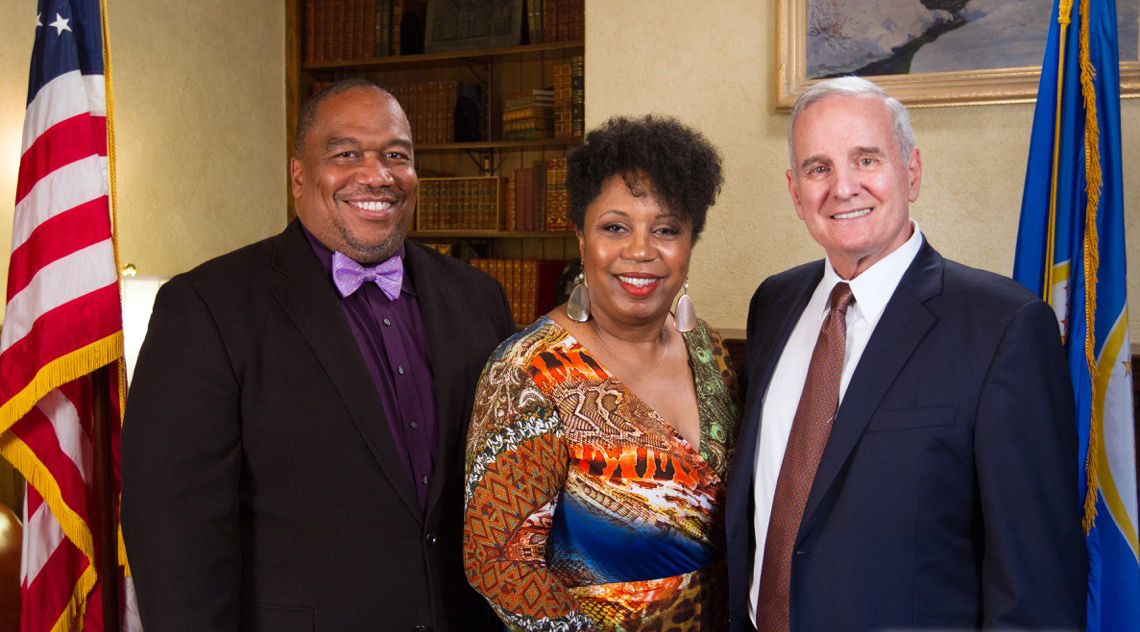
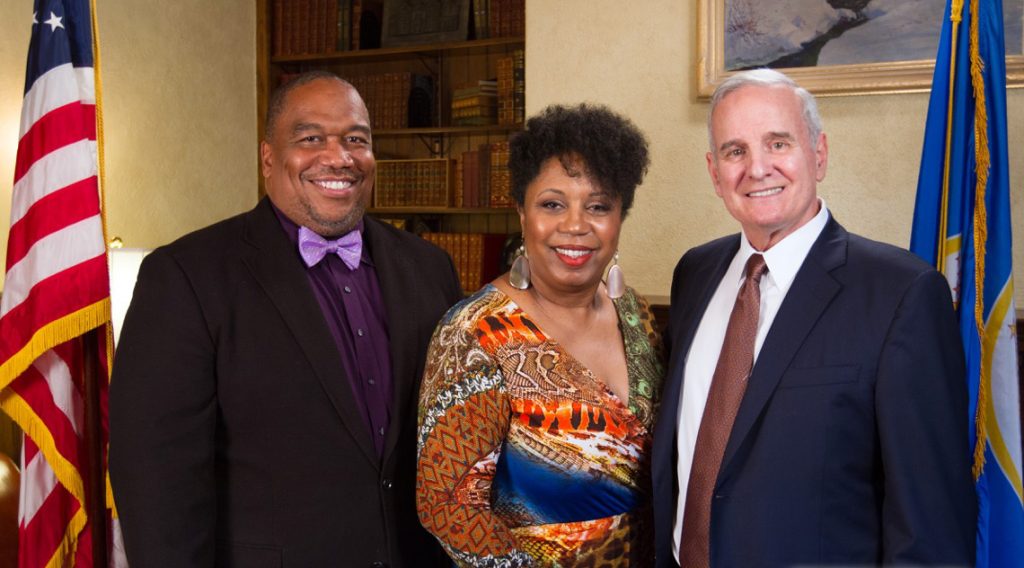
People of Color Career Fair founder, Sharon Smith-Akinsanya (Center) with the Chief Inclusion Officer, State of Minnesota, James Burroughs (left) and Governor Mark Dayton of Minnesota. The State of Minnesota along with U.S. Bank and Midco are the key sponsors of the People of Color Career Fair that will be held on October 18, 2016 at the Minneapolis Convention Center. Photo: Courtesy Rae Mackenzie Group.
People of Color Career Fair founder, Sharon Smith-Akinsanya (Center) with the Chief Inclusion Officer, State of Minnesota, James Burroughs (left) and Governor Mark Dayton of Minnesota. The State of Minnesota along with U.S. Bank and Midco are the key sponsors of the People of Color Career Fair that will be held on October 18, 2016 at the Minneapolis Convention Center. Photo: Courtesy Rae Mackenzie Group.People of Color Career Fair founder, Sharon Smith-Akinsanya (Center) with the Chief Inclusion Officer, State of Minnesota, James Burroughs (left) and Governor Mark Dayton of Minnesota. The State of Minnesota along with U.S. Bank and Midco are the key sponsors of the People of Color Career Fair that will be held on October 18, 2016 at the Minneapolis Convention Center. Photo: courtesy Rae Mackenzie Group.
The Twin Cities, home to the largest per capita number of Fortune 500 companies in the nation, is gearing up to host one of the largest state sponsored career fairs targeting people of color on Tuesday, October 18.
The event, planned from 9 a.m. to 5 p.m. at the Minneapolis Convention Center has the backing of none other than the state’s governor, Mark Dayton. The fair is partly a response to his agenda to address the racial disparities that the state is facing that pose a threat to its future workforce needs.
The people of Color career fair will provide an opportunity for the region’s employers to connect with professionals of color, according to its founder Sharon Smith-Akinsanya.
The high performing state is facing a number of challenges to its future prosperity. According to data published by the Minnesota Department of Employment and Economic Development (DEED), in June 2016 African American and Hispanic communities had a 14.4 percent unemployment rate compared to 2.9 percent among whites. To add urgency to the conundrum the state finds itself in, data from a recent Wilder Research study found that a higher education does not equate to a better job for minority employees: college educated blacks in Minnesota currently have a 9 percent unemployment rate as opposed to a 3 percent unemployment rate among their white counterparts.
From 2010 to 2014, US census data shows that Minnesota lost 35,000 white residents of working age. During that same time, the number of working-age people of color increased by 72,000. There is therefore an urgency the state is facing to address its future workforce needs.
“This event empowers companies to proactively create the change that closes the economic gap and ends the structural racism that can ultimately harm the economic stability of our state. The People of Color Career Fair provides the space and opportunity for those companies ready and wanting to solve the problem to meet with and talk to qualified candidates of color who are looking for an amazing company to work for. It’s bold. It’s radical. It’s necessary,” Smith-Akinsanya told Mshale.
The People of Color Career Fair website lists among the companies participating include U.S. Bank, Midco, State of Minnesota, The Patterson Companies, Allianz Life Insurance of North America, University of Minnesota, Medtronic, Metro Transit, Mortenson Construction and more. You can find the full list here.
According to Smith-Akinsanya, candidates that will benefit range from college interns and recent college graduates to experienced professionals with advanced degrees.
“Attendees can expect to meet and speak directly with hiring managers and decision makers representing Minnesota’s top employers,” said Smith-Akinsanya.
She encourages those planning to attend to register in advance at www.peopleofcolorcareerfair.com to upload their resume and receive some benefits that those who just show up won’t – a free professional headshot and a free bus or train pass.
“State government is among Minnesota’s largest employers,” said Gov. Mark Dayton in a release supporting the Fair. “As our state becomes increasingly diverse, we are committed to building a talented workforce that is representative of Minnesota. I encourage all interested people of color to consider state employment and attending this job fair.”
In a wide ranging Mshale interview, Smith-Akinsanya said there is still room for employers that want to participate as the governor has urged. Details for employers are also on the same website.
Besides the career opportunities the fair will provide, there will be four breakout sessions dubbed 30 Minutes of Power:
LinkedIn Simplified—Grow your Visibility, Credibility and Hire-ability! – Sponsored by Midco
Find Success by Bringing Your Authentic Self to Work! – Sponsored by U.S. Bank
Stand Out From the Crowd and Land a Meaningful Internship! – Sponsored by U.S. Bank
7 Ways to Makeover Your Career! How to Rekindle Your Passion at Work – Sponsored by State of Minnesota
“Come dressed and ready to interview with 10-15 resumes in hand, hiring managers will be there” Smith-Akinsanya said.
People of Color Career Fair
Date: Tuesday, October 18, 2016 9:00am – 5:00pm Venue: Minneapolis Convention Center, 1301 2nd Ave S, Minneapolis, MN 55403 Registration:http://www.peopleofcolorcareerfair.com