
Home Blog Page 130

Ilhan Omar’s legislative race taking shape

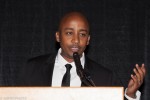
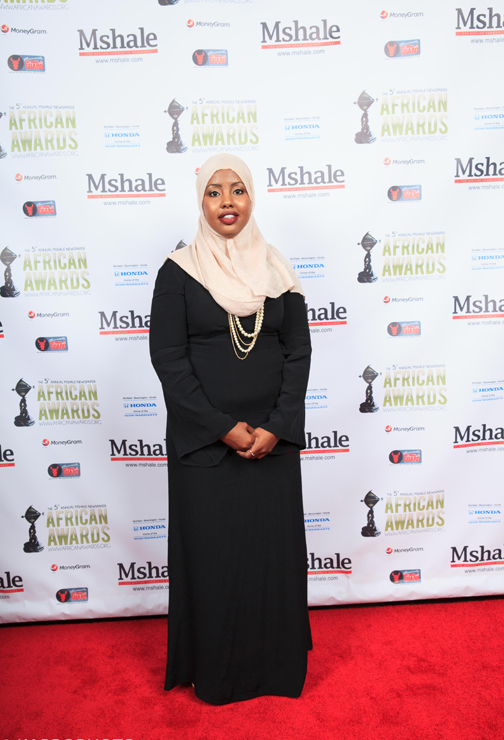
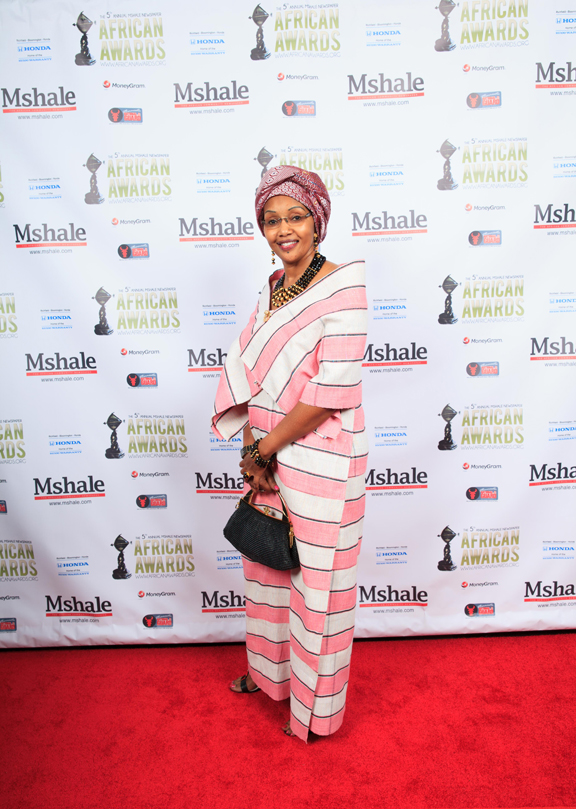
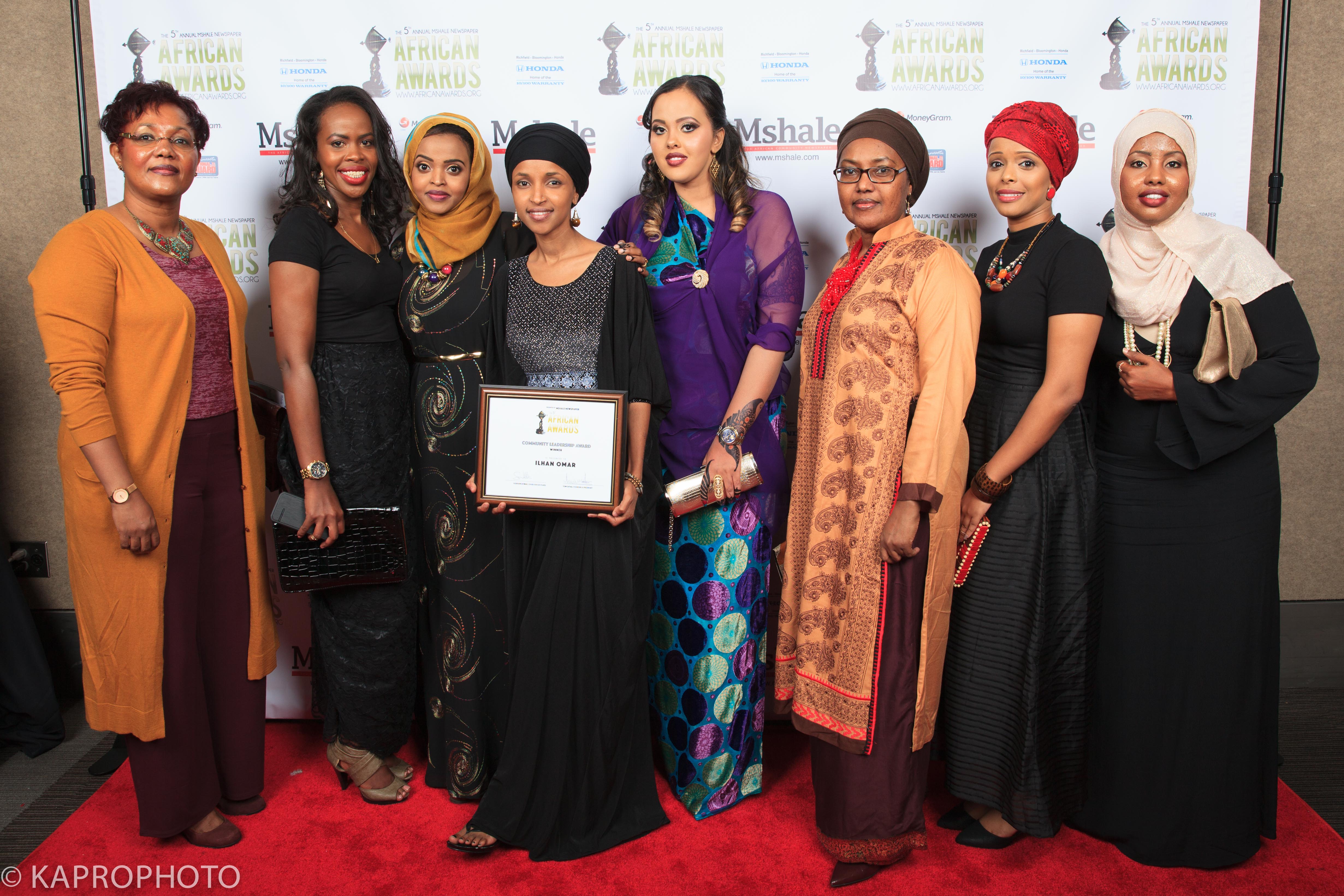
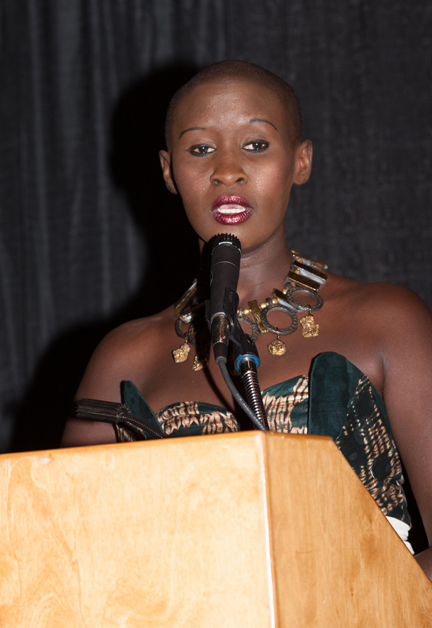
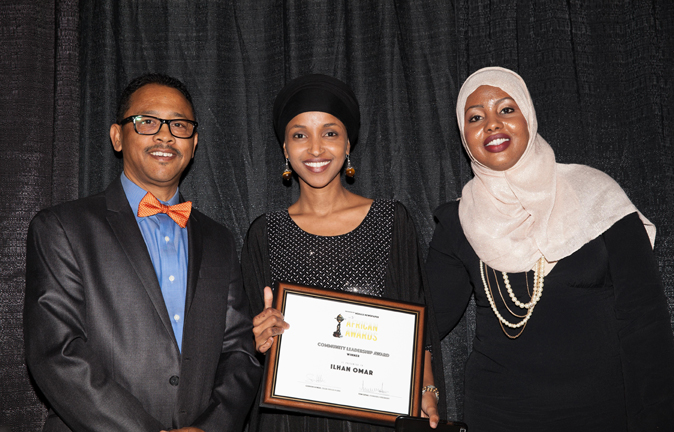
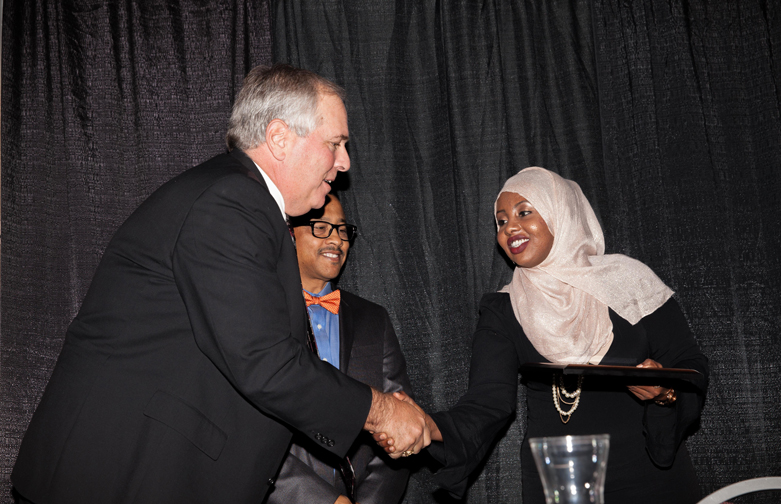
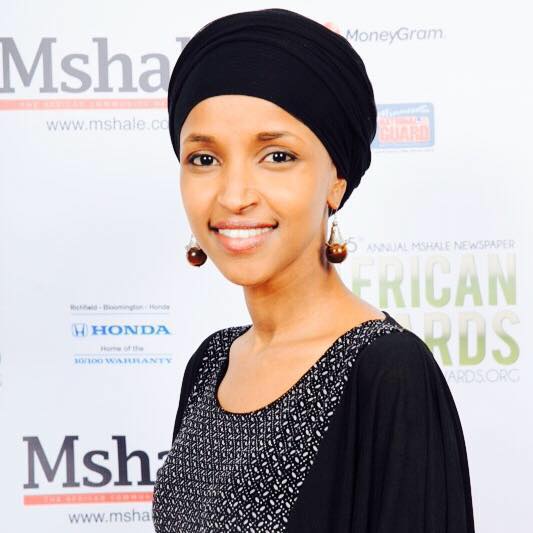
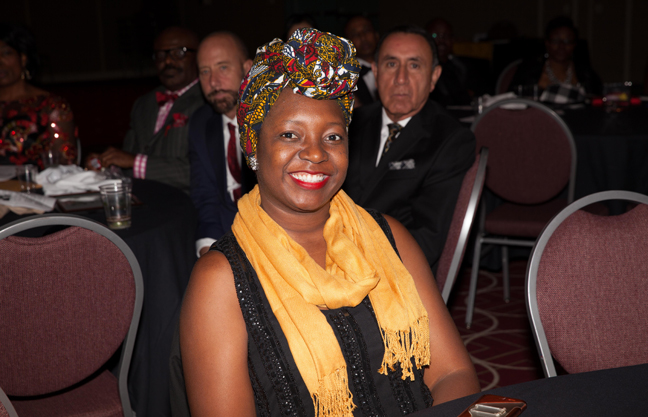
Ilhan Omar, seen here at the African Awards in Minneapolis in October where she was awarded the Community Leadership Award through a community vote, has announced her candidacy for the Minnesota District 60B race. Photo: Mamadou Moustapha Ka for Mshale

Ilhan Omar, DFL activist and Director of public policy initiatives at Women Organizing Women (WOW) Network, announced her candidacy for Minneapolis House District 60B in October.

Should she be elected, it will be a historical win, making her the first woman from the Eastern Africa region to be elected to statewide office in the United States.

Omar said in an interview with Mshale that she is ready to speak to the public about controversies surrounding her candidacy and the reason why she is running for office against her DFL opponents, Mohamud Noor and Rep. Phyllis Kahn. Kahn has represented the area since 1972 and is the longest serving Minnesota lawmaker.

60B, a predominantly Democratic district,  includes the Cedar Riverside and Seward neighborhoods, home to a large Somali community, in addition to Nicollet Island, Prospect Park, Marcy Holmes and the University of Minnesota Minneapolis campus (home to Carlson School of Management and the U’s law school).

Omar’s interest in politics was piqued by her close relationship with her grandfather. Their conversations revolved around activism and policy work.  “Being able to dream about the prosperity for your children, having access to economic sustainability and equitable housing were some of the conversations I had with my grandfather, said Omar.”

Omar grew up in the Cedar-Riverside neighborhood and has actively advocated for the community. She continues to be identified in political arenas advocating for issues concerning equity. “I grew up in this area, she said.”

“I understand the growing need in all corners of this district. I have a feeling that I am the right candidate.”

Omar said she is convinced that the people of district 60B need a representative at the Capitol who understands them. “We are very diverse,” said Omar. “We need a representative that can speak on and understands the socioeconomic, age and cultural differences.”

Omar will now face off her fellow DFLers, Noor, last year’s returning challenger against incumbent Kahn. Many in the community have been wondering why Omar is running against Noor when she publicly and vocally supported his campaign last fall. Omar contends however that she was a neutral representative of the DFL party during the 2014 caucus, one that erupted into violence leaving Omar with multiple injuries. “I did not support Noor after the convention was over,” she said.

Omar, who seems baffled by public inquiries about why she is challenging Noor this year, says she “believes in a free democratic system that allows people equal participation in our society.”

She says she supported Noor because she wanted to see change. She thought Noor was the change for House District 60B.  “I am now running because I don’t see that urgency from him or from the other opponents anymore.” Omar said that she considers herself a “bridge-builder”.

“I got tired of wishing for that perfect candidate. I got tired of having conversations with people on what is really important,” she said.

Omar said she stopped rallying behind political campaigns and decided to run for office. “If you are willing to ask people of something, you should be willing to do, “she said with her trademark beaming smile.

“Noor and I are still good friends. I have reached out to him numerous times before declaring my candidacy. I have also reached out to many state officials including Phyllis Kahn.”

Omar said that she is not fond of conversations about how she shouldn’t run against Noor or vise versa. “I hear a lot of people say only one of you should run. I don’t advocate for such conversations, Omar said.” Omar said that she wants those with the negative mindset to know that she and Noor are not detrimental to their political race.

Omar lights up when asked about the multi-ethnic approach she plans to include in her campaign kick off on Tuesday. “The plan is to talk about our commonalities. What connects us is that we all want to survive and thrive.”

Omar said that she is running a unique campaign and hope to use some of that uniqueness to attract people and to create relationships.

“My campaign is fueled by students and even my children,” she said.

Omar, a mother of three said that her two oldest children (Son Adnan and daughter Isra) are active participants in her campaign. “My son has attracted so many of his friends’ parents, she said. I get asked to have coffee meetings because of my son.”

Omar said that her little one doesn’t understand what her mother is doing, but her daughter who also has ambitions of being a politician plays many roles in her mother’s campaign. “My oldest daughter is my door knocking buddy. She is also my advisor,”she said.

Ilhan Omar will kick off her campaign today (November 10) at the Mixed Blood Theatre in Minneapolis at 6pm. The address is 1501 S. 4th Street, Minneapolis, MN 55454.

Editor’s note: We have a request out to the Mohamud Noor campaign for an interview and will publish it as soon as it is completed.

Related: Ilhan Omar launches campaign for Minnesota House seat
African immigrants express frustration over California driver’s license hurdles

0
African immigrants express frustration over California driver's license hurdles

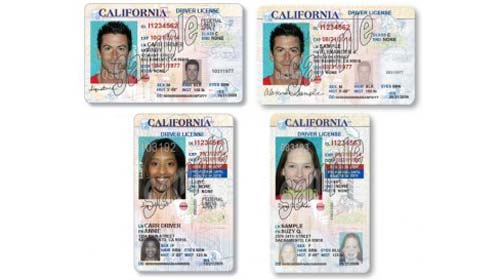
CA Driver LicenseAfrican immigrants in the Bay Area are upset that many of them have to go through a secondary review process in order to apply for a California driver’s license under AB 60.

But DMV officials say the reason some countries don’t appear on the list of acceptable passports has to do with security requirements, not geography.

At a recent forum in Oakland with DMV officials, several African immigrants said they didn’t understand why they were sent into secondary review. Attendees asked why more than half of African countries were not on the list of acceptable passports, leaving their nationals to provide more documentation in order to apply for a driver’s license.

Ekow Croffiie, an Oakland resident originally from Ghana, pulled out his passport and birth certificate, saying he had been in secondary review for months.

“Every time I call, they say, ‘You should wait for 90 days,’” said Coffie. “I’m just frustrated because I have a family, my wife doesn’t drive, and my kids have to go to school.”

Adoubou Traore, project director of the African Advocacy Network in San Francisco, has been meeting with DMV officials to answer some of the questions and concerns that he hears in his community.

“They contacted us,” Traore said about the recent forum in Oakland, one of more than 200 public forums the DMV has held across the state to provide information about how to apply for a license. Traore saw that as a hopeful sign. “It shows that there’s a will to see this issue taken care of.”

Still, he said, “You could feel people’s frustration.”

Since January 2015, the DMV has issued more than 500,000 driver’s licenses to unauthorized immigrants in California under AB 60. To be eligible, they must provide proof of identity and California residency, as well as pass all required tests.

Passports and other documents accepted by the DMV must meet all of the standards of security. This includes questions like how easy it is to forge a passport, and how the country verifies people’s identities.

Mexican nationals, whose country has a security agreement with the DMV, need only present one document to prove their identity. This can include a Mexican passport issued in 2008 or later, a Mexican consular card (matricula consular) or a 2013 Mexican federal electoral card (Instituto Federal Electoral Credencial para Votar).

A second group, including those from some other Latin American countries and those whose passports are approved by the DMV, needs to present two documents.

Those who do not fall into either of the first two groups, including nationals of many African and Asian countries, are sent to secondary review, where they are asked to provide additional documents to verify their identity.

According to the DMV, a majority of those who have been sent to secondary review in January and February have gotten approval to move forward with their application.

But Armando Botello, deputy director of the DMV’s Office of Public Affairs in Sacramento, noted that the number of applications that required a secondary review exceeded the DMV’s expectations. As a result, the wait time in some cases exceeded four months.

“To everyone who has been waiting for their secondary review,” Botello said, “we apologize and ask them to be patient.”

Traore said he plans to continue to meet with DMV officials to help more African immigrants take advantage of AB 60.

“Education is needed on both sides,” Traore said. “It’s in everyone’s interest,” he said, to allow people to apply for a driver’s license – not only for those who get a driver’s license through AB 60, but for the safety of everyone sharing the road.

For more information about how to apply for a California driver’s license under AB 60, go to:DMV.ca.gov.

How South Africa born Trevor Noah is making The Daily Show his own, without changing it completely

0
South African born Trevor Noah is late night's only millennial host. Photo: Courtesy The Daily Show
South African born Trevor Noah is late night’s only millennial host. Photo: Courtesy The Daily Show

Late night’s only millennial host opens up about his first month

On Sept. 28, the final piece of the recast late-night lineup clicked into place with the debut of The Daily Show With Trevor Noah. Replacing an icon like Jon Stewartafter 16 years would be a daunting task for anybody, much less a relative unknown like the 31-year-old South African comedian. But Noah started strong (“Assured, handsome and with a crisp delivery, Mr. Noah was a smoother presenter than Mr. Stewart,” proclaimed The New York Times), and he has improved markedly every night since.

When Stewart announced in February that he was stepping down as Daily Show host, Comedy Central offered the job to big names like Amy Schumer before settling on Noah, who started as a Daily Show contributor last December. The network is betting on Noah’s long-term potential to reach millennial audiences (see “In Just Nine Months, Comedy Central Reshaped Late Night—and Kept Advertisers Happy“), and so far, so good. While ratings have dipped versus Stewart (which Comedy Central anticipated), more than half of the show’s 18-34 audience is new to the show under Noah, according to the network. Meanwhile, advertisers have stayed loyal. According to SQAD NetCosts, The Daily Show with Trevor Noah boasts the second-highest 30-second ad rates in late night, behind only The Tonight Show with Jimmy Fallon.

After wrapping his first few weeks in the chair, Noah sat with Adweek to talk about easing into his role, what he thinks about brand integrations, plus the crazy consumerism that has come to define the holidays in America and the world.

Read Full Story on AdWeek.

Minnesota Kenyans and Liberians mourn loss of two that shared first name

0
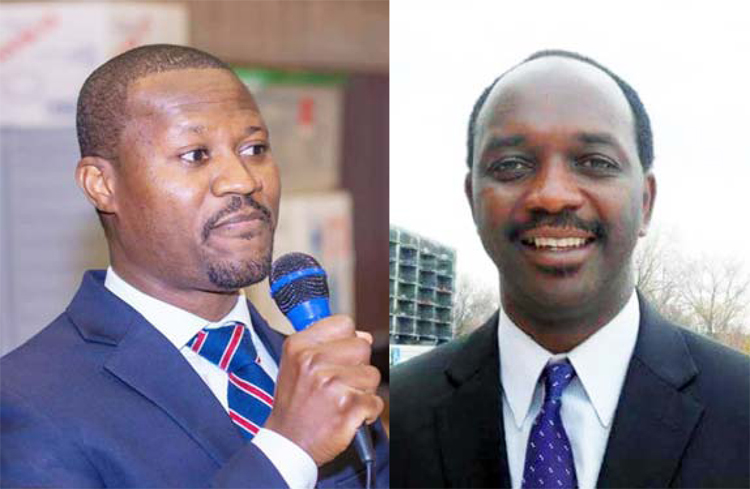
Henry McCabe (left) an auditor with the Minnesota Department of Revenue and originally from Liberia was found dead on Rush Lake in New Brighton on Monday, November 2. He had been missing since September 7. Less than 24 hours later, Henry Gichaba (right),a Kenyan-American psychologist at Metropolitan Health Services was found dead in his apartment in Robbinsdale.

Kenyans and Liberians in Minnesota are in a state of shock after bodies of two members of their communities that share a first name were discovered within 24 hours of each other.

32-year-old Henry McCabe’s body was found Monday on Rush Lake in New Brighton at 4:20pm. He was originally from Liberia and resided in the City of Moundsview with his wife Kareen and their two daughters ages 10 and 2. He was last seen on September 7 in the City of Fridley, about 6 miles from where his body was found on Monday.

He was an auditor with the Minnesota Department of Revenue.

Members of the community have conducted numerous searches since he went missing.

Moundsview Police Chief, Tom Kinney, was quoted Monday as saying McCabe’s death “does not appear to be suspicious,” but that the cause of death is undetermined “pending toxicology results.” He however said the investigation continues.

David Singleton, the chief executive of Minnesota Community Policing Services, has taken a different view and he was quoted in a Startribune story saying he thinks someone else was involved in McCabe’s death.

Less than 24 hours after McCabe’s body was discovered, a Kenyan, Henry Gichaba was found dead in his apartment in Robbinsdale, about 10 miles south of New Brighton.

Robbinsdale Police Chief Jim Franzen in a telephone interview told Mshale that a welfare check call from a concerned relative came in at 8:44am on Tuesday. Police then went to the property management office to get a key and that is when they found him. “There was nothing to suggest foul play,” Franzen said. The Chief said the Hennepin County Medical Examiner will determine the cause of death.

Gichaba moved to Minnesota four years ago from North Carolina after separating from his wife whom they had a two children with. He was a psychologist at Metropolitan Health Services in St. Paul.

His body was taken to the Hennepin County Medical Examiner who told Mshale they were not ready to release any further information yet other than the date of death, November 3.

Family members, still in shock, through a spokesperson Geoffrey Gichana, a cousin to Gichaba, said he developed a blood clot that might have led to his death. Earlier in the year he had broken a leg while playing basketball at a community event. “We don’t know if the two are related”, said Gichana.

The normally social Gichaba was not in contact with anyone all of Monday, which was unusual for him according to Gichana and attempts to reach him were unsuccessful prompting the extended family to call the police on Tuesday.

The family has setup a GoFundMe fundraising page to assist with funeral expenses at https://www.gofundme.com/h98g8zpg. One can also deposit contributions at a WellsFargo account number 3444272334.

A memorial fundraiser for Gichaba is planned for November 15 at the Kenyan Community Church located at 6625 Humboldt Ave N, Brooklyn Center, MN 55430. It will start at 4pm.

This story will be updated as facts warrant.

Related:

Why do many highly educated immigrants face underemployment?

0
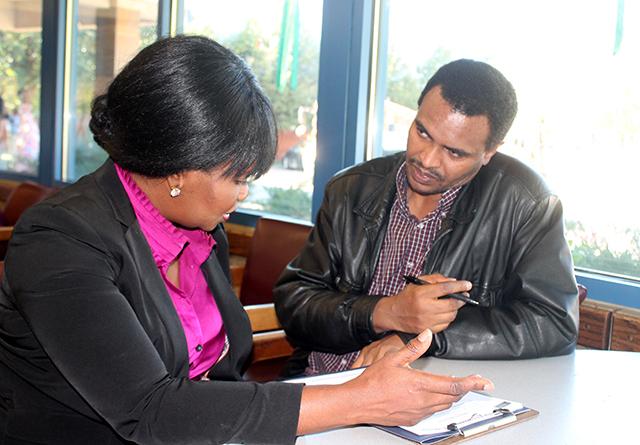
Roseline Shelstad, left, speaking with Zewdu Negash about job training and career opportunities in the Twin Cities. Photo: Ibrahim Hirsi/MinnPost

Earlier this month, Zewdu Negash sat in the lobby of a Minneapolis homeless shelter with a pile of credentials detailing a two-decade experience as a legal professional in Ethiopia.

The résumés showed that Negash has indeed been a well-established legal expert: a prosecutor for the Ethiopian government, an attorney with several private institutions, a judge in Addis Ababa and a 1994 graduate of the Kiev State University in Ukraine, where he earned an international public law degree.

When Negash moved to Minnesota in February, however, he could only secure a food-packing job at LSG Sky Chefs, earning $9 an hour to sustain his family, which has been living in the Sharing and Caring Hands homeless shelter in north Minneapolis.

“I have to work for my family,” he said softly, as his 6-month-old twin sons and 3-year-old daughter tightly clung to him. “I am supposed to leave this shelter in a few months and find my own place.”

For more than seven months now, Negash, 45, has been calling and sending emails to local governmental and nonprofit legal organizations seeking employment — to no avail.

Negash is hardly alone in his struggle to find employment in his chosen profession. More than 1.3 million U.S. immigrants who attained higher degrees from universities in their native countries are unemployed or underemployed, often working as cab drivers, cleaners or security guards, according to a report by the Migration Policy Institute, a think tank based in Washington D.C.

The report also found that the recovery of such immigrants’ occupational status depends on a host of factors, but that “overall, college-educated immigrants from Africa and Latin America have less success in finding skilled jobs in the United States than do immigrants from Asia and Europe,” the study noted. “Highly skilled immigrants with U.S. college degrees or U.S. work experience prior to permanent settlement fared far better than their peers with foreign-obtained degrees or no U.S. work experience.”

In Minnesota, according to census data, a higher percentage of foreign-born Minnesotans (15 percent) have attained a master’s or professional degree than non-immigrants (10 percent). Yet Bruce Corrie, an economics professor at Concordia University in St. Paul, said he knows many highly educated immigrants who are unable to make use of their credentials in the Twin Cities. Some of them eventually go back to school to relearn or polish their skills. But many others are forced to reinvent themselves, he said, and are now pursuing different professions.

In fact, Nasser Mussa, a program specialist at the Cedar Riverside Adult Education Collaborative, said his organization receives at least 50 college-educated immigrants and refugees each month. “We’re talking about people who managed giant corporations in their countries, engineers, math teachers,” Mussa said of the clients, many of them from Afghanistan, Somalia and Ethiopia.

For some, the biggest hurdle isn’t a mystery: the ability to speak English proficiently. Marisa Hernandez, a business training program coordinator at the Minneapolis-basedLatino Economic Development Center, often works with former teachers and nurses from Central America who are now stuck in low-paying jobs. “The issue for these immigrants is usually language,” Hernandez explained. “Many are highly skilled, but they don’t speak English.”

But other issues are less obvious, says Roseline Shelstad, a program coordinator at the Bloomington-based African Workforce & Entrepreneurial Development (AWED), which often works with immigrants whose degrees and credentials aren’t often recognized in the United States.

“We give them different career training,” said Liberian-born Shelstad, who has lived in Minnesota for more than 20 years. “But having soft skills is usually the biggest issue for the new immigrants.”

“It’s a cultural thing,” she added. “It’s just the way people were brought up. A lot of us were brought up not to look people in the eye when talking to them. But in the American work setting, you’re not qualified if you don’t show confidence, which is partly looking people in the eye in communications.”

Negash is among those now enrolled in AWED’s 18-month training program, which partners with local companies to provide job seekers the tools they need to succeed in the work force, and he hopes to eventually continue in the legal profession.

“I’m hoping to find somebody who could help me navigate the educational system,” he said. “Information is very important. All I have been trying to do these months was to find people.”

Minnesotan takes over as U.S. Army Africa Deputy Commanding General

0
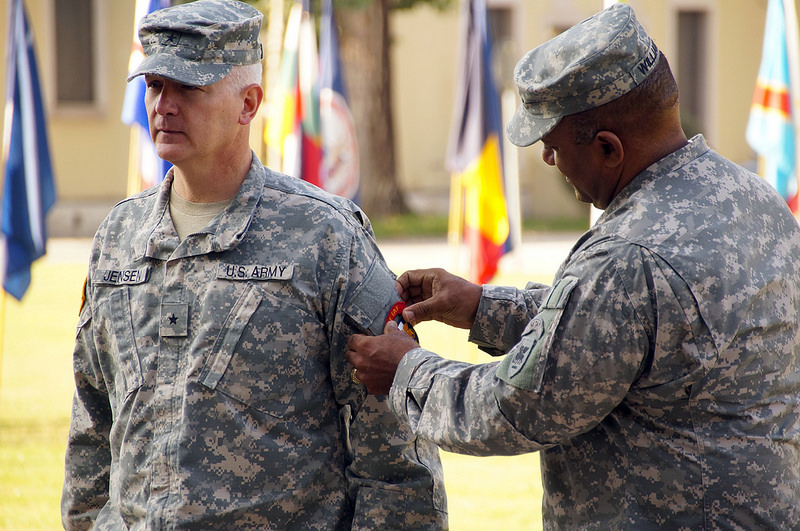
Maj. Gen. Darryl A. Williams U.S. Army Africa/Southern European Task Force commander (right), places the U.S. Army Africa patch on Brig. Gen. Jon A. Jensen, Director of the Joint Staff for the Minnesota National Guard during a patch ceremony at Caserma Ederle, Oct. 23, Vicenza, Italy. Jensen takes over as a deputy commanding general for U.S. Army Africa and the Southern European Task Force. He will still maintain his position at the Minnesota National Guard. Photo: Mike Whetston/U.S. Army Africa
Maj. Gen. Darryl A. Williams U.S. Army Africa/Southern European Task Force commander (right), places the U.S. Army Africa patch on Brig. Gen. Jon A. Jensen, Director of the Joint Staff for the Minnesota National Guard during a patch ceremony at Caserma Ederle, Oct. 23, Vicenza, Italy.  Jensen takes over as a deputy commanding general for U.S. Army Africa and the Southern European Task Force. He will still maintain his position at the Minnesota National Guard. Photo:  Mike Whetston/U.S. Army Africa
Maj. Gen. Darryl A.
Williams U.S. Army Africa/Southern European Task Force commander (right), places the U.S. Army Africa patch on Brig. Gen. Jon A. Jensen, Director of the Joint Staff for the Minnesota National Guard during a patch ceremony at Caserma Ederle, Oct. 23, Vicenza, Italy. Jensen takes over as a deputy commanding general for U.S. Army Africa and the Southern European Task Force. He will still maintain his position at the Minnesota National Guard. Photo: Mike Whetston/U.S. Army Africa

An Apple Valley Minnesota resident, Brigadier General Jon Jensen, has taken over an additional role as the Deputy Commanding General for U.S. Army Africa. Jensen is the Director of the Joint Staff for the Minnesota National Guard and will continue in that role in addition to his new responsibilities at U.S. Army Africa.

U.S. Army Africa, also known as the Ninth U.S. Army is based in Vicenza, Italy. It states as its mission as “employ(ing)  Army forces as partners, builds sustainable capacity, and supports the joint force in order to disrupt transnational threats and promote regional stability in Africa,” and its vision as “a trusted and respected partner, achieving long-term strategic effects in Africa.”

Some of the publicly available information on activities that U.S. Army Africa has been involved in include In July 1994 when it deployed to Entebbe, Uganda as the core staff of Joint Task Force Support Hope. According to records available, a total of 2,100 U. S. military personnel, including SETAF’s 3rd Battalion (Airborne), 325th Infantry Regiment, deployed to the region in what  Pentagon records describe as “help(ing) prevent a humanitarian crisis resulting from large-scale refugee movements caused by the civil war in Rwanda.”

On July 25, 2003, it led the US military mission in Liberia to help prevent an impending humanitarian disaster.

In 2008 U.S. Army Africa officially assumed duties as the Army component headquarters for the controversial U.S. Africa Command commonly, known as AfriCom.

A release from the Minnesota National Guard said Jensen will help advance U.S. strategic efforts and partnerships in Africa. He will split his time between his duties at the Minnesota National Guard and U.S. Army Africa headquarters in Italy. He holds a Bachelor of Science in finance/business economics from Northwest Missouri State University, a Master of Military Arts and Sciences from the Command and General Staff College and a Master of Strategic Studies from the United States Army War College. Jensen has previously deployed in support of Operation Desert Spring, Operation Joint Forge and Operation Iraqi Freedom. He earned his commission in 1989 from the U.S. Army Officer Candidate School at Fort Benning, Georgia. He served in a variety of positions in both the Minnesota and Iowa National Guard throughout his career, including as commander of the 1st Armored Brigade Combat Team.

In a statement, Jensen said “I am honored to be a part of this joint force and participate in the U.S. Army Africa and the Southern European Task Force tradition of partnering with other nations to achieve stability. About one in five immigrants in Minnesota is African, and I am especially looking forward to making meaningful local connections that will help U.S. Army Africa continue to assist our military and civilian partners throughout the continent.”

The National Guard was one of the main sponsors of the 5th African Awards Gala presented by Mshale held earlier this month.

Kenya Embassy warning to its nationals in the US

0
Kenya university graduates at a commencement ceremony. Photo: Courtesy of Business Daily Africa

The Kenya Embassy in Washington this morning issued a reminder to its nationals living in the United States about the impending expiration of a one month amnesty extended for those in the diaspora by that country’s Higher Education Loans Board. The amnesty expires in four days, the release said.

HELB, as it is known, is a state corporation that finances higher education in Kenya. In September, HELB announced that it is in pursuit of 74,500 that have defaulted on their loans amounting to US$88 million.

Some of the defaulters, who tend to be highly educated, have since left the country for other opportunities in places such as the United States.

HELB CEO, Charles Ringera, said as part of the amnesty, the Kenyan diaspora in the United States can have 80% of the penalty waived. Mr. Ringera said it was important that HELB ramp up loan repayments so it can finance more students for higher education.

Kenyans in the diaspora failing to service their HELB loans have the following consequences awaiting them:

1.) Their names will be forwarded to the Kenya Credit Reference Bureau (CRB)

If one’s name ends up on the CRB as a result of a HELB loan default, they will not be able to

2.) Access Kenya bank loans

3.) Apply for Kenya government jobs or contracts.

4.) Cannot run for political office

One will need to get a clearance certificate from HELB in order to have their name removed as a defaulter and access the benefits mentioned above.

Anyone in the Kenyan diaspora with an outstanding loan that is not being serviced should visit www.helb.co.ke.

Click on Loan Repayment. Fill out the form and email it to [email protected]

African diaspora shines at the African Awards Gala

0
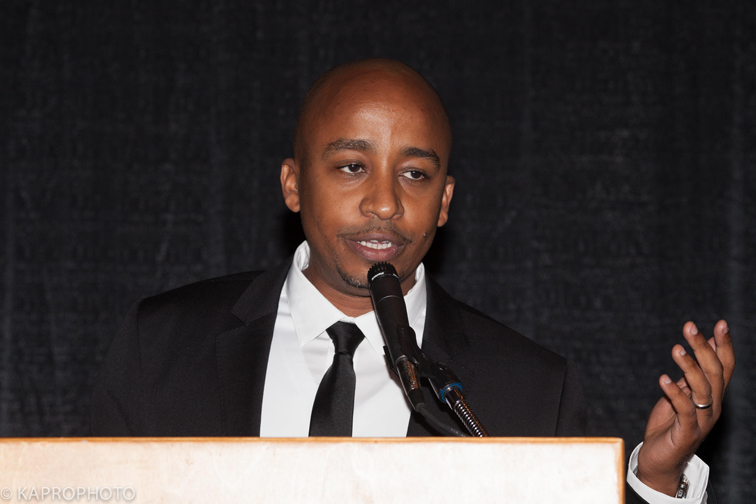
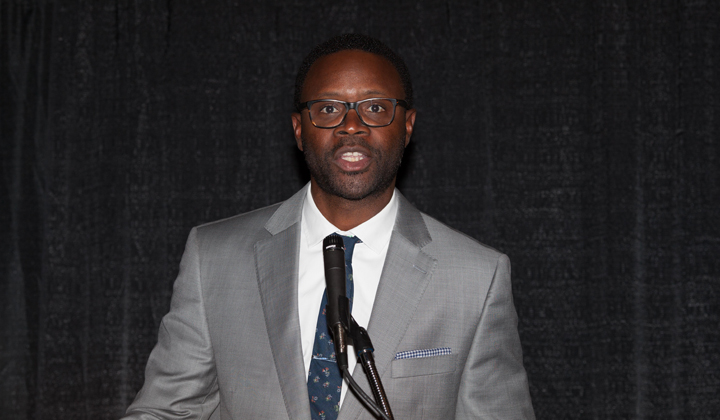
David Kobia, co-founder of Ushaidi and MIT Humanitarian of the Year speaking at the 5th African Awards Gala presented by Mshale Newspaper at the Minneapolis Convention Center where he was the keynote speaker on Saturday, October 10 2015. Visit the Media Gallery for photos from the event. Photo: Mamadou Moustapha Ka for Mshale

African Awards Gala & Red Carpet Photo Gallery: GO HERE.

David Kobia, co-founder of Ushaidi and MIT Humanitarian of the Year speaking at the 5th African Awards Gala presented by Mshale Newspaper at the Minneapolis Convention Center where he was the keynote speaker on Saturday, October 10 2015. Visit the Media Gallery for photos from the event. Photo: Mamadou Moustapha Ka for Mshale

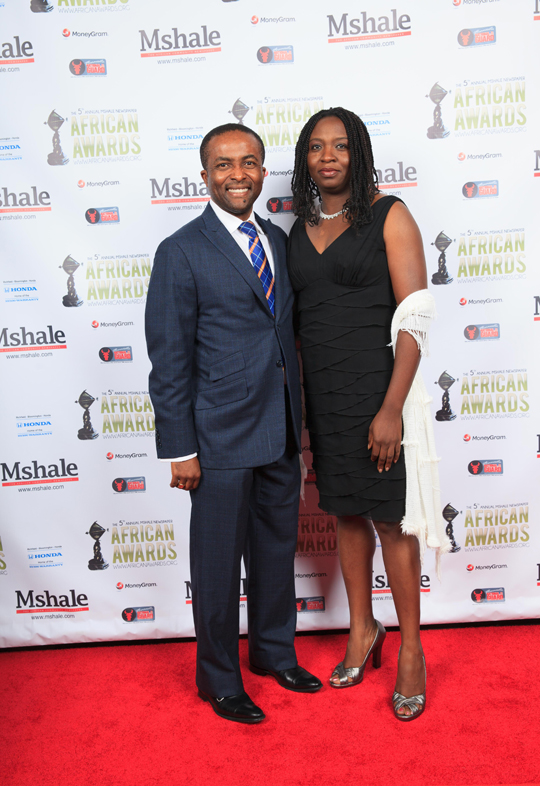
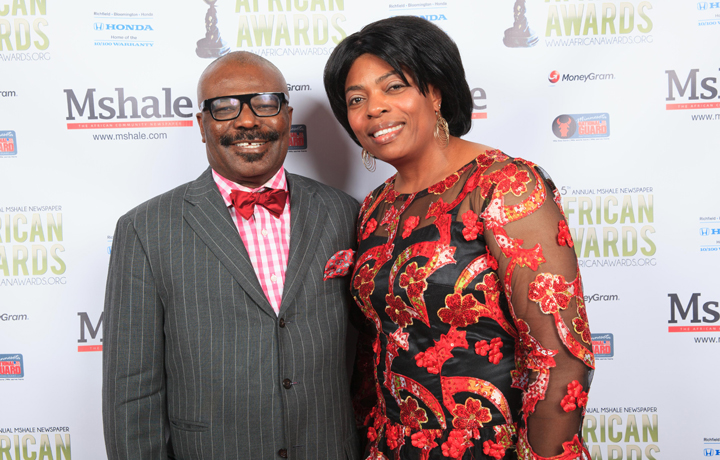
MINNEAPOLIS – Ask me to describe the African Awards in one word? Inspiring. No other word comes close to describing the atmosphere, the awards, the attendees or all the outstanding nominees for this year’s 5th Annual African Awards hosted at the Minneapolis Convention Center. This past Saturday after the votes were counted and seats numbered, About 200 people convened for a gala event celebrating the successes of African immigrants in the Diaspora. But more than a celebration of past successes, it was a glimpse into the future for Africans who now find themselves making new lives in the U.S.

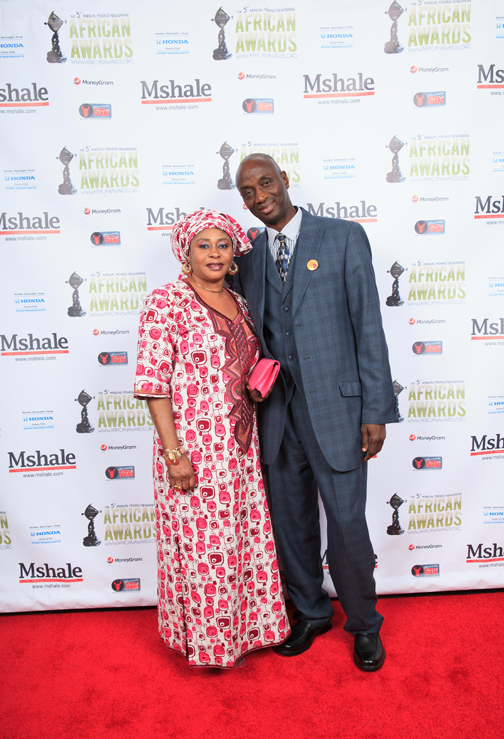
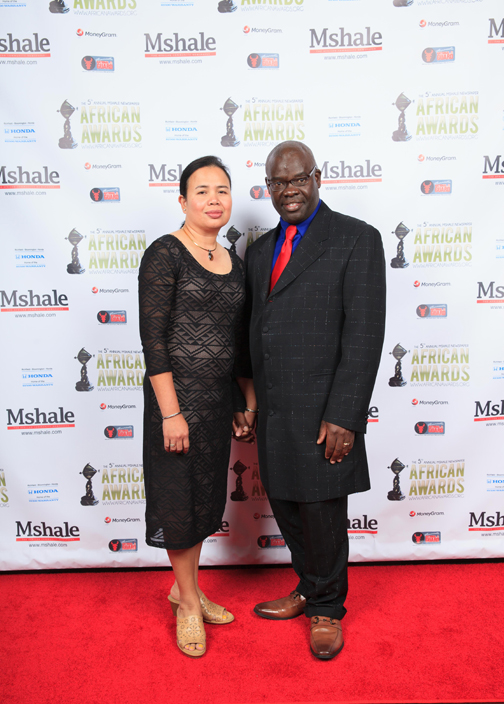
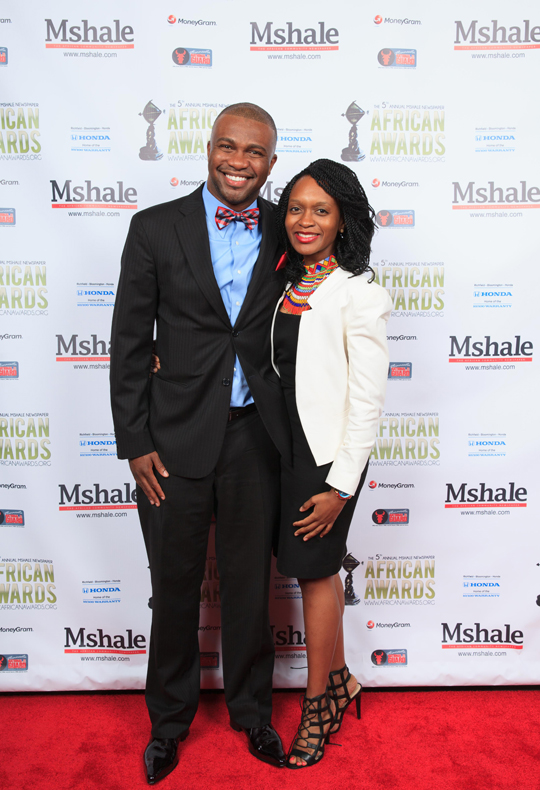
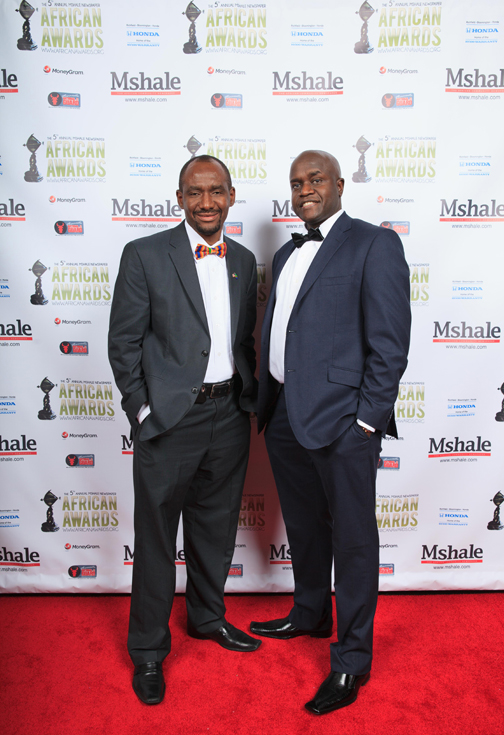
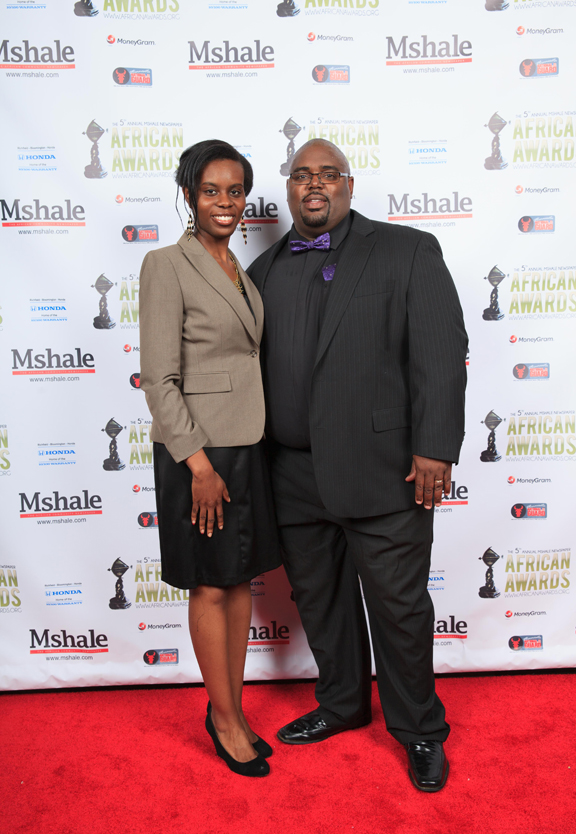
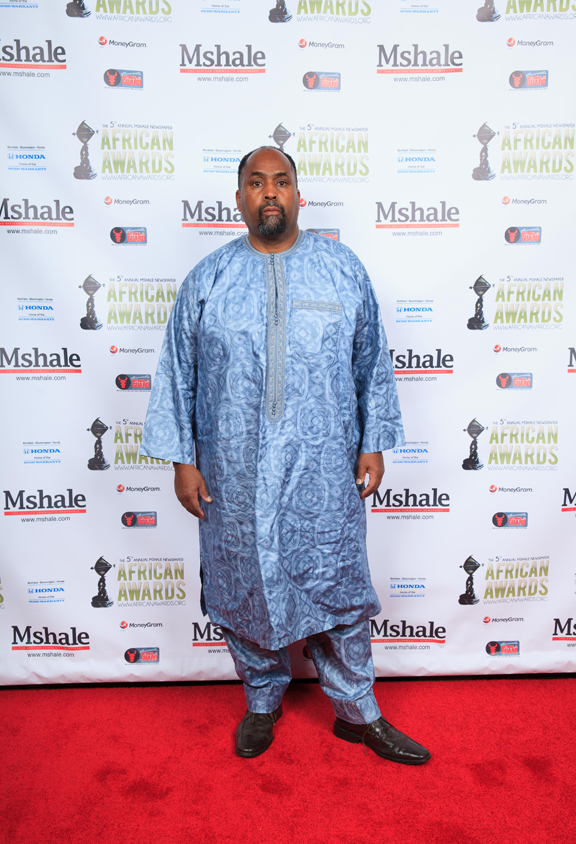
Among the attendees were Africans whose birth countries spanned the continent, local African businesses and organizations, and community partners from all walks of life. The stellar ceremony opened with a generous 2 hour red carpet event that allowed attendees and nominees to get a take home souvenir showing off their Sunday best. In true African style, both attendees and nominees for the Awards were dressed to the nines, with no fabric or color left out of the menagerie. Short lines and plenty of outfits to show off meant that the red carpet photos were a hit, both before and after the Awards ceremony. Overhead, African beats rang out from the DJ’s who provided the perfect accompaniment to the celebration of all things African.

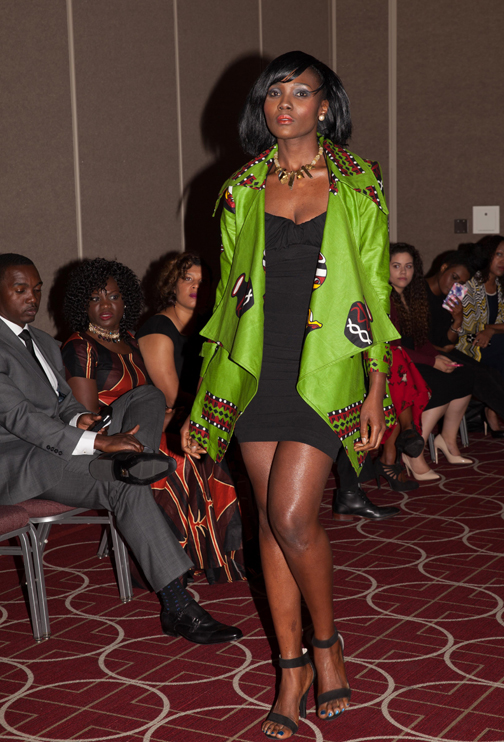
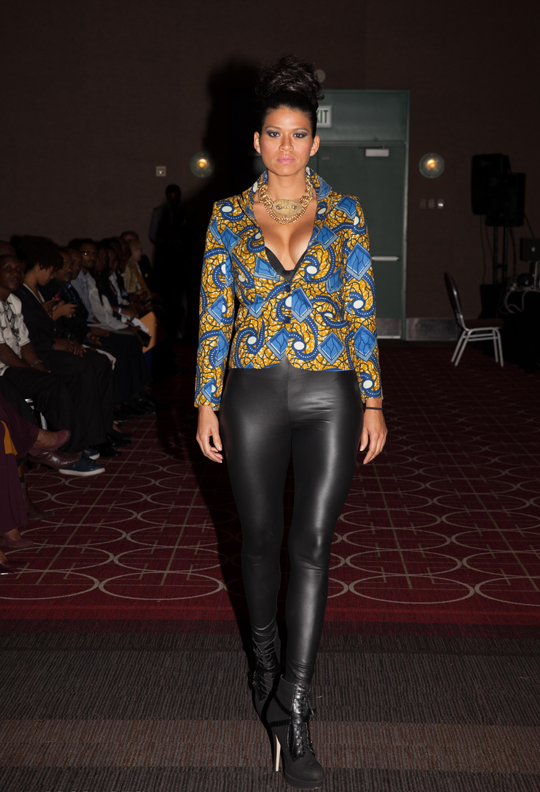
Meanwhile, Tom Gitaa, Mshale founder and organizer of the African Awards was a busy man. Dressed in a sleek black suit and accompanied by his equally well dressed fianceé, Gitaa was swamped all night shaking hands and ensuring the whole operation went smoothly. Elsewhere, judges mingled with the nominees and nominees mingled with their families, barely containing their excitement. Shortly after 7:30 pm guests were invited for the first event of the ceremonies, a fashion show by Dahil Republic of Couture’s Hilda Mauya who was freshly returned from New York City’s Fashion Week. Mauya, like many who would take to the stage later that evening, gave a nod to Gitaa who she said “Gave me my first show. He believed in me when no one else did.”

As Mauya’s clothes took to the runway, they were greeted by flashing bulbs and open smiles and nods. Mauya’s take on African fabrics was elegant, modern, and sexy, as piece after piece was strutted on the runway. While I can’t speak for anyone else in the audience, I know the one thought that rang through my head as each model walked out was, “I want that!” The audience likewise seemed to eat up Mauya’s designs before sitting down for the more ‘formal’ aspects of the gala.
If it wasn’t clear already, it became very apparent that the evening would be a celebration of the African continent and its people as the keynote speaker, David Kobia, took the stage. Kobia to say the least is a life-saver and MIT Humanitarian of the Year Awardee among a long list of accomplishments. His Ushahidi crisis-mapping platform originating in the aftermath of Kenya’s 2007 post-election violence has literally been saving lives since it launched. Whether in the aftermath of Haiti’s 2010 earthquake, Japan’s 2011 Fukushima nuclear disaster, earthquakes in Chile or floods in Australia, Kobia’s platform has been a lifeline for people trapped in the aftermath of a disaster by allowing them to map their location and needs.
Speaking with Atlanta-based Kobia before he took to the stage I asked him how he felt about being the keynote speaker for the Awards. Kobia stated, “It’s always a little pressure, but it’s great, it’s an honor to be here and just being around these folks is great.” In his address, Kobia highlighted his own journey to America and spoke to the difficulties that Africans in the diaspora face as they “struggle with a cultural duality.” He added, “I do to. Sometimes, you have to own it. Bridging multiple cultures gives us perspective and drive.” Kobia also spoke to the unique role that Africans in the diaspora must play, “It is our responsibility to dispel the myths of Africa,” while highlighting the successes of other African immigrants to the U.S such as the writers Chimamanda Ngozi Adichie and Ngugi Wa Thiong’o.

For Kobia though, Africans in the diaspora have a responsibility not only to the image of Africans in the West, but also their continent, stating, “Our engagement shouldn’t be limited to just remittances. There are problems to be solved.” Speaking to Kobia before his address he told me about his current projects noting that he was working on creating a “Silicone Savannah” that would turn Nairobi into a tech-hub. Kobia, like the African Awards, has a grand vision that tells the world that Africans are “Not just the recipients of aid. We actually develop and build stuff.” On whether he had any words of advice for young up and coming African programmers, Kobia had this to say, “It’s the right space, especially for Africans. There are more than enough problems to solve. I welcome anybody to come back to Africa and help with solving these problems.”

Following Kobia’s speech, dinner was served and then it was time for the stars of the show to shine during the awards ceremony. Godson Sowah, the judge panel chair, accompanied by the other two judges (Fatima Mohamed and Leon Rodrigues) presented all the awards to the winners, with all nominees receiving a certificate of recognition. When I asked Sowah to sum up the nominees in a few words, he had had this to say, “These are the giants on whom most people will stand on one day. These are a clear group of people that showcase that we’re going somewhere despite all the challenges Africa has.”

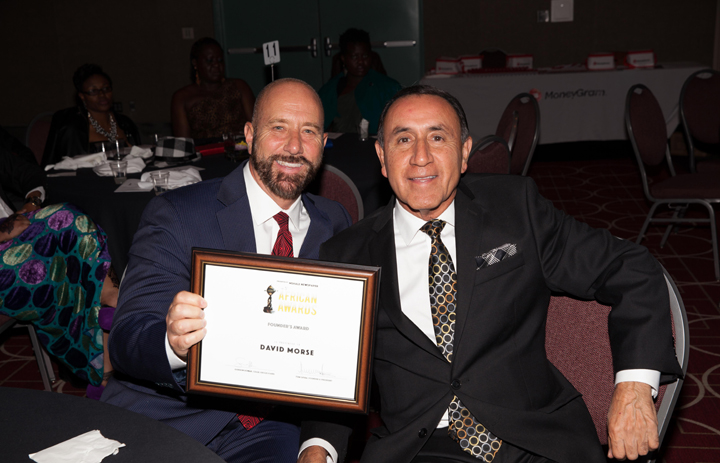
The giants took the stage for each of the seven award categories, delivering humbling and moving speeches to the eager crowd. The winners talked about community engagement, pride, and for some, the role of their parents and families in pushing them to their achievements. David Morse of New American Dimensions, who received the Founder’s Award talked about the market research study his company had conducted on African immigrants (the first of its kind) and the impact it had on him, “My life has been changed after these focus groups. The prognosis for the U.S is pretty good given the quality of African immigrants to the U.S.”

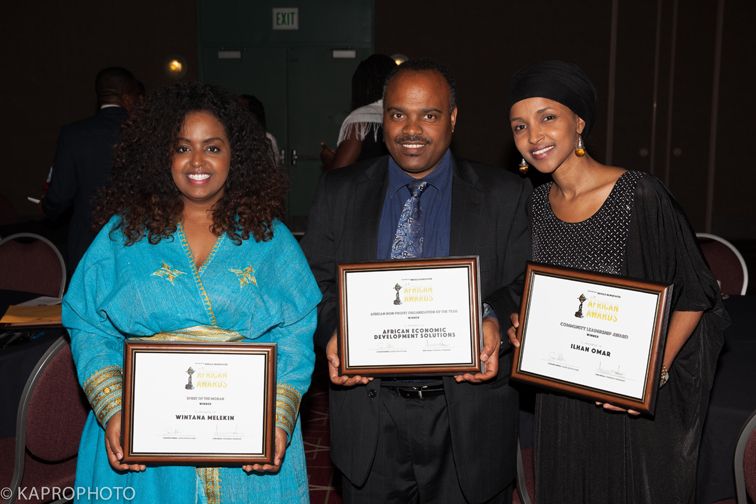
Eritrean Wintana Melekin who received the Spirit of the Moran Award gave thanks to her parents who “encouraged her to take risks.” Attorney Paschal Nwokocha recipient of the Business of the Year Award noted that his involvement in the community was the reason for his nomination but that he was more interested in “building capacity” among immigrants, not only through the immigration services his office provides, but also “within the law community.” Student of the Year, Charlen Nyangaresi spoke of her desire to engage the diaspora community and “going back and giving back.” Ilhan Omar, who received the Community Leadership Award, took the opportunity to announce her candidacy for District 60B which covers the West Bank, Seward, Prospect Park, Marcy Holmes, Dinkytown and Como neighborhoods. Omar, who if elected, would be the first African born woman (or man) ever to be elected to such an office noted that she was “changing the narrative of what it truly means to be American.”

As the event came to an end, there was the remarkable feeling of a community engaged in changing the world around them and challenging themselves to grow. Speaking with Sowah, the panel judge chair, after the event I asked him what the African Awards meant to him. Sowah had this to say, “Africa has a lot of unique voices and they’re very distinguished, very clear, they have this timbre to it and wherever we go you can hear us. Unfortunately that voice has gotten silenced for a very long time. Every once in a while, something comes up that allows these voices to shine, to flourish. That one example is these awards.”

African Award Winners

Community Leadership: Ilhan Omar

Non-profit of the Year: African Economic Development Solutions

Friend of the Community:  Richard Wagner

Business of the Year: Paschal Nwokocha, Paschal Nwokocha Law Offices

Spirit of the Moran: Wintana Melekin

Founder’s Award: David Morse, New American Dimensions

A Day with the Champions: Kenyan winners of New York, London and Berlin Marathons to hold Clinic in Minnesota on November 7 and 8

0
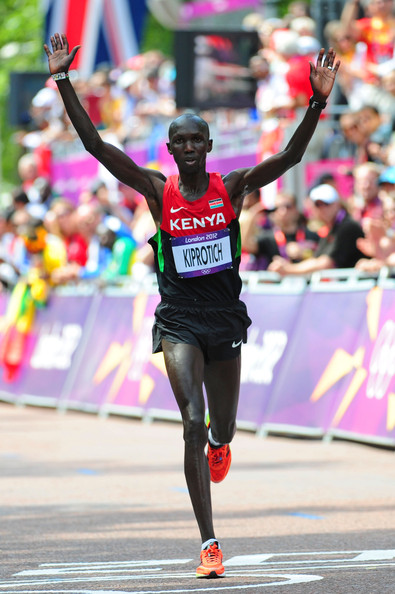
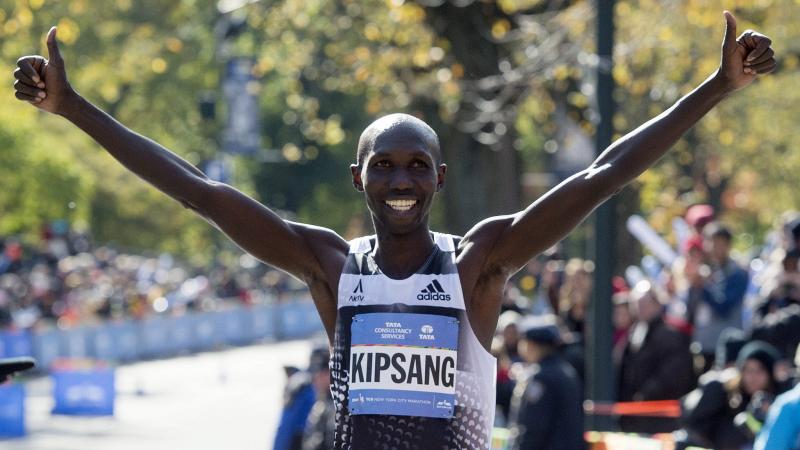
2014 New York Marathon winner, Wilson Kipsang, will hold a running clinic in Minnesota with fellow Kenyan Abel Kirui, two time World Marathon on November 7 and 8 2014, a few days after he runs the 2015 New York Marathon on November 1. The clinic is being hosted by Minneapolis based Warriors Edge Athletics Photo: Courtesy of Warriors Edge Athletics
2014 New York Marathon winner, Wilson Kipsang, will hold a running clinic in Minnesota with fellow Kenyan Abel Kirui, two time World Marathon on November 7 and 8 2014, a few days after he runs the 2015 New York Marathon on November 1. The clinic is being hosted by Minneapolis based Warriors Edge Athletics Photo: Courtesy of  Warriors Edge Athletics
2014 New York Marathon winner, Wilson Kipsang, will hold a running clinic in Minnesota with fellow Kenyan Abel Kirui, two time World Marathon on November 7 and 8 2014, a few days after he runs the 2015 New York Marathon on November 1. The clinic is being hosted by Minneapolis based Warriors Edge Athletics Photo: Courtesy of Warriors Edge Athletics
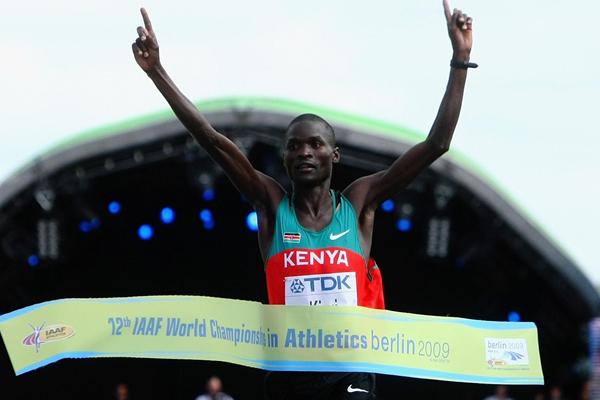
Two time World Marathon Champion, Abel Kirui will hold a running clinic in Minnesota with fellow Kenyan Wilson Kipsang,  winner of the New York, Berlin and London Marathons on November 7 and 8 2014, a few days after Kipsang runs the 2015 New York Marathon on November 1. The clinic is being hosted by Minneapolis based Warriors Edge Athletics Photo: Courtesy of  Warriors Edge Athletics
Two time World Marathon Champion, Abel Kirui will hold a running clinic in Minnesota with fellow Kenyan Wilson Kipsang, winner of the New York, Berlin and London Marathons on November 7 and 8 2014, a few days after Kipsang runs the 2015 New York Marathon on November 1. The clinic is being hosted by Minneapolis based Warriors Edge Athletics Photo: Courtesy of Warriors Edge Athletics

For two mornings in November runners and aspiring world record holders will get a chance to train with Kenyan world champion runners, Wilson Kipsang and Abel Kirui. The event, billed as A Day With the Champions, is being put on by Minneapolis based Warriors Edge Athletics. An organization that “creates unique events by bringing professional athletes to clinics where the attendees can hang out and workout with the pros.” Events will take place on Saturday November 7th and Sunday November 8th beginning at 7 am with an exclusive morning 5 mile run with Wilson Kipsang & Abel Kirui. How exclusive is the morning run? Only the first 60 registrants will get a chance to run with the well decorated long-distance runners.

Warriors Edge however, promises a full day of handy tips and informative sessions with both Kipsang and Kirui along with Coach Dennis Barker of Team USA Minnesota; a Distance Training Center formed in 2001 that trains athletes “in distances ranging from the 800/1500 meters up through the marathon.” Along with the exclusive morning run, there will be cadence drills, running from critique, a gym work out and two sessions led by each Kipsang and Kirui. Each day will close with another exclusive event; a social hour and meet greet open to the lucky first 60 registrants.

Wilson Kipsang is a 2012 bronze medal Olympian who broke a marathon world record during his 2013 Berlin Marathon run with a  2:03:23 time. He also won the 2014 New York Marathon. Kipsang will be sharing that special moment with attendees during a session titled ‘What it Feels like to Break the World Record’.  Abel Kirui is a 2012 silver medal Olympian who also won the World Championships Marathon in 2009 and 2011. Kirui also won the 2008 Vienna Marathon and will be sharing his training tips in a session titled ‘My Training Methodology & How I Stay on Top.’ If you’re serious about running or fitness be sure not to miss this once in a lifetime event to train with the winners!

Tickets are still available. Click here for details on tickets, parking, location, and access.


Does Obama’s DACA Make You More Dateable?

0
Does Obama's DACA Make You More Dateable?

DACALONG BEACH, Calif.- Two years ago, everything seemed to fall into place for Chando Kem, from his mental state to his work and love life.

That was when the Long Beach resident applied for and received Deferred Action for Childhood Arrivals (DACA), a program that grants certain undocumented youth temporary relief from deportation, a social security number, and a permit to work.

“Now I’m not afraid to walk anywhere,” said the native of Cambodia who has lived most of his life undocumented.

Kem may only be 21, but he has been through a lot.

He’s worked under the table and been robbed of overtime pay due to him. Without an I.D., he’s missed out on memories with friends at clubs. Without a license, he has had to pick up his dates on the bus, sometimes being late. Deportation was always at the back of his mind.

“My whole life got better,” said Kem, laughing, after he qualified for the program in February 2013. “Mentally, I feel more relief and more legitimate. I’m not going to be deported.”

Since it was launched by President Obama in 2012, DACA has benefitted the lives of over 680,000 people like Kem so far, according to U.S. Citizenship and Immigration Services data.

Besides a healthier state of mind, Kem now has a better-paying job as an outreach ambassador for Long Beach City College.

“Prior to that, I felt like I was stuck in limbo, not being able to grow,” said Kem, who worked only under the table jobs before.

Kem used to work as a wedding server at a Long Beach restaurant, juggling school part-time. He often served during breaks and was not paid the overtime hours he performed. “It was rough because I worked from 6 PM to 3 AM. We were always understaffed. Yeah, it was tiring,” Kem recalled.

He estimates the employer robbed him of “a few thousand” dollars in overtime.

Now that he has a work permit through DACA, Kem was able to find a job that he loves. “This job is awesome. They work with my schedule. They respect my time,” said Kem, who provides college resources to high school students. “I want to reach the undocumented kids that feel shy,” he said.

Free from deportation, and with a better job, dates on the bus are also no more: Kem has a driver’s license, and it does not have the distinguishing mark that AB 60 licenses have. Some immigrants feared that the mark, which states “Federal Limits Apply,” may lead to profiling.

“I can commute wherever I want, whenever I want,” said Kem, who doesn’t bug his friends for rides anymore.

He was often late to dates, especially when he missed the bus. His dates would ask him why he couldn’t drive. “Prior to DACA, I felt a stigma,” said Kem. “Especially when you’re in the dating stage, I don’t really tell people, ‘Hey, I’m undocumented.’”

It’s the same stigma that keeps many Asian-Pacific Islander (API) youth from applying to DACA, Kem says.

Only 21 percent of eligible Asians have applied for DACA, compared to 77 percent of Latinos, according to a report by the Migration Policy Institute that looks at immigrants from the top four counties in Asia and the top 12 countries in Latin America.

“We’re culturally more reserved and more timid to talk about undocumented status,” Kem explained. “Culturally, it’s [seen as] a shameful thing to come here illegally.”

The Migration Policy Institute estimates there are 152,000 Asian immigrants who are eligible for DACA, the largest concentration of them in California.

Kem was a Dream Summer intern this past season, where he worked to educate people in API communities about DACA. He discovered that many did not know what DACA was.

Asian Americans need to join the immigration movement to diversify it, Kem said, perform more outreach, and gain as strong a media presence on the issue of immigration as Latinos have. “That really brings power to the Latino voice,” Kem said.

“Stigma is silencing,” Kem said. “The more you talk about it, the more you kill stigma.”

For all its privileges, DACA does have its limits. It costs $465 to apply and also to renew, and beneficiaries can apply to travel outside the country only for humanitarian, educational, or job-related reasons. The last time Kem was in his Cambodian hometown of Phnom Penh was when he was seven.

Since then, his mother, a business owner in Phnom Penh, has visited him in Long Beach sporadically throughout the years.

Yet many areas of Kem’s life have improved thanks to DACA. In particular, Kem’s dating life has gotten better. He recently picked up his girlfriend in his 2002 Toyota Solara for a date to Disneyland. He was on time.

“What are you waiting for?” Kem asks those who haven’t applied yet. “Opportunity [comes] to you,” he says, when you are able to get a social security number, a work permit, or an unmarked driver’s license. “It’s a tremendous change to your life.”

This profile was produced for New America Media in collaboration with Ready California (Ready-California.org), a statewide coalition working to ensure that the maximum number of eligible Californians benefit from DACA and DAPA. For more information about how to apply for DACA, go to: www.ilrc.org/daca.

5th African Awards Gala and Red Carpet Event

0
5th African Awards Gala and Red Carpet Event

Full story on the 5th African Awards Gala and Red Carpet event.

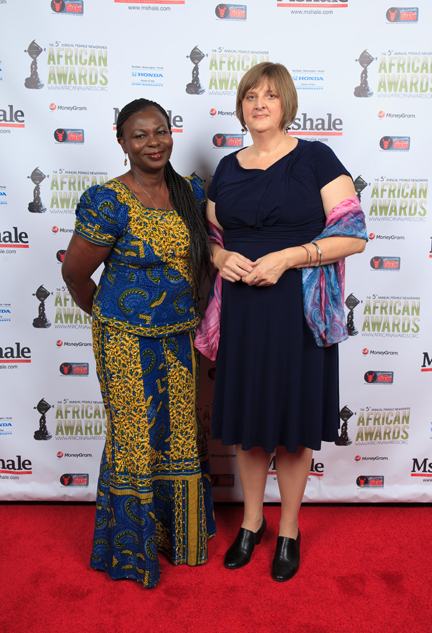
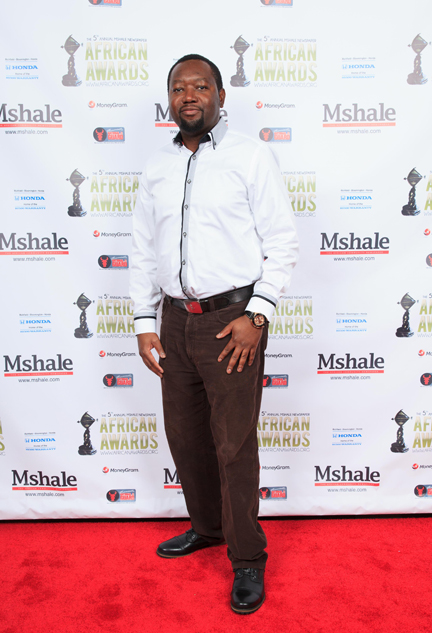
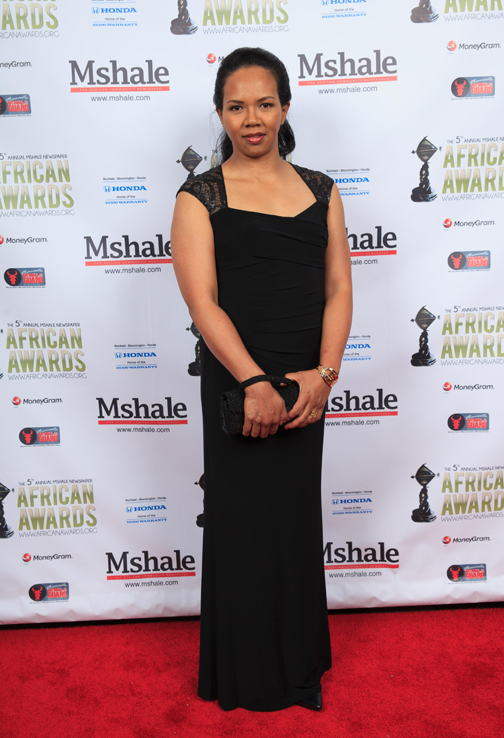
Mshale photographer Mamadou Moustapha Ka was on hand to capture images of the Mshale Newspaper produced 5th African Awards Gala and Red Carpet event. It was keynoted by David Kobia, Co-Founder of Ushaidi and MIT Humanitarian of the Year.