Home Blog Page 135

Hugh Masekela and Vusi Mahlasela sing freedom in tribute to anti-apartheid freedom fighters

0
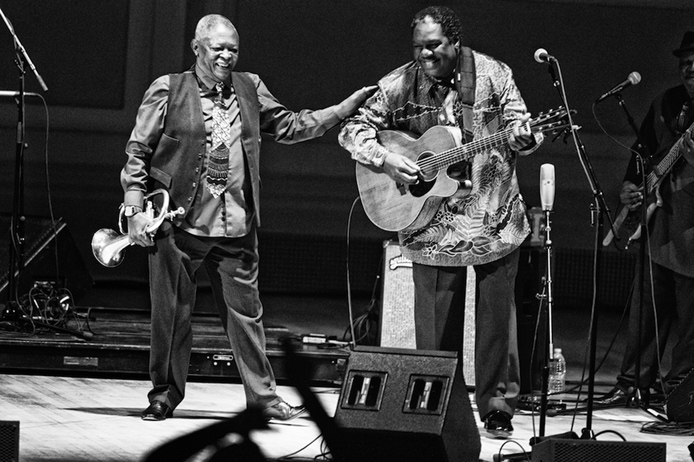
Hugh Masekela and Vusi Mahlasela perform at Carnegie Hall last Fall as part of the 20 Years of Freedom tour. The tour made a stop at the Ordway Center's new concert hall in Saint Paul on Saturday, March 7, 2015 and Mshale's Kari Mugo was there to review the show. Photo: Courtesy of Hugh Masekela
Hugh Masekela and Vusi Mahlasela perform at Carnegie Hall last Fall as part of the 20 Years of Freedom tour. The tour made a stop at the Ordway Center’s new concert hall in Saint Paul on Saturday, March 7, 2015 and Mshale’s Kari Mugo was there to review the show. Photo: Courtesy of Hugh Masekela

It goes without saying that Hugh Masekela and Vusi Mahlasela delivered an outstanding performance as part of the Ordway’s celebration of its new concert hall, dubbed ‘Rock the Ordway’. We would expect nothing less from the two individually, but as a duo they are quite simply exhilarating; complementing each other in that way great partnerships do. But even before Mahlasela had uttered a single tone, or Masekela had given breath to his trumpet, the show had began much earlier in a stroll through Rice Park and into the renovated Ordway Center for the Performing Arts.

St. Paul does not get all the love it should, and that’s not because it’s lacking but because it’s got a rowdier bigger sister who hoards all the attention- Minneapolis. So whenever I find myself in downtown St. Paul, it’s a pleasant remembrance of just how charming the city is. The Ordway’s guest entrance sits facing Rice Park, which is surrounded on all four sides by old world architectural charm. The real treat though is the thousands of lights that drape the trees in the winter and are a beautiful sight both from outside and inside the large glass windows occupying the front wall of the Ordway. As we walked into the foyer, there was buzzing energy and plenty of attendants on hand, as people milled around for the two scheduled performances for the night.

With tickets on the second floor of the brand new hall, we had an impressive view of the stage and its signature rolling wood ceiling. The ceiling designed to amplify sound was complemented by upholstered audience seats, and unassuming white walls, giving the hall a light, clean, and open feel. I can also happily report that there indeed is no bad seat to be found. With each seat no more than 100ft from the main stage, and an acoustician employed in the designing process, the space was created with utmost consideration for the guest experience.

As the crowd settled in for the show, Mahlasela appeared on stage with his guitar, opening the show with a song on the beauty of Africa’s land, sang in Zulu and Xhosa. He was soon joined on stage by Masekela, who was warmly received by the crowd, as the bigger of the two stars. The rest of the band poured out to take their positions- composed of all Africans and an impressionable mastery of their instruments that sounded as natural as Mahlasela and Masekela’s talents. The two artists dedicated the show to the “grandfathers of humanity who taught forgiveness” such as Desmond Tutu, Nelson Mandela and Mahatma Ghandi, as they talked about the 20 + years since the end of apartheid.

Setting the tone for most of the night, they joked about their 20 Years of Freedom tour, which Masekela said felt more like “The Great Arctic Tour,” drawing laughter from the audience. Masekela and Mahlasela then embarked on a musical and storytelling journey through the depths of apartheid, and its political and creative oppression. In song and impassioned messages they spoke of the freedom fighters and ordinary citizens who had protested aparthaid, the heroes and dreams that were realized, and the continued commitment to ensure that “never again” would South Africa have a society in which others were oppressed by one group.

In song and instrument, Masekela and Mahlasela were dedicated performers, covering their hits as well as songs that had been part of the anti-apartheid struggle, and that spoke to issues that still faced Africans. Speaking to the dangers the mining industry still poses in “Stimela” (“Coal Train”), Masekela spoke in English about the trains carrying African laborers to backbreaking jobs in the mines. As the song drew to an end, Masekela who had mimicked the movement of a train with his body, released screeching like brakes and train whistles that signaled the trains movment and left chills on my arms.

He played his signature fluegelhorn and various instruments throughout the performance, while Mahlasela alternated between his guitar and his hearty voice that carried into every corner of the room. Mahlasela opened his song, “Sing Now Africa” with a reflection on Africa’s fate being decided by people outside of Africa and invited the audience to consider whether Africa should receive aid. His conclusion, “We deserve that aid because Africa has been given aid to others for centuries.” The song, telling Africans to rise up had lyrics in Kiswahili and proved why Mahlasela had earned the name “The Voice.”

The show was filled with jabbing phrases, jokes, and singalongs, and grooves that made you want to move. On stage, the two artists were not shy about moving to the music. In synchronized and solo dances, they entertained the crowd, with Masekela inspiring great whoops as he repeatedly twisted himself on stage. All around the hall, solo and duo dancers in the audience who could not resist the urge to move either, could be spotted. Sensing the energy in the room the two artists invited the audience to dance with them, moving everyone to their feet for the last 3 songs of the night. The mixed crowd gladly moved their bodies to the beat of the music, working up a sweat and demanding an encore when the artists left the stage, which they gladly provided.

The performance and the Ordway delivered beyond expectations and for this young African, it felt like an evening with a distant uncle and a grandfather who were in town visiting. From the song Ubuntu, this lyric sums it up, “I might be walking in a city called London, but the dust on my feet and the rhythm of my boots say Africa.”

African Awards Gala venue announced and Leon Rodrigues joins Judges panel

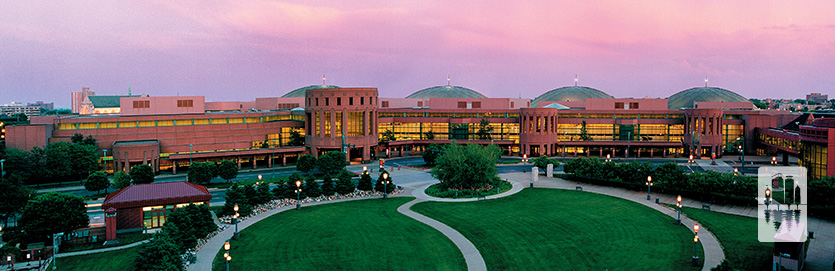
The African Awards Gala will be held at the Minneapolis Convention Center on Saturday, October 10 2015.

Mshale, organizer of the African Awards announced today that they have reached agreement with  the Minneapolis Convention Center to hold this year’s Awards gala at the venerated space on Saturday,  October 10.

This will be the fifth anniversary of the highly esteemed Awards which has seen attendance grow from  the original 150 when CNN personality of American Morning, Lola Ogunnaike, keynoted, to the 400 that attended the third edition three years ago when former White House Social Secretary, Desiree Rogers was the keynote. The fourth edition was held in conjunction with Books for Africa’s 25th anniversary gala. Mshale founder, Tom Gitaa, a former Books for Africa board president said at the time holding the African Awards in conjunction with Books for Africa’s gala was in deference to the revered organization. He was also the 25th anniversary BFA planning committee co-chair with Doris Pagelkopf, a retired United Way executive. Popular Ghanaian actor and winner of the 2012 African
Academy Movie Awards Best Actor, Majid Michel, keynoted the last African Awards.

The African Awards are designed to honor excellence and community service in the US African immigrant community. The public nominates honorees, who then are narrowed down to three per category in the seven eligible categories by a panel of judges. The public then votes for the eventual winner of each category.

“We have moved to a larger venue since we have sold out so far in previous years and this year being a milestone with five editions of the Awards, we expect heightened interest from the community especially once we reveal this year’s keynote speaker,” said Gitaa. “It will be hosted at the Minneapolis Convention Center to create a celebratory but equally formal atmosphere.”

Dahil Republic of Couture, which returns to  New York Fashion Week this year, will be the main feature of the fashion show at the 5th edition of the African Awards. The full entertainment lineup is still being finalized.

Judges Panel Complete

The all important Judges’ Panel for the African Awards is also complete. South African-born, Leon Rodrigues, Chief Diversity Officer for the Minnesota State Colleges and Universities (MNSCU) System, has joined the panel. He takes the place of Joash Omandhi, whose increased transatlantic business travel will impede his ability to fully participate.

Rodrigues will join the other two judges to complete the panel. The other two are Ghana-born Godson Sowah, a CPA and manager in the Advisory practice at Ernst & Young, LLP. Sowah is also president of the National Association of Black Accountants, Minnesota Chapter. Fatima Mohamed, is the co-founder of Egart Foundation and a board member of the Minnesota Somali Chamber of Commerce.

“We are very lucky to have this calibre of judges during this important fifth anniversary milestone and welcome Leon to the African Awards community,” said Gitaa.

Nominations are expected to begin next month.

Mayor Lunde of Brooklyn Park and ex-soccer player turned presidential aspirant, George Weah, to speak at OLM Inaugural Ball in Minnesota

0
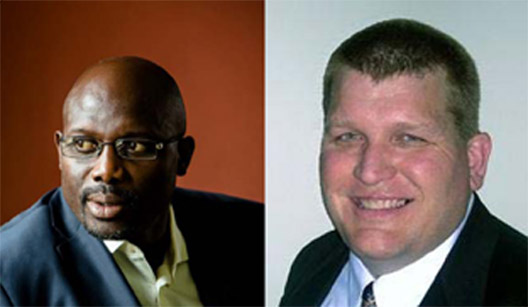
George Weah (left), ex-soccer player and presidential aspirant and Brooklyn Park Mayor jeff Lunde are featured speakers at the Organization of Liberians in Minnesota Inaugural Ball on Saturday, March 14 2015.

The Organization of Liberians in Minnesota (OLM) will hold its Inaugural Ball on Saturday, March 14 at Northbrook Alliance Church in Brooklyn Center. The occasion is the inauguration of newly elected officers.

Brooklyn Park Mayor Jeff Lunde is the featured keynote speaker. In the past week, there have been calls from sections of the Liberian community to withdraw the invitation to the mayor until he supports a lifting of the amplified noise ban that the Brooklyn Park City Council imposed on the city’s parks. African immigrants including those from Ghana, Kenya, Liberia and others spoke passionately at a council meeting last week exhorting it to lift it, as it will disproportionately affect their communities.

OLM board member, Mohammed Dukuly, in an email to the community in the past week has also announced that George Weah, a former soccer player and presidential aspirant, will grace the occasion.

Tickets for the inaugural ball are going for $35 for couples and $20 for a single person. They are available by calling Mrs. Victoria Peabody @ 763-496-7121.

OLM Inaugural Ball
Saturday, March 14 2015 7:30pm
Northbrook Alliance Church
6240 Aldrich Avenue North
Brooklyn Center, MN 55430
Tickets: Mrs. Victoria Peabody @ 763-496-7121

Seun Kuti to perform in Minneapolis at Rock the Garden

0
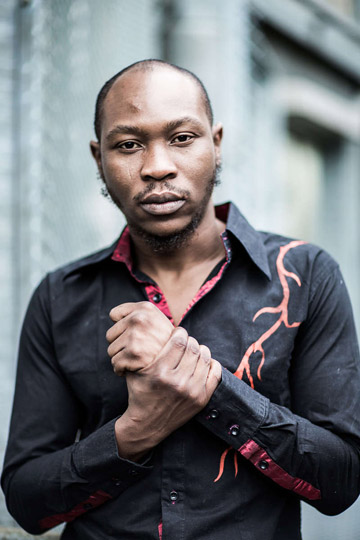
Seun Kuti and his band Egypt 80 will perform outdoors at Rock the Garden in Minneapolis on Sunday, June 21 2015 . Photo: Courtesy of Walker Art Center

Attention Afrobeat fans: Be ready Thursday March 12 at 11am. Why? That is when Seun Kuti tickets for his outdoor Minneapolis summer concert go on sale if you are a member of either the Walker Art Center or Minnesota Public Radio. Remaining tickets after members have had theirs will go on sale for the rest of the public on Tuesday, March 17 at 11am.

The Walker Art Center yesterday announced the lineup for their annual Rock the Garden concerts and Seun Kuti is one of them. Seun Kuti, son of Afrobeat founder, Fela Kuti will perform on Sunday, June 21. He will be accompanied by his father’s band Egypt 80 which he took over at the age of 14 after Fela’s death.

Rock the Garden will run June 20 and 21.

The lineup for June 20 is: with thestand4rd, Lucius, Courtney Barnett, Conor Oberst, and Belle & Sebastian

On day two, June 21: Ghost of a Saber Tooth Tiger, JD McPherson, Seun Kuti and Egypt 80, Babes in Toyland, and Modest Mouse.

For tickets, visit www.walkerart.org.

UN health agency announces start of Ebola vaccine testing

0
Working towards zero cases of Ebola. Photo: UNMEER/Martine Perret

The World Health Organization (WHO) announced today that it will begin conducting Ebola vaccination trials in Guinea this week, which if found effective, could be the “game-changer to finally end the epidemic” that has affected nearly 24,000 people, mostly in West Africa.

“We have worked hard to reach this point,” WHO Director-General, Dr. Margaret Chan, saidin Geneva.

“There has been massive mobilization on the part of the affected countries and all partners to accelerate the development and availability of proven interventions,” she continued. “If a vaccine is found effective, it will be the first preventive tool against Ebola in history.”

Based on promising data from initial clinical trials in late 2014, WHO said it will launch a Phase III trial in Guinea on 7 March to test the so-called VSV-EBOV vaccine for efficacy and effectiveness to prevent Ebola in collaboration with the Health Ministry of Guinea, Médecins Sans Frontières (MSF), Epicentre and the Norwegian Institute of Public Health.

WHO said the vaccination will take place in areas of Basse Guinée, the region that currently has the highest number of cases in the country.

The announcement came as the agency, in its latest update on Ebola, reported 132 new confirmed cases had been reported in West Africa in the week to 1 March, an increase from the previous week of 99 new cases.

Liberia reported no new confirmed cases this week, the first time since the week of 26 May 2014, but the weekly number of confirmed cases has increased in both Sierra Leone and Guinea, according to WHO.

Transmission remains widespread in Sierra Leone and Guinea, and the agency also reported a marked increase in case numbers compared with the previous week. Unsafe burials continue to occur in both these countries.

Assistant Director-General Marie-Paule Kieny, who leads the Ebola Research and Development effort at WHO, said: “An effective vaccine to control current flare-ups could be the game-changer to finally end this epidemic and an insurance policy for any future ones.”

Explaining the trial strategy, WHO said it involves the identification of a newly diagnosed Ebola case – the “index case” – and the tracing of all his/her contacts. The contacts are vaccinated if they give their consent.

“The objectives of the trial are two-fold: to assess if the vaccine protects the contacts who were vaccinated and if vaccinating the contacts will create a buffer – or ring – of protected individuals – around the index case to prevent further spread of the infection,” WHO said.

“Vaccination will also be proposed to frontline workers in the area where the trial will take place,” the agency added.

Since September 2014, according to WHO, the two most advanced Ebola vaccines have been evaluated in about 15 countries in Africa, Europe and North America.”

“The VSV-EBOV vaccine was selected for the planned trial based on a framework of parameters developed by the WHO Scientific and Technical Advisory Committee on Ebola Experimental interventions,” it said. “Criteria included acceptable safety profile, induction of appropriate immune responses, including neutralizing antibodies, and the timely availability of sufficient supplies of vaccine doses.

WHO, the UN Children’s Fund (UNICEF), the U.S. Centers for Disease Control (CDC), the Bill and Melinda Gates Foundation and vaccine alliance GAVI are collaborating with the affected countries to develop plans and strategies for large-scale introduction, should this be needed.

WHO said the vaccines’ manufacturers have assured that enough vaccine will be available in the coming months and that financial resources are in place to procure and make vaccines available in the affected countries.

The vaccine VSV-EBOV was developed by the Public Health Agency of Canada. The vaccine was licenced to NewLink Genetics, and on November 24, 2014, NewLink Genetics and Merck announced their collaboration on the vaccine.

Mo Ibrahim Leadership Prize finally finds a winner in Namibia’s Hifikepunye Pohamba

0
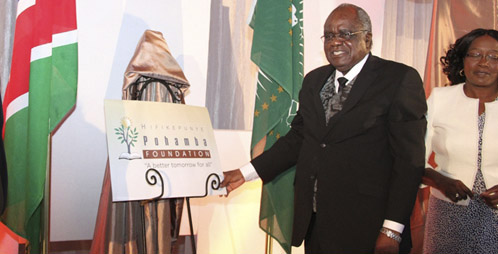
President Hifikepunye Pohamba when he launched the Hifikepunye Pohamba Foundation on June 7, 2014. He has won the Mo Ibrahim leadership prize after the prize went unawarded since 2011 for lack of suitable candidates. Photo: Office of the President Namibia

A five million dollar prize for exemplary leadership, good governance and defending human rights has been awarded to the president of Namibia, it was announced this week.

President Hifikepunye Pohamba is the first leader to capture the prize since it was awarded to Cape Verde’s former president in 2011. The Mo Ibrahim Foundation, named for Mohamed “Mo” Ibrahim, a Sudanese-British former mobile communications entrepreneur and billionaire, said it failed to find a qualified leader in the interim years.

Pohamba, 79, was announced as the winner of the award at a ceremony in Nairobi on Monday.

According to the Foundation’s website: “The Ibrahim Prize recognizes and celebrates African leaders who have developed their countries, lifted people out of poverty and paved the way for sustainable and equitable prosperity.”

The award – worth $5m over 10 years and then $200,000 per year thereafter – is only open to former African executive heads of state or government who have left office voluntarily in the last three years after being democratically elected.

At 25, Pohamba was a founding member of the South West Africa People’s Organization (Swapo) which pursued independence from apartheid South Africa. He was held as a political prisoner during South Africa’s colonial rule over the country and was whipped in public for advocating an independent Namibia.

Until the achievement of independence, Pohamba represented SWAPO across Africa, although he studied politics in the Soviet Union for a time in the early 1980s. As Minister of Lands, Resettlement and Rehabilitation, among his many posts, Pohamba initiated a policy of partial land expropriation from landed white farmers to landless black ones. The move was intended to speed up the “willing buyer-willing seller” policy which was deemed insufficient.

Pohamba was elected twice – in 2004 and in 2009. He has pledged to hand over power to prime minister Hage Geingob later this month.

Under Pohamba’s leadership, Swapo made major strides in gender equality, with 25 of 72 parliamentary seats filled by women. The party was also been commended for improving national health services and increasing Namibia’s life expectancy from 55 in 2004 to 64 in 2012.

He is also credited with overseeing strong economic growth with gross domestic product per capita rising from $3,297 in 2004 to $5,693 in 2013, according to the World Bank.

In a press interview, Mo Ibrahim said: “I think [Pohamba] gave us a wonderful example of a leader who came in democratically and moved his country forward, improved education … and paid attention to social cohesion.”

Hugh Masekela and Vusi Mahlasela to ‘Rock the Ordway’

0
Hugh Masekela and Vusi Mahlasela when they performed together at Carnegie Hall on October 10, 2014. They will appear together at the Ordway on Saturday, March 7 2015. Photo: Courtesy of Hugh Masekela

While Spring may still seem far off, Rock the Ordway, billed as “22 days of opening nights” showcasing a motley of unexpected, and new performances is out “to shake things up” for Minnesotans trapped in the dark days of winter. The Ordway Center for the Performing Arts embarked on a grand renovation of its 30 year old digs and $42 million later it is inviting the public to celebrate its new 1,100 seat concert hall with performances by some of the best and the brightest national and international artists.

Two of those artists are the legendary Hugh Masekela, and Vusi Mahlasela, currently on a North American tour marking the 20th anniversary of the end of apartheid in South Africa. If it is true that every revolution needs a soundtrack, then the two musicians were the soundtrack to South Africa’s struggle for independence, providing stirring music that refused to accept things as they were. Hugh Masekela with his rallying anthem ‘Bring Home Nelson Mandela’, and Mahlasela who simply became known as “The Voice” of the anti-apartheid movement through his songs calling for justice, and freedom were largely responsible for focussing the world’s attention on the events in South Africa through their music.

Hugh Masekela, no stranger to the Twin Cities,  maintains his own right as one of the most iconic jazz musicians, with a dizzying career that spans 4 decades, countless collaborations, and numerous studio albums. He is magic on the trumpet and flügelhorn, and a fitting accompaniment to Vusi Mahlasela on the guitar. Mahlasela, whose political leanings were solidified after witnessing the massacre of 200 South Africans during the Soweto uprising, is a prolific poet and songwriter, who delivers rich vocals that speak to the African, and the human experience.

It is only fitting that the two legendary artists should be invited to to be part of the Ordway’s celebration; a multilayered celebration of dreams realized. As an added perk, the Ordway guarantees that there is no such thing as a bad seat in their new state of the art concert hall. If you have any doubts as to the chops these two artists have, or the Ordway’s claims, come check them out this Saturday, March 7th, with a free pre-show tasting of South African wines starting at 5:30 pm, while supplies last.

Hugh Masekela and Vusi Mahlasela in Concert
Saturday March 7th, 2015
7:30 pm
$20.00 – $47.00
Buy Online
345 Washington Street
Saint Paul, MN 55102
Ticket Office: 651.224.4222
Main Office: 651.282.3000

Brooklyn Park African residents to amplify voice at City Council meeting over sound ban

0
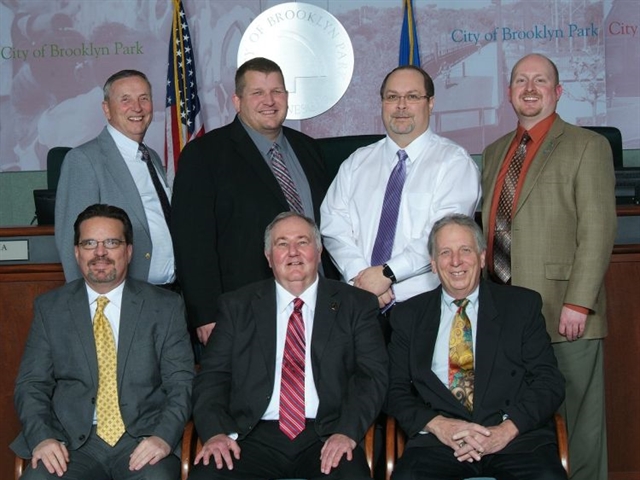
The City of Brooklyn Park City Council will at its March 2, 2015 meeting hear from its African immigrant residents on the amplified sound ban passed last December by the Council in this minority-majority city. Photo: City of Brooklyn Park

Residents of Brooklyn Park will at today’s City Council meeting make a case for the lifting of the ban on amplified sound on city parks.

The city, which is a minority-majority city with a large number of African immigrants residing there, passed an ordinance last December banning amplified sound at its parks except for city organized events like the annual Tater Daze.

Amplified sound prior to the December ban, was already restricted to just one park, Oak Grove Park since 2011 citing residents’ complaints.

Duannah Siryon, a “Lift the Ban in Parks” campaigner said in an email message to the community this morning that the ban was unfair and that inaction by the community will encourage other cities to follow Brooklyn Park’s lead.

African immigrants’ love for the outdoors during warmer climates makes them heavy users of the region’s well developed park system and many feel the ban will have a disproportionate adverse effect on them .

“Think about attending a loved one’s wedding barbeque without music or celebrating your child’s birthday party without (a) sound system,” Siryon said.

Brooklyn Park City Council Meeting
Monday, March 2, 2015
Time: 6:30PM
Address: 5200 85th Avenue N. Brooklyn Park, MN 55443

World Tuberculosis Day

0
March 24 is World Tuberculosis Day. Photo: Courtesy CDC

What is TB?

TB is a serious disease caused by a bacteria (germ) called Mycobacterium tuberculosis. TB is most often found in a person’s lungs, but TB can also attack other parts of the body, including the brain, bones, and lymph nodes.

TB is spread through the air from one person to another when a person with active TB disease in their lungs or throat releases invisible droplets containing the bacteria by coughing, sneezing, speaking or singing. A person breathing in air containing the droplets of bacteria can become infected without knowing it.

There are two phases of TB: latent TB infection and active TB disease.

Latent TB Infection (LTBI)

People with latent TB infection do not feel sick. The TB germs are in the body, but they are contained by the body’s immune system. It is important to get medicine for this type of TB to kill the germs in the body. If the TB germs are not killed, they may escape the immune system in the future and make the person very sick.

The only way to know if TB germs are in your body is to ask your doctor for a TB skin or blood test.

Active TB

People with active TB disease can become very sick and spread the TB germs to others. They may have one or more of the following symptoms: a cough (lasting at least three weeks), coughing up blood, chest pain, weight loss, fever, chills, night sweats, and being very tired for no reason. In order to be cured, a person with active TB must take special TB medicine for 6 months or longer.

TB is a Global and Local Health Issue

TB is a common but serious health problem throughout the world. The World Health Organization estimates that one third of the world’s population has latent TB infection. That’s more than 2 billion people   ! In 2013, 9 million people became sick with active TB disease and over 500,000 of those people were children. 1.5 million people died of TB in 2013.


In Minnesota, there are about 150 people diagnosed and treated for active TB disease each year. Doctors work with public health departments to help TB patients get access to free TB medications and ensure that the patients have everything they need to get well.

In the United States, including Minnesota, most doctors recommend taking TB medications to treat LTBI. This helps prevent that person from getting sick with active TB in the future. This may be different in other countries where LTBI is not treated because there are limited resources and they focus instead on treating active TB.

BCG Vaccine & TB Testing

The BCG vaccine is given in many parts of the world where TB is common. BCG helps prevent children from getting severe forms of TB disease. BCG vaccine is not given in the United States because of the low risk of TB spreading here.

People who have received the BCG vaccine should ask for the TB blood test if they need to be tested for TB. If the result is positive, it is very likely that it is due to a TB infection and not because of the BCG vaccine.

Additional Information

The Minnesota Department of Health has fact sheets about TB in English and 15 other languages including: Amharic, Arabic, Bosnian/Croatian/Serbian, French, Hmong, KaRen, Khmer (Cambodian), Laotian, Nepali, Oromo, Russian, Somali, Spanish, Tibetan, and Vietnamese. These fact sheets can be downloaded at www.health.state.mn.us/divs/idepc/diseases/tb/ed/index.html.

Obama nominates first U.S. Ambassador to Somalia in 24 years

0
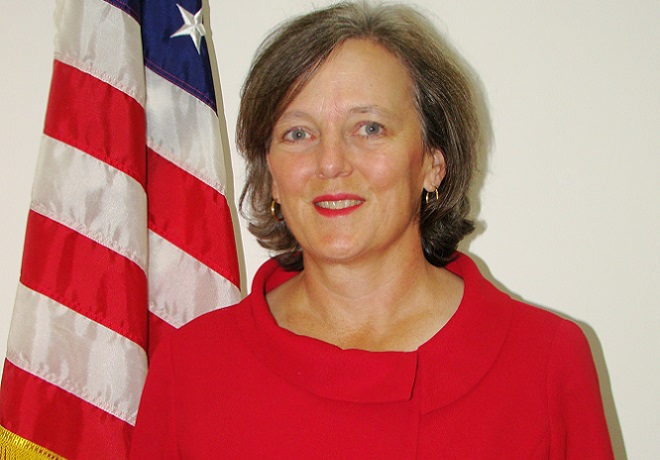
US President Barack Obama on Tuesday, February 24, 2015 nominated Katherine Simonds Dhanani as US ambassador to Somalia, the first in 24 years since the US embassy there closed in 1991 as civil war descended on Somalia. Photo: Courtesy of U.S. State Dept.

President Barack Obama has nominated the first U.S. ambassador to Somalia in 24 years. She is Katherine Simonds Dhanani, a Foreign Service veteran who has previously served in five other African countries in various capacities.

Dhanani will be based in neighboring Kenya until the situation in Somalia stabilizes to allow the U.S. embassy to reopen.

U.S. State Department spokeswoman, Jen Psaki, said in a statement to Mshale that the nomination was a sign of the “deepening relationship” between Somalia and the United States. “Somalia has considerable work ahead to complete its transition to a peaceful, democratic, and prosperous nation. The United States is committed to supporting Somalia on this journey as a steadfast partner,” she added.

Two years ago, the U.S. recognized the new U.N.-backed Somali government which continues to battle al-Qaeda linked al-Shabab.

Other African countries that she has served in: Deputy Chief of Mission at the U.S. Embassy in Harare, Zimbabwe from 2007 to 2010 as well as at the U.S. Embassy in Libreville, Gabon from 2005 to 2007.  Additionally, she was the Political and Economic Section Chief at the U.S. Embassy in Lusaka, Zambia from 2002 to 2005 and Economic Section Chief at the U.S. Embassy in Kinshasa, Democratic Republic of the Congo from 1999 to 2002.

Dhanani also served as Staff Assistant in the Bureau of Inter-American Affairs at the Department of State, as Consular Officer at the U.S. Embassy in Brazzaville, Republic of the Congo.

Dhanani received a B.A. from Kenyon College and an M.A. from the Massachusetts Institute of Technology.

The U.S. Embassy in Mogadishu closed in 1991 when Somalia’s government collapsed as civil war ensued.

“As security conditions permit, we look forward to increasing our diplomatic presence in Somalia and eventually reopening the U.S. Embassy in Mogadishu,” Psaki said.

Dhanani’s nomination requires senate confirmation. She is currently the Director of the Office of Regional and Security Affairs in the Bureau of African Affairs in the Department of State, a position she has held since 2013.

Immigrants: Past, Present and Potential

0

The Immigrant has a special place in our national psyche. The story of the downtrodden coming to these shores, escaping religious and/or political persecution, working hard, building a home and making something of them-selves is the stuff of legend. The United States is described as a “nation of immigrants”, the melting pot of many cultures. Even our nation’s motto highlights this fact, as illustrated by the national seal, “E pluribus Unum”, Out of many one. Through popular culture we are led to idolize, even mythologize the good immigrant, excusing his or her short comings and celebrating their journey.

New immigrants like me see America as a land of opportunity; of laws, a society built on compassion, in which personal excellence, responsibility and the pursuit of happiness are things to strive for. I am not under the illusion that we have a perfect union, or that there are no social ills in our country. But it is also part of being an American that we should aspire to overcome such obstacles in the hope of perfecting the Union.

Minnesota’s early immigrant population came primarily from Europe. They were Germans, Swedes, Fins, Poles, Norwegians, Irish, Brits, among others. Along with Native Americans and African Americans, they helped shape the Minnesota of today. Their struggles and triumphs in building this great State is an inspiration to us all. Today their stories are told not only in the State’s history but also in the names of our towns, public spaces, educational institutions, places of worship and various community centers, such as the Ukrainian Center, the Swedish Institute and Sons of Norway.

The most recent large immigrant waves to Minnesota have mainly come from Central & Latin America, South East Asia and Africa. Like those before them, most sought refuge from persecution, others migrated for economic reasons. They can be described as being energetic, resourceful, entrepreneurial and patriotic. They value family, have faith and believe in hard work.

The contributions of the new immigrants have been immense, from protecting our country by serving in the armed forces, Police and emergency services personnel. They have improved our economy through the provision of labor, purchase of homes and countless business startups. They have enriched our culture from the food that we eat, the music we listen to and the arts that we enjoy.

But unlike the immigrants of old, their success is often ignored and stories seldom told. Too often and for far too long, new immigrants have been subjected to irrational, xenophobic propaganda aimed at tarnishing their image and using them as scapegoats for some of society’s major failures.

Embracing our new immigrant population and integrating them into the main stream does not only pay dividends at home, it can also have other positive outcomes. We live in an interdependent world, a world of fierce global competition. The fastest growing economies today are found in South East Asia, Latin America and Africa. Spanish, Mandarin, Arabic, Yoruba, Somali and Swahili, are world languages of commerce and power. We are fortunate to have children born in Minnesota today who speak these languages at home, whose parents have a profound knowledge and understanding of those regions. It’s advantageous for our government, multinationals and nonprofit actors to harness these gifts. With little effort we can utilize the potential of our immigrant population, and who knows they might one day become our competitive advantage abroad.

Today’s immigrants are not much different to their old counterparts; they are not seeking pity, or handouts. They want to be respected and to be seen as they see themselves, writers of the latest chapter of the continuing wonderful story of America.