
Home Blog Page 144

Towards a fashionable Muslimah at USA Islamic Fashion Week

0
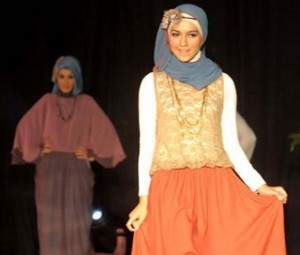
Models at USA Islamic Fashion Week . Photo: Courtesy of OnIslam

By Mahasin D. Shamsid-Deen via OnIslam

Make way on the runway America – USA Islamic Fashion Week has arrived!  Organized by the Modesty Defined Islamic Fashion Council of America, LLC (MDIFC), this lively event was hailed a success by those in attendance.

More than a year in the planning, the USA Fashion Week, held February 13-16 in the DC, at Maryland Virginia area, had an expressed goal by organizers: to  bridge the gap between modest and Islamic fashions by showcasing the distinguished designs of emerging and established Muslim women designers.

Baring the winter weather that gripped the Northeast, curious and excited attendees were able to enjoy and view the original fashion creations of La Merveille by KD Noor Couture, AK Designs, Akilah Fashions, Dols Designs, IDeen Collection, Hadiyah Weeks, Snazzy Fashions, Qadira’s Qreations as well as purchase accessories and items from vendors in the ‘boutique’ marketplace.

With the professionalism and polish to rival any runway show in the fashion world, young, slim models showcased chic, fashionable and Islamic inspired clothing for the American Muslimah.

Towards a fashionable Muslimah

Sarah, A young Muslim convert in attendance was amazed at the variety. She said, “I always see Muslim women dressed in one of three ways.  They either are completely uncovered and undistinguished from other Americans, draped in ill-fitting bag-lady type clothing or dressed in all black as if they are in mourning.

To be honest, it’s the number one thing that I struggle with as a new convert – the dress.  What we wear is an expression of who we are and how we feel, which is why I like the outfits with bold colors and patterns. I am shaped by my culture even as I embrace Islam so dark dull clothing is often worn by those seen as stern, mean or closed-minded.  Also, because sadness, depression, and other negative emotions are associated with black and bland colors, those outfits do not attract my attention without appropriate accessories.

I liked that to a certain extent the fashion show taught how to put things together.  I would love to own some of these pieces.  I think I would feel feminine and put together in those outfits and also relieved that what I am wearing meets religious obligations.”

Another young Muslimah who had grown up in Islam in the US marveled at the unique expressions of some of the designs. “Some of the designs really spoke to who I am as an American Muslim.” She said.  “As a teen, it seemed like the girls that covered, popularized a variation of the clothing on TV shows like ‘I-Carly’ where they wore turtle neck and long sleeved t-shirts under a short sundress or even cocktail dress and some pants.

I never liked that look and I’m way too curvaceous and endowed for that type of clothing to offer the modesty that I want to adhere to.  How refreshing to see loose, vibrant, feminine clothing that is oriented towards a young audience.  In addition, I like the idea of Americans developing our unique look – again.  When my Mom was growing up Muslim women wore long skirts, blouses, turbans and long tops over pants.  It was the way people could tell she was one of those ‘Muslims’.  But these new designs are wonderful and so very pretty.

I loved the ethnic inspired clothes, especially the colors and vibrant patterns.  My only complaints are that I didn’t see enough ‘casual’ wear or clothing for large busted women.”

Organizing and designing expertise

Indeed, USA Fashion Week organizer, Komita Carrington, explained that models chosen to be on the runway were ‘industry’ standard size, but also included that the individual designers themselves had the option of stating whether the styles offered were available in larger sizes.

The USA Islamic Fashion Week organizers are themselves industry professionals.  MDIFC founder, Romana Kerns Muhammad has more than 28 years in the fashion industry where she did actual modeling and model coaching, development and management.

The co-founder, Komita Carrington, who was in charge of choosing the models, works with adolescent girls to develop an appreciation for modestly unique clothing.  Other committee members are Akilah Baynes who served as lead designer coordinator and is the designer and founder of Akilah Fashions, Jalila Q. Muhammad is a graduate of a Creative Fashion program in college and served as the event lead producer and designer of Qadira’s Qreations. And USA Fashion Week PR director, Aliyah Bashir, is the founder of Image Maker Public Relations company in Maryland.

Designers for the show came from all over including New York, New Jersey, Maryland, Virginia, Illinois, Texas and Canada with inquiries from designers in the Middle East and Asia.

When asked what would be the defining feature of Islamic fashions for the Muslim Woman in North America, MDIFC co-founder Komita Carrington explained that America has so many different flavors including indigenous descendants from many generations or newly arrived naturalized or first generation Americans, that the American Muslim modest attire has a range of style and expression.

But it will not be like a Muslim woman from India where the dress of Muslims and non-Muslims is similar or even parts of Africa where the clothing is practically the same.  In North America, there are different religions and the uniquely modest attire of Muslims has its own distinctiveness.

Fashions that came down the runway this week included outerwear, formal wear, bridal, abayas and ethnically inspired outfits with pants, skirts, tops, dresses, jackets and all other forms of clothing worn in the US and Canada

Future plans for MDIFC is to continue to provide a platform for emerging designers to have their work known and ultimately available to the buying public.

Indeed, many of the designers want to see their fashions available at retail stores in the nation not just Muslim clothing boutiques.  As USA Fashion Week organizers posted on their Facebook page “This first show gives us leverage to move forward in expanding the vision of creating an exclusive opportunity for the American-based Muslim Fashion Community.”   Plans are already in place for another show in September 2014 and again next year in February 2015 in the DC, Maryland, Virginia area (DMV).

Mahasin Shamsid-Deen is a World renowned author, poet and published playwright with plays performed, staged, and or read in the United States, Europe and the Middle East.


UN marks launch of ‘Kwibuka 20’ in remembrance of Rwanda genocide

0
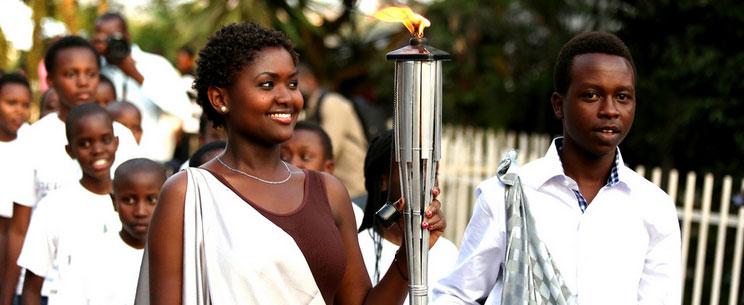
Youth in Kigali carrying the 'Kwibuka flame' on January 7 2014 when Rwanda launched commemorative activities in the run-up to the 20th anniversary of the 1994 Genocide against the Tutsi. Photo: Courtesy Kigali Today
Un Secretary-General Ban Ki-moon Photo: UN News Service

Ahead of the twentieth anniversary of the genocide in Rwanda, Secretary-General Ban Ki-moon today honoured the launch of “Kwibuka 20,” a series of events commemorating the tragedy, and urged the international community to do more to fully internalize and implement the lessons learned from the killings of 800,000 people in 1994.

“We must speak out forcefully whenever communities are threatened by mass atrocities or their precursors,” Mr. Ban said in New York ahead of the official observance of the Day on 7 April.

He described the collective failure to prevent atrocities in Syria over the past three years as a “shameful indictment of the international community.” He also noted the “worrying trends” of rising bias against groups of people in Europe and elsewhere, and the establishment of an inquiry to probe human rights violations in the Central African Republic.

The theme for Kwibuka 20 is “Remember, Unite, Renew,” aiming to remember the people murdered in Rwanda, draw inspiration from the ability of the Rwandan people to unite and reconcile, and marvel at their determination to renew their country.

“Twenty years after the tragedy, many challenges remain and the country still needs strong support from the international community to assist victims in areas such as housing, healthcare, welfare or education,” said President of the General Assembly John Ashe, who was also participating in the launch.

The audience included Eugene-Richard Gasana who is the Rwandan Minister in Charge of Cooperation and Permanent Representative to the UN, and Jean-Baptiste Rudatsikira, President of the Rwandan Community in New York, New Jersey and Connecticut.

As part of this year’s observance of the anniversary, the Kwibuka Flame of Remembrance has been on a nationwide tour since 7 January. The flame, which symbolizes remembrance as well as the resilience and courage of Rwandans over the past 20 years, is carried in a simple lamp and lights other lamps in communities around Rwanda.

It will return to Kigali on 7 April where Rwandan President Paul Kagame will use it to light the National Flame of Mourning and start the national mourning period.

Last May, Mr. Ban visited the Gisozi Genocide Memorial in Kigali, where he said the UN had played a key role in helping Rwanda recover by establishing the International Criminal Tribunal for Rwanda (ICTR) set up to bring justice to perpetrators of the massacres.

“I was moved to tears by the enormity of the violence that targeted a range of Rwanda’s people – Tutsis, Twa, moderate Hutu and others,” Mr. Ban said remembering the visit.

Nearly one million Rwandans were massacred by militia and Government forces over a period of just 100 days. This occurred despite the existence of the Genocide Convention of 1948, which makes it a crime to commit genocide.

Calling the lack of response to the genocide “an epic failure,” Mr. Ban noted that the international community has since learned important lessons.

“We know more keenly than ever that genocide is not a single event but a process that evolves over time, and requires planning and resources to carry out,” he said. “As chilling as that sounds, it also means that with adequate information, mobilization, courage and political will, genocide can be prevented.”

Among the actions the UN is taking to prevent genocide, Mr. Ban created the “Rights up Front” Action Plan to strengthen the Organization’s ability to prevent large-scale violations of human rights, including the imperative for an early response to the risk of mass atrocities and the realization that prevention is a common responsibility of the entire UN system.

Launched in December 2013, the Plan includes training for UN staff on the world body’s core purpose of promoting respect for human rights; providing Member States with the information needed to respond to human rights violations; and ensuring that UN personnel around the world are more attuned to situations where there is a risk of serious human rights abuses and are equipped for the responsibilities that such potential crises entail.

Speaking at an event at the UN headquarters in January, Deputy Secretary-General Jan Eliasson urged the international community to never forget the collective failure to prevent the Rwandan genocide.

“Repeating the phrase ‘never again’ is in itself a sign of continued failure,” he said.

Lupita Nyong’o is ready for normalcy

0
Lupita Nyong'o at the 2013 Toronto International Film Festival. Photo; Used under Creative Commons License

Lupita Nyong’o is preparing herself for normalcy. After the frenzy that’s followed her gripping performance in “12 Years a Slave,” she wants to be ready for life back home in New York.

“I try to keep my regimen — rest, water, eat well, workout — so that when this is all over, I don’t experience a total hangover,” she says, taking a bite of scrambled eggs in a recent interview at a Beverly Hills cafe.

She hasn’t yet accepted that her life may never be the same. “I have a very ostrich mentality,” she says. “I feel like I have my head in the sand so no one can see me.”

Before playing slave Patsey in Steve McQueen’s brutal tale of a free black man kidnapped into slavery in the 19th century South, Nyong’o was virtually unknown. Now, as a supporting actress Oscar nominee, she’s become a breakout star.

When she received the call from McQueen saying she had landed the role, “I was so elated,” she recalls. “But then I immediately panicked. I was so scared.”

No wonder; this would be her first major role after attending the Yale School of Drama. Yet shooting the film gave her the confidence she needed coming out of school. “It was an amazing feeling,” she says.

Now, with all eyes on what she’ll do next, the actress refuses to stress about securing another role that’s equally as celebrated.

“The bar has been set very high externally and internally,” she says. “But I don’t want to feed into that pressure of expectation. This film was so fulfilling and artistic. I’ve tasted that and I obviously want to experience that kind of creative fulfillment again, but I also know that I can’t replicate that. I want a varied acting experience and that may include some failure and that’s healthy.”

Actually, Nyong’o’s next film is already in the can and ready for release on Feb. 28: She plays a flight attendant opposite Liam Neeson in the action-thriller “Non-Stop.” ”It was what I needed to do,” she says. “It was the perfect antidote to ’12 Years a Slave.’ It was a different genre with different demands. It was very technical and fun.”

Growing up in Kenya, Nyong’o says her parents encouraged her and her five siblings to “find out what we were called on this earth to do and then do it to excellence.”

Before former Kenya president Daniel Arap Moi allowed multi-party politics in 1991, Nyong’o’ father, Peter Anyang’ Nyong’o, was an advocate for democratic reform, opposing Kenya’s autocratic regime. Then a political science teacher, Nyong’o’s father relocated his family to Mexico City for their safety. It was there that Nyong’o was born, yet her family returned to Kenya before she was a year old.

Nyong’o says her parents have been supportive of her Hollywood success but have also taken the excitement in stride. “It’s nice to have parents like that because they’re thrilled,” she says. “But they’re not shaken by it.”

(Nyong’o’s father is now a Kisumu County senator and her mother, Dorothy Nyong’o, is the managing director of the Africa Cancer Foundation.)

With the Academy Awards less than two weeks away, the 30-year-old actress says she wants to continue to savor every moment, even the overwhelming ones.

“The Hollywood Film Awards were really stressful,” she remembers of the October ceremony, where she shared the spotlight with the likes of Julia Roberts and Matthew McConaughey. “It was the biggest press line I’d ever seen. It was difficult to orient myself, but there are familiar faces now, so it becomes less daunting.”

Not only blessed with significant acting ability, Nyong’o’s striking beauty and bold fashion choices have made her one of the most talked-about celebs on the red carpet.

From the turquoise Gucci column gown she wore to the Screen Actors Guild Awards to the emerald green Christian Dior dress she chose for the British Academy of Film and Television Arts awards last weekend, she’s what “12 Years a Slave” screenwriter John Ridley calls “undeniably poised and graceful.”

Never the girl who thumbed through Vogue (now she appears in the magazine as the face of fashion house Miu Miu), Nyong’o began buying fashion magazines in preparation for all of the formal events she expected to attend following the success of “12 Years.”

“I was like, ‘OK, I have to research,'” she recalls with a giggle. But letting herself “dress large” has been scary, she admits. Referencing the scarlet Ralph Lauren dress she wore to the Golden Globes, she adds, “It had a cape! That was exhilarating.”

Despite her tendency to make fashion statements in stunning ensembles, she doesn’t feel pressure to always deliver a talked-about look. And the same goes for her feelings about Oscar night.

“I feel privileged that people are looking up to me and perhaps a dream will be born because of my presence,” she says. “But my responsibility is to just keep on pursuing my dreams and goals and the admiration will take care of itself.”

Notes Whoopi Goldberg, who Nyong’o cites as an inspiration after watching her in “The Color Purple” as a child: “Hollywood is a very strange place. Lupita has to be really glad people want her autograph and know that she has the right to say ‘Not right now.’ But no one can limit her conversation to race because she’s better than that. She’s a great visual for why dreaming is OK.”

Immigration reform advocates urge Obama to stop deportations

0
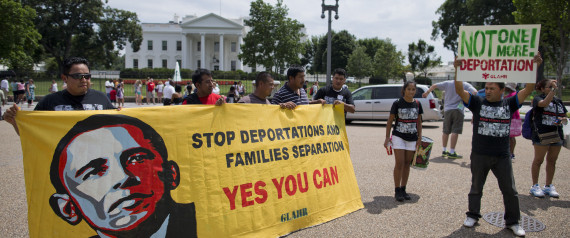
Demonstrators rally in front of the White House in Washington, Wednesday, July 24, 2013, calling for immigration reform. The demonstrators urged President Barack Obama to use executive authority to expand the policy that allowed hundreds of thousands of illegal immigrants who came to the United States as children to remain. Photo: Evan Vucci)

Immigrant rights advocates are urging President Barack Obama to use his executive authority to stop the deportations of illegal immigrants. Some arrests were made Monday when dozens of advocates rallied in Washington.

Religious and civil rights activists chanted and prayed alongside illegal immigrants near the White House as they urged the president to stop the deportations, which they say are tearing families apart.

Methodist Bishop Julius Trimble said he wants comprehensive, humane immigration reform that provides a pathway to citizenship.

“A majority of people who are detained and deported have no criminal record or have done no crime,” he said. “They are just here because they don’t have documentation and we don’t have a pathway for dealing with those persons who are our neighbors or parts of our churches and who have businesses in our communities.”

One of those undocumented immigrants is Gerardo Torres. He’s from Mexico, but he said he has lived in [the U.S. state of] Arizona for more than 20 years.

“I want to have the freedom to go to my country and visit my family and just the freedom of movement,” he said. “That’s all I want.”

Police moved in and arrested some of the demonstrators after they edged closer to the White House.

Jessica Vaughan is director of policy studies at the Center for Immigration Studies. The group believes the law should be changed to meet U.S. economic needs — not to satisfy the demands of those who have entered the country illegally or overstayed visas.

She said it would be wrong for Obama to stop the deportation of undocumented immigrants.

“Not only would it be a bad political move, it would be a horrible thing for public safety, national security, and immigration law enforcement in general for him to do that. Enforcement is already about as bare-bones as it gets,” she said.

More than 1.9 million undocumented immigrants have been deported since Obama took office in 2009. The rate of deportations under his administration is outpacing that of his predecessor, President George W. Bush.

During a November speech in San Francisco, the president heard first-hand from immigration reform advocates who are unhappy with his policy.

Obama said he needs to rely on Congress.

“If in fact I could solve all these problems without passing laws in Congress, then I would do so,” he said. “But we are also a nation of laws. That is part of our tradition.”

The Senate passed immigration reform last year, but the legislation has stalled in the House.

House Speaker John Boehner has said he is pessimistic about immigration reform passing this year.

Ghanaians in Minnesota to launch Academic Foundation on Independence Day

0
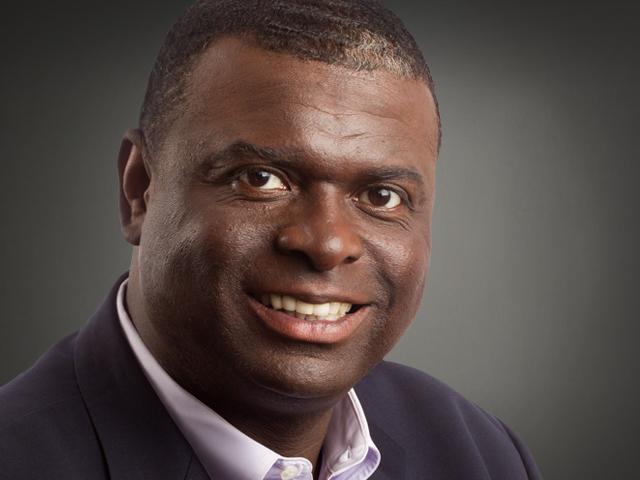
Reg Chapman, WCCO TV News reporter will keynote the 57th Ghana Independence Day celebration at the Coon Rapids Civic Center on Saturday, March 8 2014. Photo: Courtesy WCCO
Reg Chapman, WCCO TV News reporter will keynote the 57th Ghana Independence Day celebration at the Coon Rapids Community Center on Saturday, March 8 2014. Photo: Courtesy WCCO

The Ghanaian Association of Minnesota (GhanAM) is preparing to celebrate Ghana’s 57th Independence Day with a bold launch of a foundation with the express mission of awarding academic scholarships to deserving students who lack the financial wherewithal to further their education.

The Ghana independence celebration, which will be held at the Coon Rapids Civic Center on March 8th, will also serve as the launch event for the Academic Foundation for the Development of Responsible Citizens. The event begins at 8:00PM.

GhanAm president, Kwao Amegashie, said his community has long felt financial assistance to qualified students who lack the resources but are motivated to further their education was important as that will help such students become responsible citizens.

Reg Chapman, WCCO TV News reporter will deliver the keynote address which will focus on the youth. Amegashie said Mr. Chapman in his keynote, will address “the transition of youth into responsible citizenship by engagement in community service and mentoring programs, (and) development of leadership skills”.

Ghana played a significant role in the liberation struggle across the African continent with the efforts of Kwame Nkrumah, independent Ghana’s first president.

At the March 8 celebration, Tiyumba Cultural Group will provide the entertainment while Sister-C Catering Services will cater Ghanaian dishes.

March 6 is the actual Independence Day for Ghana and members of the Minnesota Ghanaian community will be volunteering at Second Harvest Heartland in Golden Valley on March 6th from 6pm -8pm. Second Harvest describes itself as the Upper Midwest’s “largest hunger relief organization.”

Advance tickets are $40 per person or $70 for couples. Tickets are $45 per person if purchased at the door.

Advance tickets can be purchased from the following individuals (You can also have  their numbers sent to your mobile phone instantly via Mshale’s short code number by texting GHANA to 24587, number might not work on prepaid cell phones like Boost or Simple Mobile):

  • Kwao Amegashie – (612)386-3639
  • Eddie Ocansey – (612)207-6342

More details can also be found at www.ghanam.org.

Ghana Independence Day Celebration
Saturday, March 8, 2014 8:00 P.M.
Coon Rapids Civic Center
11155 Robinson Drive
Coon Rapids, MN 55433-3761

Bono’s Edun clothing line boosts percentage of clothes made in Africa

0
Part of the Edun fall/winter 2014-2015 collection, presented at New York Fashion Week fall 2014 last week. Photo: Courtesy of Vogue
Chelsea Clinton sits in between singer Bono and his wife Ali Hewson, co-founders of the Edun line, in the front row of the Edun runway show during New York Fashion Week, Sunday Feb. 9, 2014, in New York. Photo: Leanne Italie/AP
Part of the Edun fall/winter 2014-2015 collection, presented at New York Fashion Week fall 2014 on February 9, 2014. Photo: Courtesy of Vogue

The Africa-focused clothing line founded by rocker Bono and his wife, Ali Hewson, has a fan in Chelsea Clinton.

Clinton, who works with the Clinton Foundation and the Clinton Global Initiative, chatted with the label’s two visionaries Sunday night on the front row of Edun’s fall runway show.

“I just have such tremendous respect for everything that Ali and Edun have created in their continued commitment to fabricating in Africa, which I think is so important,” she said.

Does she think the fashion manufacturing base in Africa is strong enough for other companies to follow suit?

“Absolutely. I mean seven of 10 of the fastest-growing countries in most of the last 10 years have been in sub-Saharan Africa, so I think there is already vital fashion happening in Africa,” said the daughter of former President Bill Clinton and former U.S. Secretary of State Hillary Rodham Clinton.

“It just hasn’t penetrated to this side of the Atlantic. I think that with people like Ali and companies like Edun investing in Africa, it will not only help bring African-made products to American consumers but will also, ultimately, help African designers come to the United States.”

Clinton called the collection in earthy colors of charcoal, camel and rust “absolutely gorgeous” and thinks it’s in good hands with Edun’s new designer, Danielle Sherman, who joined last year.

After a rocky start, Edun for the first time made 85 percent of its spring-summer clothes in African factories, primarily in Kenya and Madagascar, Sherman said. The company, intended to promote trade and create jobs in Africa, was founded in 2005.

The company’s mission is not charity, she cautioned. “It’s not handouts. Its core mission is to give people work. That’s really the ethos.” Key to success, the company learned, is to have staff on the ground in Africa working closely on the manufacturing end.

Aesthetically, Edun has honed its look. This time around, Sherman incorporated graphic elements through texture blocking and weaving. Other fabric manipulations produced hair-like and Astroturf textures, and she used faux fur.

“We really are playing with materials to build that youthful playfulness,” she said. “There’s a kind of art student feeling to it.”

Part of that playfulness came in a woven herringbone in patent leather on a chunky-heeled boot, the result of a collaboration with Manolo Blahnik.

“We were really lucky to work with them,” Sherman said.

Photos from the Edun line can be viewed here.

The changing face of Brooklyn Park

0
Photo: Doug Wallick/Published under Creative Commons License
Mshale Editor’s note: This is part of a series that the TC Daily Planet has published looking at the issues of subsidies, affordable housing, and segregation. You might also be interested in this piece that is part of the series about people of color and housing policy. The City of Brooklyn park is also referred informally as the “African Suburb” being where a lot of the emerging African immigrant middle class first bought homes in the 1990s. Mshale is a founding member of the Twin Cities Media Alliance which runs the TC Daily Planet.
 
Joy Marsh Stephens moved to Brooklyn Park in the late 1990s for the promise of a safer, better community. What she found was a mostly white area that wasn’t always welcoming. Today, Brooklyn Park has growing diversity, which Stephens appreciates, but also more poverty. Stephens wishes the city would face the problems head on, rather than focusing on its current rebranding strategy.

Secretary of the Board of Isaiah, a faith-based social justice coalition of congregations, Stephens said her work is focused in Brooklyn Park, which has recently seen a lot of development, but has a “vast wealth disparity from a racial standpoint.”

Stephens moved to Brooklyn Park in 1998 from South Minneapolis. “There was a myth that the suburbs were better,” she said. “That the schools were better, the communities were better — all of those myths. That’s why I bought into it.”

But when she got out to Brooklyn Park, “It wasn’t all I thought it was going to be,” she said. At the time, the city was “significantly less diverse than it is today,” she said.  In an email, she noted that “the city wasn’t really set up to positively respond to the changing racial demographic. That hasn’t really changed all that much since I’ve been here. Fifteen years ago, it didn’t matters as much. Today it is a much bigger deal. The people on my street, by and large, were quite welcoming. Welcoming neighbors didn’t equate to racially conscious schools, however.”

Her eldest daughter, who had spent first grade in a school in Minneapolis, had been doing well academically. But when she moved to Brooklyn Pak, somehow she didn’t qualify for gifted and talented programs, and the teachers focused on her behavior.  Over time, her daughter’s confidence level decreased, to the point were Stephens pulled her out of the school that was literally across the street and sent her back to school in Minneapolis.

As the demographics changed, many people were not as comfortable. Now that Brooklyn Park has become more diverse, “to me it’s a great delight,” she said.

Today, Brooklyn Park has about 50 percent people of color, many of them African Americans, African immigrants and Asian Americans. Stephens said that many people have moved to the suburb from North Minneapolis for better opportunities, but the shifting demographics also has unintended consequences.

For example — one woman Stephens knows, who is an African immigrant, told Stephens that when she and her mother were looking for a place to live, were told by the real estate agent that Brooklyn Park and Brooklyn Center were the two places she should look. “She was steered away from Eden Prairie and Edina,” Stephens said.

Even within Brooklyn Park, there are different experiences depending on where you live, Stephens said. The city is divided into north and south sides, with a dividing line at 85th Street. The north side has larger homes with fewer people of color and the south side has an older, more diverse and blended community.

Currently, Stephens said, the city has contracted a consulting company to rebrand Brooklyn Park, emphasizing the great things about the city.

“I’m very happy on the street that I live,” she said. “It is a great community.” At the same time, she doesn’t think poor PR is really the city’s biggest challenge.

Brooklyn Park’s City Council members — who  are all white — “don’t have an intentional relationship with communities of color,” she said. “Their perspective is things are great — let’s ignore the negatives.”

Nelima Sitati: Make sure people of color are at the decision making table in housing discussions

0
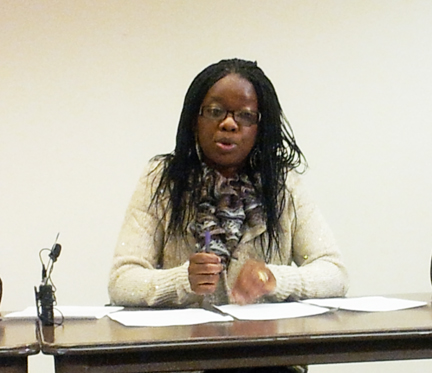
Nelima Sitati at a 2013 community press conference to express concern at the subsidies the City of Brooklyn Park was extending to the Target Corporation to develop its Brooklyn Park campus. Photo: Tom Gitaa/Mshale
Photo: Doug Wallick/Published under Creative Commons License
Mshale Editor’s note: This is part of a series that the TC Daily Planet has published looking at the issues of subsidies, affordable housing, and segregation. You might also be interested in this piece that is part of the series about the “Changing face of Brooklyn Park”. The City of Brooklyn Park is also referred informally as the “African Suburb” being where a lot of the emerging African immigrant middle class first bought homes in the 1990s. Mshale is a founding member of the Twin Cities Media Alliance which runs the TC Daily Planet.
 
Nelima Sitati, a community organizer who formerly worked in North Minneapolis, currently lives in Brooklyn Park. Both North Minneapolis and Brooklyn Park are “Racially Concentrated Areas of Poverty” (RCAPs), which have become hot button points of contention between policy makers thinking about where to spend money on subsidized housing.

Two University of Minnesota policy analysts, Myron Orfield and Ed Goetz, differ on whether it’s helpful for more subsidized housing to be placed in areas that have high concentrations of poverty and people of color (RCAPs) or in more prosperous suburban areas.

Sitati doesn’t necessarily believe that siting affordable housing is a zero sum game. “Before we get to solutions,” she said, “we have to acknowledge that disparities do exist, and exist along racial lines. But who is crafting the narrative? And is it a solution-based narrative? And who are the experts crafting the solutions?” Sitati added that often, the people most affected by the policies are often not included at the decision making table.

Sitati, an Education Equity organizer with Organizing Apprenticeship Project, sits on the Met Council Policy Planning committee and has been working on a housing plan for the seven-county metropolitan area. She believes that people living in RCAPs should have a choice to move, “but it should be a real choice,” she said. “If all things being equal, I would still choose to movie.”

Sitati stressed that regions aren’t discriminated against. “People are discriminated against,” she said.

In her own community in Brooklyn Park, there were few people of color living there in the 1990s. When large numbers of people of color began moving there, disinvestment started to happen.

“There is nothing wrong with people of color living together,” she said. “Social capital is important. What is happening is people of color are being penalized for living together, while high concentrations of white people are thriving.”

Sitati doesn’t see “spreading out the poor people,” as a solution to the poverty issue. “We have many areas that exist that are denying those people the opportunity to be successful,” she said.

She added that proximity to new jobs “doesn’t necessarily translate to access to good jobs.”

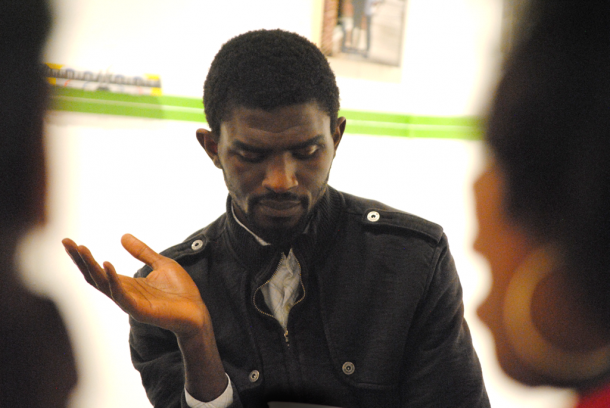
February 18th marks Gambia’s independence and IBé’s original celebration

0
IBé Kaba Photo: Nigel Parry and the Saint Paul Almanac

In a single breath, IBé can spill out over two hundred syllables. But to honor Gambia’s 49th anniversary of independence, he’s asking us to read only 17 syllables at a time in the form of a haiku poem.

Although born in Guinea and now living in the States for the past 23 years, IBé chose to shine a light on Gambia. A prompt at wooloo.org—a website for and by artists—impelled him to create a celebratory event observing Gambia’s independence. There’s nothing unusual happening in Gambia. Just like in England or Belize or Iceland, the people are living their lives and following their routines, which is the whole point of the recognition by IBé.

“I have issues with the fact that a lot of [white] people are first introduced to Africa because of tragedy,” the spoken-word artist says. Africa’s public image has been maligned by disasters and IBé wants to counter that sticky label.

Through HaikusforGambia.com, the stereotype of Africa will find itself in jeopardy. One or even four or five countries in peril cannot dictate the world’s perception of an entire continent. IBé intends to erase the negativity. “News accentuates the bad,” he bemoans, “but there are 54 other countries to consider.”

The Minneapolitan poet decided on haiku because he loves the form. “It says a little, but means a lot,” he notes, “It works like a megaphone amplified.” He realizes that people might not have the patience to read a lengthy poem, but a short, three line, 17-syllable poem? That’s enough to whet their appetite.

On the big day, February 18th, haiku written by 49 local artists and non-artists will decorate billboards along the freeways of 35 and 94 in both directions. The poems will also appear over radio, in newspapers, and plastered on the Internet searchable by #Haikus4Gambia. Forty-nine poets writing 49 different haiku about Gambia to celebrate Gambia’s 49th anniversary of independence.  Keep your eyes open.

More info at Atlanticrock.com.

Walter Mongare appointed Communications Director for Kisii County

0
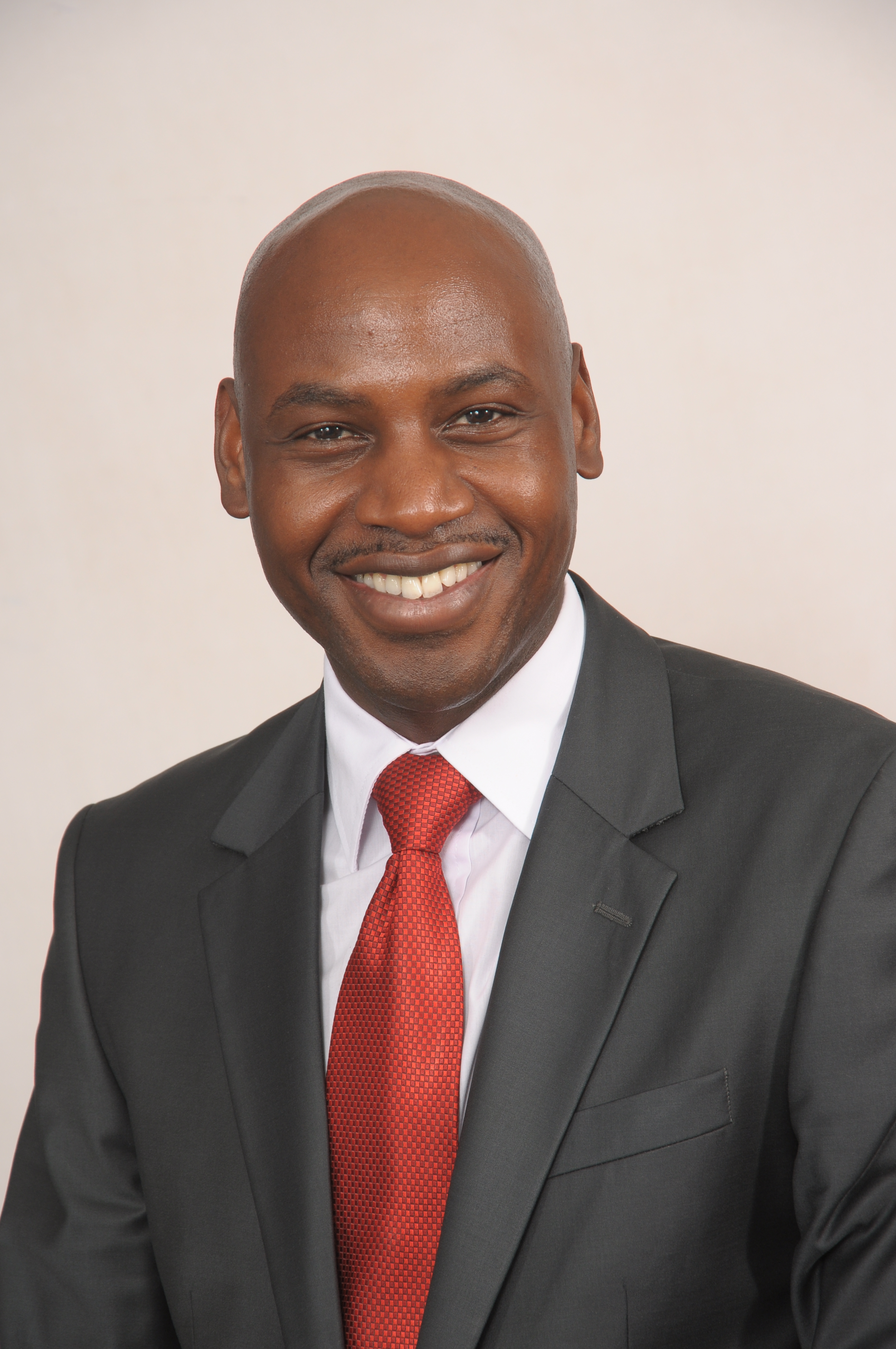
Walter Mongare is now the Communications Director for Kisii County in Kenya

Mshale Editor’s note:  Our reporter, Miriam Mongare, who penned this story is not related to Walter Mongare.

Kenyan media personality, Comedian, Actor and Singer Walter Mongare aka Nyambane has been appointed Communications Director for the populous Kisii County in Kenya. Mongare shot to the limelight as part of the Redykyulass trio that satirized the oppressive Moi regime.

In an email communication with Mshale Publisher Tom Gitaa, Mongare stated that part of his duties will be managing Diaspora affairs on behalf of the County although it was not clear what the depth of his managing will be.

Kisii County along with its neighboring Nyamira County is home to the Abagusii community which boasts arguably one the largest contingent of Kenyans in the United States. The community’s nerve centers in the United States include New Jersey, Texas and Minnesota. In Minnesota, they constitute the single largest entity of Kenyans from one community.

The new Kenya constitution that ushered in a new system of government that “devolved” power to the new counties gave the latter the freedom to engage in bilateral dealings with foreign governments which some of the counties have gone about with much gusto. Many of the counties have also invested political and financial capital in engaging members of the big Kenya Diaspora community that hail from their respective counties in the belief that they can be helpful with ideas now that the counties and not the national government will be responsible for the provision of services and development initiatives.

Communication Director was a nearly non-existent position in the new county government structure that counties seem to have determined is important to their operations and have gone about creating them.

Given the energy invested by Kisii county in engaging the Diaspora community, Mongare being in charge of Diaspora affairs is of interest to the Kisii and Nyamira counties Diaspora community in the US. Both county governors visited the States in the latter part of last year to connect with those hailing from their counties.

Mr. Mongare’s profile lowered somewhat after former president Daniel Arap Moi retired and he went into radio and TV along with consulting gigs before his latest appointment. He last visited the United States in October 2013 when he accompanied Sports, Culture and Arts Cabinet Secretary, Hassan Wario, on an official trip.

Mongare attended Kenyatta University in Kenya and is reportedly working to complete his degree from the institution.

Moiro Omari, Cabinet Secretary in charge of trade at Kisii County, told Mshale via phone that the cabinet looks forward to working with Mr. Mongare in his new capacity “He has years of media experience so we are looking forward to see what he can do for the county,” he said.

Rich diversity of African artists are Minnesota bound

0
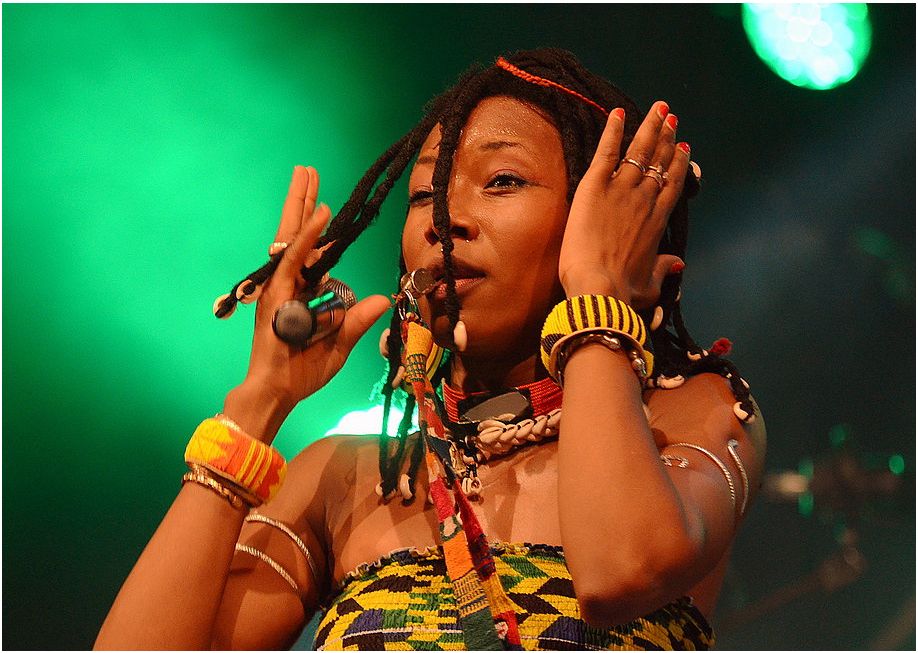
Fatoumata Diawara Photo: Pascal Varrel
The Twin Cities entertainment scene will experience a rich diversity of African entertainment in the coming months. we have compiled some of them for your consideration.

Ordway in St. Paul
345 Washington Street
Saint Paul, MN 55102
651.224.4222 Ticket Office

Rennie Harris Puremovement Fri, Feb 7 – 7:30 hip-hop from Philadelphia
Several classes or discussions will take place this week.

More information is here.

Ladysmith Black Mambazo Sun, Feb 9, 2014 7:30 pm from South African
Before the show opens Dr. Leon Rodrigues of Bethel University and Professor Sowah Mensah, Macalester College will offer a special address with their experiences of apartheid in South Africa. Following the concert, a party will be held.

More information is available here.

Maria de Barros Wed, Feb 19 – 7:30 from Cape Verde and there will be dancing including a 5:30 pm dance class available by pre-registration. Also an hour before the show starts, vocalists Elsa Vega Perez and Maria Isa Perez will discuss their artistic endeavors and their commitment to cross-generational sharing with the intention of passing on traditions.

Go here for more information.

The Gershwin’s Porgy and Bess Tue, Mar 25 & Wed, Mar 26
Pre- and post-show discussions will be offered with an opportunity to see and hear excepted performances of some of the greatest musicals of all time. After the last performance, there will be a discussion with the performers.

Go here to learn more.

STEP AFRIKA! May 31 – June 1

More information can be found here.

The Cedar Cultural Center
416 Cedar Ave S,
Minneapolis MN 55454
Tel: 612-338-2674

The Cedar presents five events imbued with African essence as well.

Habib Koité on February 25th at 7:30 pm from Mali promises an honest performance with delectable commentary.

Meklit (Hadero) March 27th at 7:30 pm born in Ethiopia, relocated to the United States, Meklit presents a broad palette of music.

Sierra Leone Refugee All-Stars April 3 at 7:30 pm always an energetic band, they will bring their audience to the dance floor

Tinariwen April 6th at 7:30 pm, a nomadic people from the Saharan deserts of Mali, this band brings their hypnotic sound back to the Cedar stage.

Fatoumata Diawara April 12th at 8:00 pm puts a completely new face on Malian music in contrast to the other musicians from Mali at the Cedar this year.

Information about tickets can be found here