
Home Blog Page 129

Family, friends remember and celebrate Henry McCabe

0
Kareen McCabe (in hat) at her husband's funeral at the Brooklyn United Methodist Church in Brooklyn Center, Minnesota on December 19, 2015. To her immediate right is daughter Yve. The late McCabe's body was discovered at Rush Lake on November 2, 2015 after missing for almost a month. Photo: Courtesy of Liberian Brothers and Sisters Keepers Organization (LIBASKO)
Kareen McCabe (in hat) at her husband’s funeral at the Brooklyn United Methodist Church in Brooklyn Center, Minnesota on December 19, 2015. To her immediate right is daughter Yve. The late McCabe’s body was discovered at Rush Lake on November 2, 2015 after missing for almost a month. Photo: Courtesy of Liberian Brothers and Sisters Keepers Organization (LIBASKO)
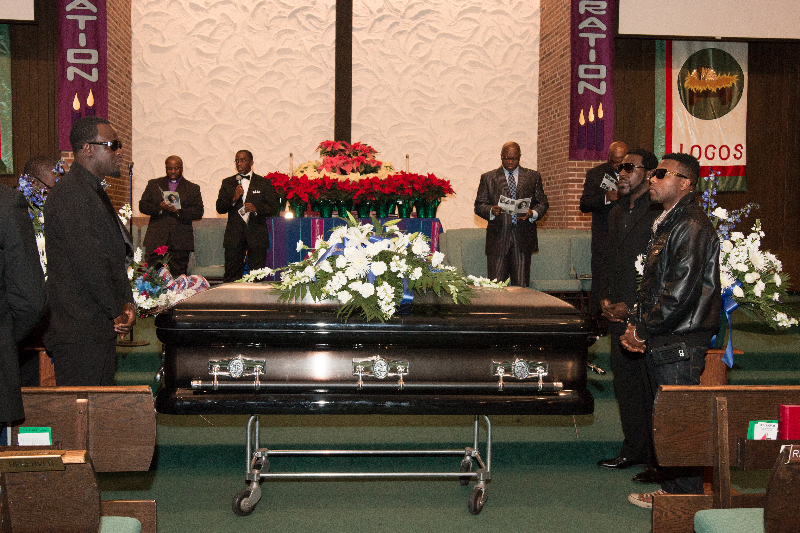
Friends of the late Henry McCabe guarded each corner of the casket during his funeral at the Brooklyn United Methodist Church in Brooklyn Center, Minnesota on December 19, 2015. To her immediate right is daughter Yve. The late McCabe's body was discovered at Rush Lake on November 2, 2015 after missing for almost a month. Photo: Courtesy of Liberian Brothers and Sisters Keepers Organization (LIBASKO)
Friends of the late Henry McCabe guarded each corner of the casket during his funeral at the Brooklyn United Methodist Church in Brooklyn Center, Minnesota on December 19, 2015. The late McCabe’s body was discovered at Rush Lake on November 2, 2015 after missing for almost a month. Photo: Courtesy of Liberian Brothers and Sisters Keepers Organization (LIBASKO)
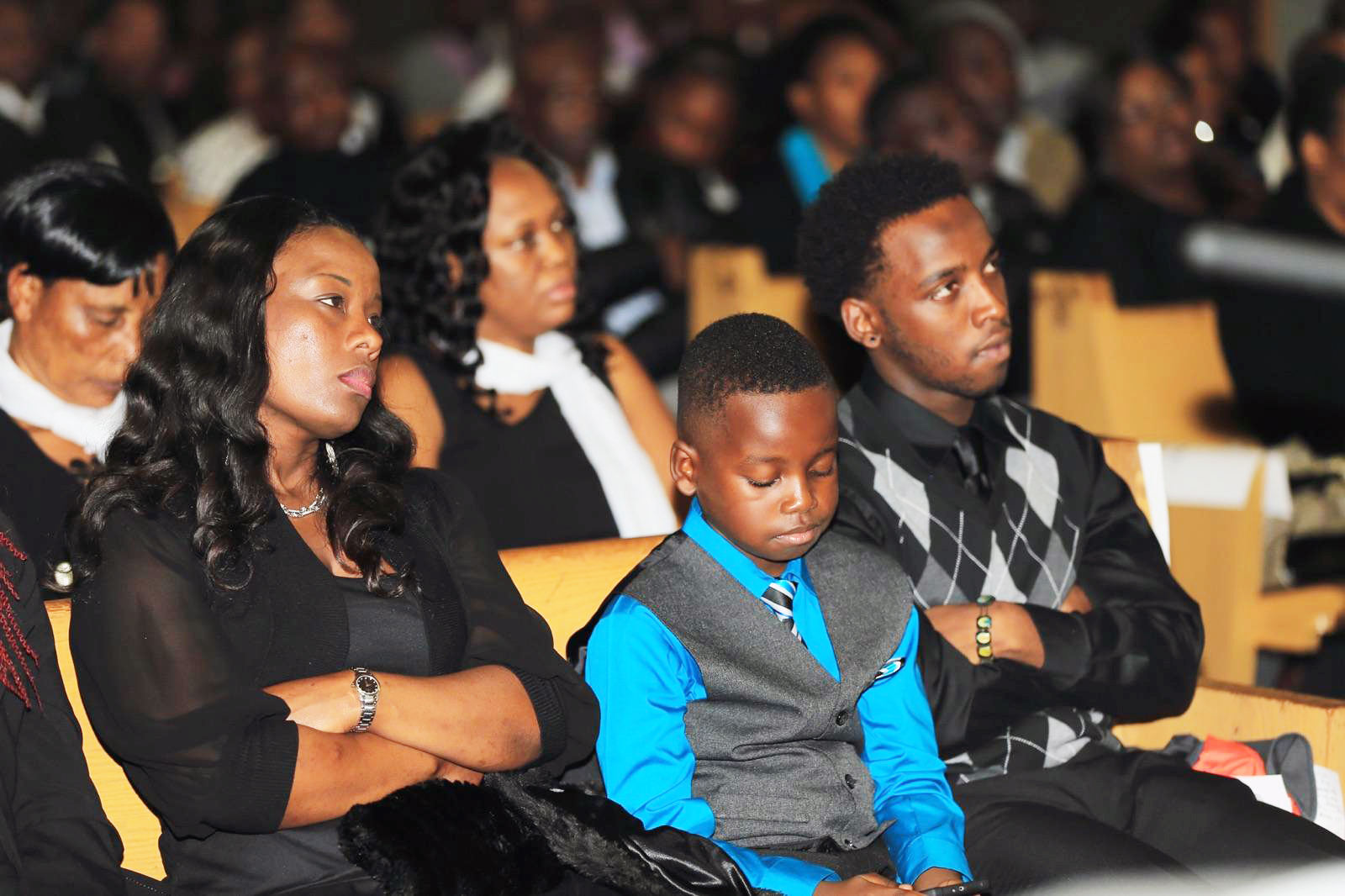
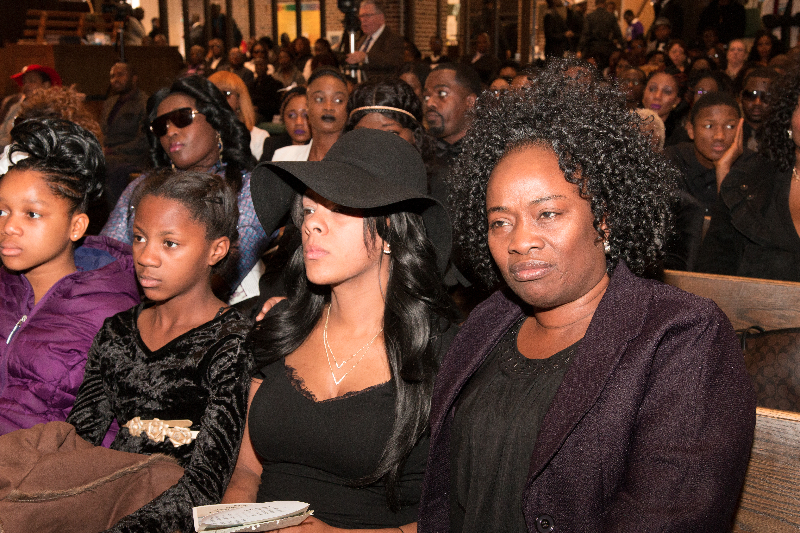
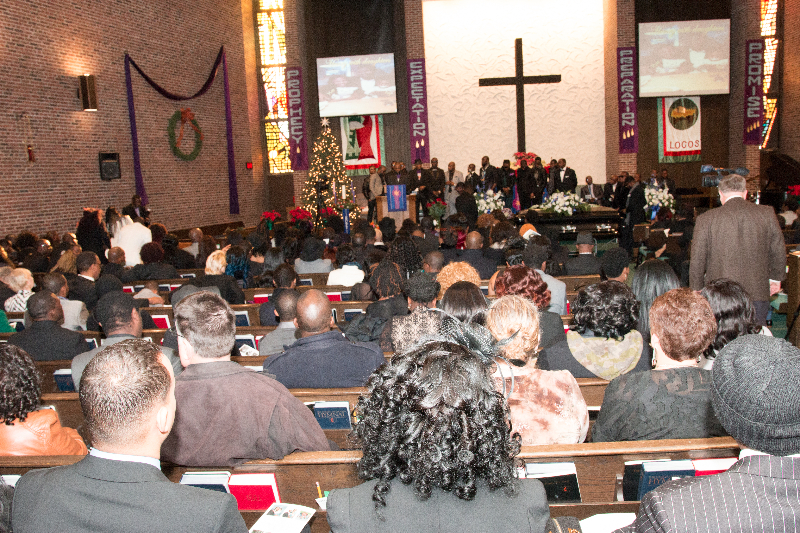
A cross section of the mourners at the funeral of the late Henry McCabe at the Brooklyn United Methodist Church in Brooklyn Center, Minnesota on December 19, 2015. The late McCabe's body was discovered at Rush Lake on November 2, 2015 after missing for almost a month. Photo: Courtesy of Liberian Brothers and Sisters Keepers Organization (LIBASKO)
A cross section of the mourners at the funeral of the late Henry McCabe at the Brooklyn United Methodist Church in Brooklyn Center, Minnesota on December 19, 2015. The late McCabe’s body was discovered at Rush Lake on November 2, 2015 after missing for almost a month. Photo: Courtesy of Liberian Brothers and Sisters Keepers Organization (LIBASKO)
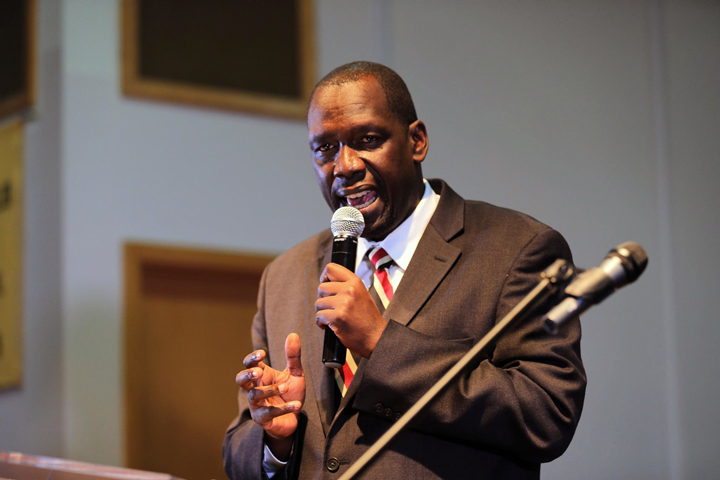
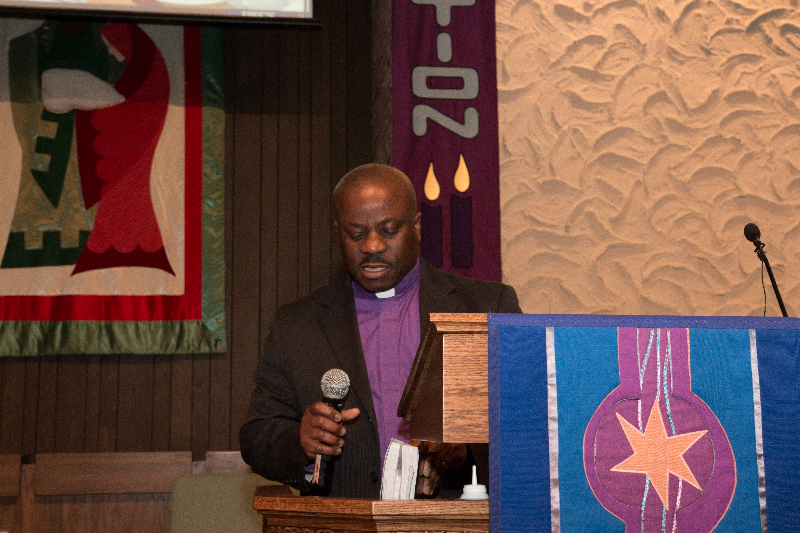
Pastor Charles Goah of United Christian Fellowship Church in Minneapolis officiated at the funeral of the late Henry T. McCabe at the Brooklyn United Methodist Church in Brooklyn Center, Minnesota on December 19, 2015. The late McCabe's body was discovered at Rush Lake on November 2, 2015 after missing for almost a month. Photo: Courtesy of Liberian Brothers and Sisters Keepers Organization (LIBASKO)
Pastor Charles Goah of United Christian Fellowship Church in Minneapolis officiated at the funeral of the late Henry T. McCabe at the Brooklyn United Methodist Church in Brooklyn Center, Minnesota on December 19, 2015. The late McCabe’s body was discovered at Rush Lake on November 2, 2015 after missing for almost a month. Photo: Courtesy of Liberian Brothers and Sisters Keepers Organization (LIBASKO)

BROOKLYN CENTER, Minn. (Mshale) – Hundreds of community members and high ranking State of Minnesota government employees gathered a week before Christmas to remember a man they described as a loving father, dedicated employee and erstwhile union leader.

Henry T. McCabe, a Minnesota Department of Revenue Corporate Auditor, who had been missing for almost a month was discovered dead on Rush Lake in New Brighton on November 2. He was 32. He left behind two daughters, his wife of 11 years and many friends and work associates who celebrated his memory at Brooklyn United Methodist Church in the ‘African Suburb’ of Brooklyn Center.

McCabe was the best dad anyone could ever ask for, his oldest daughter, 10-year old Yve McCabe, said at the service. An emotional Yve told the by now hushed church that her dad’s death was “the worst punishment ever.”

“Why did he have to die like this?” Yve asked, barely holding back tears.

Yve’s question was in the minds of many in the Liberian community which has had a particularly challenging year. McCabe’s death came barely 6 months after that of 10-year old Barway Collins, whose body was found on the banks of the Mississippi River.  His father, Pierre Collins, pled guilty to second-degree intentional murder and is serving a 40 year sentence.

Yve’s uncle, Timothy Borbor, had spoken just before her and in a halting voice said he believed “my brother was murdered.” Police have said the death is still under investigation.

McCabe was an honor student at his alma mater California State University and a member of Beta Alpha Psi, an international honor organization for financial information students and professionals.

McCabe’s wife, Kareen, described the disarming man that she fell in love with.  After composing herself, she joked how when they first met at a multigenerational Liberian family party that had everyone from the little babies to the old people “I would normally give out a fake phone number when a guy asked but before I knew it, I had given him my real number.”

“He taught me how to cook,” Kareen said. As she perfected the cooking in those early years, McCabe got “skinnier”, she said to laughter.

McCabe’s love of community and people are things that never changed since he met him, the tearful widow told mourners. “And that is what I loved about him.” She said it has been difficult to go near the desk where the late McCabe used to study.

Kareen also joined her brother-in-law Timothy in calling her husband’s death a murder.

“I want justice for my husband. He didn’t deserve to die. Someone did this to him. There is a God and he knows what happened and hates an injustice. Whoever did this, God will deal with you,” the now visibly emotional Kareen said as the congregation nodded and murmured their approval.

Pastor Charles Goah of United Christian Fellowship Church in Minneapolis said Kareen told him she was hoping the death was still a dream she will wake up from.

“This is not academic to her and the family, but real,” pastor Goah said as he delivered the sermon.

Pastor Goah then went on to preach, from among other books in the bible, the book of Luke, directing mourners specifically to chapter 7. That chapter tells the story of how Jesus raised the son of the widow of Nain from the dead. Goah said death for those left behind many times leads to suffering but like what Jesus did with the widow, he showed compassion towards her and those around Kareen should do the same.

“In our darkest moments, where there is the presence of Jesus, there cannot be hatred,” the fiery Goah told mourners.

In addition to his devotion to his family and larger Liberian community, McCabe was a dedicated and committed employee, said Ryan Church, the Minnesota department of Revenue Deputy Commissioner, who got to know McCabe as they both worked at Revenue. Church led a strong delegation of state employees who came to pay their respects.  The previous night at the wake, Church’s boss, Cynthia Bauerly, Revenue Commissioner at Revenue had paid her respects as she was scheduled to be out of town during McCabe’s funeral.

“If you forgot your lunch, Henry had you covered,” a wistful Church said. The impact McCabe had at Revenue for the four years he was there “was striking.”

The powerful Minnesota Association of Professional Employees (MAPE), the union that represents state and municipal workers, had a strong presence at the funeral as they sent a delegation led by its statewide president Chet Jorgenson.

“He always had a smile at the beginning and at the end of the day,” Jorgenson told mourners. He narrated discussions he had with the late McCabe and the latter’s wish to retire in the future and assist non-profits in their work. “And oh, if you talked about your children, you better have the photos ready as he would ask to see them.”

The late McCabe served as the chapter president of MAPE Local 401 until just this past summer and the task of expressing the grief of MAPE members was given to Joan Treichel. A sobbing Treichel said the biggest thing Henry was working on while chapter president was paid parental leave for all public workers, a desire that was fueled after his second child Ivy was born.

“We are still fighting (for parental leave) and I am sure Henry will be smiling up there once we accomplish it,” Treichel said. All MAPE members are praying God will reveal the answers to what really happened to their friend.

McCabe’s mother mourned her son via phone in an emotional eulogy that had tears flowing freely in the packed church.

“God only knows why I am not there,” McCabe’s mother said. She thanked everyone for finding her son and also thanked Kareen “for the children you had together.”

The funeral had been delayed for weeks to allow the late McCabe’s mother to travel from Liberia but those efforts were not successful, organizers said.

After the mother’s powerful delivery, Seyon Nyanwleh, a community organizer and the funeral’s master of ceremony said “we tried to get her here but were not able but you can see she is not broken.” He said whoever killed McCabe did not only hurt McCabe’s family “but all of us.”

Various speakers from a cross section of the communities that the late McCabe had a relationship with spoke of the impact that he had on them, from his early years in Liberia to his adult life in the United States. Signifying how well rounded he was, there were also speakers from the soccer team he was a part of, East Coast Stars.

His teammates recalled the jokes they would have with him on the sidelines. McCabe’s jokes would make things lively in between action at the games, they said.

“We will never know why bad things happen to good people,” one East Coast Stars player said as he mourned his teammate. He will never want us to cry today.

The Liberian Gospel Musicians Association provided the music in between the remembrances from the contingent of speakers.

Also speaking was the widow’s mother, Heloisa Wade.

“His earthly life might have been interrupted but his life goes on,” Ms. Wade said.

Related: Minnesota Kenyans and Liberians mourn loss of two that shared first name
Ex-Minneapolis mayor delivers keynote address on Jamhuri Day, urges Kenyans to wake up from slumber

0
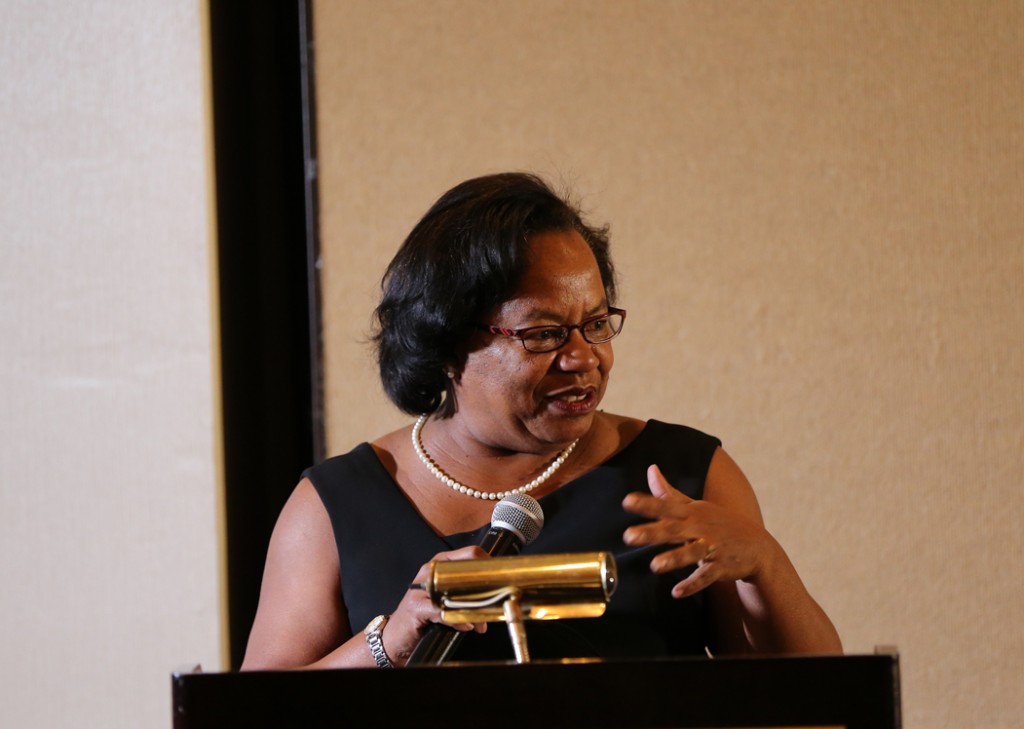
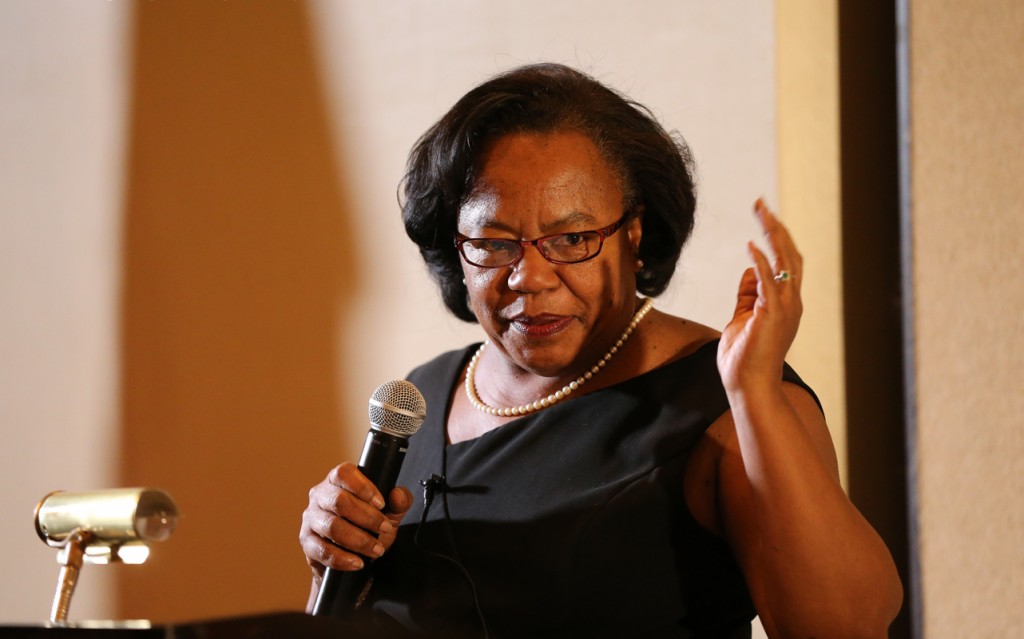
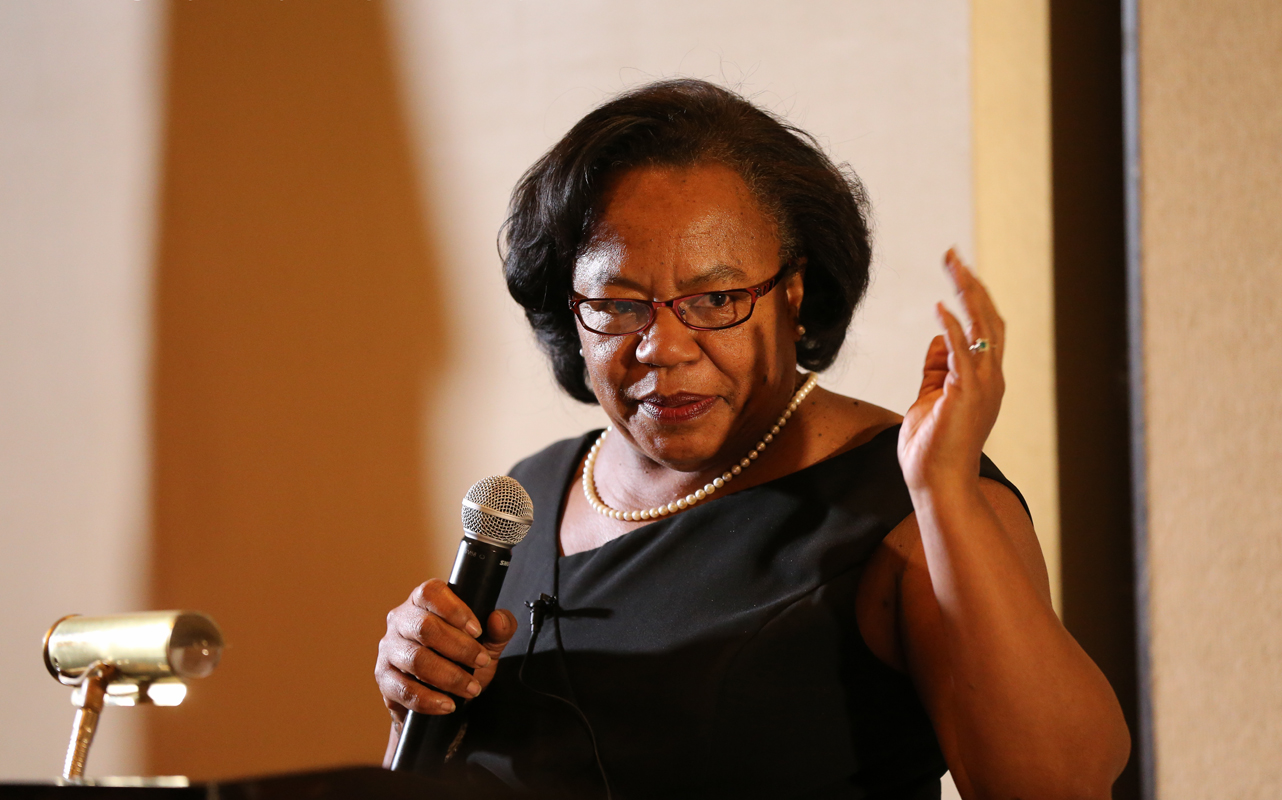
Sharon Sayles Belton, VP of Government Affairs at Thomson Reuters and former mayor of Minneapolis, Minnesota's largest city and commercial center, keynotes Kenya's 52nd Jamhuri Day Dinner held at a local hotel organized by the state's Kenya leadership group. Photo: Courtesy of KDR TV
Sharon Sayles Belton, VP of Government Affairs at Thomson Reuters and former mayor of Minneapolis, Minnesota’s largest city and commercial center, keynotes Kenya’s 52nd Jamhuri Day Dinner held at a local hotel organized by the state’s Kenya
leadership group. Photo: Courtesy of KDR TV
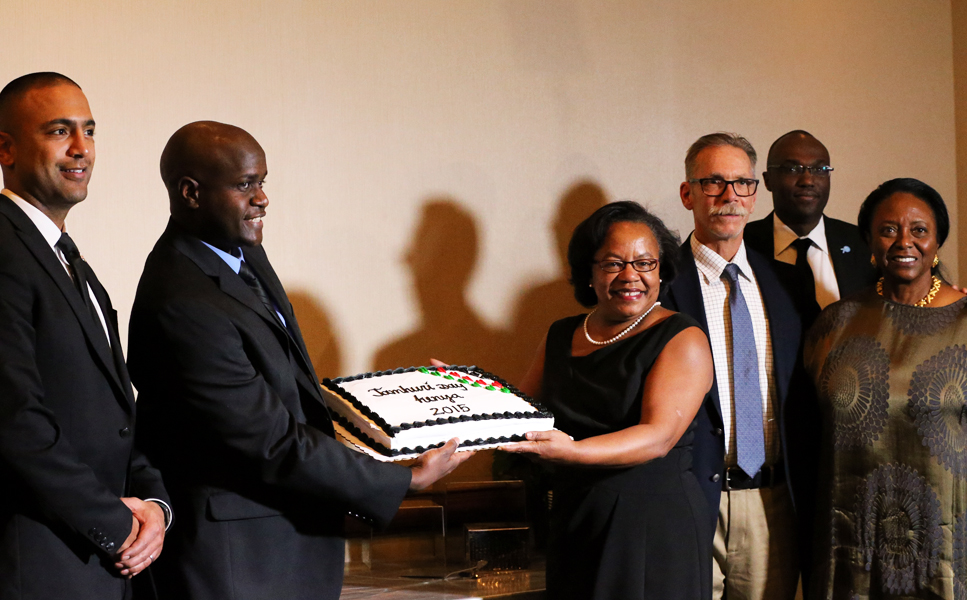
The chairman of the 2015 Jamhuri Day Committee in Minnesota, Geoffrey Gichana and former Minneapolis mayor Sharon Sayles Belton hold the cake marking the occasion of Kenya's 52nd Jamhuri Day on Saturday, December 12. The mayor, the first female mayor of Minnesota's largest city and commercial center, keynoted the independence dinner at a local hotel. The two are flanked by others who spoke at the dinner, Salim Omari, Dr. Karl Anderson and Judge (ret.) Lajune Lange. Photo: Courtesy of KDR TV
The chairman of the 2015 Jamhuri Day Committee in Minnesota, Geoffrey Gichana and former Minneapolis mayor Sharon Sayles Belton hold the cake marking the occasion of Kenya’s 52nd Jamhuri Day on Saturday, December 12. The mayor, the first female mayor of Minnesota’s largest city and commercial center, keynoted the independence dinner at a local hotel. The two are flanked by others who spoke at the dinner, Salim Omari, Dr. Karl Anderson and Judge (ret.) Lajune Lange. Photo: Courtesy of KDR TV
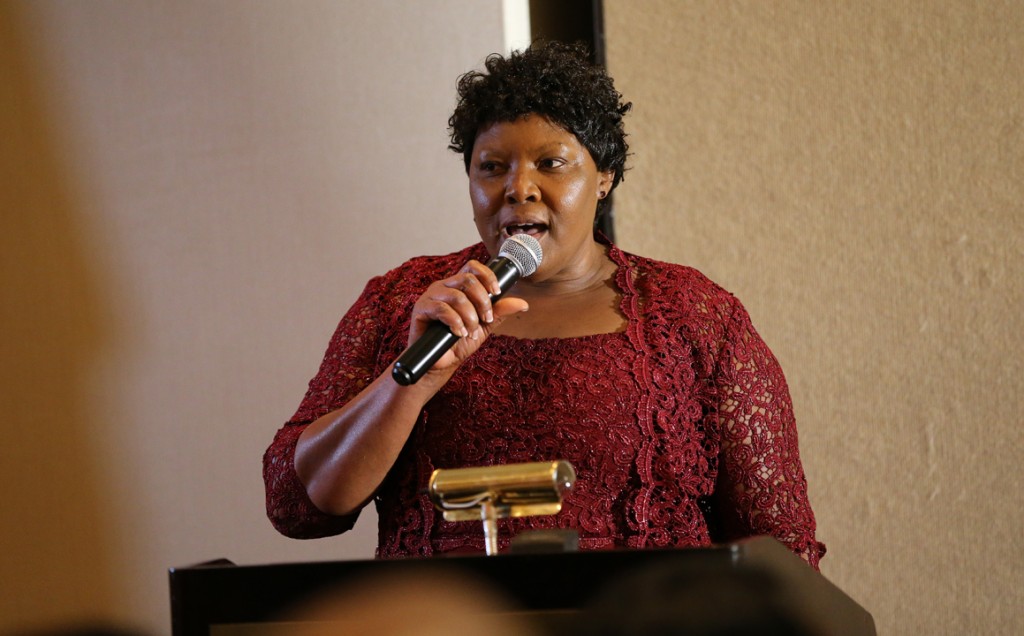
Elizabeth Marigi of AMWAG (African Minnesota Women Awareness Group), speaking on the domestic violence challenges that have beset the Kenyans in the state and the services her group offers. Photo: Courtesy of KDR TV
Elizabeth Marigi of AMWAG (African Minnesota Women Awareness Group), speaking on the domestic violence challenges that have
beset the Kenyans in the state and the services her group offers. Photo: Courtesy of KDR TV
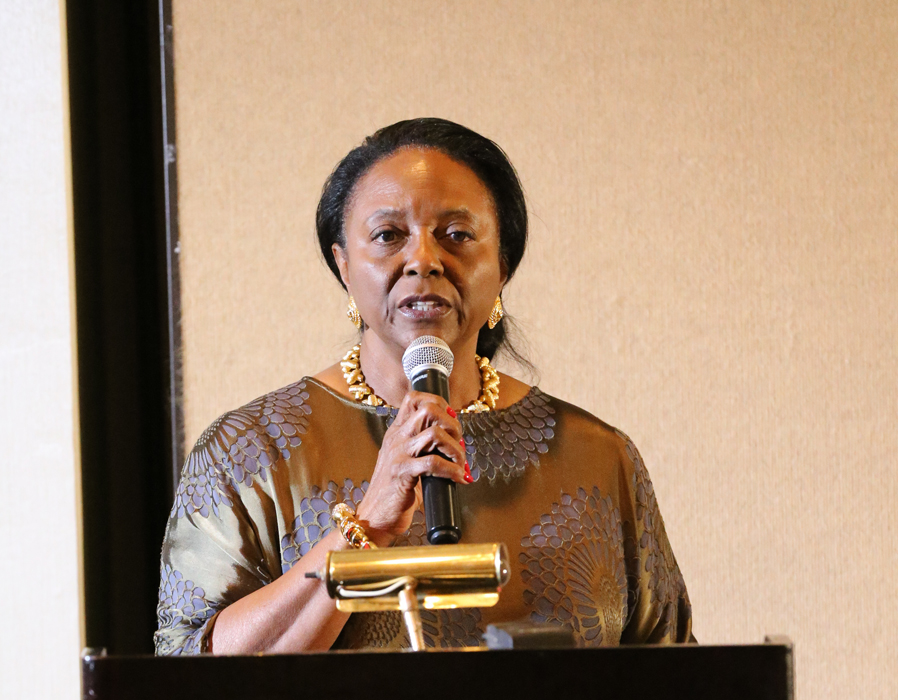
Judge (ret.) Lajune Thomas Lange, president of the International Leadership Institute and Honorary Consul of South Africa for Minnesota making briefs at a dinner to mark Kenya's 52nd Jamhuri Day that was keynoted by Sharon Sayles Belton, the first female mayor of Minnesota's largest city and commercial center. The retired state judge was instrumental in the highly touted Minneapolis-Eldoret sister city relationship that continues to thrive. Photo: Courtesy of KDR TV
Judge (ret.) Lajune Thomas Lange, president of the International Leadership Institute and Honorary Consul of South Africa for Minnesota making briefs at a dinner to mark Kenya’s 52nd Jamhuri Day that was keynoted by Sharon Sayles Belton, the first female mayor of Minnesota’s largest city and commercial center. The retired state judge was instrumental in the highly touted Minneapolis-Eldoret sister city relationship that continues to thrive. Photo: Courtesy of KDR TV
Graham Gaya of the National Black MBA Twin Cities Chapter urged Kenyan-Americans to consider mentoring the youth during a dinner to mark Kenya's 52nd Jamhuri Day on Saturday, December 12 2015. The dinner was keynoted by Sharon Sayles Belton, the first female mayor of Minnesota's largest city and commercial center. Photo: Courtesy of KDR TV
Graham Gaya of the National Black MBA Twin Cities Chapter urged Kenyan-Americans to consider mentoring the youth during a dinner to mark Kenya’s 52nd Jamhuri Day on Saturday, December 12 2015. The dinner was keynoted by Sharon Sayles Belton, the first female mayor of Minnesota’s largest city and commercial center. Photo: Courtesy of KDR TV
Minnesota Kenyans take selfies during a Jamhuri Day dinner on Saturday, December 12, 2015 that was keynoted by Sharon Sayles Belton, the first female mayor of Minnesota's largest city and commercial center. Photo: Courtesy of KDR TV
Minnesota Kenyans take selfies during a Jamhuri Day dinner on Saturday, December 12, 2015 that was keynoted by Sharon Sayles Belton, the first female mayor of Minnesota’s largest city and commercial center. Photo: Courtesy of KDR TV
George "Jojo" Ndege of Jambo Africa Restaurant at the a dinner to mark Kenya's 52nd Jamhuri Day that was keynoted by Sharon Sayles Belton, the first female mayor of Minnesota's largest city and commercial center. Mr. Ndege hosted the first Jamhuri Day dinner in 2014 at his popular restaurant that provided the spark for the community organized one this year. Photo: Courtesy of KDR TV
George “Jojo” Ndege of Jambo Africa Restaurant at the a dinner to mark Kenya’s 52nd Jamhuri Day that was keynoted by Sharon Sayles Belton, the first female mayor of Minnesota’s largest city and commercial center. Mr. Ndege hosted the first Jamhuri Day dinner in 2014 at his popular restaurant that provided the spark for the community organized one this year. Photo: Courtesy of KDR TV
Sharon Sayles Belton, VP of Government Affairs at Thomson Reuters and former mayor of Minneapolis, Minnesota's largest city and commercial center, keynotes Kenya's 52nd Jamhuri Day Dinner held at a local hotel organized by the state's Kenya leadership group. Photo: Courtesy of KDR TV
Sharon Sayles Belton, VP of Government Affairs at Thomson Reuters and former mayor of Minneapolis, Minnesota’s largest city and commercial center, keynotes Kenya’s 52nd Jamhuri Day Dinner held at a local hotel organized by the state’s Kenya leadership group. Photo: Courtesy of KDR TV

ST.LOUIS PARK, Minn. (Mshale) – Before the keynote speaker took the podium at a local hotel Saturday on the occasion of Kenya’s 52 years of independence (Jamhuri Day), the evening’s master of ceremonies, Lillian Otieno, invited the chair of the planning committee, Geoffrey Gichana, to introduce the committee.

Gichana introduced the committee and described it as “a committed group of people in our community” destined to take it to greater lengths. As he introduced them individually, he urged the audience to get behind efforts “to unite the community.”

The Jamhuri Day committee is the same one that puts together the decade old annual festive Madaraka Day in the summer (The Kenya embassy in Washington has Minnesota designated for the last decade as the official site of the embassy’s Madaraka Day activities). The committee draws its membership from the leaders of the various Kenyan community groups in the state. This was the first community organized Jamhuri Day event after the idea was sparked by Kilimanjaro Entertainment’s George “Jojo” Ndege, when he hosted a Jamhuri Day dinner last year at his Jambo Africa Restaurant in Brooklyn Center that former Minneapolis NAACP president Brett Buckner keynoted.

The evening brought together the who’s who of the Kenyan community in Minnesota and friends of Kenya, including Judge (ret.) LaJune Thomas Lange, president of the International Leadership Institute and Honorary Consul of South Africa in the State of Minnesota. At their dinner tables, the audience found a call for suggestions for a name for a future umbrella organization of Kenyans in the state.

The featured keynote speaker was Sharon Sayles Belton, the first female mayor of Minneapolis and the first black person to ascend to the mayorship of Minnesota’s largest city and commercial capital where she served for two terms. She is currently vice-president for Government Affairs at Thomson Reuters Corporation, the market leader in financial data (ahead of rival Bloomberg).

Belton addressed the audience after several others shared their involvement on the ground with Kenya and Minnesota Kenyans locally. Her message to the audience came in the form of a challenge to use the sizeable Kenyan community to influence local and state government policies in the state.

Acknowledging the numerical strength of Kenyans in the state of Minnesota, the former mayor wondered out loud “Where do you all live?” drawing loud laughter. She was alluding to the fact that despite being among the so-called “Big Five” (Somalis, Ethiopians, Liberians, Kenyans and Nigerians) in Minnesota, Kenyans are the most invisible of the five.

“The world is ruled by those who show up, if you don’t show up your agenda is not going to be discussed,” she said. “What do you think will happen if 500 of you showed up at City Hall for a subcommittee meeting or at the legislature?”

She urged the Kenyan community to be active participants in America’s democracy as its success depends on everyone taking part.

Kenya versus USA

The former mayor told the Kenyans that being active with matters back home whether developmental or political is not an excuse not to be involved locally in America where they live and raise their families. “It is not an either/or situation,” she said. Minnesota Kenyans can be active both in Kenya and the United States, she added.

Eldoret

To drive home her point, Mayor Sayles-Belton recalled how one of her proudest achievements while in office as mayor was the Eldoret-Minneapolis sister city relationship which was birthed while she was in office. She commended Judge Lange for her commitment to the sister-city relationship and for continuing to nurture it. The city of Eldoret which is in Uasin Gishu County has benefited by receiving fire trucks, ambulances and medical equipment.

The Eldoret-Minneapolis sister-city relationship has previously won Sister Cities International’s Innovation Award. Sister Cities International is the national membership organization for individual sister cities, counties, and states across the U.S. that facilitates and unites the global partnerships.

“Let us dedicate some of our time to building the coalitions that are necessary to empower our communities,” Mayor Belton said.

Belton also urged Kenyans in Minnesota to continue their tradition of valuing education and to take it a notch higher by participating in America’s democracy. She said by leveraging democracy and education, true prosperity will follow. Just because you have attained high levels of education does not guarantee prosperity, she told them but it is active participation in the democratic space that allows the community to take advantage of economic opportunities such participation brings.

A Minnesota Kenyan young professional, Graham Gaya, who is active in the National Black MBA mentoring program had spoken briefly before Belton’s address about mentoring which the former mayor seized upon to stress the importance of mentoring young Kenyan-Americans “We must continue to stress education, self respect, and personal responsibility,” Belton said.

Acknowledging the educational and professional accomplishments of the Kenyans in the audience, Belton challenged them to use their success and follow Gaya’s path and mentor a young person. “It is never about you but the united us,” Sayles Belton said to prolonged applause.

Sayles Belton said if the Minnesota Kenyan community worked hard to instill societal values in its offspring “We can avoid a lot of the challenges we now have such as domestic abuse or negative interactions with police,” she said. Adding that “the absence of love and values” is wreaking havoc in the community. Earlier, Elizabeth Marigi of AMWAG (African Minnesota Women Awareness Group) had spoken of the rising cases of domestic violence her group has been encountering and services they offer. Salim Omari, a sergeant with the St. Paul police department and works in its training department in addition to being a lead in its SWAT team, cautioned Kenyan Americans to be careful when it comes to domestic violence as Minnesota statues requires officers to make an arrest when called. Omari is the son of Hassan Omari, a long time Minnesota Kenyan who has since relocated to Mombasa but is currently in Minneapolis visiting his family. The younger Omari was one of the invited speakers and spoke on police community relations. Also speaking before the keynote address was the loquacious Dr. Karl Anderson, a local dentist who in collaboration with the Kamba Association of Minnesota has been working on projects for the blind in Kenya.

Concluding her wide ranging keynote address, Sharon Sayles-Belton told Minnesota Kenyans that whichever method they choose to get involved in the civic life of America, “at a minimum, please vote,” she said.

Also Read: Sharon Sayles Belton bronze bust unveiled at Minneapolis City hall

Immunization and Pregnancy

0
Immunization and Pregnancy

MDH- 12-15As a parent, you do everything you can to keep your child healthy. Keeping your child healthy starts before they are born. When you’re pregnant, you take vitamins, avoid things that can harm your unborn baby, and make sure you get exercise and extra rest. Did you know that another healthy thing to do is to get vaccinated before your baby is born? Some pregnant women may be surprised that their doctor is recommending vaccination, but vaccination keeps both you and your baby healthy.

Immunizations are life-saving and protect pregnant women and their babies against dangerous diseases.  Getting vaccinated during pregnancy not only protects mothers from getting some dangerous diseases, but also protects their babies before they are born and in the first months of life before they can get their own vaccines. There are two vaccines that are recommended during pregnancy: the influenza vaccine and the pertussis or whooping cough vaccine. Let’s explore what these diseases are and why vaccination during pregnancy is important.

Influenza, or flu, is a respiratory disease that attacks the nose, throat, and lungs. It is not a common cold and is more dangerous to pregnant women and their unborn babies. If a pregnant woman has the flu, she can go into labor early, which is dangerous for both the mother and the baby.

After a pregnant woman gets flu vaccine, she passes along protection to her baby. This protects her baby from flu during the first few months of life until the baby can get vaccinated. It is safe for a pregnant woman to receive the flu shot at any time during her pregnancy, and it will not harm her unborn baby. The flu shot has been given to millions of pregnant women over many years.

Pertussis, or whooping cough, is a lung disease that causes violent coughing attacks that lasts for weeks or months. When young babies get whooping cough they may stop breathing or cough so hard that they turn blue or vomit.

The pertussis vaccine is also known as Tdap.  All pregnant women should get a Tdap during every pregnancy. It is given closer to the end of their pregnancy so they can pass protection to their babies before they are born. Getting Tdap during pregnancy protects you from getting pertussis during the time when your baby is most at risk. The pertussis vaccine also passes protection to your unborn child so they are protected during the time when they have the highest risk for serious illness or death. The Tdap vaccine is safe to get during pregnancy for both the pregnant woman and her unborn baby.

To make sure the new baby stays as healthy as possible, fathers, brothers and sisters, grandparents and other close contacts should make sure they also get the flu vaccine and that they are up to date on their pertussis vaccine.

If you have any questions about the vaccines you receive while you are pregnant, ask your health care provider. You can also learn more about vaccines you may need before, during or after pregnancy at http://www.cdc.gov/vaccines/adults/rec-vac/pregnant.html.

Minnesota African community to observe World AIDS Day on December 5

0
The African community in Minnesota will observe World AIDS Day on Saturday, December 5, 2015 as a new report shows most of the new HIV infections among women in Minnesota were by women born in Africa.

A coalition of African immigrants is holding its annual African World Aids Day (AWAD) on Saturday, December 5 at the  Sabathani Community Center in Minneapolis. The theme this year is “PrEP the Pill to Stop HIV?”.

It runs 12pm to 4pm and is  free and open to the public.

The event, now its 12th year, comes amid a new report by the Minnesota Department of Health in April that the number of  cases in the state is not dropping. A reported 7,988 people are living with HIV/AIDS in Minnesota according to the  department.  The state has reported between 280 and 370 new HIV infections each year since 2000. It ranks 17rth nationally in new cases reported.

In the new cases that were reported in 2014, the latest year figures are available, 62% involved men who have had sex with other men. 31% of the men who contracted HIV last year were aged between 20 and 29.

African Immigrant Women

Of the 73 infections for females discovered in 2014, black women accounted for most of them and most of those black women were born in Africa. The 73 infections among women was an increase of 7% from 2013.

The annual Africa Worlds Day (AWAD) which brings together the African immigrant community to stress the importance of getting tested and prevention measures, is a collaboration between the African community organizations with the Minnesota Department of Health in a supporting role.

The theme “PrEP the Pill to Stop HIV?” is meant to highlight the daily prevention pill that is now available targeting those at a very high risk of getting HIV. The drug regiment is referred to as PrEP, or pre-exposure prophylaxis.

“Despite the tremendous progress made in responding to the epidemic over the past three decades, the annual number of new HIV cases has not declined and remains unacceptably high,” said Dr. Ed Ehlinger, Minnesota’s commissioner of health on World Aids Day which was this past Tuesday. “We still haven’t found a reliable cure or vaccine against HIV infection and the data make it clear we need to do more.”

At the AWAD event on Saturday, December 5, there will be confidential free HIV testing, free blood pressure checks and a free health screening. There will also be free food and a live band, organizers announced.

If you go:

What: 12th Annual African World AIDS Day (AWAD)
Admission: Free
When: Saturday, December 5, 2015 @ 12pm-4pm
Where: 2nd Floor Gym @ Sabathani Community Center, 310 East 38th Street, Minneapolis, MN 55409
More information: Shanasha @ 612-483-0199, Alvine Siaka @ 612-229-2679 or Henry Momanyi @ 763-439-0083

Minnesota orders retesting of Certified Nursing Assistants

0
The Minnesota Department of Health on December 1, 2015 ordered the retesting of 569 nursing assistants that took their test at Inver Hills Community College between May 1, 2014, and October 16, 2015. Photo: Courtesy of Inver Hills Community College

The Minnesota Department of Health has ordered the retesting of 569 nursing assistants who took their test to become federally qualified nursing assistants at Inver Hills Community College Center for Professional and Workforce Development and its satellite location at Blue Sky Online in West St. Paul between May 1, 2014, and October 16, 2015.

Nursing assistants who took the tests at these two locations during the time indicated can continue to work, but they will need to retake the tests by no later than March 31, 2016, the Minnesota Department of Health declared.

In a release to media, MDH said its order comes after investigators found evidence of anomalies in test results associated with the two sites thus raising questions about their reliability. Testing has been discontinued at both locations pending the outcome of the investigation.

MDH, Inver Hills Community College, and Minnesota State Colleges and Universities (MnSCU), of which Inver Hills Community College is a part, began an investigation after noticing suspicious patterns in test results.

“We have an obligation to ensure that these workers meet the basic requirements,” said MDH Assistant Commissioner Gil Acevedo. “Since nursing assistants must be supervised and receive specialized training after hiring and prior to working with patients, there is a relatively low risk to patients. Regardless, it is important to re-establish the credentials of these nursing assistants as quickly as possible without causing an undue disruption for workers, employers, or patients.”

Inver Hills Community College President Tim Wynes said that Inver Hills takes its role in preparing nursing assistants “very seriously and that “As soon as potential improprieties were noted we suspended our testing services. We now look forward to the results of the investigation and, if needed, improving our processes.”

Minnesota has more than 55,000 certified nursing assistants in the state, many of them African immigrants.  Their duties generally include taking vital signs, making beds, and helping patients with dressing, bathing, and other basic functions. Some may also administer medications with proper training and under the supervision of a nurse.

To help employers verify the qualifications of potential nursing assistants prior to hiring them, the state and the federal Centers for Medicare and Medicaid Services (CMS) maintain a registry of certified nursing assistants. To be added to the registry, prospective workers must pass a written test and a skills test required by the state and CMS.

MDH said it is not clear which individuals that took the test at the two sites are impacted by the alleged improprieties and is thus taking the extraordinary step of requiring retesting of all those that took the test between May 2014 to October 2015.

MDH will be contacting employers and the affected individuals on next steps.

If you are a CNA and took the test at Inver Hills Community College between May 1 2014 and October 16, 2015:

MDH wants you to:

• Notify your employer;
• Contact MDH by emailing [email protected] or by calling 651-201-4131; and
• Start preparing to retake the test and watch the MDH website for updates.

Senegal plans to ban the burqa

0
Senegal plans to become the fifth African country to ban Muslim women from wearing the full-face Islamic veil – known as the burqa - in public.
Senegal plans to become the fifth African country to ban Muslim women from wearing the full-face Islamic veil – known as the burqa – in public.

Senegal plans to become the fifth African country to ban Muslim women from wearing the full-face Islamic veil – known as the burqa – in public. The move is an attempt to curb extreme Islamic activity.

According to the interior minister Abdoulaye Daouda, the decision should not be seen as anti-Islamic, especially because Senegal was a mainly Muslim state.

If the plan is passed into law, the West African nation will become the fifth African country to restrict the wearing of the full-face veil, for the same reason the Senegalese are planning to do.

President Macky Sall, himself a Muslim, called for a courageous fight against militant Islamists last week. Chad, Gabon and Congo-Brazzaville have passed similar legislation, with Cameroon being the most recent after it introduced the ban in July in its Far North region.

Ironically, all of them are former colonies of France, which caused an uproar in 2011 when it passed a legislation to become the first European country to ban the full-face veil from being worn in public places.

In the particular case of Chad and Cameroon, they have been targeted by burqa-wearing suicide bombers believed to be deployed by the Nigeria-based Boko Haram group, to enter densely populated areas and detonate bombs.
Senegal has not been attacked so far by militant Islamists.

But the minister averred that the plan to ban the full-face veil was in the interest of national security. Senegalese officials announced the arrest of two Imams linked with militant groups for the first time a fortnight ago.

Last week, Mr Sall was reported as having stated that the full-face veil was not compatible with Senegalese culture and the tolerant Islam practiced by Muslims in the West African state.

Most women in the country do not wear it.

Hundreds bid farewell to the late Henry Gichaba

0
The family of the late Henry Gichaba, wife Jackline and sons Tylor and Trevor, look on during the sendoff memorial service at the Kenyan Community SDA Church in Brooklyn Center, Minnesota on Sunday, November 15 2015. Gichaba was found dead in his apartment the morning of Tuesday, November 3, 2015. Photo: Courtesy of KDR TV
Kenyan-American Henry Gichaba was found dead in his apartment by Robbinsdale Police the morning of Tuesday, November 3, 2015. Photo: Courtesy of Family
Pastor Eric Mokua of Kenyan Community SDA Church delivering the sermon during the memorial service for Henry Gichaba on Sunday, November 15, 2015 in Brooklyn Center, Minnesota. Photo: Courtesy of KDR TV

BROOKLYN CENTER, Minn. – There was not a single empty seat inside the Kenyan Community SDA Church on the day the Kenyan-American community in the United States came to say goodbye to Henry Gichaba. Robbinsdale police, responding to a welfare check call found him dead in his apartment where he lived alone the morning of November 3.

He was 51.

On Sunday, all the pews were filled with Gichaba’s family, friends and others who just knew of him through his writings. Those who came in later had to follow the proceedings from the vestibule as the ushers declared the main sanctuary full.

A  Kenyan’s death in Minnesota, when you exclude the elderly that travel here from Kenya for treatment, still remains a rare occurrence which serves to bring the community together.

A procession of his extended family, most from other states such as Texas and North Carolina, barely holding back tears, went on to describe their lives growing up with Gichaba in Kenya and during his stay in America.

Gichaba is survived by his two children, Trevor, a sophomore at Morehouse College and Tyler who is in middle school and his wife Jackie. The three traveled from North Carolina where they live.

One by one, and sometimes in pairs, they went on stage to describe the Gichaba they knew. Most were stoic as they gave tribute but some needed support to get through as emotions overwhelmed them.

Just below the stage where they were giving tributes was Gichaba’s open casket, surrounded by wreaths and a blown up photo of him.

“Henry was an intelligent man,” one relative said. “He always encouraged us to be strong in the face of adversity.”

One relative described how Gichaba could smile through adversity. “He always had time for us,” another one said.

Gichaba’s accomplishments as a public intellectual were also brought up in the remembrances by relatives. One narrated how the late Gichaba helped him with a thesis paper, a task that seemed effortless on his part.

Gichaba’s cousin, Geoffrey Gichana, said that politics was a passion that he shared with his departed cousin. “We did not always agree, but he was a mentor nonetheless.” “In that sense, I will miss him,” he said. Gichana, a leader in his own right as president of the influential Mwanyagetinge organization, displaying the opportunism of a politician, wasted little time in taking advantage of the rare large audience the memorial service provided to advance a pet topic of his. He implored Minnesota Kenyans to have the same level of engagement with other important community initiatives that do not involve fundraising for funeral expenses. On a weekly, sometimes daily basis, Kenyan online and offline diaspora groups are filled with solicitations for funeral expenses for dead relatives either in Kenya or somewhere around the world. Gichana and other Minnesota Kenyan leaders have been working for some time to channel the energy and resources to other initiatives for the community that will allow it to carry its weight in Minnesota as the fourth largest African community after the Somalis, Ethiopians and Liberians.

The already somber mood got even more so when his wife and sons came up on stage to eulogize Gichaba. The older son spoke first followed by the mother. “He was the smartest person I ever knew and he loved his family very much,” oldest son Trevor said. “And he always provided for us.”

“He loved his boys so much,” Mrs. Gichaba said as she started to tear up, “he was a good father.” She pledged to continue raising her sons to continue the deceased’s legacy.

The somber mood was broken briefly by one Henry Tirimba, a burly retired senior Kenya police officer, who provided some comic relief and near controversy. “The Gichaba I knew is the one back in Kenya, that is the one I knew very well,” eliciting laughter as he went on with a down-home style that relieved the tension in the sanctuary. He described how after Gichaba moved to Minnesota about five years ago, he found a confidant in Tirimba “because of all he was going through which I cannot tell you,” he said, to more laughter from those in on the joke. Tirimba seemed to be describing a sort of kindred spirit that developed between him and Gichaba over time as two men in similar circumstances, of husbands no longer living under the same roof with their spouses.

Women

Tirimba concluded with an unexpected parting shot at Kenyan women in the US that went on for almost a minute. He implied they were not being good wives and asked them to shape up. Most of the women quietly listened but some frowned their disapproval and one mumbled “where is the emcee?.”

The elderly Tirimba’s outburst compelled Pastor Eric Mokua to address the unexpected subject matter when he took to the pulpit to deliver the day’s message. In a rebuke to Kenyan men before he segued to his prepared sermon, he lamented that some men upon arriving in the United States “have lost direction.” “Be a man and come back to yourself, as you still have an identity.”

Mokua’s remarks were alluding to a sense in the community that the state of Kenyan marriages in Minnesota was far from healthy. Those that moved here already married facing the most risk. Support groups have been created to support the church in strengthening the family structure. A prominent one for men being the nascent Global Fatherhood Foundation headed by Sam Mwangi, an outgoing City of Champlin Environmental Resources Commissioner. Another support group has also recently emerged to support battered women.

Pastor Mokua’s sermon however was about comfort for the Gichaba family. He spoke of the late Gichaba as a man who was about to come back to God after being away from church.

Evolution vs. Creationism

“He was a good man but also very philosophical,” Pastor Mokua said. Gichaba, author of two books, Eyes from Beyond the Grave and I apologize, was not shy about stating his belief in the theory of evolution as opposed to creationism that a man of the cloth like Mokua preaches every day. “He challenged me all the time,” said Mokua.

Gichaba’s book Eyes from Beyond the Grave explores the tussle between Christianity and traditional practices (including witchcraft) that his Gusii community in western Kenya experiences. The majority of the 10,000 plus Kenyans in Minnesota hail from that community.

Pastor Mokua’s response to Gichaba was to invite him to church. “We convinced him to come to church one day, and after it was done he said he felt good.” Mokua went on to explain that on subsequent encounters with Gichaba, he expressed a wish to visit church again. “I was looking forward to baptizing him,” said Mokua, adding that Gichaba went away “too soon.”

Anchoring his sermon on John 14 and Psalm 23, Mokua told the congregation not to fear talking about death, saying that “to understand life you have to talk about death.” Adding that when you live like every day is your last day on earth, it will spur you to prioritize what is essential.

Mokua then gave the example of Solomon in the bible as a man who did not give death much thought as he should have and the consequences that followed. “When you go home, please read the book of Ecclesiastes,” he urged those present. The book of Ecclesiastes was written by Solomon.

Addressing Minnesota Kenyans’ proclivity for 16 plus hour shifts, Mokua advised them to allow time for quality time with their families. “Men, you might do all the doubles (16 hour shifts) but when you die some other man will enjoy your fruit instead” said Mokua to the audience’s laughter. Urging them to enjoy their fruit now with “their wives.”

Gichaba’s family had announced earlier that he will be cremated according to his wishes.

Related:


Meet Samia Suluhu Hassan, Tanzania’s first ever female vice president

0
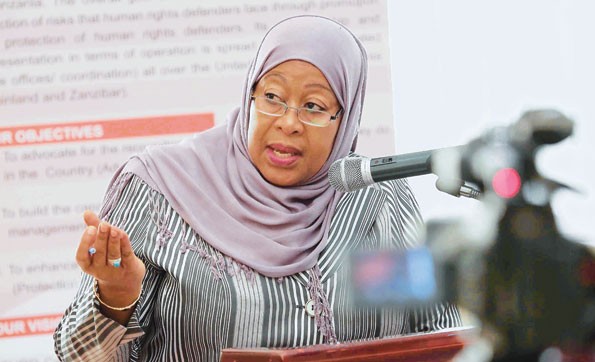
Samia Suluhu Hassan was sworn in as Tanzania's vice-president on November 5, 2015. With her election, she became the country's first ever female vice president. Photo: Courtesy of Samia Suluhu Hassan
Samia Suluhu Hassan was sworn in as Tanzania's vice-president on November 5, 2015. Wither her election, she became the country's first ever female vice president. Photo: Courtesy of Samia Suluhu Hassan
Samia Suluhu Hassan was sworn in as Tanzania’s vice-president on November 5, 2015. Wither her election, she became the country’s first ever female vice president. Photo: Courtesy of Samia Suluhu Hassan

The recent presidential election in Tanzania saw John Pombe Magufuli emerge victorious. His running mate was Samia Suluhu Hassan. The ticket’s victory gave the country its first ever female vice president. It is a rarity in Africa and the history making win did not go unnoticed.

Chama Cha Mapinduzi (loosely translated from Swahili as party of the revolution); Magufuli and Hassan’s party faced the strongest competition it has ever faced in its long reign as the party that has been in power the longest in the entire African continent.

The election outcome in Zanzibar still unresolved after the Zanzibar Electoral Commission nullified the election for what it termed as irregularities. The official explanation by the ZEC is that the vote was not valid “because it did not meet the threshold for a free and fair election.” The word on the street however is that CCM lost that election and CUF winning will threaten the union. CUF favors greater autonomy from the mainland. The fear is that a CUF victory might lead to the breakup of the union.

The Zanzibar vote notwithstanding, the election of Samia Suluhu Hassan is historic. The two were sworn in on November 5 and have been in office for a week now.

The last time the East Africa region had a female vice-president was across the border from Tanzania in Uganda over a decade ago. Specioza Naigaga Wandira Kazibwe was Uganda’s vice president from 1994 to 2003, stepping down in 2003 after it became difficult for her to perform her duties due to what was then a very messy divorce from her then husband.

So after a long 12 years, East Africa has another female vice president it can celebrate.

So who is Samia Suluhu Hassan?

Hers has been a slow and methodical rise to the top.

She graduated from Mzumbe University in 1986 with an Advanced Diploma in Public Administration. She continued on to the University of Manchester where she received a postgraduate diploma in Economics in 1994.

She has demonstrated a proclivity for continual learning. This year with all the political temperature building up as the election neared, she received a received an Masters in Science in Community Economic Development through a joint-program between the Open University of Tanzania and the Southern New Hampshire University.

In her native Zanzibar, she was the only high ranking female in president Amani Abeid Karume’s cabinet.

Her entry into national electoral politics came relatively late by African standards. In 2010 she vied for a parliamentary seat in Makunduchi constituency winning handily (80%). Upon her win, just departed president Jakaya Kikwete appointed her Minister of State in the Vice-President’s Office (Union Affairs).

She is married to Hafidh Ameir, tying the knot in 1978, a union that has been blessed by one daughter and three sons. Mr. Ameir is a retired agriculture officer and is currently a consultant. Their offspring are in careers ranging from business to information technology. The daughter is the only one to have followed in the mother’s footsteps. The daughter, Mwanu Hafidh Ameir, is a member of the Zanzibar House of Representatives.

Many in the region are hoping that Samia Suluhu Hassan’s election is a sign of things to come. Will a woman rise to the presidency in any of the Eastern Africa countries? Only time will tell.

The last time a woman ran a country in East Africa was in 1994, when Agathe Uwilingiyimanain served as Prime Minister of Rwanda (specifically from July 18 1993 until her death on April 7 1994).

Hassan is used to doubters and she will inevitably meet some as she goes about fulfilling her new mandate as vice-president of Tanzania. She told a reporter last year that when president Karume appointed her to the cabinet in her Zanzibar, she was the only woman and the male colleagues looked down on her, however, “I stood my ground and eventually they appreciated my contributions.” Her competence at that first cabinet appointment in Zanzibar saw the number of female cabinet members rise to four, a development she describes with pride.

“I have risen to this position as a result of my competence and not through favors,” she told the same reporter.

Given the manner her boss has gone about his duties since being sworn in last week, pushing for accountability and efficient service delivery from the civil service for example , the election and presence of Samia Suluhu Hassan might turn out to be a critical turning point not just for Tanzania but for the entire East Africa region.

Former Minneapolis Mayor, Sharon Sayles Belton, to keynote Kenya Independence Day Dinner

0
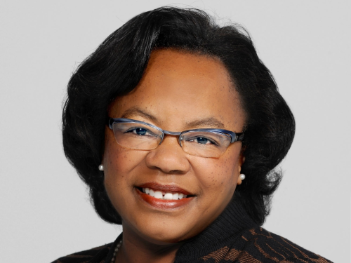
Former Minneapolis Mayor, Sharon Sayles Belton, will keynote the Kenya Independence Day Dinner on Saturday, December 12 at the DoubleTree by Hilton in St. Louis Park, Minnesota. Photo: Courtesy Thomson Reuters

Former Minneapolis Mayor, Sharon Sayles Belton, will be the keynote speaker at Minnesota’s Kenya Independence Day Dinner on  Saturday, December 12, chairwoman of the Kenya Leadership Group that is planning the dinner announced. The dinner will take place at the DoubleTree by Hilton in St. Louis Park.

The occasion will mark 52 years of Kenya’s independence. In Kenya, it is known as Jamhuri Day. Jamhuri is the Swahili word for republic.

Mayor Belton is the first woman and first black person to be mayor of Minnesota’s largest city where she served for two terms (1994 to 2001). She is currently Vice President of Government Affairs at Thomson Reuters.

“It’s an honor to welcome Mayor Belton as a keynote speaker,” Lillian Otieno, chairwoman of the Kenya Leadership Group stated. “She is a great friend of the Kenyan community, and has always been a great friend.” Otieno touted Belton’s long list of accomplishments in both the public and private sector as the group’s reason for selecting the former Mayor as this year’s keynote.

In 2013, Minneapolis renamed the iconic Third Avenue South bridge near downtown in her honor. Among awards bestowed on her include the Gertrude E. Rush Distinguished Service Award given by the National Bar Association and the Rosa Parks Award which she received from the American Association for Affirmative Action.

The Kenya Leadership Group hosting the dinner is the same one that plans the annual Madaraka Day festivities in the summer that is traditionally keynoted by Kenya’s ambassador to the United States.

Tickets to the Jamhuri Day Dinner are available online at eventbrite.com.

Gichaba death: Family announces visitation and funeral arrangements

0
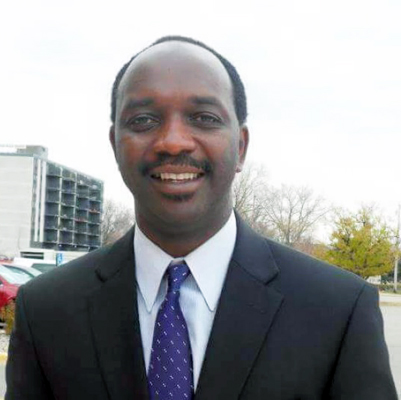
Kenyan-American Henry Gichaba was found dead in his apartment by Robbinsdale Police the morning of Tuesday, November 3, 2015. Photo: Courtesy of Family

There will be a visitation today (November 12) for Henry Gichaba, a Kenyan-American that was found dead in his apartment on November 3 by Robbinsdale police responding to a welfare check call from a concerned relative, as first reported by Mshale.  A funeral and memorial service that will double up as a fundraiser for funeral expenses will be held at the Kenya Community Church in Brooklyn Center on Sunday, November 15 at 4:00PM.

The visitation will be at First Memorial Funeral Chapel in Brooklyn Park from 4:30pm to 8:00pm. It is located at 7835 Brooklyn Blvd, Brooklyn Park, MN 55445.

Robbinsdale Police Chief Jim Franzen had told Mshale last week that “There was nothing to suggest foul play,” after Gichaba’s body was found and that the Hennepin County medical Examiner will give the cause of death later.

In an email announcement about the visitation, family said this week that “from the autopsy report the cause of death was confirmed as being a blood clot in the artery of the heart.”

A spokeswoman from the medical Examiner however told Mshale this morning (Nov.12) that “we are not ready to provide the cause of death at this time as it is undetermined.” It is not unusual for the medical examiner to provide preliminary results to the family of the deceased. “Whatever they (family) might be stating as the cause of death is inconclusive from our end,” the medical examiner spokeswoman said. Conclusive results can take up to a month, she said.

Chief Franzen told Mshale this morning that the case remains open “as we have not yet received a report from the medical examiner’s office which can take sometime.” He said the department will determine how to proceed once it receives the report.

Family plans to cremate his remains. He is survived by his estranged wife, Jackie and two sons, Taylor and Trevor.

Those unable to make it to the Sunday memorial/fundraiser and wish to donate can do so at the following:

Wells Fargo Bank
Henry Gichaba Memorial Trust
Routing # : 091000019
Account # 5717336720

Related:


Ilhan Omar launches campaign for Minnesota House seat

0
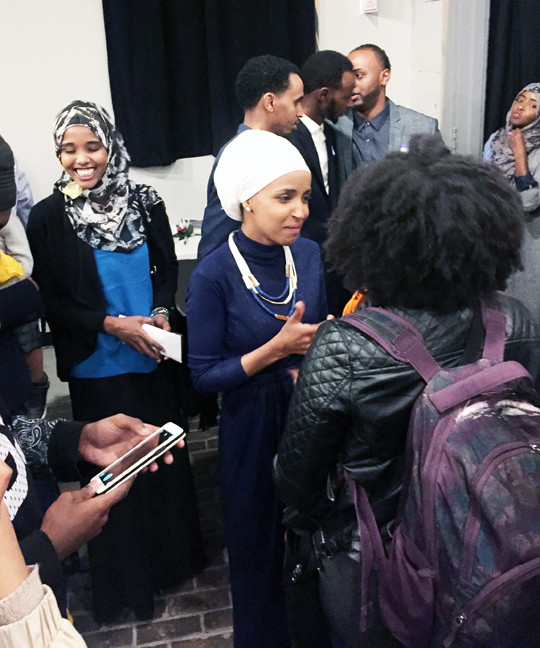
Ilhan Omar who formally launched her campaign for Minnesota House District 60B on Tuesday, November 10, 2015 talks to supporters at the launch. Photo: Kari Mugo/Mshale
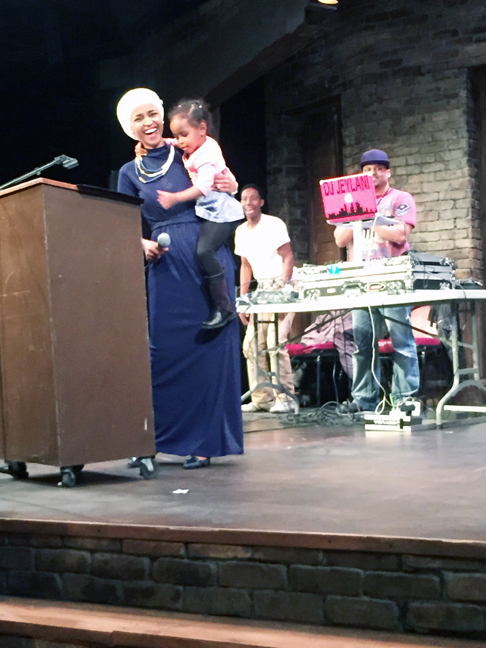
Youngest daughter to Ilhan Omar clings to her as she  formally launched her campaign for Minnesota House District 60B on Tuesday, November 10, 2015 talks to supporters at the launch. Photo: Kari Mugo/Mshale
Youngest daughter to Ilhan Omar clings to her as she formally launched her campaign for Minnesota House District 60B on Tuesday, November 10, 2015 talks to supporters at the launch. Photo: Kari Mugo/Mshale
Minneapolis Councilman Andrew Johnson hugs his former policy aide, Ilhan Omar, at the start of formalities to officially launch her campaign for Minnesota House District 60B on Tuesday, November 10, 2015 talks to supporters at the launch. Photo: Kari Mugo/Mshale

MINNEAPOLIS – Politics is a game that for the most part, many of us choose to partake in only as often as we are obligated to. But for Ilhan Omar, who officially kicked off her campaign Tuesday night at the West Bank’s Mixed Blood Theater, politics is about “participating in democracy.” Omar who announced her candidacy in October for Minneapolis’ District 60B told the mixed crowd on Tuesday night that, “We have an important choice to make, stay the course and continue to support the same old ideas and views, or introduce new voices into that process and take a look at new solutions.”

Those ‘old ideas’ were an indirect jab at incumbent, Phyllis Kahn, who has represented the largely Democrat district which covers Cedar-Riverside, Prospect Park, Marcy Holmes, Nicollet Island, West Bank, Seward, and Como for 43 years now. Khan in her last re-election was thought to have faced her toughest challenge for the DFL nomination yet in then candidate Mohamud Noor. Securing this year’s nomination for Kahn may present an even bigger challenge; facing up not only to Noor again, but Omar also who has secured the support of key figures and constituents in the district.

Omar who had previously supported Noor’s campaign, and counts Khan as instrumental in “paving the way for women to partake politically and in activism” presents a third choice for the DFL ticket, in a district whose last election cycle was marked by violence and allegations of both threats and fraud.

On the question of Omar running against another Somali-American and the ripples it has sent in the community? Omar downplayed this on stage, stating that her and Noor were still friends. In fact Omar’s campaign kickoff seemed an effort to distinguish herself as not just another Somali-American candidate for the legislature, but the right candidate, “My approach to politics and community building is very different from his (Noor).”

The campaign kickoff felt jovial and tight knit; with many shaking hands and exchanging hugs as they poured into the theater. A mix of world music piped in overhead as attendees mingled with or stopped Omar for a picture. Speaking with Lula Salah before she took to the stage as the first of 3 live performers of the night, I asked her what she thought of Omar’s campaign.

“I think it’s excellent that she’s running for office. I can honestly think of no other person who best represents her community and Minnesota as a whole. It’s definitely inspiring to me as an East African woman to see another East African woman who’s also a mother, a daughter, a sister, all these things, running. I’m excited.”

A capacity crowd of over 220 filled the theatre. It was not only the Somali-American community, but a wide swath of community members, mixing races, gender, and age, with varying levels of political engagement.  A point that campaign manager, William Ransford was quick to make as I interviewed him during the event. Responding to the question, what differentiated Omar from the other candidates, Ransford stated,  “I see in Ilhan someone who is able to connect with people across all those communities as you can see from the room today, there’s a lot of different folks here. It’s really a cross section of what we’re looking at in the district.”

That cross-section includes a growing East African community that finds its heart in the Cedar-Riverside community, students from the University of Minnesota who are becoming increasingly engaged in politics, long time community residents, and activists who have made their home in the district. Omar’s political appeal appears to be the ability not only to rally the East African community behind her, but all the other community members who feel left out of the process, or who find that their needs aren’t being met.

One such community member is Joelle Stangler who also happens to be the University of Minnesota’s student government president. Also known as the Minnesota Student Association, the student government of the state’s largest campus has come out in full support of Omar for reasons that Stangler shared with the crowd as she took to the stage Tuesday evening.

Stangler told the gathered crowd that within the current legislature the “Student voice isn’t heard or being championed, but I don’t feel that way when I talk to Ilhan. I see her interest in our interests.” Omar herself confirmed these shared interests in education in her closing speech where she touched on rising college debt and the need to make education affordable and accessible as a means to close Minnesota’s education gap, one of the largest in the nation.

In a heartwarming speech that saw Omar introduced on stage by her son Adnan, while her youngest daughter clung to her momentarily before being whisked off stage, Omar was at her best. She gave thanks to the many gathered, her family and friends, former boss, council member Andrew Johnson (who spoke briefly before leaving for another engagement), and Councilwoman Alondra Cano, among others.

In her speech, Omar painted a vivid picture of her history and the experiences that had influenced her politics; from her grandfather who had inspired her love for politics at a young age, and began taking her to caucuses at age 14 as his translator. She spoke of her first few jobs beginning at 16, one of which she worked alongside her father, a single parent who had moved his family to Minnesota from Mogadishu.

She shared how her experience visiting Somalia in 2011, during the worst famine in decades in the Horn of Africa, had influenced her views on environmental issues as she worked desperately to bring food to families who were in ruin. Omar also talked about her days working in the City of Minneapolis as a policy aide (to Councilman Johnson) and the policies she had pushed to better her community. One of the change of policies she worked on allowed restaurants in the city of Minneapolis to have later hours during the holy month of Ramadan.

With each personal experience, Omar connected the audience to her campaign issues; improved working conditions and wages for workers, investing in education to tackle the education gap, criminal justice reform including restoring voting rights, and environmental justice.

But Omar who is running in a largely Democratic and liberal district does not just stand out for her stances on these issues. In an effort to further distinguish herself as not just a liberal politician running in a largely liberal district, Omar asked the crowd what the difference was between a liberal and a progressive.

“Being a liberal,” she said, “means being open to new ideas. Being a progressive means acting on those ideas. We need progress. I am progressive. I am ready to lead and I’m ready to build new coalitions to get things done.”

If elected, Omar would be the first Muslim American woman and first Eastern Africa woman elected to statewide office in the United Sates.

Her campaign website is at www.ilhanomar.com

Related: Ilhan Omar’s legislative race taking shape