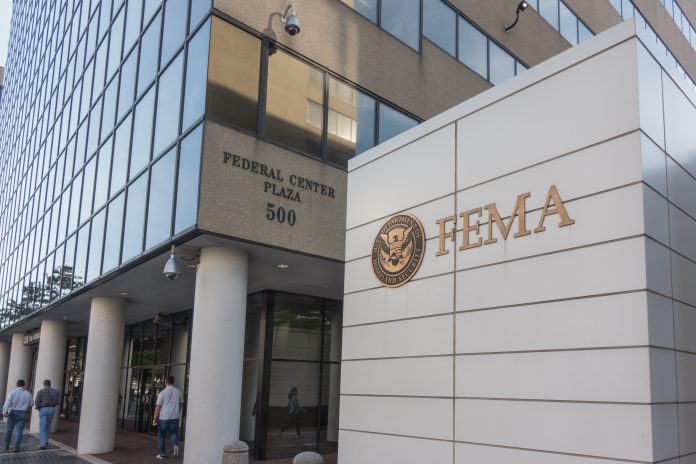
The Federal Emergency Management Agency is offering to provide financial relief for COVID-19-related funeral expenses as early as April 2021 as part of the CARES Act.
The Federal Emergency Management Agency is offering to provide financial relief for COVID-19-related funeral expenses as early as April 2021 as part of the CARES Act. The Federal Emergency Management Agency is offering to provide financial relief for COVID-19-related funeral expenses as early as April 2021 as part of the CARES Act. Photo: Shutterstock
The agency will start accepting applications as early as April 1.
The death should have occurred after January 20, 2020 in the United States, including U.S. territories.
The death certificate should attribute the death to COVID-19.
There is no requirement for the deceased person to have been a U.S. citizen, non-citizen national, or qualified alien and applicants need to be U.S. citizens, non-citizen national or qualified alien. The key requirement is that you incurred the funeral expenses.
FEMA said it will provide up to $9,000 per funeral and for those who lost multiple family members to COVID-19 eligible to apply for up to $35,000.
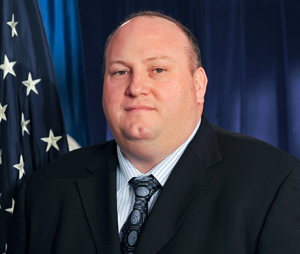
“At FEMA, our mission is to help people before, during and after disasters,” said Acting FEMA
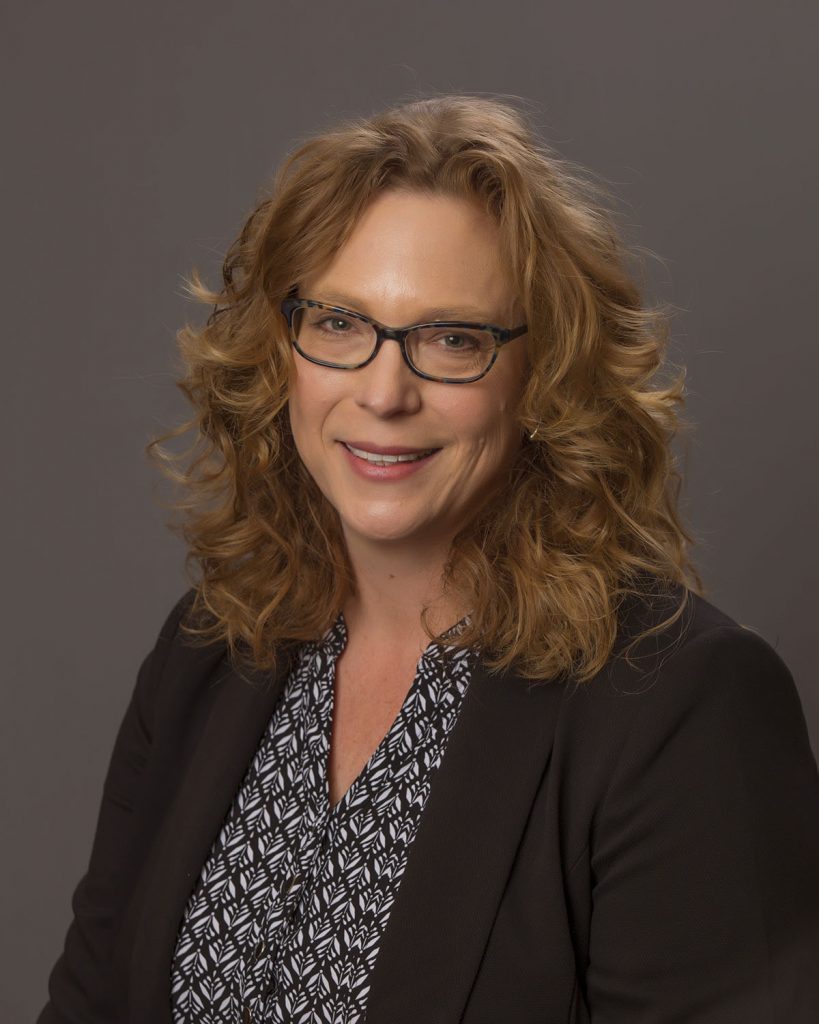
Acting FEMA Administrator Robert J. Fenton Photo: FEMA
Administrator Bob Fenton in a news release. “The COVID-19 pandemic has caused immense grief for so many people. Although we cannot change what has happened, we affirm our commitment to help with funeral and burial expenses that many families did not anticipate.”
According to FEMA, applicants can be reimbursed for costs related to funeral expenses and will include the following:
Transportation for up to two people to identify the deceased individual
Transfer of remains
Casket or urn
Burial plot or cremation niche
Marker or headstone
Clergy or officiant services and arrangement of the funeral ceremony
Use of funeral home equipment or staff
Cremation or interment costs
FEMA’s funeral assistance will however not reimburse costs that were already covered by other aid, including burial or funeral insurance, donations, or financial assistance received from other agencies, organizations or government programs.
Mshale has not been able to determine whether life insurance proceeds are considered aid, so if you received life insurance after a loved one’s death, we encourage you to still apply.
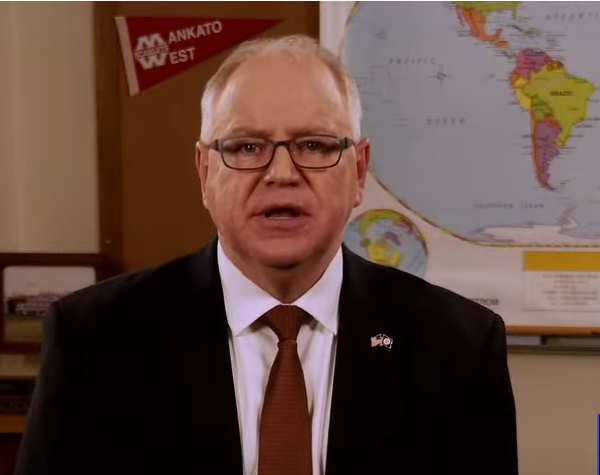
Governor Walz of Minnesota on March 28, 2021 delivered his State of teh State address from teh classroom he used to teach at Mankato west High School. Photo: YouTube ScreenGrab
Governor Walz of Minnesota on March 28, 2021 delivered his State of teh State address from teh classroom he used to teach at Mankato west High School. Photo: YouTube ScreenGrab
Minnesota Gov. Tim Walz on Sunday delivered an upbeat 2021 “State of the State” address and said brighter days are ahead as the state is on track to beat the coronavirus pandemic.
“The state of our state is strong, Minnesota,” Walz said in a speech streamed live from Mankato West High School, where he taught social studies before joining politics. “This is our goal-line stand. Get vaccinated. We are coming back.”
The governor’s speech comes in the wake of milestones the state has achieved in fighting the pandemic. The state has so far vaccinated 1.5 million people which includes 80% of seniors.
“To everyone who has lost someone they care about this year, Minnesota’s heart breaks for you,” said Gov. Walz.
The governor’s address to the state came a day before the trial of Derek Chauvin who is facing murder charges of kneeling on the late George Floyd and killing him.
Walz evoked the name of Martin Luther King Jr. when he said “Please, Minnesotans, make your voices heard. Practice your First Amendment right — but please heed Dr. King’s advice that nonviolence is the only way to truly move hearts and create change.”
Legal marijuana and camera surveillance: 5 takeaways from the Brooklyn Park mayoral candidate forum
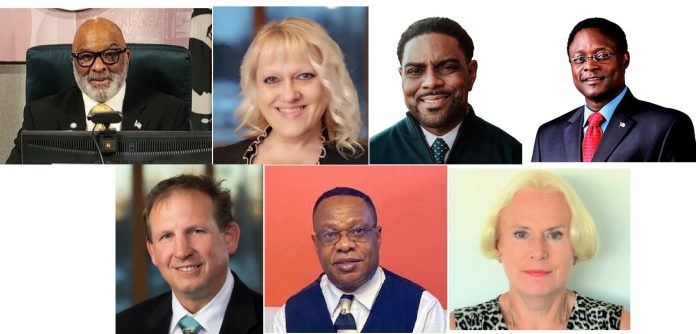
Candidates for mayor of Brooklyn Park took part in a virtual candidates’ forum hosted by Beyond Media Solutions and Mshale. Collins Oppong of Beyond Media and Cynthia Simba of Mshale co-moderated the almost 80-minute session.
Five of the seven candidates in the race participated with Lisa Jacobson and Mark Mata citing a scheduling conflict for their absence.
In-person and mail-in absentee voting is already underway for the April 13 special primary election for mayor. You can find details on the city website at this link.
With just three weeks to the April 13 special primary election, candidates for the first time on Tuesday directly criticized votes or stances taken by their opponents and although this was a forum and not a debate, the criticized candidates did not shy away from responding.
Here are the highlights from Tuesday:
The gloves are off
Until now, candidates have focused on selling themselves and have not called out their opponents positions they agree on, at least not openly. They have left open direct criticism of their opponents to their supporters and surrogates.
However, with three weeks to go and time becoming an issue, the gloves are off.
Benjamin Osemenam who in last week’s forum promised “read my lips, no new taxes,” this week signaled to voters that he is the one looking out for them
About 17 minutes into the forum, he said “At the last forum, it was mentioned that the city does not have money to clean our water. But one of the people that mentioned that, was on the Budget Commission, and the other was a City Council member that voted to give a staff $10,000 raise, but there was not enough money to clean our water. Now, it makes you wonder what are our priorities?”
Osemenam did not mention any names but viewers quickly had any confusion erased about five minutes later when Hollies Winston pointed out he is one of those being referred to when he chose to defend himself.
“I am the guy who sat on the Budget Advisory Commission. Paying someone $10,000 for hard work, is very different than a $20 to $25 million bill to fix hard water, versus investing in public safety and many of the issues that people of Brooklyn Park are concerned about.”
Of the seven candidates in the race, Mark Mata who skipped this forum was the only one in the council when the water issue came up.
Candidates articulate their visions of policing
Throughout the campaign, all candidates have not shied away from trying to prove their public safety bona fides, even as they admit the city’s police department needs to do things differently.
Tuesday was no different but their responses gave additional insight on the candidates’’ different views on police-community relations overall.
At the forum, with the exception of Kurdyumova, they all committed to some version of ‘community policing.’
Winston said the officers need to get out of their cars more and understand “What’s going on, on a block-by-block basis.” Him and Russell agreed that the department needs more officers of color.
“I have been here for 18 years; I have not had any problems with Brooklyn Park police. But that doesn’t mean that some resident down the street, or someone who looks like me, who lives across 85th, may (not) have had a problem with the Brooklyn Park police,” said Russell.
Morson reminded viewers of the ongoing Wilder Research study that is evaluating policing, community safety and violence prevention in the city.
In December, the city hired Wilder Research to evaluate policing, community safety and violence prevention for six months. Morson said of the study, after reminding viewers of its existence, that “I am the council member that sits on this particular committee.”
Kurdyumova supports legal marijuana
Candidates were asked to list two priorities for reform in the city and supporters of legalized marijuana discovered they have a friend in Yelena Kurdyumova.
Kurdyumova came out in support of Minnesota House Majority Leader Ryan Winkler’s legislation introduced on March 5 that would legalize the adult use of cannabis. Rep. Winkler when introducing the bill said the “legislation is the result of months of public discussions on how to responsibly legalize and regulate cannabis.” Among the provisions in the bill, if it becomes law, is the expungement of most cannabis convictions. In April 2020, the American Civil Liberties Union released a report that showed Black people are 5.4 times more likely than white people to be arrested for marijuana possession in Minnesota, despite comparable usage rates.
On Tuesday, in publicly supporting the legislation, Kurdyumova said “When it passes and becomes the law, it will open new, legal opportunities for Brooklyn Park’s small businesses, marijuana dispensaries,
residents won’t have to go to other states like South Dakota to buy cannabis, but will buy locally and leave their money in the city where they live.”
Morson digs in on the Green Light Project
In the first forum, Morson shared his vision of a camera surveillance system to fight crime in the city modeled after Detroit’s Green Light Project.
On Tuesday, he reiterated his commitment to the surveillance project saying “It has reduced crime in Detroit.” Morson said his version of surveillance will be in conjunction with “A community radio patrol, where our volunteers would be our neighborhoods, our own people from our community, donating and give and volunteer and hour or two hours of their own time, to patrol their own neighborhood.”
Osemenam is of a different mind when it comes to the Green Light Project although he does support some type of surveillance. He said that his version of surveillance will be “the establishment of public-private, citywide, surveillance system, linked to the police, that is not similar to what you have, you know, for the Green Light in Detroit. But something that is done in conjunction with our Toward Zero debt.”
Agreement on immigration
Three of the five candidates at Tuesday’s forum are immigrants and the other two, Morson and Winston, have longstanding relationships and support within the immigrant community.
Therefore, it was not surprising that there would be general agreement and support for issues of particular concern to immigrants.
Even with the broad agreement among the candidates, Osemenam made a statement worth noting when he said “As your next mayor, I will work with the police chief to sign off on all V visas, which protects immigrants from harm against them. In fact, as I mentioned earlier, that V visa is part of my Toward Zero Police Incident and Crime program.”
Osemenam was probably referring to the U visa and not the V visa which is how the police chief will be involved. The U. S. Citizenship and Immigrations Services defines the U visa as “U nonimmigrant status (U visa) is set aside for victims of certain crimes who have suffered mental or physical abuse and are helpful to law enforcement or government officials in the investigation or prosecution of criminal activity.”
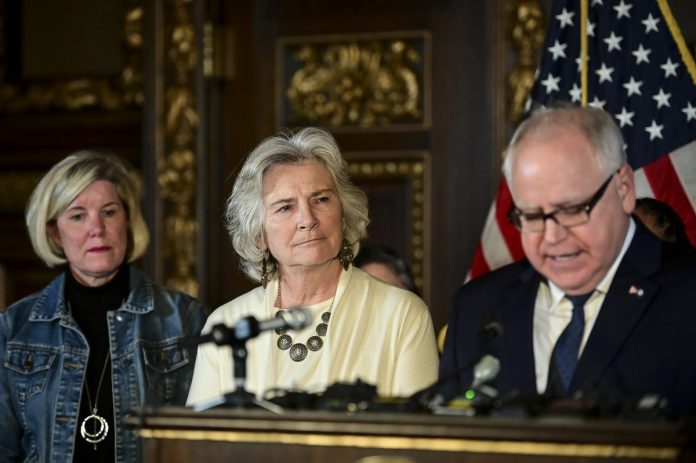
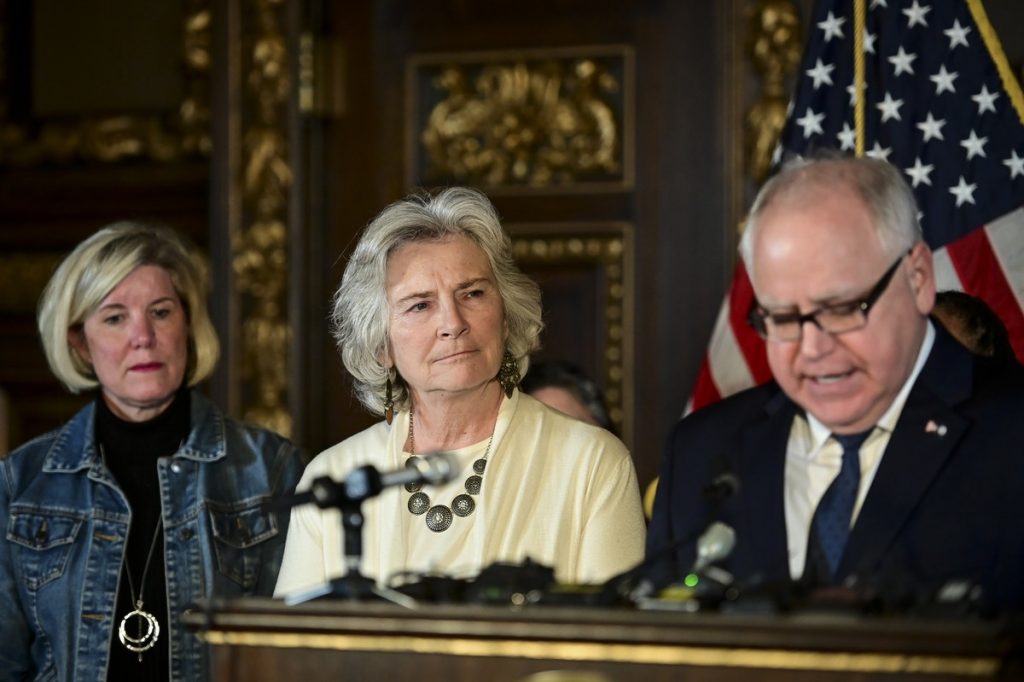
(L to R) Minnesota infectious disease director Kris Ehresmann, health commissioner Jan Malcolm and Governor Walz in March 2020 as they announced the state's first confirmed case of COVID-19. Photo: Pool via Startribune
(L to R) Minnesota infectious disease director Kris Ehresmann, health commissioner Jan Malcolm and Governor Walz in March 2020 as they announced the state's first confirmed case of COVID-19. Photo: Pool via Startribune(L to R) Minnesota infectious disease director Kris Ehresmann, health commissioner Jan Malcolm and Governor Walz in March 2020 as they announced the state’s first confirmed case of COVID-19. Photo: Pool via Startribune
Minnesota will expand vaccine eligibility to all Minnesotans 16 and older starting March 30 according to a news release from the governor’s office. Gov. Tim Walz is set to make the formal announcement during a press conference scheduled on Friday.
The eligibility for all comes in the wake of a promised increase in weekly doses from the federal government early next month, the governor’s office said Thursday.
At a COVID-19 media briefing today, Kris Ehresmann, the infectious disease director at the Minnesota Department of Health said the state expects its allotment from the federal government to increase to 304,000 doses.
“It’s definitely an increase in terms of what we have been receiving and we are just eagerly waiting to get to that point,” Ehresmann said. “It may be that we’ll get that in our allocation next week or it may be in the first week of April, but we know that it is coming.”
Minnesota is among the top states in vaccines administered but on Thursday, MDH officials warned that there is an uptick in new COVID-19 cases which they attributed to the B117 variant first detected in Britain. During the briefing they announced 1,857 new cases to bring the state’s total number of deaths to 6,814 since the start of the pandemic.
Total COVID-19 cases for Minnesota since the pandemic started now stand at 510,398 as of March 25.
Health Commissioner Jan Malcolm said most residents of long-term care facilities would have had a chance to be fully vaccinated by the end of this week.
This week, Minnesota was ranked number one in the country for the percentage of vaccine doses administered. The state has vaccinated 80 percent of its seniors and has also vaccinated at least two-thirds of school and child care personnel.
The governor’s office said while all Minnesotans will become eligible for a vaccine on March 30, not every Minnesotan will be immediately able to make an appointment.
“Vaccine shipments from the federal government will continue increasing over the coming weeks, but for now demand will still exceed supply,” the governor’s statement said.
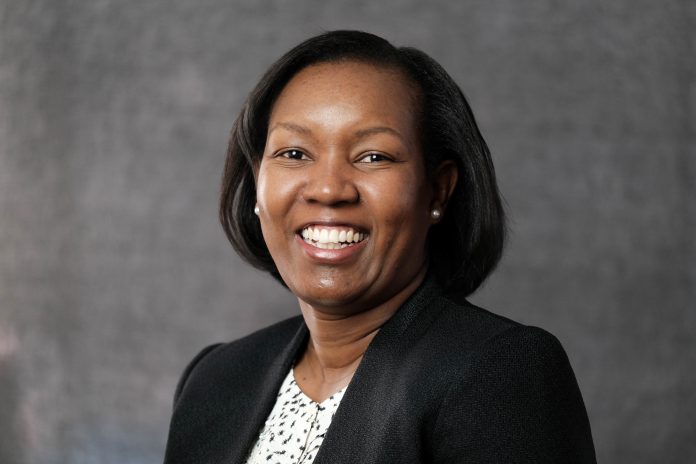
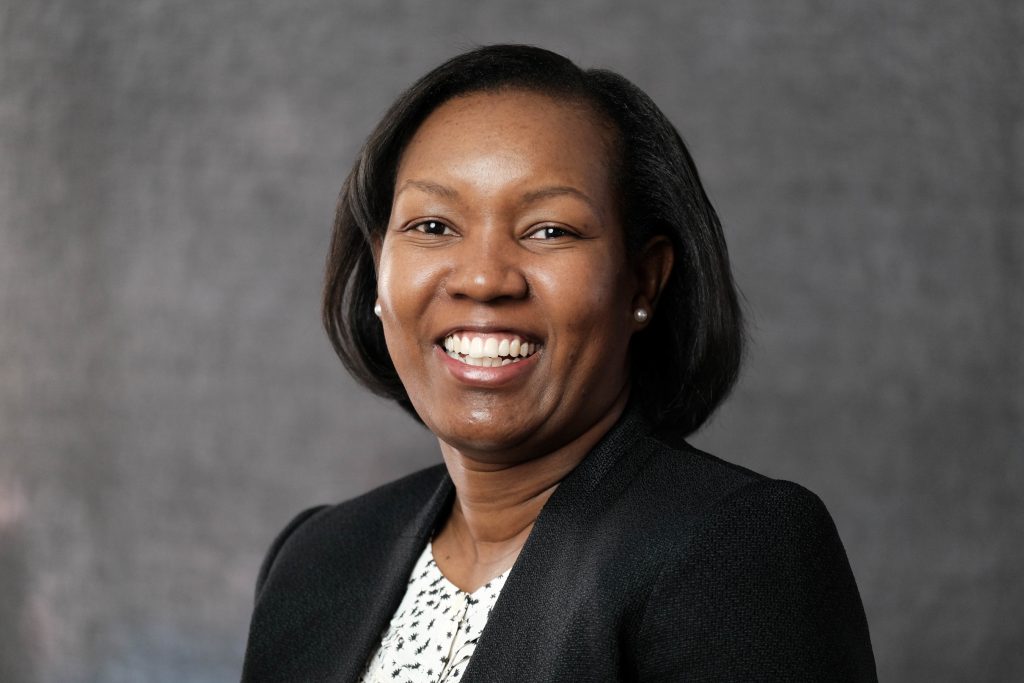
Caroline Njau is joining Children’s Minnesota as its new senior vice president of patient care services and chief nursing officer. She will be part of the senior executive leadership team at Children's Minnesota. Photo: Submitted
Caroline Njau is joining Children’s Minnesota as its new senior vice president of patient care services and chief nursing officer. She will be part of the senior executive leadership team at Children's Minnesota. Photo: SubmittedCaroline Njau is joining Children’s Minnesota as its new senior vice president of patient care services and chief nursing officer. She will be part of the senior executive leadership team at Children’s Minnesota. Photo: Submitted
Caroline (Ndungu) Njau, until recently the director of hospital and nursing operations at St. Louis Park, Minnesota based Park Nicollet Methodist Hospital, is the new senior vice president of patient care services and chief nursing officer at Children’s Minnesota, the largest pediatric health care provider in the Upper Midwest.
Children’s Minnesota made the announcement Monday afternoon.
Njau, who starts immediately, becomes the first person of color to become chief nursing officer at Children’s Minnesota. She co-led Park Nicollet’s Health Equity Imitative while there.
The health system employed over 5,000 employees as of the end of 2020 and operates hospital campuses in Minneapolis and Saint Paul, a surgery center, as well as 12 primary-care clinics, nine specialty-care sites and six rehabilitation centers.
Njau, a native of Kenya, began her nursing career in medical-telemetry units at Emory University Hospital in Atlanta and has held a variety of health care leadership positions for more than 15 years. She succeeds Pam VanHazinga who retired in December.
She is an alum of Kennesaw State University where she received her Bachelor of Science in Nursing.
James Burroughs who is the chief equity and inclusion officer at Children’s Minnesota and served in the administration of former Governor Mark Dayton in a similar role was part of the search process that hired Njau.
Burroughs hailed her hiring and described Njau as “amazing.” Speaking to Mshale after the announcement, he said “Her addition to our top leadership ranks is part of our efforts to diversify our workforce with top talent, to better serve our patients.”
Njau, who has an MBA from the University of St. Thomas, will be part of the executive leadership team at the system. In her new role, she will be responsible for patient care operations across the system’s two hospital campuses and will be in charge of a broad portfolio that includes nursing strategy, education, nursing and patient and family services and professional development, according to a news release from Children’s.
“I am deeply humbled and full of joy, gratitude and excitement as I join Children’s Minnesota,” said Njau. “Health care has been rapidly evolving over the last few years and we have experienced growth and change in so many ways. As we pave forward our path and design the next generation of pediatric care, we will continue to ground ourselves in our shared values, mission and vision that makes Children’s Minnesota such a treasured part of the community.”
“We’re thrilled to have Caroline join the Children’s Minnesota family and bring her wealth of expertise to our patients and families,” said Dr. Marc Gorelick, president and CEO of Children’s Minnesota. “I’m confident that her optimistic leadership and deep commitment to health equity, diversity and inclusion, and continuous patient care improvement will help us shape our future to better meet the needs of our patient families today and in the future.”
Five takeaways from the first Brooklyn Park mayoral forum
The next candidates forum hosted by Africa, Lets Talk! and Mshale will be held on March 23 at 6:00 PM and will be live-streamed here and here.
Candidates for mayor of Brooklyn Park took part in the first candidates forum at city hall on Tuesday in an event hosted by the League of Women Voters of Brooklyn Park, Osseo and Maple Grove and the Twin West Chamber of Commerce.
It was an in-person candidate forum with no audience due to the pandemic but was aired live on Channel 16 and livestreamed online. Kirsten Kjome of the League of Women Voters was the moderator. All seven candidates took part.
A special primary election will be held on April 13 with the top two candidates advancing to the special election on August 12.
In-person and absentee voting is already underway. Visit the city’s website at this link for information.
Here are some highlights from Tuesday’s forum:
Brooklyn Park Police needs reform
When asked to name the critical issues facing the city, the one issue that was common to all seven was public safety and how police/community relations have been playing out in the city.
Except for Boyd Morson and Mark Mata, all candidates gave standard boilerplate responses on how to address the issue of police reform, namely working with the community and police to better relations.
Morson in his response on public safety embraced Detroit’s Project Green Light, a citywide camera surveillance system to deter crime. “I just left Detroit and we are trying to bring this to Minnesota and in Brooklyn Park to have an opportunity to make our residents feel safe,” said Morson.
Mata on his part portrayed himself as the mayor that will make sure that inner city problems do not come to Brooklyn Park “(on) police reform I will make it clear that what is happening in Minneapolis is not gonna happen in Brooklyn Park,” he said. Adding that he will not defund the police and that “we do have some issues in our police department and we will deal with them on a personal level.”
It should be noted that none of the candidates running have called for defunding of the police.
“Read my lips no new taxes”
Most homeowners have recently received their property tax statements with many seeing an increase. Candidates were asked what they would do to lower the city portion of the taxes.
Mata said he will oppose any property tax increases if elected and urged homeowners to show up at the truth and taxes hearing on April 12 to protest their home values. Winston took issue with Mata’s attitude of just saying no and instead called for an expansion of the tax base to ease the burden on homeowners “until we get our arms around how to bring more businesses here and not just fast-food restaurants and build a coalition, it is not going to happen (bringing taxes down),” said Winston.
Lisa Jacobson who sits on the council currently reminded voters that the city did not increase the levy and that homeowners saw an increase in their property taxes “because the values of their homes went up, but we didn’t increase the levy, we increased it less than half a percent.”
Wynfred Russell who serves on the current council with Jacobson and Boyd Morson pledged to hold the line on property taxes if elected by ensuring that “we have a diverse mix of businesses coming to the city and being a good steward of your money.”
Councilman Morson said he will not make a promise of not increasing property taxes as “that is just not realistic, although I do not want to increase them.” Adding that as the cost of living goes up it will have an impact on the buying power of city government and its budget.
Yelena Kurdyumova in her response said “I think the tax burden should be transferred from homeowners to larger businesses so they can cover it.”
Perhaps the most memorable response was that of Benjamin Osemenam who decided to channel his inner George H. W. Bush.
“Brooklyn park residents read my lips I will not raise your property taxes I will reduce them,” said Osemenam, reciting a line from former president George H.W. Bush that cost him reelection after raising taxes when he had promised not to when he first ran for office. Osemenam criticized the city’s “tax and spend” culture saying as an engineer he knows how to make things work.
Olympic size swimming pool, Light Rail, Connectivity
Candidates were asked to describe a vision of the city 20 years from now and the answers gave a glimpse into the personal values of the candidates.
Kurdyumova envisions an Olympic size swimming pool being located in the city.
Mata said he hopes to see the Target corporate campus being fully developed.
Jacobson hopes in 20 years the community will look back with appreciation on how city was united in fighting the pandemic.
Osemenam is hoping multimodal transportation will be a reality for the city by then.
Boyd is looking forward to a city without prejudice that is also united.
Winston is envisioning a safe city that values diversity.
Russell, an avid biker, said he is looking forward to a more connected city that is easy to get from one end to other and a city that is united.
Mark Mata says he is not a “career politician”
Mark Mata who served for eight years on the Brooklyn Park City Council before opting not seek reelection last year said at the forum “I have served on every single commission that Brooklyn Park has to offer over my eight years, I am not a career politician.”
Mata’s statement might come as a surprise to city residents because at some point during his time on the council, he was in 2017 accused by fellow council members of a “culture of hostility” which cost the city $173,000, so that the city’s beloved fire chief, Ken Prillaman, could leave without suing the city.
Why is the water so bad?
Brooklyn Park’s city water might not be as bad as Minnetonka which has the hardest water in the state at 310 PPM but that is of little comfort to the residents.
The issue of the city’s water hardness came up at the Tuesday forum with candidates asked what they plan to do about the issue.
Osemenam, who works at the Minnesota Department of Transportation as an engineer was the first to respond and said the reason the city’s water is so hard is because “we have particulates in our water.” As to what he would about it as mayor, he said “I intend to work with city staff to make sure that we use the right treatment that will remove the hardness to provide soft water that will stop damaging our appliances,” adding that as an engineer he has dealt with worse problems.
Councilman Russell said that he drinks the city’s tap water which he acknowledged is hard and that if elected mayor he would ensure “our engineers have the tools and resources they need to improve upon our water system.” He is also open to looking at other cities for best practices.
Councilman Morson said the issue is not unique to Brooklyn Park and opined that the city needs to look to other cities that have found solutions to their hard water problems. The moderator Kirsten Kjome joked it is not any better in her city of Maple Grove.
Mark Mata said city residents have a choice to make “either they (city) soften it or the homeowners soften it” and choose which expense they prefer. He said that is an issue the city council needs to decide on after hearing from experts.
Candidate Winston who holds an MBA from the University of Minnesota’s Carlson School of Management said “I do think there needs to be a cost benefit analysis in terms of what does it cost the homeowner or the city to address it.” He said that water hardness does not rise to the same level as public safety in terms of priority.
Councilwoman Jacobson said before her time at the council city residents had been told it would cost millions to soften the city water and they opted to do it themselves. “Maybe it is time we look at it again and find out how much it would cost us as a community,” she said, but agreed with Winston that it is not a priority with Kurdyumova also agreeing it is time the city revisits the issue.
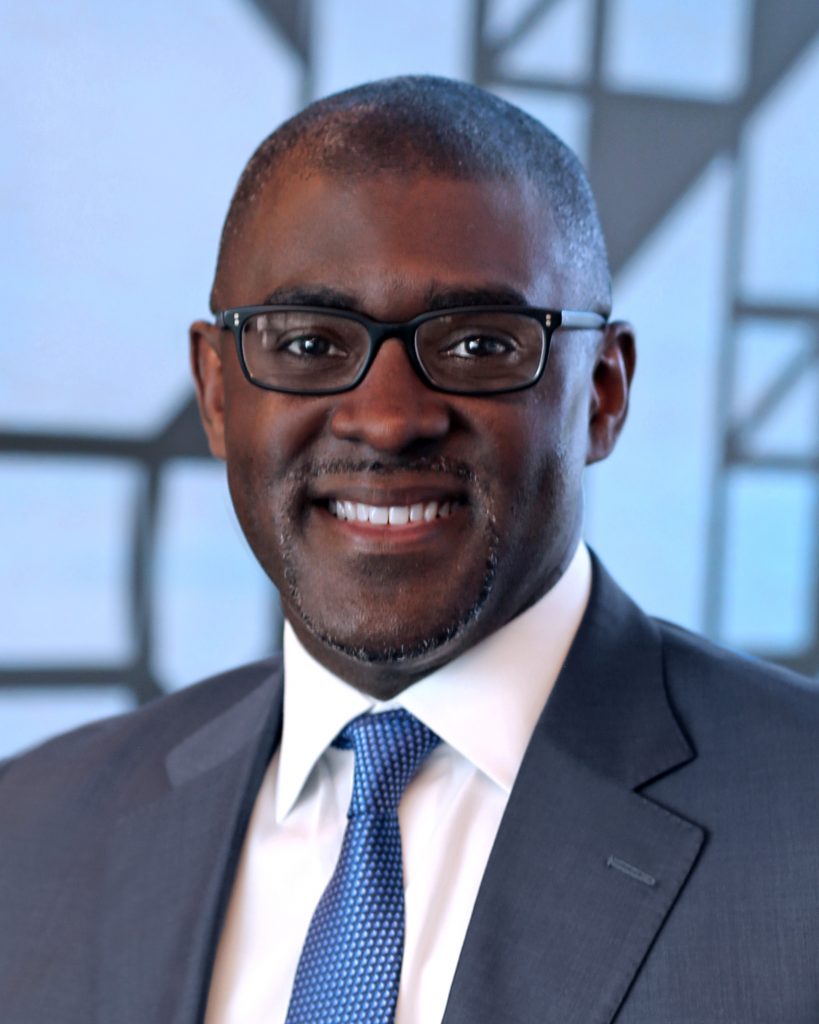
Brian Lamb, Global Head of Diversity & Inclusion at JP Morgan Chase. Photo: Submitted
Brian Lamb, Global Head of Diversity & Inclusion at JP Morgan Chase. Photo: SubmittedBrian Lamb, Global Head of Diversity & Inclusion at JP Morgan Chase. Photo: Submitted
Advertorial
The past year has been one of the most tumultuous chapters in recent history for Black Americans, with numerous reminders that systemic racism brings devastating consequences for individuals, families and communities.
The COVID-19 pandemic is tearing through Black communities across the country, killing Black people at twice the rate of white Americans, while leaving a trail of lost jobs and shuttered Black-owned businesses in its wake. This, along with the killing of George Floyd and so many others, has sparked an outpouring of corporate support for Black Americans in recent months, and we’ve seen numerous examples of companies stepping up to make concrete changes to the way they do business in an effort to advance racial equity around the world.
As the largest bank in the United States, it’s long past time for JPMorgan Chase to own its part in creating economic opportunity and inclusion for communities that have been historically marginalized. Systemic racism is a tragic part of America’s history. It’s a congenital defect of our society that’s resulted in racial gaps across virtually every walk of American life, including wealth, homeownership, educational outcomes, health care, incarceration rates and life expectancy.
Real lives that matter are impacted by these gaps, and it’s our responsibility to do something about it, given the role of banks in the financial health of the communities we serve.
How JPMorgan Chase is combating the racial wealth divide
Over the past few months, we’ve reviewed our business practices, products and the role we play in communities across this country to understand the changes we need to make to address the largest drivers of the racial wealth divide. We’ve been especially focused on developing ways to expand affordable lending and housing, increase credit and capital for Black-owned small businesses, and improve access to tools that will help Black people save money and get on a path to sustained financial health.
This work led us to make a $30 billion commitment over the next five years to provide economic opportunities in underserved communities — with a special focus on Black and Latinx people. These commitments include loans, equity, and direct funding to promote homeownership and affordable housing.
We’ve set a goal of originating an additional 40,000 home purchase loans for Black and Latinx households. To do this we’ve committed $8 billion toward mortgages. We also want underserved communities to be able to take advantage of historically low interest rates, and we’ve committed $4 billion toward helping Black and Latinx households refinance their home loans.
Creating pathways to financial health
Through our own research, we know that Black households tend to have lower savings and higher debt burdens than other groups. Historically, Black Americans have been forced to grapple with less access to credit, and often have to pay higher financing fees. Too many Black Americansare completely unbanked as well, which increases the likelihood of turning to predatory alternative financial services like check cashing and payday lenders.
To combat this challenge, we aim to help one million people open low-cost checking and savings accounts. To accomplish this, we must build stronger connections to underserved communities, so we’ve committed to hiring 150 new community managers. We’re also planning to open new Community Center branches in the areas that need them most, and increase our marketing outreach to our Black and Latinx populations to raise awareness of these efforts.
Leaning in on Black entrepreneurship
If we are to make meaningful progress in closing the racial wealth divide, entrepreneurship must be a key part of the equation. We’re committed to helping the job creators in Black and Latinx communities gain access to the credit they need to launch, grow and scale their businesses. As part of this effort, we’ve committed to delivering $2 billion in loans, and to spending an additional $750 million with Black and Latinx companies that can supply products and services to JPMorgan Chase.
We’re also going to expand our Entrepreneurs of Color Fund to support more Black and Latinx small-business owners nationwide.
As we move forward with these efforts, we know we must hold ourselves accountable if they’re going to achieve their intended impact. We are going to continually assess how these commitments are performing and will adjust when necessary. Ultimately, we know that no single company can close the racial wealth gap, but it is our responsibility to try — and to work with other companies and policymakers along the way.
We’re owning our part in this — and we’re just getting started.
Visit JPMorganChase.com/Pathforward to learn more about our efforts to advance racial equity, which include affordable housing, minority-owned businesses, financial health, workforce diversity and more.
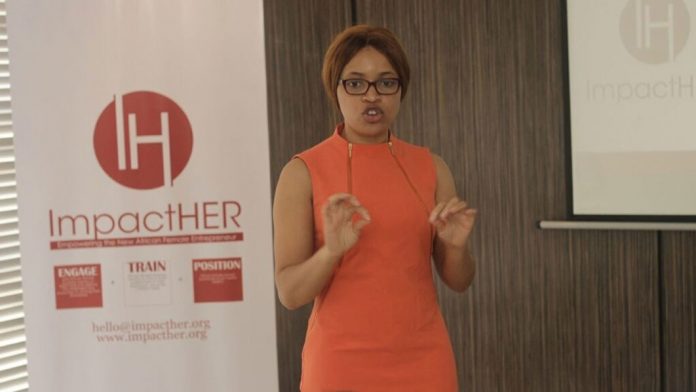
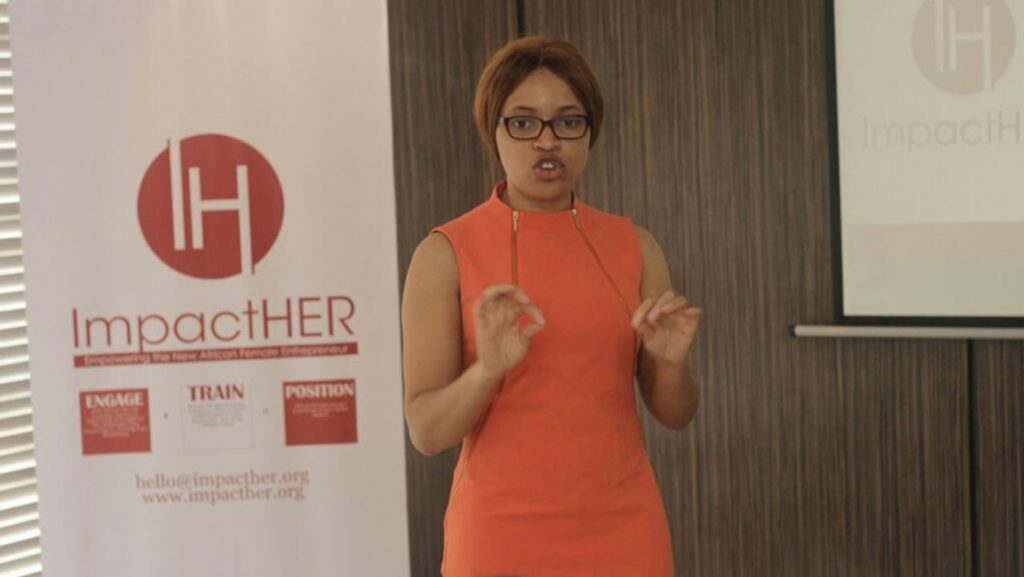
Efe Ukala, founder of ImpactHer and assistant general counsel at JPMorgan Chase, at a previous event. Photo: Courtesy of Guardian Nigeria
Efe Ukala, founder of ImpactHer and assistant general counsel at JPMorgan Chase, at a previous event. Photo: Courtesy of Guardian NigeriaEfe Ukala, founder of ImpactHer and assistant general counsel at JPMorgan Chase, at a previous event. Photo: Courtesy of Guardian Nigeria
Businesses run by African women have been disproportionately affected by the Covid-19 pandemic, and are in dire need of financial help, according to a new study released Wednesday.
The findings of the survey were shared by Efe Ukala, the founder of ImpactHer, a nonprofit organization that helps African female entrepreneurs access funding and other tools to scale up their businesses both locally and globally.
“In 2020, there was a lot of pivoting that had to be done to ensure that all those businesses we we’re working on would not turn into a statistic,” said Ukala, a lawyer who is also a vice president and assistant general counsel at JPMorgan Chase, New York.
Ukala was speaking at a virtual conference hosted by Global Minnesota in partnership with Team Women in celebration of International Women’s Month.
Funding for female owned businesses is a challenge globally, particularly in developing nations. The International Finance Corporation, a member of the World Bank, estimates that there is a $300 billion financing gap in formal female-owned businesses, and more than 70 percent of them have inadequate or no access at all to financial services.
African women are more likely to be self-employed than women from any other continent. However, according to the World Bank, female led enterprises in Africa are 38 percent less profitable than their male counterparts. The organization said the gap in financial capital is large contributing factor, with male owned enterprises having as much as six times more capital than those led by women.
To properly diagnose the needs of businesses run by African women, ImpactHer launched a survey to collect data on the effects the pandemic has had on them, Ukala said. She said she was inspired to create ImpactHer as a solution to a global issue she observed through her work in the finance industry. In her profession as a private equity attorney, Ukala said she noticed a lack of female representation in her pool of clients.
“While doing a lot of this work, I noticed most of the companies we were talking to at the time are male led businesses,” she said.
Ukala decided to conduct personal research on her observations and discovered that this was a global issue that had been well documented.
“I decided to do something to help move the needle a little bit,” she said.
ImpactHer works to engage with African female business owners to help them address the challenges they face in running their businesses. The organization then trains the entrepreneurs on how to build scalable ventures to secure funding from investors.
Since its founding in 2017, ImpactHer has trained more than 17,000 female entrepreneurs across 52 African countries. It has teams of trainers based in Nigeria, Kenya, and the United States.
Ukala said her survey discovered that 80 percent of female owned businesses had been partially halted due to the pandemic and half of those enterprises had reduced their employees’ hours. The survey also revealed that a more than 90 percent of the businesses needed short term financing to stay afloat during the pandemic. In addition to the economic impact, some owners also needed mental support from the psychological effects of the pandemic.
After analyzing the survey’s findings, ImpactHer took the initiative to ensure African female owned enterprises received adequate support to help them recover. The organization sent policy recommendation letters to presidents of the 30 countries represented in the survey, as well as to the African Union. The goal was to advocate for gender specific and inclusive stimulus packages to ensure that female business owners, who were disproportionately affected by the pandemic, were able to access economic relief. ImpactHer also advocated for reduced collateral requirements to make it easier for female entrepreneurs to access financing from African banks as well as reduced interest rates.
Ukala said during the pandemic, the organization decided to increase the amount of services it offered. It provided free website creation to 500 businesses as well as marketing consultation and mentorship. ImpactHer was also able to help over 4,000 businesses transition to the digital world by providing technical support and tools needed to digitally launch and sustain their enterprises. The organization was able to secure over $500,000 in financing for small businesses.
Hiwot Tsegaye, the owner of Book a Leather, a leather goods company in Ethiopia, said her business came to a complete halt as the country shut down to curb the spread of the coronavirus.
She said she struggled to find money to pay for her expenses.
“ImpactHer helped us by working on our website, and teaching us how to develop [and] how to work with other markets, and how to increase our sales,” Tsegaye said.
After working with ImpactHer, Tsegaye was able to sustain her business and even increased revenue by 25 percent. That inspired her to become an ImpactHer ambassador working to help other women in Ethiopia to utilize the organization’s resources to grow and expand their businesses.
Ukala said ImpactHer’s team of mentors and advisors were chosen for their professional expertise, commitment, and personal character. Organizational leaders look for individuals who are eager to share their counsel in a kind and respectful manner.
“We never look down on a woman unless you’re looking to admire her shoes,” Ukala said. “I can envision a world where we are all connected as vendors and suppliers to each other.”
To access ImpactHer’s resources individuals can contact the organization directly through their website. To learn more about ImpactHer and ways you can partner with the organization you can visit their site.
Minnesota State Colleges and Universities on March 17, 2021 named Deidra Peaslee as president of Saint Paul College where she has worn the interim tag since May 2019. She was one of four women finalists that included two Black women. The student population is 65% people of color. Photo: Courtesy Minnesota State Colleges and Universities
Minnesota State Colleges and Universities on March 17, 2021 named Deidra Peaslee as president of Saint Paul College where she has worn the interim tag since May 2019. She was one of four women finalists that included two Black women. The student population is 65% people of color. Photo: Courtesy Minnesota State Colleges and UniversitiesMinnesota State Colleges and Universities on March 17, 2021 named Deidra Peaslee as president of Saint Paul College where she has worn the interim tag since May 2019. She was one of four women finalists that included two Black women. The student population is 65% people of color. Photo: Courtesy Minnesota State Colleges and Universities
The Board of Trustees of the Minnesota State Colleges and Universities today named Deidra Peaslee as the new permanent president. She has been the interim president since May 2019.
In terms of enrollment, Saint Paul College is the fifth largest community college in Minnesota with 65 percent of the student population being of color.
“Dr. Peaslee’s commitment and leadership of the college while serving as interim president has been exemplary,” said Devinder Malhotra, chancellor of Minnesota State in a news release. “She consistently demonstrates strong leadership, empathy, decisiveness, and tenacity. No matter where she has been, she has wholly embraced and immersed herself in transforming the institution, facing challenges head on with grace and grit. As interim president, she has navigated the college community through the dual crises of the COVID-19 pandemic and that of systemic racism. Dr. Peaslee is the right leader at this juncture of the college’s trajectory.”
Trustees for the Minnesota State Colleges and Universities have authorized Chancellor Malhotra to negotiate a three-year contract with Dr. Peaslee which will become effective July 1, 2021.
Brooklyn Park mayoral forums for the April 13, 2021 special primary election will kick off on March 16, 2021. Photo: Brooklyn Park Twitter
Brooklyn Park mayoral forums for the April 13, 2021 special primary election will kick off on March 16, 2021. Photo: Brooklyn Park TwitterBrooklyn Park mayoral forums for the April 13, 2021 special primary election will kick off on March 16, 2021. Photo: Brooklyn Park Twitter
With less than a month until the April 13 Brooklyn Park special primary election for mayor, candidate forums are starting to happen.
Seven candidates running to be Brooklyn Park Mayor will face off for the first time in a live in-person forum at City Hall on Tuesday, March 16. No audience will be allowed however due to the pandemic.
It will be broadcast live on CCX Media. You can watch online at this link if you don’t live in the broadcast area.
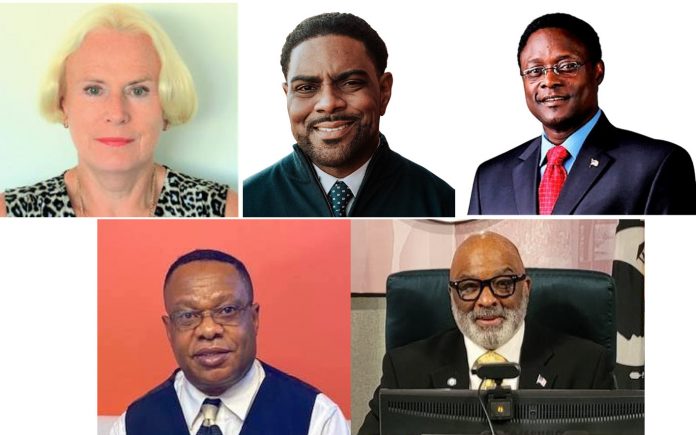
Candidates that filed by the deadline last month were Wynfred Russell, Hollies Winston, Mark Mata, Boyd Morson, Yelena S. Kurdyumova, Benjamin Osemenam and Lisa Jacobson.
The League of Women Voters of Brooklyn Park, Osseo and Maple Grove and the Twin West Chamber of Commerce are hosting the forum in conjunction with CCX Media.
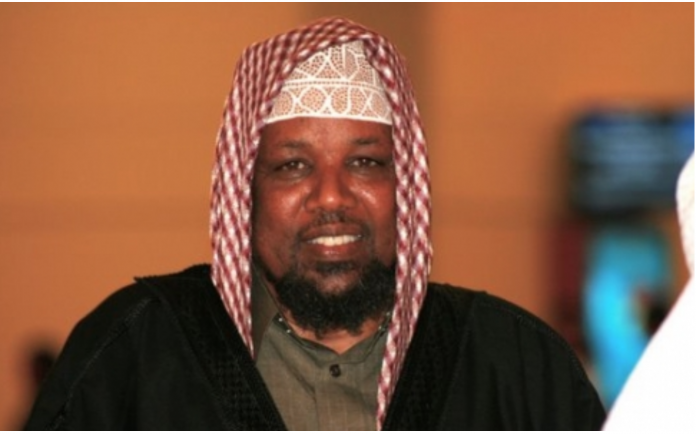
Imam Abdirahman Sheikh Omar told Mshale during an interview that taking a COVID-19 vaccine does not invalidate one's fast during Ramadan. Photo: Mshale File
Imam Abdirahman Sheikh Omar told Mshale during an interview that taking a COVID-19 vaccine does not invalidate one's fast during Ramadan. Photo: Mshale File
Taking a COVID-19 vaccine will not break a Muslim’s fast during Ramadan, Imam Abdirahman Sheikh Omar, the head and the Imam of Abubakar As-Saddique Islamic Center in Minneapolis told Mshale during an interview.
As Minnesota readies to vaccinate the general public, those ramped up efforts are going to coincide with the holy month of Ramadan which starts in Mid-April.
“Corona vaccine, like any other vaccine taken intramuscularly, does not break the fast during the blessed month of Ramadan,” said Imam Abdirahman Sheikh Omar.
The Imam’s words come in the wake of objections by Abdullahi Hassan, an influential activist in the Somali Muslim community in Minnesota, who has come out against vaccinations during Ramadan.
“I will not take the COVID-19 vaccine during Ramadan,” Hassan told Mshale. “Because I think that the vaccine will invalidate my fast.”
Told about similar sentiments from others in the community, Imam Omar said there are remedies to making up the fast if one gets a side effect, saying “But still if the person who received the vaccine experiences side effects such as high temperature and takes medicine and breaks the fast, then he/she must make up that day in compliance with the Qur’an text for ‘whoever of you is ill or on a journey, then let them fast an equal number of days after Ramadan.'”
Mshale spoke with six other metro area Imams and they all agreed with Imam Omar. Those joining him in calling on the Muslim community to take the vaccine when it is their turn was Imam Mohamed Shuayb, the founder of Bayan Research Center in St. Anthony.
“I encourage everyone to get vaccinated, including during Ramadan,” said Imam Shuayb. “The virus has made many of our minority communities even more vulnerable.”
Imam Shuayb went on to say that according to the Qur’an “Whoever saves a life, it will be as if they saved all of humanity.”’
Last week Governor Walz said the state is ahead of schedule in vaccinating seniors and will be opening up vaccinations to other vulnerable groups before rolling out to the general public.




 How JPMorgan Chase is combating the racial wealth divide