
Home Blog Page 94

Union organizer Alfreda Daniels running for City Council in Brooklyn Center

0
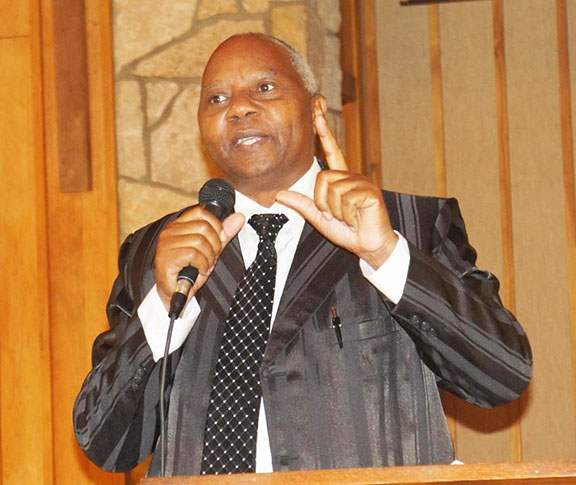
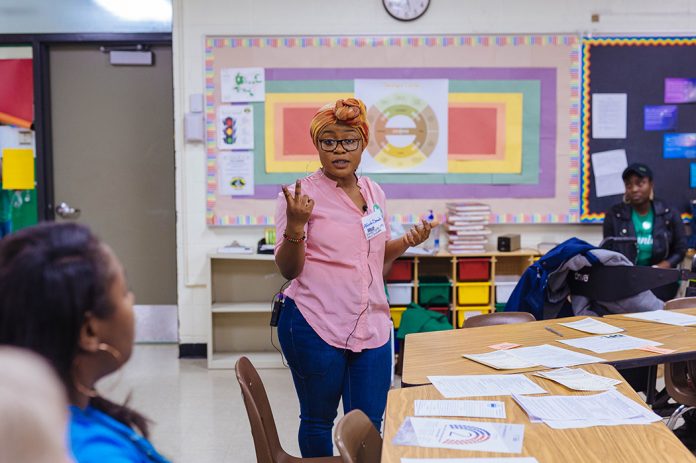
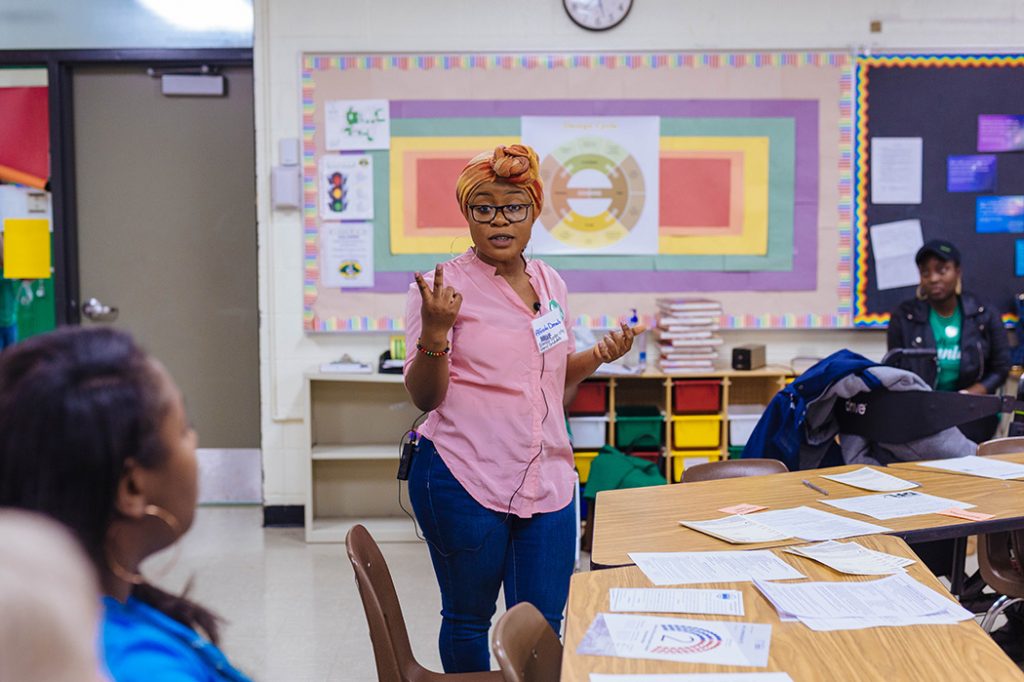
Alfreda Daniels speaking at the February 25, 2020 precinct caucus in Brooklyn Center where she is vying for a seat in the Brooklyn Center City Council. Photo: Jerusa Nyakundi/Mshale
Alfreda Daniels Speaking at DFL Caucus 2020
Alfreda Daniels speaking at the February 25, 2020 precinct caucus in Brooklyn Center where she is vying for a seat in the Brooklyn Center City Council. Photo: Jerusa Nyakundi/Mshale
Alfreda Daniels Speaking at DFL Caucus 2020
Alfreda Daniels speaking at the February 25, 2020 precinct caucus in Brooklyn Center where she is vying for a seat in the Brooklyn Center City Council. Photo: Jerusa Nyakundi/Mshale

Activist and community organizer Alfreda Daniels on Tuesday May 19 officially filed to run for one of two seats in the Brooklyn Center City Council. A few days before filing, she spoke to Mshale and said she is hoping to leverage her expertise as an organizer with a local union to fight for workers’ rights.

“I am running to represent the interests of all workers, especially those living in Brooklyn Center,” she said.

She is a familiar figure in union politics with twelve-years of experience working for one of Minnesota’s largest unions, the Minneapolis Regional Labor Federation where she honed her skills advocating for progressive policies that favor the city’s work force.

Unemployment in the city has in recent years been running higher than the state average of around 3% (pre COVID-19). The city has been working on a new master plan that is expected to inject vitality into the city. Part of the master plan includes an 81-acre zone that stretches from the former Brookdale Center mall to the area around Highways 694 & 100 that has garnered a lot of regional attention.

It is in high profile projects as this that Daniels says she wants to utilize her expertise to ensure that the residents of Brooklyn Center are not forgotten in the planning to ensure they are provided fair wages and healthy work environments. “[I want] to make sure that they are providing economic growth for our residents,” she said.

“I understand the power of our local government,” she said. Adding that council members have the opportunity to vote for issues that directly affect residents.

Daniels was born  in Liberia at the height of the Liberian civil war which forced her family to flee to neighboring Côte d’Ivoire, and eventually to a refugee camp in Ghana. They lived there for six years before moving to the United States.

In addition to her well known profile as a union organizer, Daniels is also co-founder of Black Immigrant Collective whose focus is to elevate the voices of Black immigrants in Minnesota. BIC has been in the frontline during the COVID-19 pandemic as the voice of black immigrant workers at meat packing plants that have complained of unsafe working conditions.

City council races are non-partisan races but on May 7 Daniels received the Democratic Party endorsement during the Senate district convention. Where the race goes from here depends on how many candidates file for the two open seats. If more than four candidates file, there will be a primary on August 11 to nominate candidates for the November 3 election.

To learn more about Daniels and her campaign you can visit her website: alfredadaniels.org/
Minnesota addressing racial disparities amid COVID-19 pandemic

All CareerForce services , all of which are free, continue to be offered online or over the phone during the COVID-19 pandemic. Services are available in languages other than English.
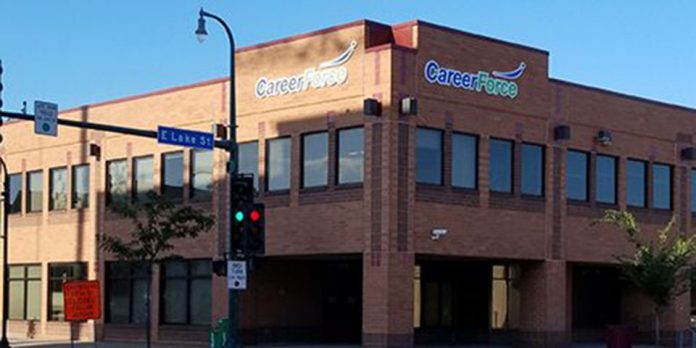
CareerForceMN Lake Street Office
All CareerForce services , all of which are free, continue to be offered online or over the phone during the COVID-19 pandemic. Services are available in languages other than English.
CareerForceMN Lake Street Office
CareerForce services , all of which are free, continue to be offered online or over the phone during the COVID-19 pandemic. Services are available in languages other than English.

The Stay at Home order is lifted, but that doesn’t mean it’s a complete return to normal. Governor Walz asks us to #StaySafeMN to continue to slow the spread of the COVID-19 virus and keep those most vulnerable to severe complications from the illness as safe as possible during the weeks and months ahead. As more businesses reopen with safely plans in place, many people who lost their jobs during the COVID-19 crisis are starting to go back to work.

If you are looking for work now, you should know that many Minnesota employers are currently hiring. CareerForce can help you connect with employers hiring now – at no cost to you. You can find connections to family sustaining jobs with opportunities for advancement through CareerForce. All CareerForce services continue to be offered online or over the phone. Services are available in languages other than English. All CareerForce services are free. You can find out more on CareerForceMN.com.

As we begin down the long road to economic recovery, it is important to recognize that while COVID-19 has impacted nearly every Minnesotan in one way or another, there has been a disparate impact on Minnesotans of color and Indigenous residents. Across state government, and within the Minnesota Department of Employment and Economic Development (DEED), we are working hard to address these disparities.

The first step in addressing disparities is defining them. One stark disparity we see at DEED is in loss of employment as revealed in applications for unemployment benefits. Based on Unemployment Insurance applications received between March 16 and May 9, we calculated that 17.8% of all white people in Minnesota’s labor force have applied for benefits, while 31.4% of People of Color and Indigenous people in Minnesota’s labor force have applied for benefits. For Black people, that share of the labor force that has applied for unemployment benefits is slightly higher at 33.2%.  This is a startling and sobering statistic: since mid-March nearly one in every three Black people in Minnesota’s labor force has applied for unemployment benefits after losing their job or having their hours significantly reduced.

At DEED, we are working to help people through the current crisis. We’re proactively engaging in outreach with Minnesota communities through a series of weekly telephone calls. We’ve invited more than 200 community leaders to ask us questions by phone, starting back in April. We’re also engaging via forums organized by elected leaders, as well as in community news publications like Mshale, and on radio and TV.  We strive to share information as clearly, quickly and transparently as possible.

We want workers to know that unemployment insurance benefits exist precisely to help people who have been laid off or had their hours reduced through no fault of their own. If you have been laid off from your job or had your hours reduced because of COVID-19, you deserve assistance. You may even qualify if you work two jobs, if you are an independent contractor, or if you are self-employed. If you are an immigrant with legal authorization to work in the U.S., you may be eligible for unemployment insurance benefits and it will not have an impact on a public charge determination. You can get answers to many common questions and apply for unemployment benefits at uimn.org.

Minnesota workers were among the first in the country to receive emergency unemployment benefits passed by Congress in late March. On April 8, eligible workers began receiving a temporary additional $600 a week in unemployment compensation, and this additional compensation is slated to continue through the end of July. Benefits for those who were nearing the end of their regular 26 weeks of unemployment benefits were extended by 13 weeks starting April 15. And emergency benefits payments began to eligible self-employed Minnesotans on April 24.

We also want workers to know that applying for unemployment benefits through the Unemployment Insurance office or getting job search assistance through CareerForce does not cost you anything and you don’t need to pay someone else to access these services.

The past two months have been hard and have revealed the racial disparities and inequality that existed in Minnesota, long before the COVID-19 crisis.  DEED and other agencies are identifying who has been most negatively impacted by the current crisis and are targeting resources to help them now. As we move into economic reopening and recovery we will rebuild based on core values of prosperity, security and community. When we rebuild, we will create a more equitable Minnesota.

Hamse Warfa is Deputy Commissioner for Workforce Development at the Minnesota Department of Employment and Economic Development.  You can reach Deputy Commissioner Warfa at [email protected].

Beloved Kenyan-American community leader in Minnesota dies of coronavirus

11
Dr. Thomas Nyambane, a beloved Kenyan-American educator in Minnesota died of the coronavirus on Sunday, May 17, 2020. Photo: Courtesy of M'barikiwa Media Ministry
Thomas Nyambane 2014 Web
Dr. Thomas Nyambane, a beloved Kenyan-American educator in Minnesota died of the coronavirus on Sunday, May 17, 2020. Photo: Courtesy of M'barikiwa Media Ministry
Thomas Nyambane 2014 Web
Dr. Thomas Nyambane, a beloved Kenyan-American educator in Minnesota died of the coronavirus on Sunday, May 17, 2020. Photo: Courtesy of M’barikiwa Media Ministry

Minnesota’s Kenyan community is grieving the loss of an influential community leader, Thomas Nyambane, to coronavirus. Nyambane, affectionately referred to as Dr. Nyambane, was a college educator and was just a few years into his retirement following a career of teaching at Hennepin Technical College. He died yesterday (May 17) aged 69.

His death is the first reported fatality of a Kenyan in Minnesota from the COVID-19 pandemic that as of May 18 had claimed 731 lives in the state.

After moving to the United States in the 80s with his wife Alice, first to Texas and then to Minnesota, they raised three children and worked hard to encourage and model cohesion of the Kenyan community in the state. He obtained his bachelor’s degree from the University of North Texas and two masters degrees from the University of St. Thomas in the Twin Cities. His doctorate degree in philosophy was from Bethel University in Saint Paul.

He was a practicing Seventh Day Adventist and was a church elder at The Mountain Experience SDA Church in Moundsview.

Friends and family that spoke to Mshale described the late Nyambane as a mentor and leader that guided many to achieve their potential and American dream.

His eldest son, Cyprian Kambuni, said the sudden loss of his father is a shock to the family and the community he served.

“He had a very generous heart – to everyone and it did not matter who or where you came from and whether you were a kid or a grownup,” said Kambuni. The son said his generosity and kindness knew no bounds as he dispensed it in equal measure both locally where he lived and to his place of birth. He was a regular in fundraisers to raise money for Books for Africa through the Minnesota Kenya International Development Association (MKIDA) to send containers of books to Kenya.

Kambuni said his father had been through four back surgeries in the last few years and had an underlying condition of diabetes that made him vulnerable to the coronavirus. His age also put him at risk.

“He complained of shortness of breath on April 30 and got admitted at the hospital and when he got tested, he was positive of the virus,” Kambuni told Mshale via phone.

Kambuni said it is not clear where his father might have contracted the coronavirus given that he had been staying close to home following Governor Walz’s stay-at-home order, only going outside his apartment to get mail, as far as he can recall.

The son said given his father’s expressed wishes over the years to be buried at his birth place, the family is trying to come to terms on how to respect those wishes given the global pandemic. Kenya is among the African countries that have closed their airspace to commercial flights following the COVID-19 global pandemic.

Nyambane’s friend, Daniel Monari, said the late Nyambane worked hard to bring Kenyans in Minnesota, especially those from Gusii, together and was tireless in facilitating interaction between Minnesota and his native Kisii County in Kenya, at one time being part of a delegation of Minnesota firefighters that went to Kisii to train their counterparts.

“He loved working for Kenyans, loved to be involved, loved to serve the community. Not seeing himself as a leader, but as a uniter of us all.”

Monari added one thing that struck him most about the late Nyambane was the fact that he gave equal respect to ideas from both men and women, recalling a time when Nyambane was chair of the Basi Community Foundation and he was the treasurer, “He would never allow dysfunction to surround him, and he put in place structures at the foundation that have stood the test of time.”

Echoing the late Nyambane as a respecter of all sexes was Lyna Nyamwaya, president of The African Nurses Network. Despite his influence and standing, Nyamwaya recalls how modest Nyambane was when she invited him to be part of a panel two years ago. Speaking in Ekegusii, Nyambane said “Baba Lyna ning’isaine koroku richuma gaki? Korende asengecho yamasikani ao, I will do it.” Loosely translated the late Nyambane was wondering if he was worthy of being on the panel but because of the respect Nyamwaya had shown him he would join the panel.

The president of the Minnesota Kenya Association, Geoffrey “Chui” Gichana, moaned the loss of a mentor whose wise counsel he said he will miss.

“He is one of those people you feel better after you are done talking to. He was a great elder and leader of our community that we are going to really miss, and especially me personally,” said Gichana.

Nyambane is survived by his wife of more than four decades Alice, his daughter Mercy and two sons, Cyprian and Fred.

Funeral arrangements are pending.

Minnesotans who have lost their health insurance due to COVID-19 can get coverage through MNsure

0
MNsure encourages those who have had a decrease in income due to the coronavirus pandemic to apply for health coverage through them.
MNSureStetho
MNsure encourages those who have had a decrease in income due to the coronavirus pandemic to apply for health coverage through them.
MNSureStetho
MNsure encourages those who have had a decrease in income due to the coronavirus pandemic to apply for health coverage through them.

If your income has decreased due to the coronavirus pandemic and you have lost the health insurance you had through your work, you might qualify for coverage through MNsure. MNsure has a new special enrollment period option that allows Minnesotans to enroll in private coverage.

You may qualify if:
• Your household income recently decreased,
• You are newly eligible for an advanced payment tax credit because of your income change, and
• You had minimum essential coverage outside of MNsure at least one day in the last 60 days.

If this sounds like your situation, call MNsure for coverage options. You need to apply within 60 days after the income decrease.

Minnesotans who experience another qualifying life event (such as marriage, birth or adoption of a child, or a move) may also be eligible to shop for coverage.

“If you were enrolled in a health insurance plan outside of MNsure and your income has decreased, you may be eligible to enroll in a plan through MNsure and qualify for tax credits to help cover the cost of your health insurance,” said MNsure CEO Nate Clark. “Don’t delay if you’re in that situation. Give us a call, or visit MNsure.org today to see if you qualify for this enrollment opportunity.”

Message from Deputy Commissioner Warfa on COVID-19 assistance to Minnesota workforce

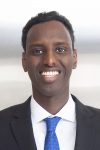
Deputy Commissioner Hamse Warfa is the highest ranking African immigrant in Minnesota state government.
hamse warfa eNews 1
Deputy Commissioner Hamse Warfa is the highest ranking African immigrant in Minnesota state government.

CareerForce Ad 1 Mshale 10x3Editor’s note: Deputy Commissioner Hamse Warfa originally sent this message to Mshale eNewsletter subscribers on May 7, 2020.
My name is Hamse Warfa and I am the deputy commissioner for Workforce Development at the Minnesota Department of Employment and Economic Development (DEED). DEED is working with Mshale and other community publications to get the word out about help for people who’ve lost a job due to the COVID-19 pandemic.

Unemployment insurance benefits are available to more people now:

  • Did you lose your job through no fault of your own?
  • Were your hours reduced?
  • Did you work multiple jobs?
  • Are you self-employed?
  • Did you lose childcare?

These are some of the reasons why people are eligible for unemployment insurance benefits. If you lost your job or lost hours, check your eligibility by applying online at uimn.org.

Applying for unemployment insurance benefits does not cost you anything., You don’t need to pay someone to help you apply. Language assistance is  available in Somali, as well as Hmong and Spanish. In fact, we have a phone interpreter for more than 100 languages.

If you have internet access, applying online at uimn.org is easy to do. If you don’t have internet access or you’re not comfortable applying online you can call 651-296-3644 for help, but please be prepared to wait a while on hold.

Are You Looking for Work?

CareerForce can help—at no cost to you! Connect with Minnesota employers hiring right now, during the COVID-19 pandemic.

CareerForce can help you online or over the phone:

  • Job search ideas
  • Resume writing
  • Interview preparation and more

Visit CareerForceMN.com or call 651-259-7501. Get on the road to rewarding work.

We’re in this together. Stay well.

Community groups launch Minnesota COVID-19 relief fund for the undocumented

1
Ten organizations in Minnesota have launched the Minnesota COVID-19 relief fund to help the state's undocumented that do not qualify for state and federal COVID-19 relief efforts.
COVIDFund
Ten organizations in Minnesota have launched the Minnesota COVID-19 relief fund to help the state's undocumented that do not qualify for state and federal COVID-19 relief efforts.
COVIDFund
Ten organizations in Minnesota have launched the Minnesota COVID-19 relief fund to help the state’s undocumented that do not qualify for state and federal COVID-19 relief efforts.

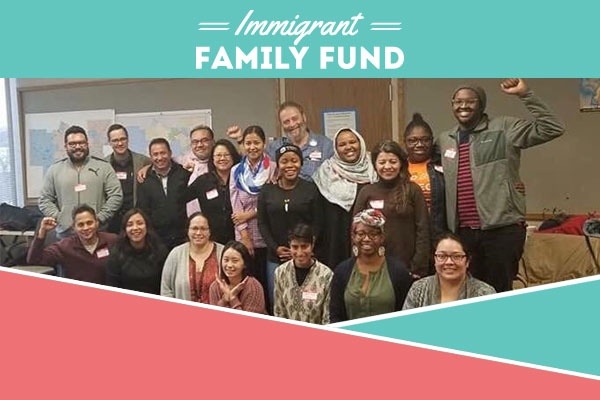
More than 10 community groups that include the Black Immigrant Collective and ISAIAH, have launched the Minnesota Immigrant Families COVID-19 Fund to raise funds to help the state’s undocumented community who have been left without access to state and federal economic programs designed to offer relief during the COVID-19 pandemic.

As of May 11, the fundraising which is going on at GoFundMe has raised over $217,000 of a targeted $300,000.

The fund is available to all undocumented individuals or households whose main sources of income is from immigrants who are not eligible for state and federal benefits.

Individuals can apply at this link.

The money can be used to pay for groceries, utilities, pay for DACA or TPS renewals and for short-term partial income loss to COVID-19 among others. Visit this link for further information.

Undocumented immigrants typically do not have social security numbers but instead use what is called Individual Tax Identification Numbers (ITIN) and the IRS takes in billions of dollars of tax payments from these undocumented workers. However, the $2 trillion CARES Act that Congress passed made people who filed taxes with an ITIN ineligible for assistance. Furthermore, US citizens or green card holders who jointly filed taxes with someone using an ITIN, they are also ineligible for the stimulus checks of about $1,200.

Minnesotans of goodwill can make donations to the fund at this link.

To apply for funds, use this link.

The community organizations involved in creating the Minnesota Immigrant Families COVID-19 Fund include: Asamblea de Derechos Civiles- St Cloud Chapter, Asian American Organizing Project (AAOP), Awood Center, Black Immigrant Collective (BIC), Centro de Trabajadores Unidos en Lucha (CTUL), ISAIAH, Navigate MN and National Asian Pacific American Women’s Forum (NAPAWF) St. Cloud chapter and Release MN8.

Hennepin Healthcare expands COVID-19 testing to Brooklyn Park, South Minneapolis and Richfield

0
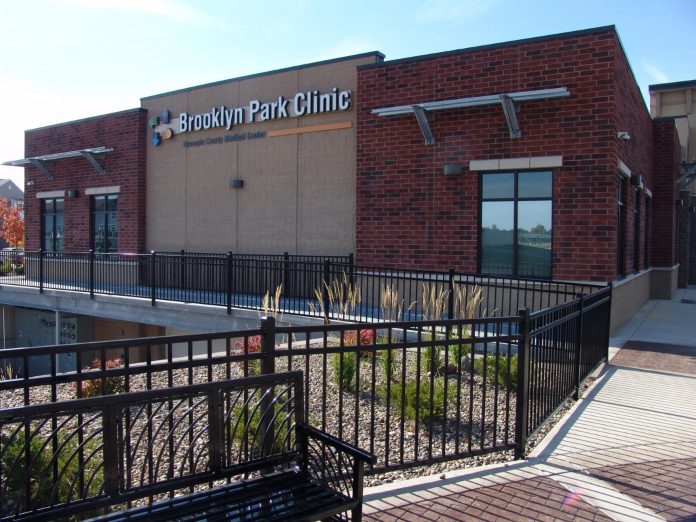
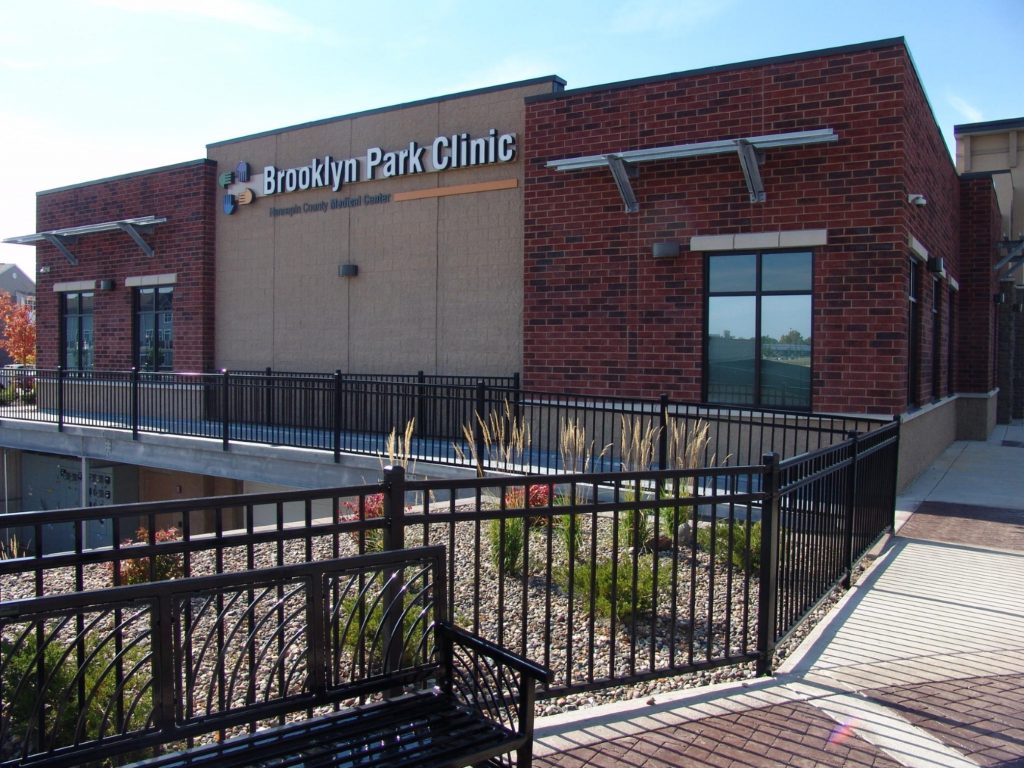
Hennepin Healthcare's clinic in Brooklyn Park now offers COVID-19 testing.
Brooklyn Park Clinic
Hennepin Healthcare's clinic in Brooklyn Park now offers COVID-19 testing.
Brooklyn Park Clinic
Hennepin Healthcare’s clinic in Brooklyn Park now offers COVID-19 testing.

One of the first testing labs in the state to offer COVID-19 testing has expanded to more clinic locations and is now supporting testing in long-term care, shelter and other settings by deploying teams of paramedics and nurses to do onsite collection. This expansion is vitally important to bring testing to underrepresented populations in Hennepin County and reduce transmission and outbreaks in long-term care facilities, group homes and other types of congregate care settings.

“This information will help us identify where the virus is, how prevalent it is and where it’s going,” said Dr. Glen Hansen, Director of Hennepin Healthcare’s Clinical Microbiology and Molecular Diagnostic Lab.

When it began testing for COVID-19 in March, Hennepin Healthcare was one of the largest laboratories at the time to offer testing for the virus. More than 200,000 tests have been secured and Hennepin Healthcare now has the capacity to test more than 1000 patients daily – helping to meet to Governor Tim Walz’ request that 20,000 daily tests to be completed in Minnesota.

Hennepin Healthcare offers testing to symptomatic patients from the community at its Viral Screening Clinic in downtown Minneapolis, as well as at its clinics in Whittier, Brooklyn Park and Richfield. Testing is also conducted on patients admitted to HCMC and the lab processes tests for several other healthcare systems, community clinics and correctional facilities.

“We’re getting rapid turnaround from our lab – literally getting results within 6-7 hours, which is crucial not only for screening asymptomatic inpatients, but also for those with symptoms whose course of care is determined by this diagnosis,” said Hansen.

The lab also has capability to conduct rapid COVID-19 testing that turns around results within 67 minutes, and it’s the only hospital in the Twin Cities to offer a full respiratory panel that can rule out 16 viruses (including COVID-19).

Hansen says that the ability to simultaneously detect COVID-19 while examining other circulating respiratory viruses will become “even more important if the outbreak extends past the summer into the traditional respiratory virus season.”

The Microbiology Laboratory at Hennepin Healthcare provides a full range of services including diagnosis of bacterial, viral, mycotic, and parasitic infections, as well as extensive testing and reporting of antimicrobial susceptibility results.

Governor Walz and Afro Deli’s Kahin give updates on COVID-19 impact

0
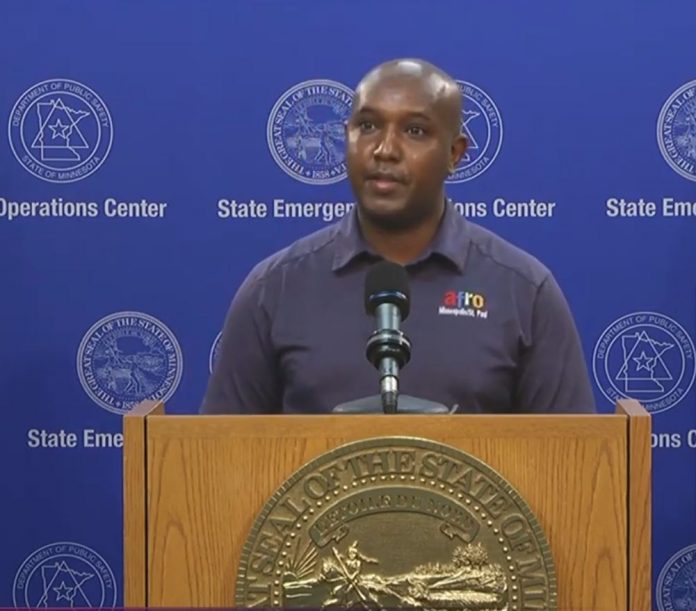
Abdirahman Kahin, owner of Afro Deli and the 2018 African Awards Business of the Year, speaks at Governor Walz's daily briefing on the COVID-19 pandemic on Monday, May 4, 2020. Photo: Mshale YouTube Channel
Kahin at Governor Briefing 5 4 20
Abdirahman Kahin, owner of Afro Deli and the 2018 African Awards Business of the Year, speaks at Governor Walz's daily briefing on the COVID-19 pandemic on Monday, May 4, 2020. Photo: Mshale YouTube Channel

Governor Walz at Monday’s daily COVID-19 briefing invited Abdirahman Kahin, owner of Afro Deli and the 2018 African Awards Business of the Year, to share the challenges restaurants have been facing following the governor’s order in March to close all restaurants except for takeout and delivery due to the COVID-19 pandemic.

Governor Walz has been under mounting pressure to end the stay-at-home order that he extended last week through May 18. At Monday’s press briefing however, Kahin praised the governor for working with the hospitality industry to work on plans on how to reopen safely. Joining Kahin to express similar gratitude was Liz Rammer, the president and CEO of Hospitality Minnesota an industry trade group that represents restaurants, lodging and campgrounds.

Kahin shared that three of his five restaurants in the Twin Cities are closed with the other two following the governor’s directive of offering just takeout and delivery. Kahin said as a business and community leader he is used to challenges “but this epidemic has presented new challenges for my business, but through it all we continue to focus on the health of our employees and customers.”

He said Governor Walz and DEED Commissioner Steve Grove have been receptive to suggestions he has offered on how restaurants can reopen safely, and that his business is ready to get back to business by following the safety guidelines that the state has developed.

Kahin’s sentiments were shared by Rammer who said the industry employees upwards of 300,000 Minnesotans and has taken what she called a monumental hit and gave an ominous warning that “more than half of these businesses face certain, permanent closure in the next two months.”

“This is a tough time but if we go through 2020 safe and healthy, we will be ready for the profits that follow afterwards and as Minnesotans we are in this together,” said Kahin.

On his part, Governor Walz promised the state that he is working hard to get businesses reopened, “I get it, this sense of urgency,” he said.

Boni Njenga announces run for Hennepin County Commissioner

0
Boni Njenga, a Twin Cities businessman and former state employee has declared his candidacy for the Hennepin County Board of Commissioners representing District 5. Photo: Submitted
Boni Njenga MshaleWeb
Boni Njenga, a Twin Cities businessman and former state employee has declared his candidacy for the Hennepin County Board of Commissioners representing District 5. Photo: Submitted

Boni Njenga, a Bloomington resident, has announced he is running for Hennepin County Commissioner in District 5 challenging first term incumbent Debbie Goettel. In a Zoom interview with Mshale as he observed Ramadan and the governor’s shelter-in-place order, Njenga discussed his platform.

Njenga said he is running because it is time for fresh ideas and action, and wants to be involved at the policy level in making the county an even better place to live for all of its residents. He has lived and worked in the county for the last nine years.

Hennepin is Minnesota’s largest county with an annual budget of $2.5 billion that is overseen by a seven-member board of commissioners that represent the county’s seven districts. District 5 covers the cities of Bloomington, Eden Prairie and Richfield.

His main issues of focus include safe and affordable housing, closing the achievement gap, creating community wealth, improving the quality of life for all county residents, and child protective services, noting that the latter has been especially costly for the county which just settled a class-action lawsuit in December that had been filed against it in 2017.

“I want to bring a 21st century approach to policy making,” Njenga said. “If you look at Debbie’s voting record, she has not had any proposals and no new ideas other than just supporting other commissioners’ proposals.” He acknowledged that the incumbent is a formidable opponent but that he is up to the challenge.

Njenga who has a masters in public administration said if elected, he plans to introduce a new era of governance called “evidence – based policy making,” adding that the approach has been used in counties around the country to guide decisions using the best available research and information.

He has championed access and opportunity for marginalized groups through his involvement in the faith-based coalition Isaiah, whether it is helping mosques in grant writing or pointing individuals to resources. His insight into the challenges the marginalized communities face is what has informed one of his platform issues – creating community wealth. He decried the county’s dismal record when it comes to contracting with minority entrepreneurs. “Hennepin County with its millions of dollars spends less than 1% in contracting with people of color,” Njenga said.

He has held supervisory and project management roles with the state where he worked before joining the private sector as a business owner. He says that background will enable him to offer ideas and innovative approaches that will enable money to go to local businesses to create sustainable jobs and economic security “instead of workforce programs and welfare.”

He was the first in his family to finish high school in his native Kenya before proceeding to Minnesota State University-Mankato where he obtained a bachelors in political science and a masters in public administration.

“It will be quite an honor if residents of District 5 give me a chance to serve them and give back to the community that gave me a home and accepted me years ago,” an animated Njenga said.

He is seeking the Democratic party’s endorsement.

Mayor Frey allows Adhan broadcast as Ramadan begins

1
In a first for Minnesota, the Muslim call to prayer, Adhan, was broadcast in Minneapolis on Thursday, April 23, 2020 to mark the start of Ramadan following a special permit by Mayor Jacob Frey. Photo: Facebook Screen Grab
Adhan
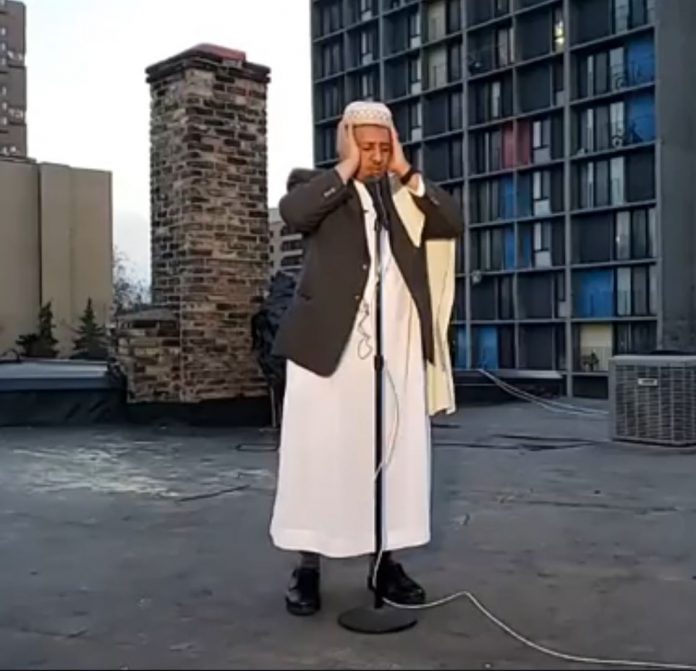
In a first for Minnesota, the Muslim call to prayer, Adhan, was broadcast in Minneapolis on Thursday, April 23, 2020 to mark the start of Ramadan following a special permit by Mayor Jacob Frey. Photo: Facebook Screen Grab
Adhan
In a first for Minnesota, the Muslim call to prayer, Adhan, was broadcast in Minneapolis on Thursday, April 23, 2020 to mark the start of Ramadan following a special permit by Mayor Jacob Frey. Photo: Facebook Screen Grab

In a historic move last night marking the first day of Ramadan, the Adhan, the Muslim call to prayer rang out in the Minneapolis Cedar-Riverside neighborhood following the granting of a special permit by Mayor Jacob Frey on Tuesday.

Mayor Frey said the move is intended to help residents maintain safe physical distance during the holy month. Places of worship have been closed to worshipers as the COVID-19 pandemic rages. The mayor’s office in a release sent to Mshale said Frey facilitated the noise permit to honor the community’s request for the service, and the Council on American-Islamic Relations (CAIR) paid for the audio equipment to make the broadcast from Dar Al-Hijrah Mosque possible.

In keeping with the Muslim tradition, the Adhan will be sounded five times per day, beginning at sunrise and ending shortly after sunset.

“At a time when physical distancing requires we pray apart, it’s incumbent on leaders to create a sense of togetherness where we can,” said Frey. “Adhan provides solidarity and comfort – both of which are essential during a time of crisis. As our Muslim community prepares for Ramadan, we hope the broadcast will offer a measure of stability and reassure our entire city that we are all very much in this together.”

CAIR-Minnesota Executive Director Jaylani Hussein said the Adhan be especially meaningful to the many senior citizens in the Cedar Riverside neighborhood who have been isolated due to the pandemic.

“It will help them feel more connected to their community and mosque in this sacred month,” said Hussein.

Imam Sharif Mohamed of Dar Al-Hijrah Mosque praised the mayor’s move saying “In this time of fear and isolation, the Muslim communities of Minnesota benefit from a city that honors and loves all of its diversity.”

The speaker is located outside Dar Al-Hijrah Mosque at South Fifth Street and Cedar Avenue and will be played at volumes consistent with city regulations, reaching thousands of residents in Cedar-Riverside.

You can view and listen to last night’s historic broadcast at this link.

Burna Boy and Black Coffee represent Africa at One World COVID-19 concert

0
One World Together At Home e1586327261340
Burna Boy and Black Coffee represent Africa at One World COVID-19 concert

The biggest and brightest of the African music world got together—while staying apart—on Saturday, and naturally, the African Giant was there. Taking his rightful place alongside the Rolling Stones, Stevie Wonder, and Lizzo, Burna Boy performed “African Giant” and “Hallelujah” for the One World: Together at Home concert Saturday from a comfortable looking chair in Lagos, Nigeria. Down in South Africa, Black Coffee remotely performed “Drive” with the British singer Delilah Montagu.

In an eight-hour stream on the internet and a two-hour televised event in America, the One World: Together at Home concert brought together a bunch of people who didn’t have anything better to do, and raised $127 million to battle coronavirus. Kicked off and curated by Lady Gaga singing the old standard “Smile,” the show was an opportunity to look into these people’s houses—or onto Elton John’s basketball court—hear an older Taylor Swift song gain new resonance, and, thankfully, hear Beyonce take all the air out of the idea that coronavirus is a great leveler.

“Black Americans disproportionately belong to these essential parts of the workforce that do not have the luxury of working from home,” Beyonce said. “African-American communities at large have been severely affected in this crisis. Those with pre-existing conditions are at an even higher risk. This virus is killing black people at an alarmingly high rate here in America.”

The concert has been released as a monstrous four-hour album, available to stream, with proceeds supporting the COVID-19 Solidarity Response Fund for the World Health Organization.

Black Coffee performance at this link.

Story courtesy of AfroPop.