Home Blog Page 52

Glass ceiling at Minnesota state senate shatters as 3 Black women are sworn in

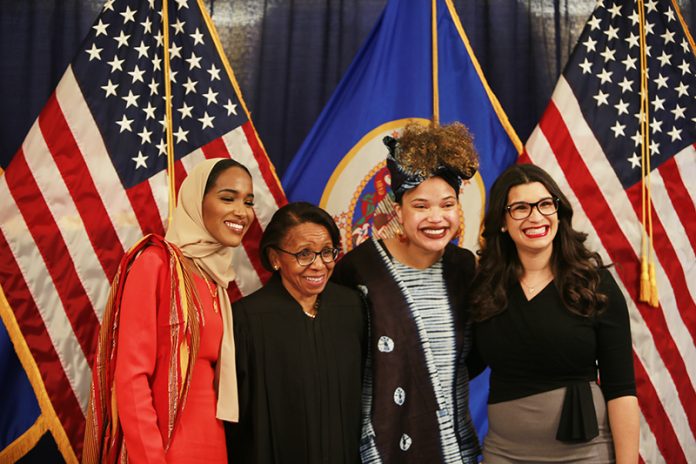
The first Black women elected to the Minnesota Senate with U.S. District Court Judge Wilhelmina M. Wright, second left, moments after the judge administered the ceremonial oath of office for them to take their seats on Tuesday, January 3, 2023. From left is Zaynab Mohamed, Clare Oumou Verbeten and Erin Maye Quade. Mshale Staff Photo by Richard Ooga
Three Black Women MN State Senators Mshale
The first Black women elected to the Minnesota Senate with U.S. District Court Judge Wilhelmina M. Wright, second left, moments after the judge administered the ceremonial oath of office for them to take their seats on Tuesday, January 3, 2023. From left is Zaynab Mohamed, Clare Oumou Verbeten and Erin Maye Quade. Mshale Staff Photo by Richard Ooga

The 2023 swearing in of lawmakers who were elected to Minnesota’s state legislature was like no other before. The ceremony, which was held on Jan. 3, saw the swearing in of a Black woman for the state senate for the first time since Minnesota joined the United States 164 years ago.

Make that three Black women sworn in. Zaynab Mohamed of District 63, Clare Oumou Verbeten of District 66, and Erin Maye Quade of District 56 shared the honor of making history when they got elected in November.

“You can’t have democracy without Black women,” Quade said. “I am excited for all three of us on this monumental day.”

The state of Minnesota joined the union on May 11, 1858. It elected its first Black senator, Dr. Robert Lewis, more than a century later, in 1972, but no woman has ever been elected to serve in the upper chambers of the state legislature.
Zaynab Mohamed Oath Mshale
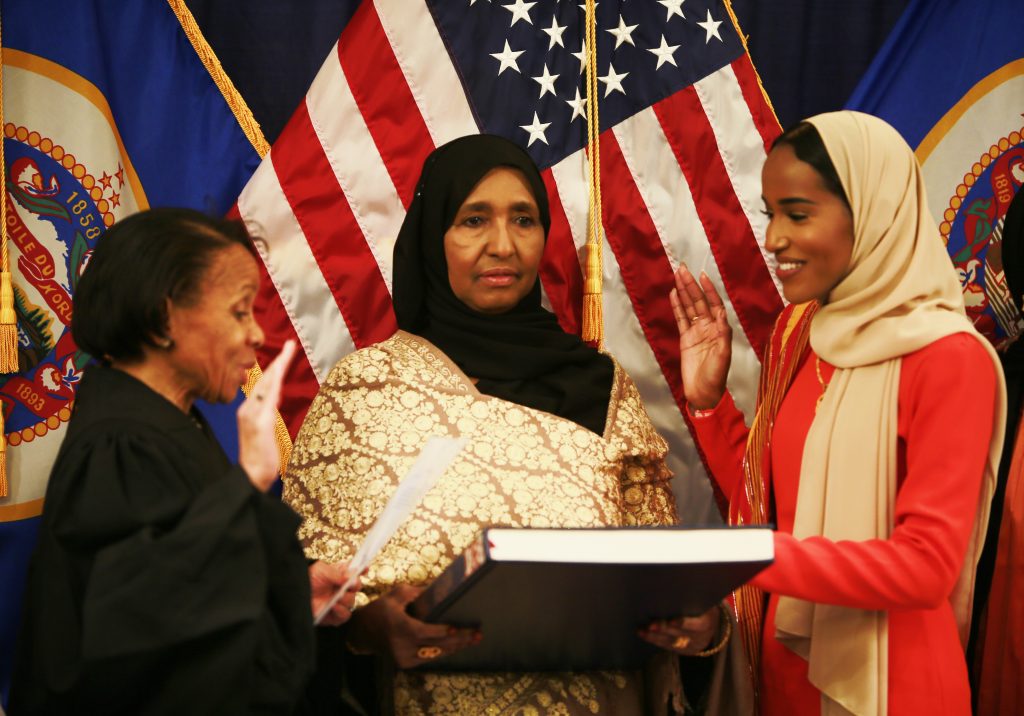
U.S. District Court Judge Wilhelmina M. Wright administers the ceremonial oath of office to Senator Zaynab Mohamed on Tuesday, January 3, 2023 to represent Senate District 63 at the Minnesota Senate. Holding the Quran is her mother Hawa Mohamed. State Senator Mohamed is one of three Black women who made history as the first Black women elected to the state Senate. Mshale Staff Photo by Richard Ooga

The election of the three women is indicative of the state’s changing demographics. Minnesota is home to around 400,000 residents who identify as Black or African American, 125,000 of whom were born in Africa, according to a 2020 study published by the Minnesota Department of Employment and Economic Development. Between 2010 and 2020, the state’s African immigrant population grew by 78%, the same report said. With the growth in population, Africans have become more involved in Minnesota politics and are creating significant impact in the state. Over the last few elections, several African-born Minnesotans have been elected to various seats ranging from local government in small suburban cities to the Minnesota state legislature, and of course to Capitol Hill, in the case of Rep. Ilhan Omar, who was overwhelmingly re-elected to her third term representing Minnesota’s 5th Congressional District in the U.S. House of Representatives.
Erin Maye Quade Oath Mshale
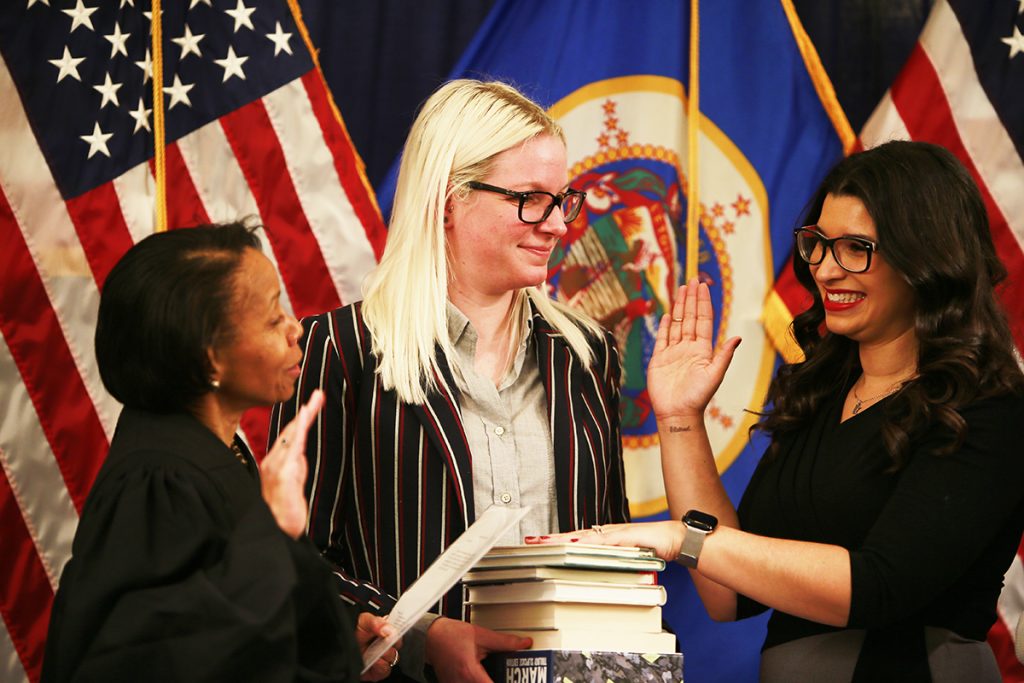
U.S. District Court Judge Wilhelmina M. Wright administers the ceremonial oath of office to Senator Erin Maye Quade on Tuesday, January 3, 2023 to represent Senate District 56 at the Minnesota Senate. In the middle is Quade’s wife Alyse. State Senator Quade is one of three Black women who made history as the first Black women elected to the state Senate. Mshale Staff Photo by Richard Ooga

Verbeten, who did not have a challenger in the nominations to represent the Democratic Farmer-Labor Party (DFL), as the party is known in Minnesota, she easily beat her Republican opponent, Mikki Murray, and Jeremy Peichel, a libertarian.

Mohamed defeated Todd Scott in the DFL primaries and went head-to-head with Republican Shawn Holster to fill the open seat of retiring Patricia Torres Ray, who herself made history in 2006 as the first Latina and Colombian immigrant to be elected to Minnesota state senate, according to the Minnesota Council on Latino Affairs.

Quade, who defeated Justin Emmerich in the DFL primaries before going on to beat Republican challenger Jim Bean, was a Minnesota State representative from 2017-2019. Between 2019 and November, Quade served as an advocacy director at Gender Justice, a gender equity organization. After her oath of office, Quade said she looked forward to representing as a Black woman the community she grew up in.

“I am excited to serve and help create a better quality of life for all Minnesotans,” Quade said.

Verbeten, a daughter of Senegalese and Dutch- American immigrants, announced her candidacy for State Senate on Feb. 15, 2022. She said that growing up, she was inspired to achieve her dreams by her schoolteacher father and her mother, who owned a cleaning business. Through the duration of her career, she has positioned herself to be active in Minnesota policy and legislature. Her work experience includes roles such as Deputy Political Director for Governor Tim Walz in 2017, and most recently as an Equity and Inclusion Program Manager for the City of St. Paul. Verbeten said her campaign was centered on social justice, citing police reform as one of the key issues she plans to address in office.
Clare Verbeten Oath Mshale
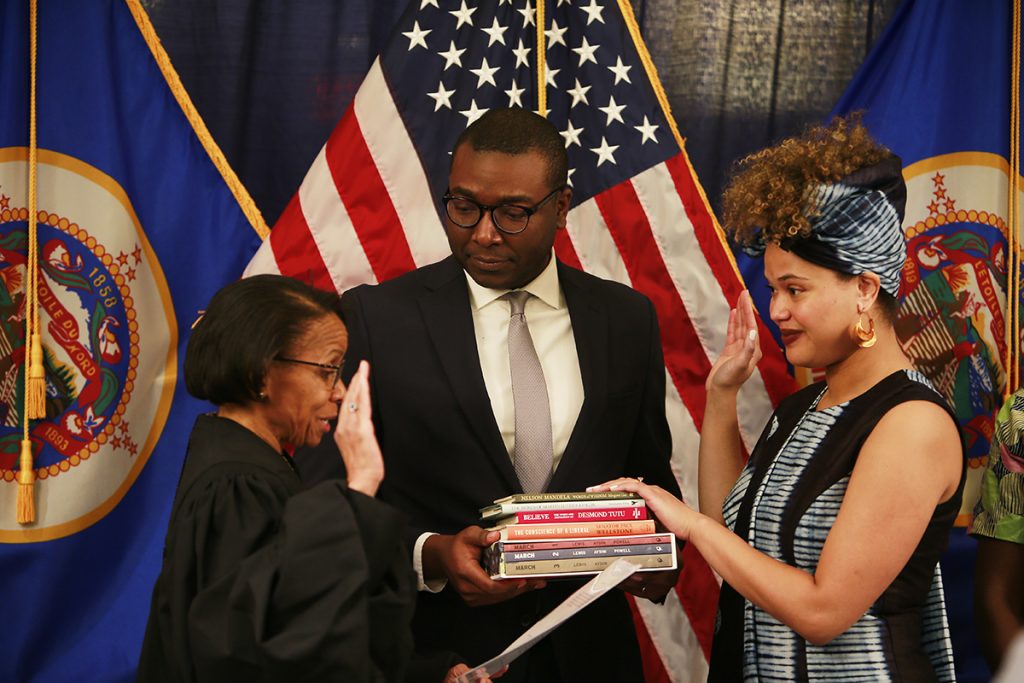
U.S. District Court Judge Wilhelmina M. Wright administers the ceremonial oath of office to Senator Clare Oumou Verbeten on Tuesday, January 3, 2023 to represent Senate District 66 at the Minnesota Senate. In the middle is husband Garrison. State Senator Verbeten is one of three Black women who made history as the first Black women elected to the state Senate. Mshale Staff Photo by Richard Ooga

Clad in a multicolor African print dress, Verbeten posed with friends and fans as she waited to be sworn in, while her mother, Ramata Verbeten, looked on. Her mother said that she knew long ago that her daughter would get into politics.

“From the moment she gave a speech in front of the principal in 6th Grade, I knew,” Ramata Verbeten said. “It is overwhelming, and I’m so happy and proud.”

After the swearing-in, Verbeten, Mohamed, and Quade embraced, as crowds flocked to capture the historic moment in photos. Amongst the crowd was Marvalyn Tripp, who has worked with Verbeten. She said she could attest to Verbeten’s work ethic and aptitude, which she said made her confident that the new senator would succeed. In addition to expressing pride in seeing Black women in the senate, Tripp also said she was happy to see the community defy heavy snow to come together to St. Paul to witness the ceremony.

“It’s important for the community to be present for this because this is who’s representing us,” Tripp said.
MN State Senate Group Oath Mshale
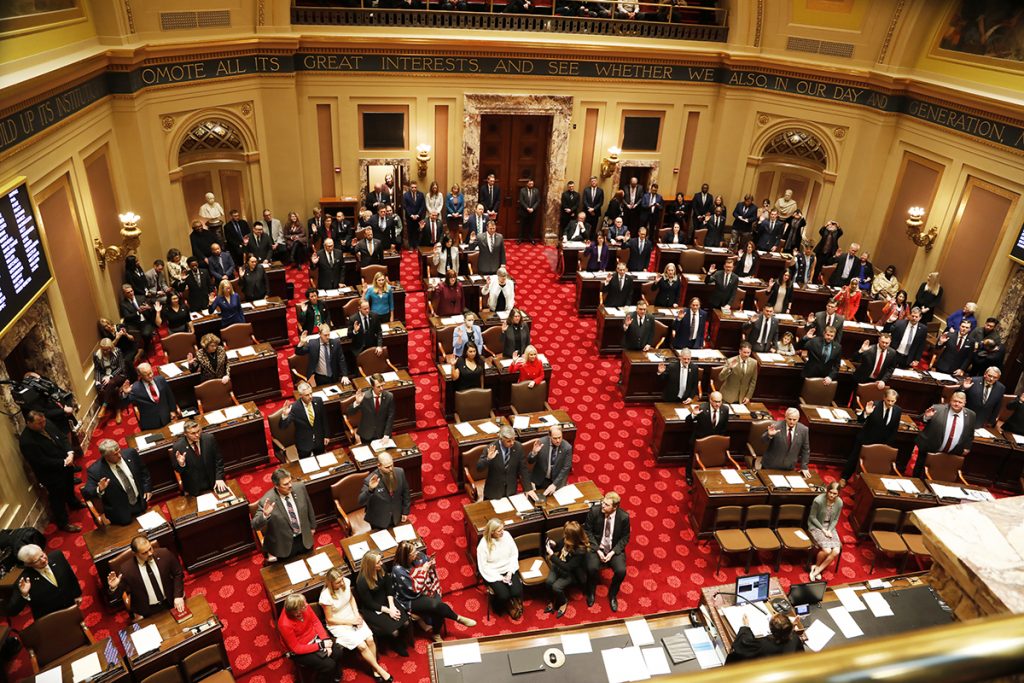
Members of the Upper House of the 93rd Minnesota Legislature Congress take the oath of office on the floor of the Minnesota Senate chamber on January 3, 2023. The oath was administered by Justice Natalie E. Hudson of the Minnesota Supreme Court. Mshale Staff Photo by Richard Ooga

At age 25, Mohamed is also the youngest person ever to be elected to the state senate. Mohamed launched her campaign in December 2021. She is a first-generation Somali immigrant who moved to Minneapolis with her family as a young child. Growing up in a working-class immigrant family, she and her siblings joined the workforce early to help their parents pay rent. Still, Mohamed was able to build a life for herself. After graduating from the University of Minnesota in 2019, she went on to become a Community Advocacy Manager at the Minneapolis chapter of the Council on American-Islamic Relations. She said that her campaign was centered around affordable housing, education, criminal justice reform, healthcare, labor rights and economic justice, and environmental justice.

After taking oath, Mohamed walked the halls of the capitol, with an entourage of friends and family trailing behind her. After stopping for hugs and photos with friends and supporters, she candidly shared why the day was so significant for her. Mohamed said that she was not only excited to break barriers, but also to be able to influence change.

“I am excited to create policies that will be long lasting and get things done for the people of Minnesota,” she said.

Watch live: Black women in the Minnesota State Senate for the first time

0
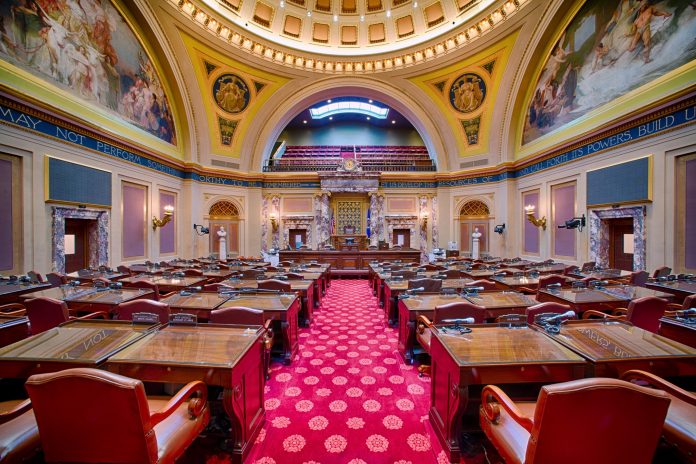
Until November 2022, Minnesota had never elected a Black woman to its state Senate. In November 8, 2022 it elected Three Black women to the chamber in one swoop. They take their seats today, January 3, 2023 when the legislature convenes. Photo: Courtesy Minnesota Legislature
State Senate MN
Until November 2022, Minnesota had never elected a Black woman to its state Senate. In November 8, 2022 it elected Three Black women to the chamber in one swoop. They take their seats today, January 3, 2023 when the legislature convenes. Photo: Courtesy Minnesota Legislature

The Minnesota state Senate convenes today at noon and for the first time will have Black women among its ranks and will have a Black man as its president, also for the first time as Bobby Joe Champion becomes the first Black person to do so. Watch live above and read about the women at this link and about state Sen, Champion at this link.

Metro Transit’s Adopt-a-Stop program revived and expanded

0
adoptastop
Metro Transit's Adopt-a-Stop program revived and expanded
Sponsored Content from Metro Transit

When Deb Winsor walked to her Uptown bus stop, she was often irked by the amount of litter she found along the way.

So she decided to act, joining a growing number of people who have joined the recently revived and expanded Adopt-a-Stop program. Adopters agree to visit their adopted stop weekly to remove litter and to report more serious concerns, like graffiti or broken glass, to Metro Transit.

In exchange for their efforts, adopters receive Go-To Cards with enough value to take 10 rides a month, cleaning supplies, and can have their names added to the bus stop sign or shelter.

“I would walk to Uptown past this bus stop and be annoyed about the litter. Then, I said to myself, `Why complain? Let’s do something about it,’” said Winsor, a hospital receptionist who takes routes 6 and 2 to her job in the surgery center at M Health Fairview in Minneapolis.

Historically, the program focused largely on stops with shelters. Today, though, people can adopt any of the nearly 12,000 bus stops found across the region.

Hamline University sophomore Lane Renner is another recent adopter. His Theta Chi fraternity now looks after the METRO A Line’s Snelling & Hewitt Station, which sits in front of their house on Snelling Avenue.

“It’s an easy way to give back to your community,” Renner said. “It doesn’t take that much work. I know the people who come by appreciate having a clean bus stop.”

To date, 14 stops have been adopted. The hope is to have dozens more adopted by the end of the year.

Learn more about the Adopt-A-Stop program

Watch live: Gov. Walz, AG Ellison, Sec. Simon and State Auditor Blah inauguration

0
Mn State Capitol
Watch live: Gov. Walz, AG Ellison, Sec. Simon and State Auditor Blah inauguration

Gov. Walz and other constitutional officers will take the oath of office today. You can watch it live here.

State-run vaccination site at Mall of America shuts down

0
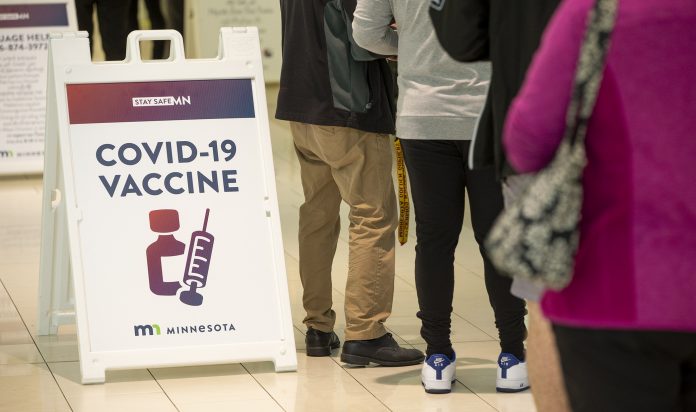
A COVID-19 vaccine site at the Mall of America in Bloomington, pictured last year. Photo: Paul Battaglia/MN House of Representatives
MOA COVID Vaccination Site in 2021 by Paul Battaglia MN House
A COVID-19 vaccine site at the Mall of America in Bloomington, pictured last year. Photo: Paul Battaglia/MN House of Representatives

Minnesota health officials have closed their COVID-19 vaccination site at the Mall of America.

Gov. Walz visited the Mall of America the same day it was to close. The site was the largest vaccination spot in the state. More than 236,000 doses of vaccine were administered there since it opened in February 2021.

Nurse Cathy Dichter said the first days of offering vaccines at the mall looked like photos from history books, with rows of nurses working nonstop to administer shots.

“Everyone was frightened, scared, relieved that they were going to get their shot,” she said. “Some would cry. Some would hug you. Some would just say ‘I haven’t talked to people in days. Can I just sit and talk to you?’ Because it was during the time where everyone was shut in.”

She said she remembered the first day of administering doses to children between the ages of 5 and 11 sounded like an “echo torture chamber with Disney music loudly infused amongst the clinic.”

Walz said the closure shouldn’t be seen as a signal for people to eschew vaccinations. He said people need to keep getting booster shots and respect COVID-19 protocols.

Ethiopian American entrepreneur Tashitaa Tufaa detained in Ethiopia

0
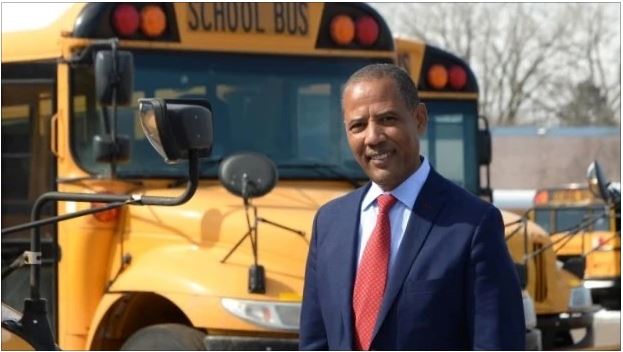
Tashitaa Tufaa, president and CEO of Metropolitan Transportation Network Inc. at their headquarters in Fridley on March 9, 2022. Tufaa, an Ethiopian immigrant, launched MTN in 2003. The company now has more than 300 employees, 420 school buses and has contracts with school districts throughout the metro area. (Scott Takushi / Pioneer Press)
Tashitaa 2
Tashitaa Tufaa, president and CEO of Metropolitan Transportation Network Inc. at their headquarters in Fridley on March 9, 2022. Tufaa, an Ethiopian immigrant, launched MTN in 2003. The company now has more than 300 employees, 420 school buses and has contracts with school districts throughout the metro area. (Scott Takushi / Pioneer Press)

Prominent Minnesota businessman Tashitaa Tufaa has allegedly been detained by Ethiopian authorities, according to his brother Gebi Tufaa and members of the Ethiopian community in Minnesota. The circumstances of why and when he was taken into custody remain unclear.

Postings on social media indicate Tufaa was in his native Ethiopia to attend the funeral of an aunt and was arrested at Bole International Airport as he was on his way back to the United States.

Tufaa is founder and CEO of Metropolitan Transportation Network, a school bus company with revenues of over $12 million. He is the recipient of numerous awards including the African Awards for Business of the Year.

According to Tulu Sikko Mando, who on his Facebook post described himself as “a member of US based National Committee that welcomed and hosted Prime Minister Abiy Ahmed’s Ethiopian Diaspora tour in the United States in July 2018,” alleged that Tufaa got “detained in his country of birth simply because of no reason except probably his ethnic Oromo identity.”

His reported detention comes in the wake of the end of a civil war that has rocked the country since November 2020 which involved the Federal government and the Tigray region. Representatives of Ethiopia’s government and the Tigray region signed a peace deal in South Africa on Nov. 2, the eve of the two-year anniversary of the conflict. Earlier this month, the two sides met in Nairobi and agreed to allow a team of independent African experts to monitor the implementation of the peace deal.

Mando said that attempts by Tufaa’s family and lawyers to reach him have been unsuccessful and that his whereabouts are unknown.

The community has called on the U.S. Embassy in Addis Ababa to intervene.

Gebi Tufaa, a younger brother of Tashitaa Tufaa, told Mshale that his family is very concerned for the wellbeing of their brother and appealed to Minnesota’s US Senators Amy Klobuchar and Tina Smith to assist in his release.

“We will greatly appreciate their help as we do not know what condition he might be in,” Gebi Tufaa said.

The younger Tufaa who is a former CFO at MTN and is now a human resource manager with the City of Saint Paul said they were both in Ethiopia recently to visit with the ailing aunt before she passed on, but that the older brother stayed behind to take her to a doctor’s appointment.

Tufaa said his brother made a brief phone call from detention to family in Ethiopia simply say he was okay in a call that lasted less than a minute.

“My brother is not even involved in any kind of politics so this is very surprising and came out of nowhere,” he said.

Editor’s note: The story has been updated to include comments from Mr. Tashitaa Tufaa’s brother. This is a developing story and will be updated.

Child care disruptions continue due to COVID

0
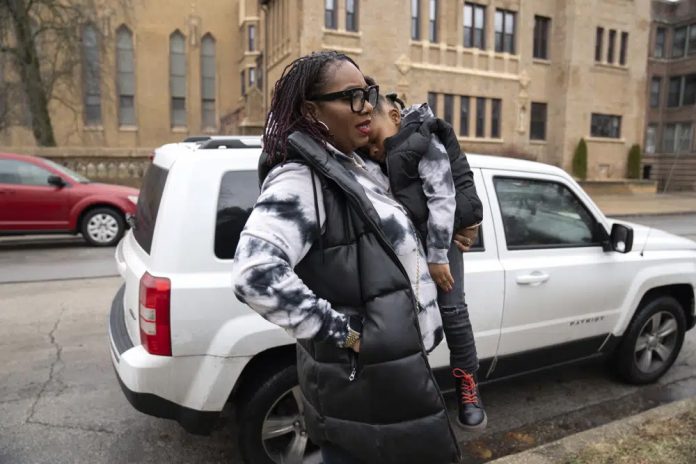
Chicago educator Tamisha Holifield spends time with her 2-year-old daughter Rian Holifield at Nichols Park, Thursday, Dec. 29, 2022, in the Hyde Park neighborhood of Chicago. When Holifield and her daughter had COVID-19 in May, the toddler had to miss 15 days of child care. Bouts of colds have followed in what Holifield described as a "constant whirlwind" of sickness that has been stressful both financially and emotionally. "It's a major inconvenience. But I'm a single parent, so I don't have a choice. If I drop the ball, the game is over," Holifield said. Photo: Erin Hooley/AP

Childcare

Forty-seven. That’s how many days of child care Kathryn Anne Edwards’ 3-year-old son has missed in the past year.

RSV, COVID-19 and two bouts of the dreaded preschool scourge of hand, foot and mouth disease struck one after another. The illnesses were so disruptive that the labor economist quit her full-time job at the Rand Corp., a think tank. She switched last month to independent contract work to give her more flexibility to care for her son and 4-month-old daughter.

In the first and even second year of the COVID-19 pandemic, multi-week quarantines and isolations were common for many Americans, especially children. But nine weeks of missed child care, nearly three years in?

“The rest of the world has moved on from the crisis that I’m still in,” said Edwards, who studies women’s issues. “That’s sometimes how it feels like to me.”

This fall and winter have upended life for working parents of little children, who thought the worst of the pandemic was behind them. The arrival of vaccines for younger children and the end of quarantines for COVID exposure were supposed to bring relief.

Instead, families were treated to what some called a “tripledemic.” Flu, COVID-19 and respiratory syncytial virus cases collided, stressing children’s hospitals and threatening the already imperiled child care system. Even parents of babies with less serious cases of COVID-19 have run into 10-day isolation rules that have taxed the patience of employers.

A record-high 104,000 people missed work in October because of child care problems, surpassing even early pandemic levels, Bureau of Labor Statistics data shows. Child care-related absences fell to 59,000 in November, but numbers still surpass typical pre-pandemic levels.

The instability has hurt many working parents’ finances. Most of those who missed work in October because of child care problems didn’t get paid, according to an analysis from the Center for American Progress, a left-leaning think tank.

Now, doctors are bracing for the number of sick children to rise after families gathered for the holidays.

“I think we’re going to have to be ready to do it all over again,” said Dr. Eric Biondi, director of pediatric hospital medicine at the Johns Hopkins Children’s Center in Maryland.

Illnesses among teachers and children have strained a child care system that’s already short-staffed.

“This is the worst year I’ve ever seen in my entire life,” said Shaunna Baillargeon, owner of Muddy Puddles Early Learning Program in Uxbridge, Massachusetts. She faces “a constant battle of staff and children being sick with a different virus every day,” with no backups if a teacher calls in sick.

At the Washington, D.C., day care where Jana Williams teaches, illness has caused classroom shutdowns almost weekly since October. Her 19-month-old daughter is also enrolled there, coming down with the same viruses.

“It’s stressful,” she said before Christmas, when she was home with her sick toddler. “You want to stay home and care for your child. But then it’s like, you have to get to work.”

During the early months of the pandemic, women in the prime of their careers left the labor market at a rate far exceeding men. They were more likely to work in the service-oriented fields that were decimated, and they often were caring for children, Edwards said.

Women have since returned to the workforce, particularly women of color, said economist Diane Swonk of professional services firm KPMG.

But the participation of prime-age working women in the U.S. lags most industrialized nations, Swonk said. Advocates have long blamed the country’s lack of universal preschool and paid family leave.

Finding child care and heading back to work has proved far from simple. At the pandemic’s height, more than one-third of day care jobs were lost, Edwards said. Staffing hasn’t fully recovered. As of November, the country had 8% fewer child care workers than before the pandemic, Bureau of Labor Statistics data shows.


The strong labor market has driven up the cost to hire new workers. That means child care spots are pricey and hard to find. Even centers with openings may close when staff or kids are sick.

That babies and toddlers are prone to illnesses adds to the challenge. In the wake of COVID, day cares are more anxious about accepting a snotty toddler.

Isolation guidelines have hit parents of babies especially hard. While older preschoolers who have COVID-19 may return with masks after five days, the Centers for Disease Control and Prevention recommends children under 2 stay home for 10 days, or until they test negative twice, 48 hours apart.

One issue is masks aren’t recommended for the under-2 crowd. Their smaller airways mean wearing them can increase the risk of suffocation, according to Nationwide Children’s Hospital in Ohio.

Not all centers are adhering to the CDC’s guidance. But many are following it to the letter, or even going further.

When Chicago educator Tamisha Holifield and her daughter had COVID-19 in May, the toddler had to miss 15 days of child care. Bouts of colds have followed, in what Holifield described as a “constant whirlwind” of sickness that has been stressful both financially and emotionally.

“It’s a major inconvenience. But I’m a single parent, so I don’t have a choice. If I drop the ball, the game is over,” Holifield said.

Disruption from illness can have ripple effects on young kids. Unduly stressed parents can become a stress on the baby, which can in turn cause sleep, gastrointestinal or socialization problems, said Dr. Sherri Alderman, a developmental-behavioral pediatrician.

The situation has also strained employers. Brad Lukas, chief nursing officer at Corewell Health Beaumont Grosse Pointe Hospital in Michigan, has seen eight or nine nurses calling out per shift, some because of sick children.

“We’re seeing a lot of people reduce their hours,” Lukas said. His own wife cut back nursing shifts so she can mostly stay home with their young children.

The continued chaos for young families is isolating, especially when other Americans’ lives are back to normal, said Lauren Hipp, early learning chief at MomsRising, an advocacy organization.

“I feel pretty angry about it,” said Hipp, whose own 2-, 6- and 8-year-old children have been wracked with illnesses, including RSV. “To feel like society has passed you by is a really difficult and lonely feeling.”

Celebrate Safely, Minnesota!

0
celebrate safely 2022 friends graphic original
Celebrate Safely, Minnesota!

Many of us will be gathering with family and friends during the upcoming holidays. With many respiratory diseases spreading right now, including flu, RSV, and COVID-19, it is important to take steps to help everyone celebrate safer!

Here are some things you can do:

  • Make sure you and your family are up to date on your COVID-19 vaccines and have received your annual flu vaccine. You can get both vaccines at the same visit.
    • Find COVID-19 and flu vaccine locations near you at Vaccines.gov. Many locations, such as pharmacies, may have both vaccines, so you can ask about getting both shots at the same time.
  • Stay home if you are feeling sick. No one wants to miss out on the celebration, but it is important to stay home so others do not get sick.
  • Wash your hands often.
  • Check the CDC COVID-19 community level by county before you go so you can follow appropriate public health recommendations, such as when to wear a mask. You can also wear a mask at any time, no matter what the community level is.
  • Consider COVID-19 testing before gathering, particularly if there will be people there who are at higher risk for severe disease.

Learn more at Protect Yourself and Others: COVID-19 and Influenza.

As Minnesota Democrats celebrate ‘trifecta’ mandate, Black community is cautiously optimistic

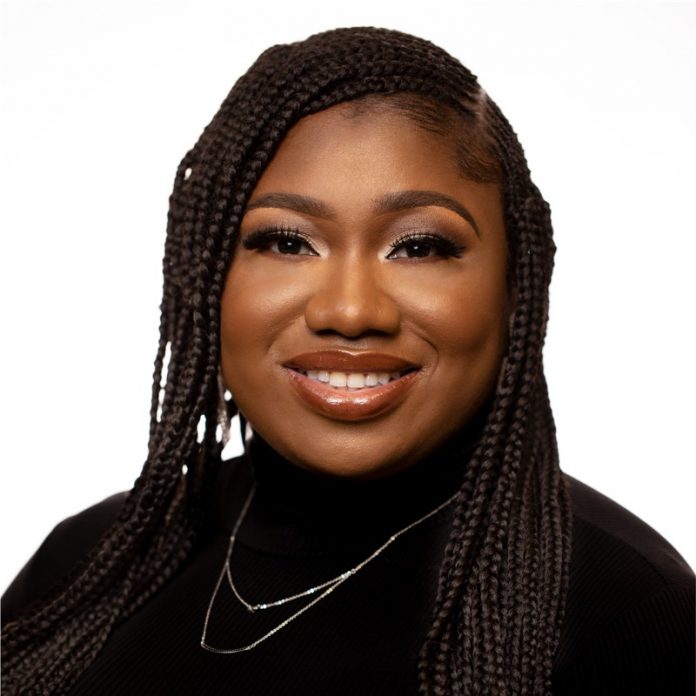
Abena Abraham, co-founder of the Black Immigrant Collective says she is excited and cautiously optimistic after Democrats in Minnesota achieved a “trifecta” in November’s elections, winning the governorship and both the state Senate and state House. Photo: Courtesy Black Immigrant Collective
Abena Abraham
Abena Abraham, co-founder of the Black Immigrant Collective says she is excited and cautiously optimistic after Democrats in Minnesota achieved a “trifecta” in November’s elections, winning the governorship and both the state Senate and state House. Photo: Courtesy Black Immigrant Collective

After a grueling election season, Minnesota Democrats are indulging in the fruits of their labor.

Minneapolis residents gathered on Tuesday, Dec. 10 at Bauhaus Brew Labs on one of the coldest days this year to celebrate an unprecedented victory in Minnesota’s legislative history. A happy hour mixer hosted by Pro-Choice Minnesota, an organization that advocates for reproductive rights, honored the wins of the Democratic Farmer-Labor Party (DFL), as the Democratic Party is known in the state.

In November, Governor Tim Walz retained his seat in the race against Republican Scott Jensen. In the state legislature, the DFL not only held its majority in the House of Representatives, but also able to flip the Senate, creating what is called “trifecta,” when one party controls the governorship and both chambers.

“This is such an important moment for policy in Minnesota,” said Kate Baxter-Kauf, a local attorney. “It’s a long-awaited victory.”

Pro Choice Happy Hour
A happy hour mixer hosted by Pro-Choice Minnesota on December 10, 2022 to celebrate the DFL winning all branches of Minnesota government. Photo: Panashe Matemba-Mutasa/Mshale

Although many expected the DFL to retain control of the house, few expected the Senate to flip on election night. It is the first blue trifecta the state has seen since 2012. Democratic supporters now hope that with the new mandate, they can tackle hot-button issues like marijuana legalization, climate change, funding for education, and paid family leave. Also on the agenda is access to abortion and reproductive rights groups like Pro-Choice Minnesota have been working to ensure that women can continue to have the procedures safely.  Minnesota is considered an “island state” surrounded by states that have voted to restrict abortion.

“Abortion access in Minnesota is one of the most important civil rights issues at the moment, and Minnesota is a beacon of access in the Midwest as other states are rushing to limit that freedom,” said Baxter-Kauf.

People continued to shuffle into Bauhaus Brew Labs as the hours went by, some letting out sighs of relief as they had just escaped the bitter cold. Partygoers were shoulder-to-shoulder as they watched their drinks being prepared at the bar. They repeatedly raised their drinks and toasted as they talked about what they were most excited about in this new political season in Minnesota. Sen. Erin Murphy, who was re-elected to represent District 64 after defeating her Republican challenger Robert Bushard, said that she was looking forward to continuing being an integral part of creating an inclusive Minnesota, specifically, by combating white supremacy and advocating for women’s reproductive rights.

“I deeply honor the work of Black Minnesotans and will call for reproductive justice,” Murphy said. “The work to advance our freedom in America is unfinished and I won’t quit.”

Since 2020, when a Minneapolis Police Department officer murdered George Floyd and sparked nationwide protests, Minnesota has been in the crosshairs of civil rights activists. Black Minnesotans began calling for change at the legislative level, and now they will be keenly watching what Murphy and other lawmakers do to tackle white supremacy.

Abena Abraham, an immigrant of Ghanaian and Liberian descent and co-founder of the Black Immigrant Collective, said that she was both excited and cautiously optimistic about the election results. She said that the level of work would need to be ramped up in order to create sustainable change for Minnesota’s Black communities.

“We will have to work twice as hard to ensure that our voices are heard,” Abraham said.

Abraham also talked about the impact of having Black women elected to the senate for the first time. Zaynab Mohamed in District 63, Erin Maye Quade in District 56, and Clare Oumou Verbeten in District 66 all won their races against their Republican challengers, making history as the first Black women in Minnesota’s statehood to do so. Abraham said that while she was elated to hear the news and what it meant for Black Minnesotans, she still had her concerns.

“While it is exciting to have three Black women in the senate, we know that they are working in a system that wasn’t designed for them,” Abraham said. “We must be prepared to be on the defensive to make sure that we are amplifying the voices.”

US will require COVID-19 testing for travelers from China

0
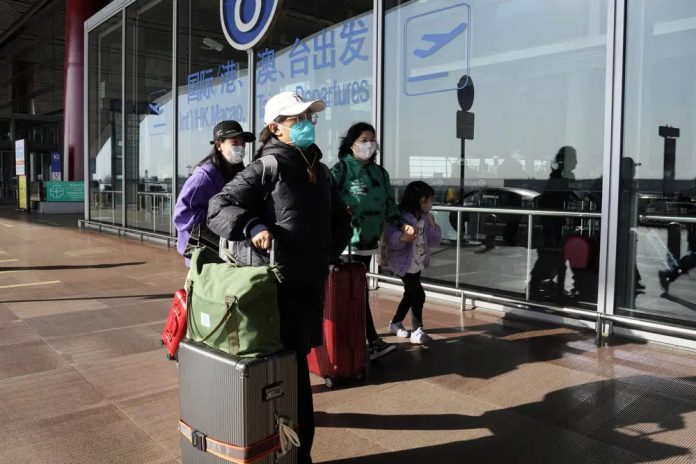
Passengers wearing masks walk through the Capital airport terminal in Beijing on Dec. 13, 2022. On Wednesday, Dec. 28, 2022, the U.S. announced new COVID-19 testing requirements for all travelers from China, joining other nations imposing restrictions because of a surge of infections. Photo: Ng Han Guan/AP File
Chinese Travelers
Passengers wearing masks walk through the Capital airport terminal in Beijing on Dec. 13, 2022. On Wednesday, Dec. 28, 2022, the U.S. announced new COVID-19 testing requirements for all travelers from China, joining other nations imposing restrictions because of a surge of infections. Photo: Ng Han Guan/AP File

The U.S. announced new COVID-19 testing requirements Wednesday for all travelers from China, joining other nations imposing restrictions because of a surge of infections.

The increase in cases across China follows the rollback of the nation’s strict anti-virus controls. China’s “zero COVID” policies had kept the country’s infection rate low but fueled public frustration and crushed economic growth.

The new U.S. requirements, which start Jan. 5, apply to travelers regardless of their nationality and vaccination status.

In a statement explaining the testing, the U.S. Centers for Disease Control and Prevention cited the surge in infections and what it said was a lack of adequate and transparent information from China, including genomic sequencing on the viral strains circulating in the country.

“These data are critical to monitor the case surge effectively and decrease the chance for entry of a novel variant of concern,” the CDC said.

Some scientists are worried the COVID-19 surge in China could unleash a new coronavirus variant on the world that may or may not be similar to the ones circulating now. That’s because every infection is another chance for the virus to mutate.

“What we want to avoid is having a variant enter into the U.S. and spread like we saw with delta or omicron,” said Matthew Binnicker, director of clinical virology at Mayo Clinic in Rochester, Minnesota.

But the CDC’s action may be less about stopping a new variant from crossing U.S. borders and more about increasing pressure on China to share more information, said Dr. David Dowdy, an infectious disease epidemiologist at Johns Hopkins Bloomberg School of Public Health, adding he hopes the restrictions “aren’t kept in place longer than they need to be.”

“I don’t think it’s going to have a major impact in slowing the spread of COVID-19,” Dowdy said. “We have a whole lot of transmission of COVID-19 here within our borders already.”

Dr. Stuart Campbell Ray, an infectious disease expert at Johns Hopkins University, agreed China isn’t sharing enough genomic sequencing information. But he also said the U.S. has become a little complacent about sequencing and needs to redouble its own efforts. The CDC also announced the expansion of an early warning program that tests volunteers at select airports for new and rare variants of the coronavirus. That program will expand to airports in Seattle and Los Angeles.

Under the new U.S. rules, travelers to the U.S. from China, Hong Kong and Macau, will be required to take a COVID-19 test no more than two days before travel and provide a negative test before boarding their flight. The testing applies to anyone 2 years and older, including U.S. citizens.

It will apply to people traveling from China via a third country and to people connecting through the U.S. as they go on to other destinations. Anyone testing positive more than 10 days before the flight can provide documentation showing they’ve recovered from COVID-19 instead of a negative test result.

It will be up to the airlines to confirm negative tests and documentation of recovery before passengers board.

Other countries have taken similar steps in an effort to keep infections from spreading beyond China’s borders. Japan will require a negative COVID-19 test upon arrival for travelers from China, and Malaysia announced new tracking and surveillance measures. India, Italy, South Korea and Taiwan are requiring virus tests for visitors from China.

Lunar New Year, which begins Jan. 22, is usually China’s busiest travel season, and China announced Tuesday it will resume issuing passports for tourism for the first time since the start of the pandemic in 2020.

“We look forward to welcoming Chinese travelers back to the United States,” U.S. Travel Association President and CEO Geoff Freeman said in a statement. He called the U.S. approach to testing inbound travelers “reasonable and appreciated.”

The U.S. action is a return to testing requirements for some international travelers. The Biden administration lifted the last of such mandates in June. At that time, the CDC continued to recommend that people boarding flights to the U.S. get tested close to departure time and not travel if they are sick.

“We’ve done this before. We can do it again,” Dowdy said.

Early in the pandemic, the U.S. barred entry to foreigners traveling from China, weeks after the virus first emerged there three years ago, and dozens of other countries were added to the list. The country started lifting travel bans late last year, but required travelers to the U.S. to be vaccinated and tested. ___

AP Science Writer Laura Ungar contributed.

President Hassan of Somalia meets diaspora in Minnesota, lays out roadmap for second term

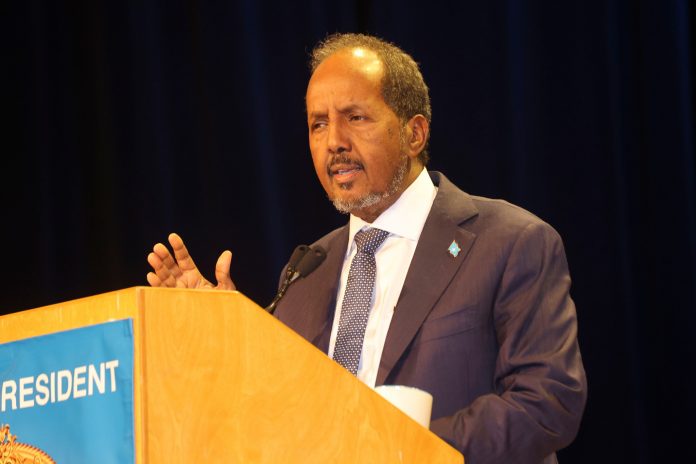
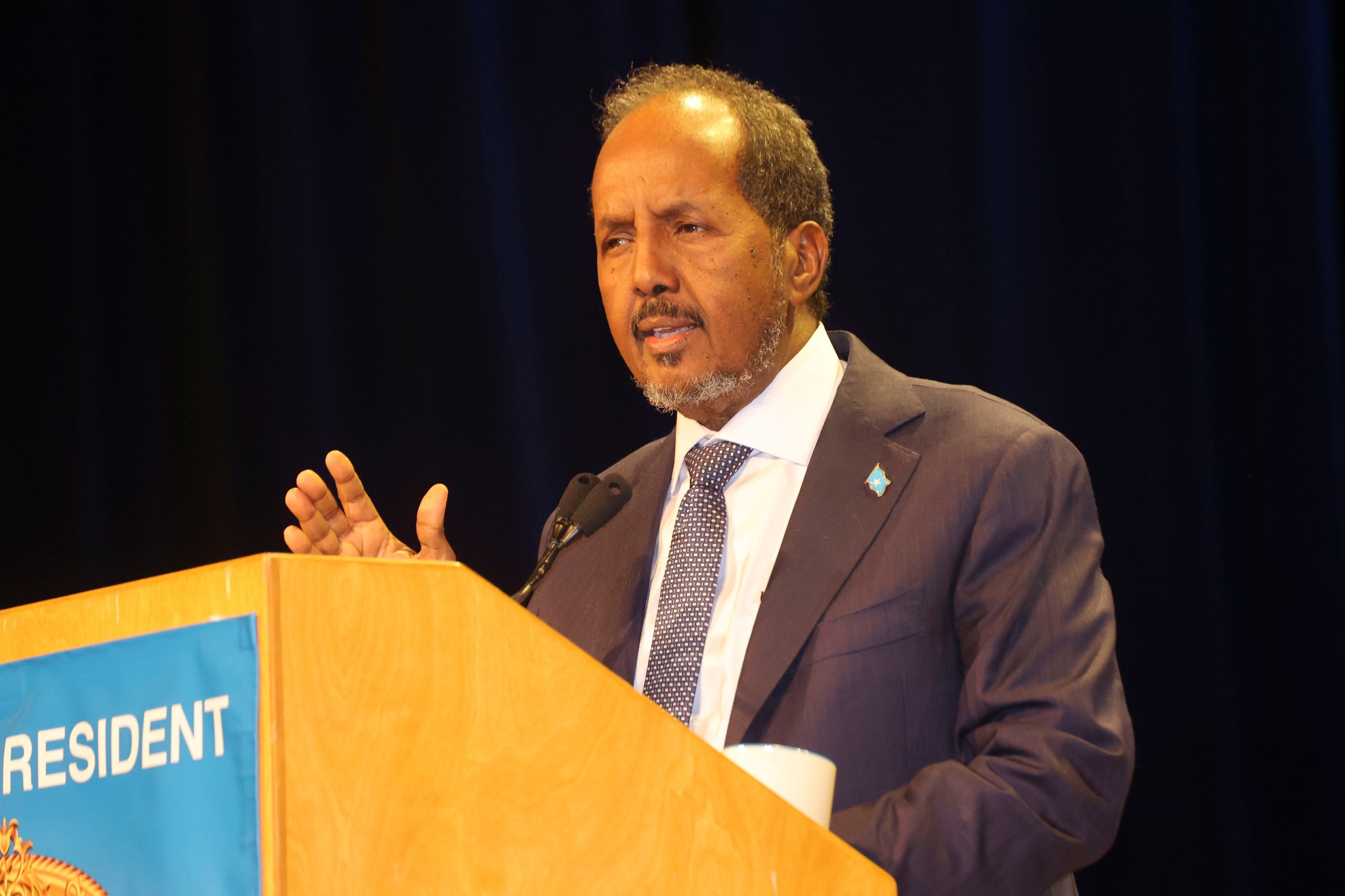
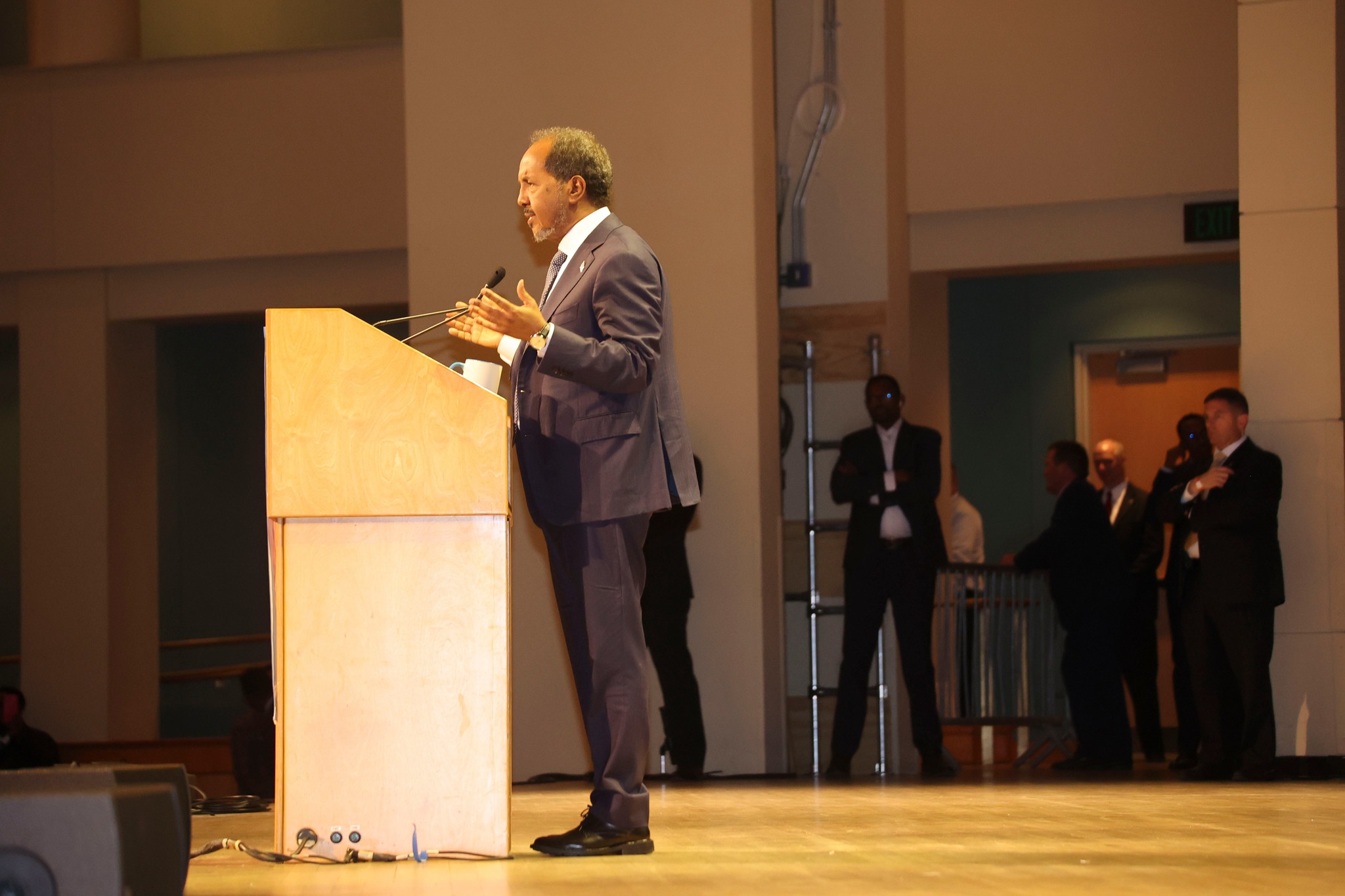
Somali President Hassan Sheikh Mohamud addresses members of the Somali diaspora at the Minneapolis Convention Center on Thursday, December 15, 2022. Photo: Siyad Salah/Somali TV
President Hassan at Podium Speaking Dec 15 2022
Somali President Hassan Sheikh Mohamud addresses members of the Somali diaspora at the Minneapolis Convention Center on Thursday, December 15, 2022. Photo: Siyad Salah/Somali TV

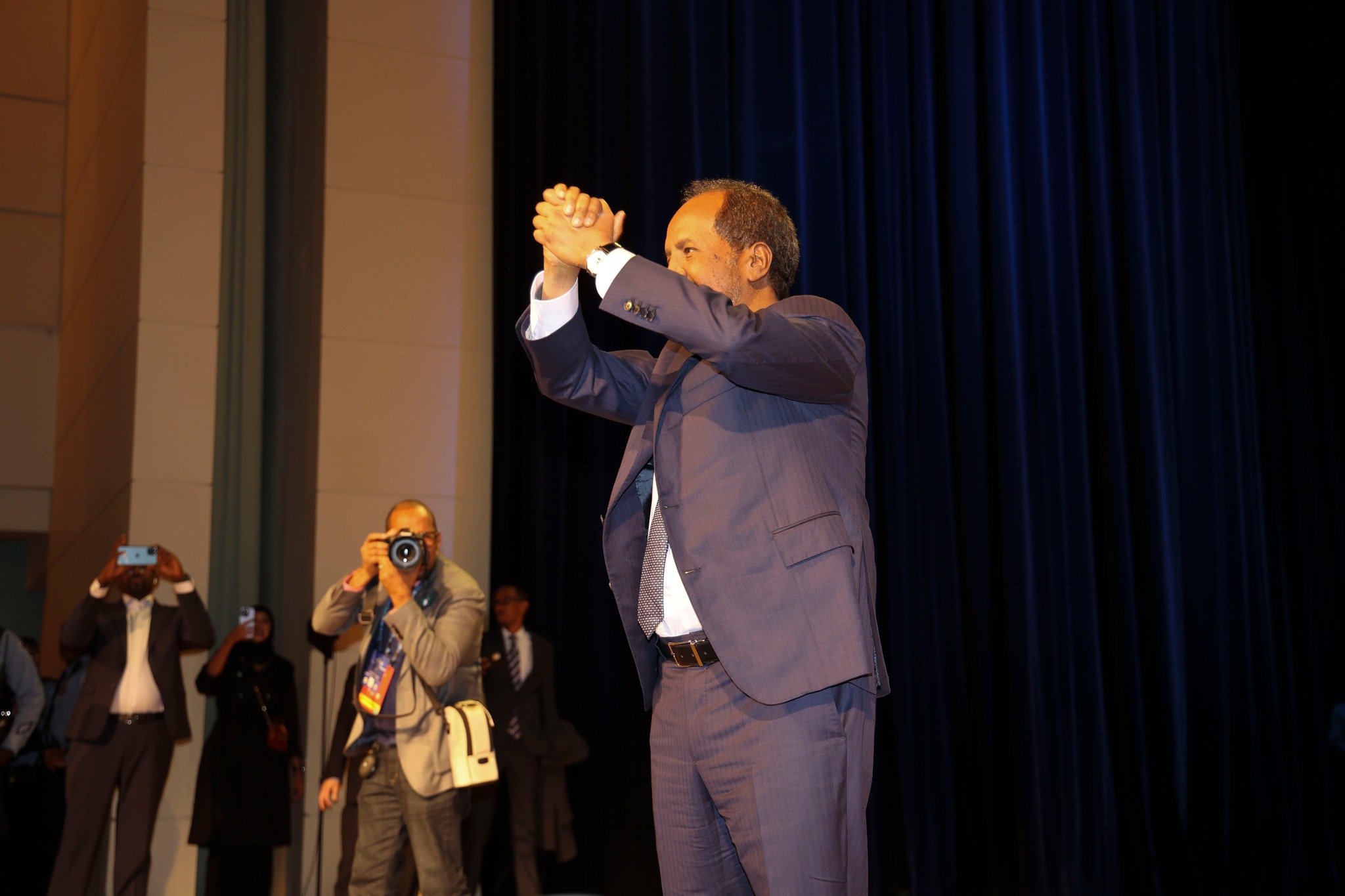
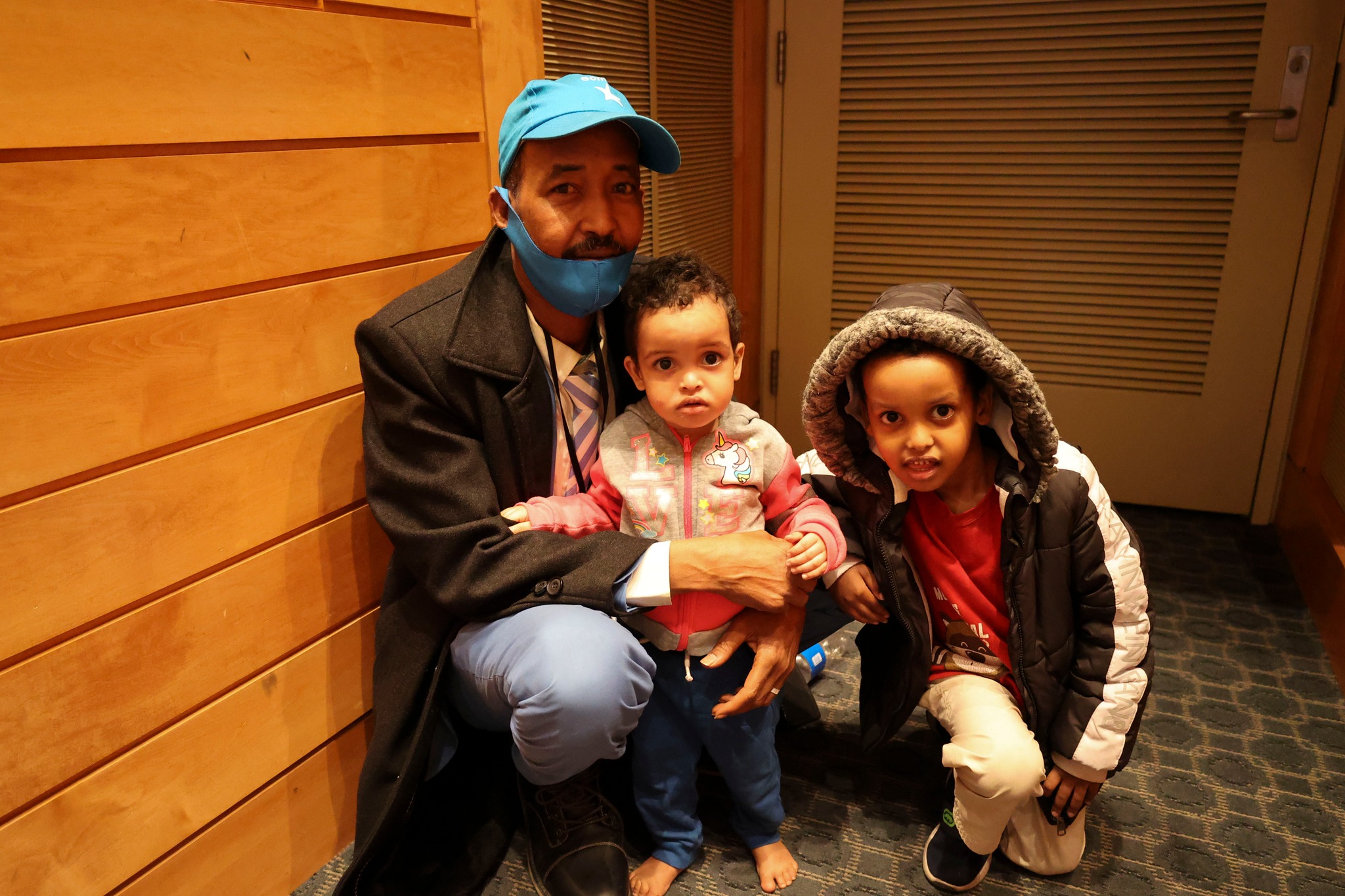
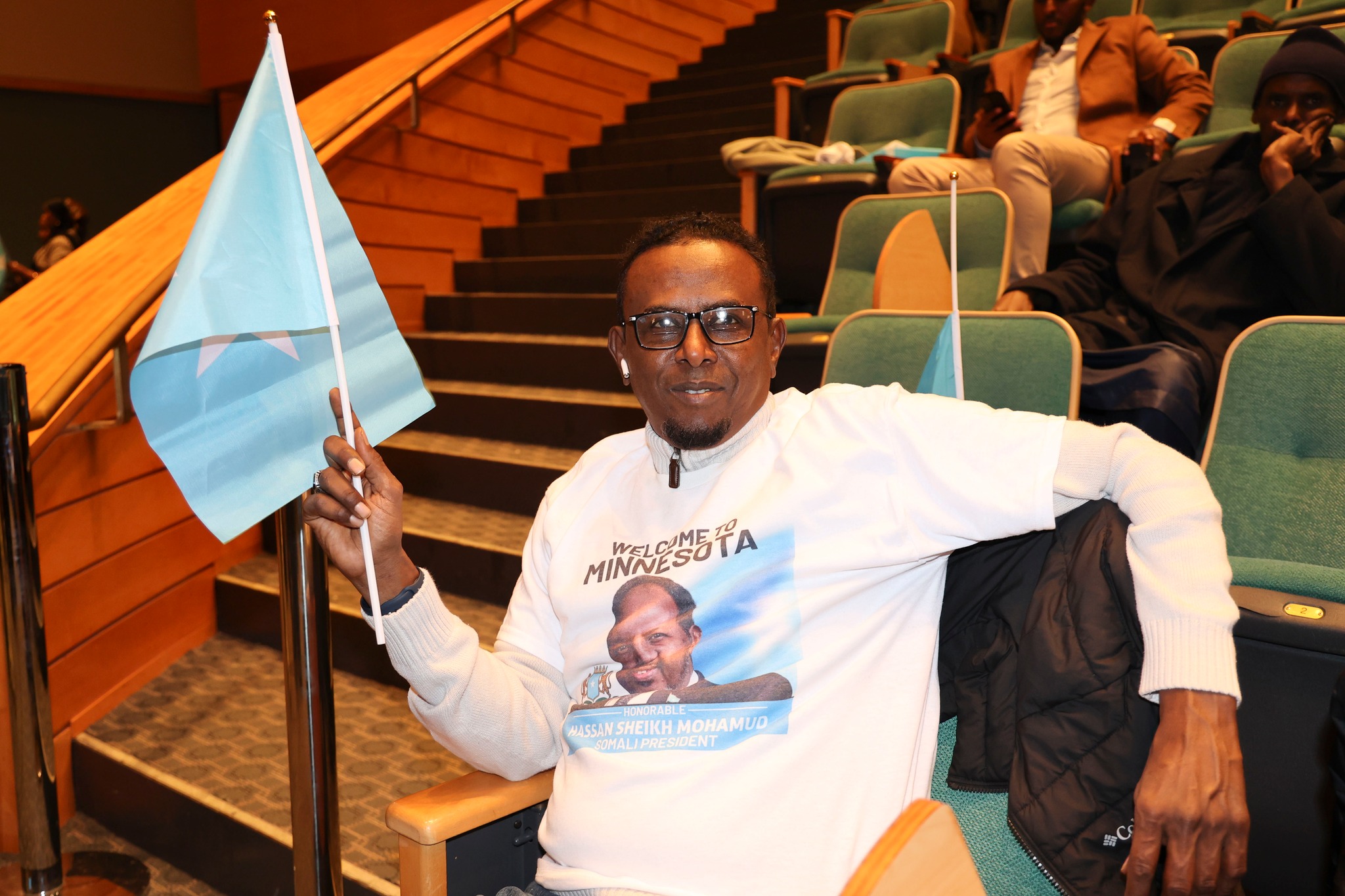
Hours after attending the U.S.-Africa Leaders Summit in Washington hosted by President Biden, Somali president Hassan Sheikh Mohamud addressed a near capacity crowd of the Somali diaspora at the Minneapolis Convention Center on Dec. 15.

Speaking exclusively in Somali for about 40 minutes to a cheering crowd waving miniature Somali flags, the president praised the tenacity of Somalis and vowed to combat religious extremism at home and abroad.

The president pledged to open a consulate in Minnesota which is home to the largest population of Somalis outside of Africa.

“We will open a consulate here in Minnesota,” President Hassan said.

The hours-long event at the convention center which started around 4pm lasted past midnight with the president taking the stage at around 11 p.m.

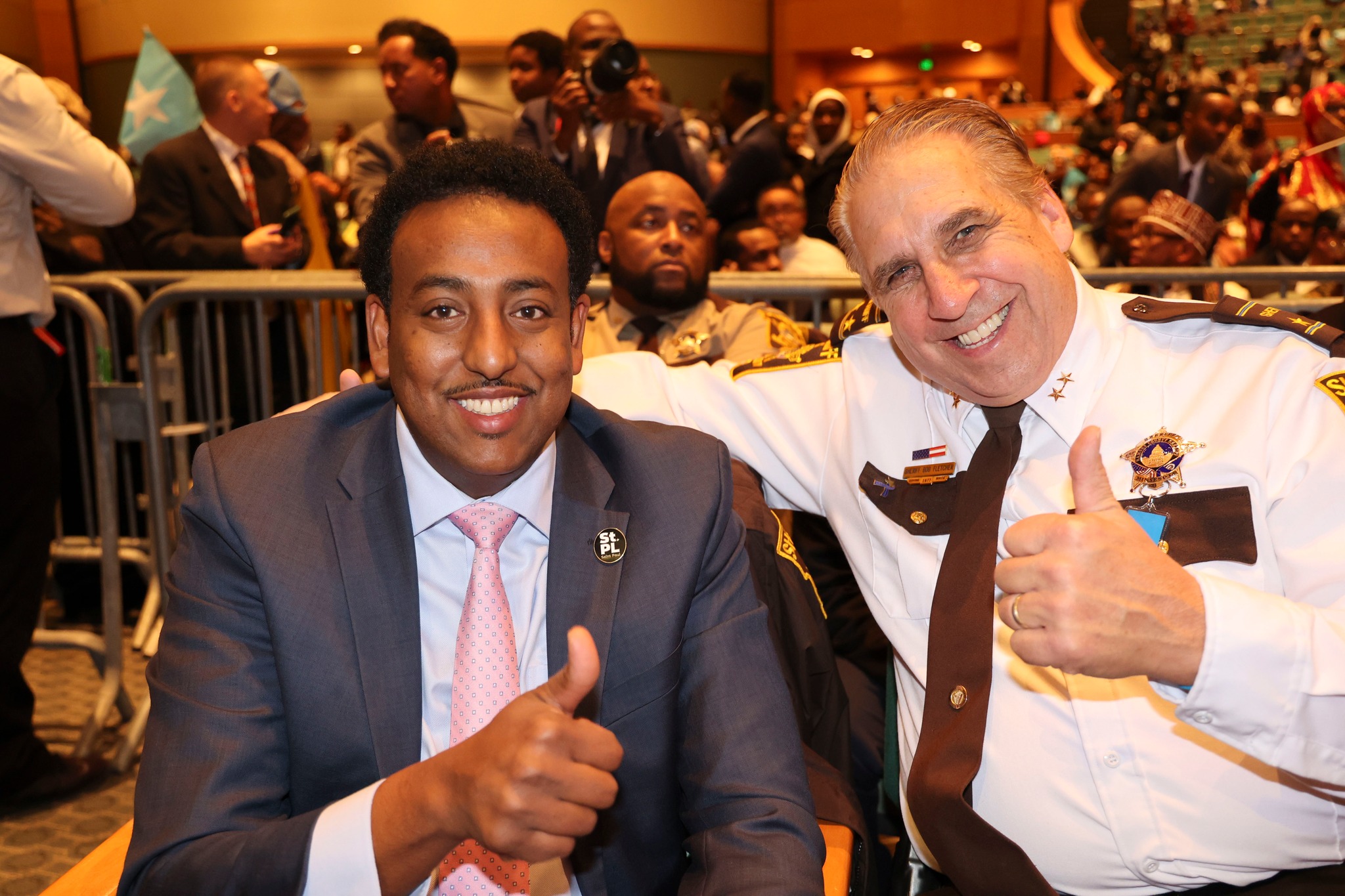
The president was accompanied by Rep. Ilhan Omar who introduced him after she spoke. Her district includes Minneapolis. Also present was Minneapolis Mayor Jacob Frey who made his introductory remarks in Somali.

The evening had a festive atmosphere with speeches from local elected leaders and Somali elders as well as music from local Somali artists.

President Hassan also cracked a joke about the snowstorm that slammed the Twin Cities upon his arrival, saying, “Get ready to go back to your home country, even if it’s just when you have a vacation or holiday or when it’s really cold like this.”

This is Hassan’s second nonconsecutive term. He served as president in 2012 to 2017 and made a visit to Minnesota halfway through his first term in 2014.

Meets Imams and Somali professionals

President Hassan also met separately with Somali Imams and professionals at his hotel the next morning. Adna Farah, aka Jinow, who attended the more intimate morning meeting, described it as chance for the Imams and professionals to ask questions of the president and also give him ideas.

“We had a chance to ask or give suggestions to the president about the future of Somalia and how we can work together,” Farah said.

Among questions that were asked of the president was when Somali soldiers sent to Eritrea in 2018 for training will come back to take part in the fight against Al-Shabaab.

“The Somali soldiers trained in Eritrea will be deployed gradually as soon the beginning of next year,” the president said. “The first group will be arriving in January and I promise to bring them back all.”

Imam Hassan Jami’i of masjid al-Dawah in St. Paul presented the president with a document the imams have drawn up with suggestions on how to eliminate Al-Shabaab.

The president in response to a question on when the African Union Transition Mission in Somalia (ATMIS), will be depart Somalia since they are not actively engaged in fighting al-Shabaab, said he appreciates the sacrifices that ATMIS has made on behalf of Somalia.

The African Union Transition Mission in Somalia (ATMIS) is described by the AU as “a multidimensional mission (military, police and civilian), authorized by the African Union and mandated by the United Nations Security Council.” It became operational in April 1, 2022 and is mandated to support the Federal Government of Somalia in the implementation of the Somali Transition Plan and “to transfer security responsibilities to the Somali security forces and institutions.”

“You can’t imagine how helpful they have been, many of them have died because of Somalia, ATMIS will be deployed back to their countries in 2024,” Hassan said.