The Trump administration in its FY 2018 budget to Congress is calling for a mandatory nationwide usage of E-Verify within three years.
The Trump administration in its FY 2018 budget to Congress is calling for a mandatory nationwide usage of E-Verify within three years.The Trump administration in its FY 2018 budget to Congress is calling for a mandatory nationwide usage of E-Verify within three years.
In his administration’s budget that it has sent to the White House, the Trump administration’s Fiscal Year 2018 Budget calls for mandating nationwide usage of the E-Verify system to reduce illegal employment. The system which is internet based, is currently voluntary except for those businesses that have government contracts. It compares information from an employee’s Form I-9, Employment Eligibility Verification, to data from DHS, the Social Security Administration, and State Department of Motor Vehicle records to confirm employment eligibility.
The budget for the Department of Homeland Security is $44.1 billion and in it the administration is calling for the expansion of “worksite enforcement strategies by mandating nationwide use of the E-Verify system.”
The Homeland Security FY 2018 Budget in Brief which can be accessed here, says in the overview section that the purpose of expanding E-Verify is “to support mandatory use of E-Verify nationwide within three years.”
In anticipation of the Trump move, Mark Schwartz of the U.S. Citizenship and Immigration Service (USCIS) Chief Information Office, was quoted by a section of the media as saying they are “streamlining the (E-Verify) process and making it capable of scaling if we bring more employers” into the system. The system which is free to employers to use has 646,000 users.
$131.5 million of the $44.1 billion Homeland Security budget will go towards the E-Verify expansion.
However in a recent blog post on the CATO Institute’s website, Alex Nowrasteh, said mandating a nationwide use of E-Verify would cost the federal government $635 million from 2018 to 2023. Quoting the Congressional Budget Office (CBO) numbers Nowrasteh said “It would additionally impose $10 million in annual costs on state and local governments, as well as a minimum $200 million in costs to the private sector as employers struggle to verify millions of employees.”
The Rumble in the Jungle is a gift that keeps on giving. The legendary 1974 heavyweight championship boxing match between Muhammad Ali and George Foreman yielded two superb documentary films, the Oscar-winning When We Were Kings (1996) and Soul Power (2008). The first unfolds on the drama surrounding the fight itself, complicated by an injury to Foreman that delayed the main event for weeks. The second showcases artists who performed at the three-day Zaire 74 music festival, the “Black Woodstock,” which went on despite the delay. This festival was essentially created by two South Africans, Hugh Masekela and Stewart Levine. (For the full drama, check out Masekela’s riveting account in his autobiography Still Grazing.) But neither of these great films fulfilled Masekela’s and Levine’s original goal of bringing African musicians to widespread international attention. Soul Power focuses on James Brown, the Pointer Sisters, B.B. King, the Fania Latin All Stars and other visitors, while sidelining performances by the likes of African stars Franco and T.P.O.K. Jazz, Tabu Ley Rochereau and Miriam Makeba.
Amazingly, all this music was nevertheless recorded on state-of-the-art 16-track gear Levine brought in from the U.S.. And some 40 years after the fact, Masekela and Levine finally pulled together the rights, the tapes and the time to mix them for this historic release. Why exactly this took so long is more or less, though not completely, explained in this double CD’s excellent booklet with essays by Robin Denselow, as well as Masekela and Levine. In any case, the result is one of the most memorable live African recordings ever, certainly one of the best of the golden Congolese era of the 1970s. One reels to imagine what we might have heard if such resources had been deployed at Festac ’77 in Nigeria, the only other African live music event of the decade that might rival this one.
This is the era of rumba rock, when the mellifluous, urbane dance music of Kinshasa in the ‘60s was getting an edgy makeover by bands like Zaiko Langa Langa. We hear that influence in sets by T.P.O.K. Jazz, Abeti, Orchestra Stukas, and Tabu Ley Rochereau. Tabu Ley opens the first volume, leading his band Afrisa at the height of its powers. The tempos are brisk and bracing. The ensemble is tight as a drum head as the brass section blares and guitars spit out surf-like ostinatos, crunchy accompaniments and bright solos, some of them ragged with amplifier distortion. Tabu Ley’s voice is sweetly soulful and lighter than air, especially on “Annie,” the longest track in his set at just over seven minutes. Most of the tracks in all these sets clock in at or around three minutes, which for veterans of live Congolese music seems very short. That’s likely because there was time pressure on these bands, with their sets tucked in between those of the visiting American stars. But brevity only heightens the focus, intensity, even urgency in these performances. When we hear snippets of response from a crowd numbered at 50,000, as on Tabu Ley’s vocal intro to “Annie,” the enormity of the moment is palpable.
Abeti comes next, beginning with two fierce, moody Franco-esque numbers sung by her guitarist brother, Abumba Masikini. Abeti’s own songs here tend more to the rolling triplet rhythms of the Congolese interior, and less to the Afro-Cuban clave feel we tend to associate with soukous. Indeed, that word had yet to emerge as a term for Congolese music in general. Abeti was the top female vocalist in Zaire at the time, paving the way for many others to come. Her voice is robust and nuanced, and her band expertly ebbs and flows around it, making it the center of attention and then surging in response to it. Occasionally the musicians break down into rowdy percussion jams. Abeti sings not one but two praise songs to then-president Mobutu Sese Seko. (Makeba and Orchestre Stukas each sing one as well.) Given the horrors to come under Mobutu, it’s hard to appreciate that the man was widely adored in 1974, as he championed African authenticity. Abeti sings, “He struggles for the dignity of all black people.” At this watershed moment in 20th century African history, this probably seemed believable to many.
Franco and T.P.O.K. Jazz open the second volume with a driving, seamless set, once again keeping the songs short, often segueing from one to the next without a stop. Franco’s brash and blustery vocal is in full bloom, backed by a chorus of singers that includes Sam Mangwana. The band’s seven-piece brass section sounds magnificent, intertwining with dense guitar chatter. This remarkably clean recording allows for panning of guitar parts so that they tickle the ears to added delight. The Latin tinge is also understated here, as grooves shift between march-like militarism, and deep forest polyrhythms etched in this band’s signature guitar, brass, percussion and vocal alchemy. Robin Denselow notes that Tabu Ley “stole the show from his legendary rival Franco,” and no doubt many who were present would concur. But for this longtime Congolese music lover, nothing tops the vicarious experience of live Franco in the ‘70s.
A brief set from Miriam Makeba provides the only non-Congolese music in this collection, and it’s a captivating interlude. Not only is Makeba in spectacular voice, but we’re meeting her on a visit from her then-home in Guinea, and she addresses the crowd in South African-accented French, a treat to hear on its own. Her spare ensemble features two acoustic guitars, making for a lighter more intimate sound. Her praise song to Mobutu nods to rumba, but “Amampondo” feels closer to a Zulu walking song with guitar taking the role of a mouth bow. Makeba huffs and puffs in guttural rhythm before breaking into full-throated glory. Her folksy song “West Wind” includes a strong message of social justice, something not likely to be heard from any Congolese band even in the glory days of Mobutu.
Orchestre Stukas’ set brings full-on rumba rock, the youthful sound then emergent in Zaire—tight vocal harmonies, squirrely tangles of guitar, shouted animation sections, and bubbling bass lines all working around a fast clave timeline. This performance was apparently huge for the band, making them one of the most popular acts in the country in the aftermath of the festival. The collection closes with a traditional performance from the Pembe Dance Troupe, which the notes tell us involved some 300 dancers that nearly brought the stage down. The last thing we hear is iconic chanting for the most charismatic champion boxing ever produced: Ali boma ye!
One footnote. This recording comes a few years before electric keyboards found their way into Congolese music. Beyond the glory of the Rumble, and the splendid quality of this recording, Zaire 74 takes us back to a moment when Congolese music was more under the sway of the Rolling Stones than the slick, high-tech sheen of Paris.
Dr. Louis Bernard will be the director of the Obama Presidential Center Museum. Photo: Courtesy of Obama Foundation
Dr. Louis Bernard will be the director of the Obama Presidential Center Museum. Photo: Courtesy of Obama FoundationDr. Louis Bernard will be the director of the Obama Presidential Center Museum. Photo: Courtesy of Obama FoundationA rendering of the future Obama presidential library and museum to be located in Chicago that was released on May 3, 2017 by the Obama Foundation. Photo: Courtesy of Obama Foundation
Dr. Louise Bernard, who worked on the design team that developed the National Museum of African American History and Culture, has been named the Director of the Museum of the Obama Presidential Center, the planned presidential library of America’s 44th president, Barack Obama.
David Simas, the CEO of the Obama Foundation said in a statement that he was excited with Dr. Bernard’s coming on board his team to develop a museum that is “active and engaging.”
“One of the key aspects of the Obama Presidential Center is a museum that does not just tell the story of the Obama Administration, but inspires individuals and communities to take on our biggest challenges.”
The presidential center will be located in Chicago’s South Side, where the Obamas lived before going to the White House.
On her part, Dr. Bernard said she is honored to have the opportunity to help guide and shape a museum that is an innovative social and cultural institution.
“I look forward in bringing President and Mrs. Obama’s remarkable story to the broadest possible audience, and to highlighting the crucial role of civic engagement in a way that is meaningful and inspiring to local South Side residents, and to people across the country and around the world,” said Dr. Bernard.
Bernard has a PhD in African American Studies and American Studies from Yale. Her master’s and bachelor’s degrees were received from Indiana University and University of Manchester respectively.
Bernard’s long resume includes stints at such hallowed institutions like the New York Public Library where she was the director of exhibitions. She was Curator of Prose and Drama for the Yale Collection of American Literature at the Beinecke Rare Book and Manuscript Library at Yale, and Assistant Professor of English at Georgetown University.
The former president unveiled the design of his planned presidential library at the historic Jackson Park in Chicago’s South Side on May 3 of this year. It is expected to be completed in 2021 and to cost an estimated $500 million.
All US presidential libraries (13 of them so far) have been built using private funds but their upkeep is funded by American taxpayers.
The Obama Foundation is accepting donations at its website.
UNFPA Executive Director, Dr. Babatunde Osotimehin, with a Syrian teenage girl with special needs at the Nizip Camp in Turkey. Photo: Nezih Tavlas/UNFPA
UNFPA Executive Director, Dr. Babatunde Osotimehin, with a Syrian teenage girl with special needs at the Nizip Camp in Turkey. Photo: Nezih Tavlas/UNFPAUNFPA Executive Director, Dr. Babatunde Osotimehin, with a Syrian teenage girl with special needs at the Nizip Camp in Turkey. Photo: Nezih Tavlas/UNFPA
Secretary-General António Guterres and other senior United Nations officials have paid tribute to Babatunde Osotimehin, the Executive Director of the UN Population Fund (UNFPA), who passed away suddenly this morning at the age of 68.
“Dr. Osotimehin was admired globally for his leadership of the UN Population Fund and for his forceful advocacy for the world’s
women and girls in particular,” said Secretary-General Guterres in a statement.
“The world has lost a great champion of health and well-being for all.”
A renowned global public health leader, Dr. Osotimehin was widely regarded for his work on sexual and reproductive health.
He was appointed as the head UNFPA in November 2010 and assumed office on 1 January 2011. He also held seniorpositions in the Nigeria, including the country’s Minister of Health.
In his statement, the UN chief also recalled Dr. Osotimehin’s “calm yet ardent efforts” that helped families avail of sexual and reproductive health services they needed, as well as his work in helping the world advance the landmark 1994 Cairo Programme of Action on Population and Development, which continues to serve as a comprehensive guide to people-centred development progress.
“His voice was invaluable over the years, including his time as Nigeria’s Minister of Health, in pressing for family planning, women’s education, children’s health and action on HIV/AIDS as vital ingredients in human progress,” he added, offering his sincere condolences to Dr. Osotimehin’s family, the staff of UNFPA as well as to the Government and people of Nigeria.
Also today, UNFPA said that Dr. Osotimehin’s passing was a “devastating” loss for the agency and the people – especially women, girls and youth – to whom he dedicated his life.
“Dr. Osotimehin was bold and never afraid of a challenge and his strong leadership helped keep the health and rights of the world’s women and girls high on the global agenda. He understood that the world’s 1.8 billion young people are truly its
greatest hope for the future,” read a statement issued by the UN agency.
UNFPA is dedicated to continuing Dr. Osotimehin’s grand vision for women and young people and will continue to stand up for the human rights and dignity of everyone, particularly the most vulnerable adolescent girls, the statement added.
In a separate statement today, Antohony Lake, the Executive Director of UN Children’s Fund (UNICEF) also mourned Dr. Osotimehin’s passing.
“Dr. Osotimehin was a constant partner and respected leader in the global effort to provide essential health care to women and adolescents around the world,” said Mr. Lake. “He was also a vocal advocate for improving collaboration across the UN
family, with a focus on achieving results, especially for the poorest and most disadvantaged.”
For his part, the head of the Joint UN Programme on HIV/AIDS (UNAIDS), Michel Sidibé, also recalled the life and work of Dr. Osotimehin, noting that he will be remembered for improving the lives of women and young people and promoting sexual and reproductive health.
“Young people have lost a champion today,” Mr. Sidibé added.
Dr. Osotimehin qualified as a doctor from the University of Ibadan, Nigeria, in 1972, and went to the University of Birmingham, England, where he got a doctorate in medicine in 1979. Among other honours, he received the Nigerian national honour of
Officer of the Order of the Niger in December 2005. He led several councils, including in the World Economic Forum.
He was married, had five children and several grandchildren.
Mayor Betsy Hodges of Minneapolis delivers her State of the City address at Masjid An-Nur in Minneapolis on Tuesday, May 23 2017. It was the first time that the State of the City address was given at a mosque. An-Nur is located in the predominantly black neighborhood of north Minneapolis.
Mayor Betsy Hodges of Minneapolis delivers her State of the City address at Masjid An-Nur in Minneapolis on Tuesday, May 23 2017. It was the first time that the State of the City address was given at a mosque. An-Nur is located in the predominantly black neighborhood of north Minneapolis.Mayor Betsy Hodges of Minneapolis delivers her State of the City address at Masjid An-Nur in Minneapolis on Tuesday, May 23 2017. It was the first time that the State of the City address was given at a mosque. An-Nur is located in the predominantly black neighborhood of north Minneapolis.
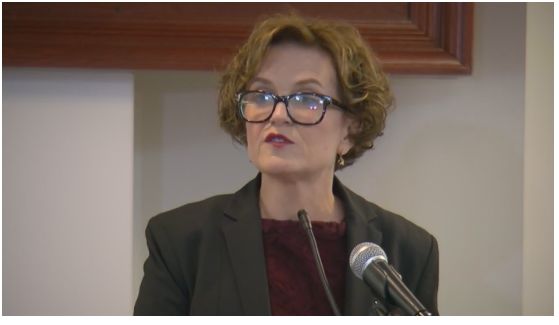
Mayor Betsy Hodges of Minneapolis held her State of the City address at the Masjid An-Nur in Minneapolis, the first time the address has been delivered at a mosque according to city officials.
When the mayor announced last week her intention to deliver the address at the An-Nur mosque in north Minneapolis she said “I am delivering my State of the City address at the mosque because at a time when our Muslim community is under attack from the highest levels of the federal government, I want to send a strong signal to the community that their mayor and their city stands with them.”
At today’s address at Masjid An-Nur, Hodges described Minneapolis as “a welcoming city for all who come in peace, for all who come for light and for hope. No president will make us change that.”
Given that it was the first time the address was at a mosque, there was an expectation that the only Muslim and black person on the council, Abdi Warsame, would be present. Masjid An-Nur is located in north Minneapolis, a largely black neighborhood. Warsame is the first Somali-American elected to the Minneapolis City Council and was the highest ranking elected Somali-American in the state until last year when Ilhan Omar became a state representative.
After the mosques Imam Al-Amin called Council vice-president Elizabeth Glidden to the podium to introduce the mayor, Glidden first stated that she was there to represent Council president Barbara Johnson who was out of state. She then went on to introduce the the Council members present. Almost half of the 13 member council was present (John Quincy, Lisa Bender, Alondra Cano, Blong Yang).
It is not the first time that Councilman Warsame has skipped an event considered significant. He has been missing in action for example when the United Black Legislative Agenda was being shaped earlier this year. Part of the goal of the agenda this was a call to the current legislative session to address racial disparities in education, health and the workforce. When the agenda was unveiled, participants active in its presentation included the Council for Minnesotans of African Heritage, the Northside Community Reinvestment Coalition, Ummah Project, Voices of East African Women and others.
A member of the Oromo community leadership in the state who declined to be named was critical of Warsame “for not showing up at important events to us, he always has excuses.” The leader then fired off a number of events they have reached out “to our man” to come that he has declined including one crucial human rights meeting at the Brian Coyle last Saturday.
Al Flowers, a community organizer, while noting the significance of the mayor holding the event in north Minneapolis and at a mosque no less, called the choice of venue “purely political” adding Warsame “has his own battles to fight.”
Flowers instead said he wants the mayor to address the killings that are happening every week in north Minneapolis “that the city does not seem ready to deal with.”
Reached by phone to explain his absence, Warsame said he had a prior family engagement he needed to attend to “besides I am pretty burned out from the endorsing convention over the weekend.” Warsame won the Minneapolis DFL endorsement last Saturday. His main competitor for the endorsement, Mohamud Noor, boycotted the endorsement convention citing fear of violence against his supporters.
Warsame however commended the mayor’s efforts to address islamophobia and hoped it would not be a onetime thing “you know I was the first one to hold a conference on islamophobia,” adding that islamophobia is real and needs to be “faced head-on.”
At her address today, Hodges reiterated her commitment to a city ordinance that keeps police work separate from the work of federal immigration officials.
“As long as I am Mayor, that ordinance will stand,” said Hodges.
The mayor, who is up for reelection in November and faces a stiff challenge, also addressed other issues of concern to the city including what she considers successes attributable to her administration.
On matters of relevance to the African immigrant community, she said the newly opened Opportunity Hub in the Cedar-Riverside area as part of a “promise of reducing barriers to employment in the East African community.”
The mayor also addressed the dire housing issue Minneapolis faces. She said her administration had invested over $40 million in affordable housing programs over the last three budgets which includes $14.7 this year.
Addressing the gentrification that is happening in many parts of the city, Hodges said this year’s city budget marks the first investment of $1.5 million to preserve existing affordable units.
On matters development, the mayor said “we have had five straight years of more than one billion dollars in development permits in Minneapolis, and the cranes keep going up in the sky.”
“The state of our city is strong. We are growing.” she said
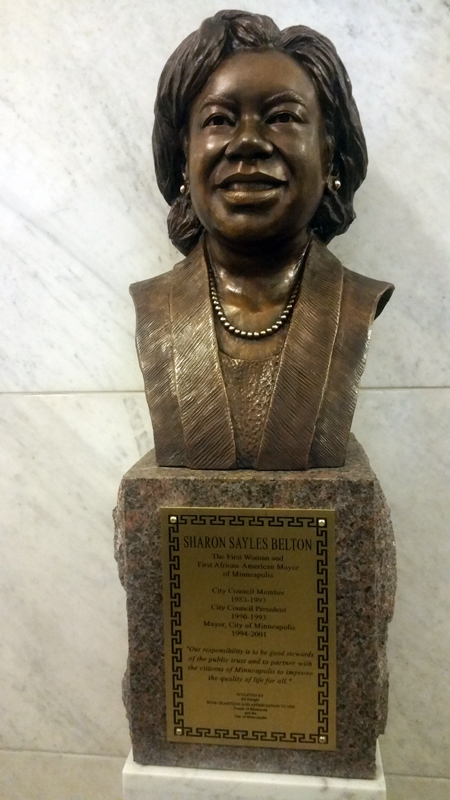
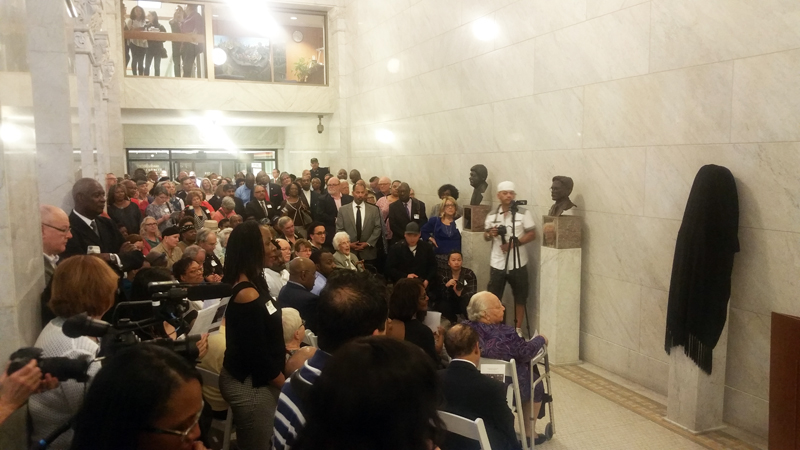
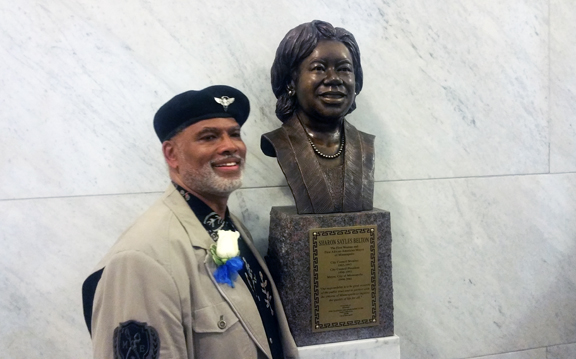
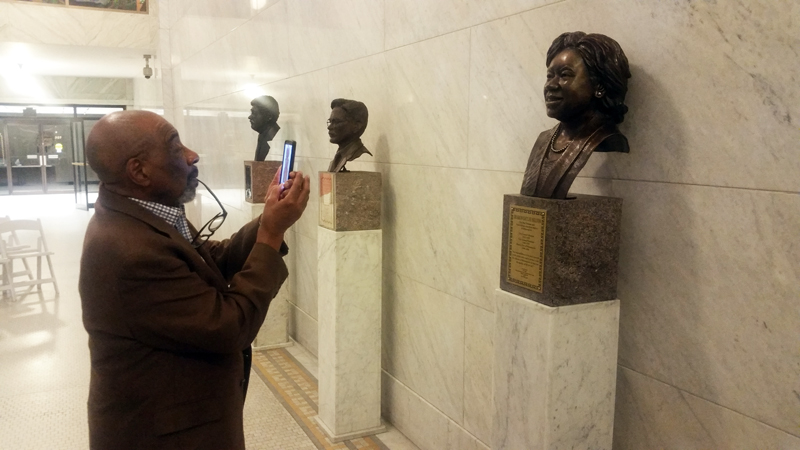
A bronze bust tribute to former Minneapolis mayor Sharon Sayles Belton, the first woman and black person to be the city's mayor, was unveiled at City Hall on Tuesday, May 16, 2017. Photo: Tom Gitaa/Mshale
A bronze bust tribute to former Minneapolis mayor Sharon Sayles Belton, the first woman and black person to be the city's mayor, was unveiled at City Hall on Tuesday, May 16, 2017. Photo: Tom Gitaa/MshaleA bronze bust tribute to former Minneapolis mayor Sharon Sayles Belton, the first woman and black person to be the city’s mayor, was unveiled at City Hall on Tuesday, May 16, 2017. Photo: Tom Gitaa/MshaleA crowd of about 300 turned up at Minneapolis City hall on Tuesday, May 16 2017 to witness the unveiling of a bronze bust in tribute to former mayor Sharon Sayles Belton, only the third such bust to be unveiled at city hall. Belton was the city’s first female and first black person to be mayor of Minneapolis. Photo: Tom Gitaa/MshaleAt Minneapolis City hall on Tuesday, May 16 2017 the city unveiled a bronze bust in tribute to former mayor Sharon Sayles Belton, only the third such bust to be unveiled at city hall. Belton was the city’s first female and first black person to be mayor of Minneapolis. Professor John Wright of the African American and African Studies department at the University of Minnesota poses for a photo with the bust. Wright will be spearheading an education forum on Belton at the university in fall 2017. Photo: Tom Gitaa/MshaleAt Minneapolis City hall on Tuesday, May 16 2017 the city unveiled a bronze bust in tribute to former mayor Sharon Sayles Belton, only the third such bust to be unveiled at city hall. Belton was the city’s first female and first black person to be mayor of Minneapolis. Photo: Tom Gitaa/Mshale
About 300 people squeezed into the third floor balcony of Minneapolis City Hall on Monday to witness the unveiling of a bronze bust honoring Sharon Sayles Belton, the first woman and first black mayor of Minneapolis.
The bronze bust will be next to the only other two already there, one of Van Freeman White and another of Brian J. Coyle. Both are former Minneapolis councilmen with Van White being the first African-American elected to the Council. The Brian Coyle Center in Cedar-Riverside that serves as a busy community center for the Somali community is named after Coyle.
Sayles Belton, who has lately gotten active in global affairs through her current employer Thomson Reuters, where she is vice president for community relations and government affairs, has also deepened her ties with the local African immigrant community. She has spearheaded efforts to bolster the teaching capacities of African Law schools through the Law and Democracy Initiative at Books for Africa. Thomson Reuters provides the Law books for Books for Africa to send to Africa. That initiative recently marked its 10th anniversary on Law Day.
“We focused more on getting the job done, rather done focus on who got the credit,” she said Tuesday at the unveiling as she explained her successful two term tenure at the helm of the state’s largest city. She had served for ten years as a council member before she ran for mayor in 1993.
Her success was in part because of her deliberate attempts to invite everyone to the table, she said, but that the strategic and responsible investments as well as “informed risk” were the ultimate formula that brought success.
Also making remarks Tuesday was the city’s current mayor Betsy Hodges. She said the metal bust, while strong “is not as strong as you.” Hodges, who is facing a tough reelection challenge this fall, is serving her first term and is the second female after sayles belton to be the city’s mayor.
When Sayles Belton came into office the city she inherited a host of problems that are well documented, one of them being crime. By the end of her two terms, crime had been contained. In 2001 when she left office Sam Grabarski, president of the Downtown Council which draws membership from the city’s largest downtown employers told the media back then that when Belton came into office, the future of downtown was in question as it was not attracting much business and office vacancy rates were high. Grabaski said Sayles Belton helped turn around downtown’s fortune.
The 2000 census was one year before she left office. Census-takers reported a population increase for the first time in half a century.
The popular Midtown Global Market, an internationally themed public market, is a legacy of Belton although it was a controversial project back then. Her take on controversy and difficulty? “You cannot run away from your problems,” she said Tuesday.
Civil rights activist Josie Johnson and General Mills executive Reatha Clark King were the co-chairs of the volunteer tribute committee which had set a goal of $100,000 needed to create and install the bronze bust.
“This is one of the most important things I have ever been involved in,” Mike Essien, president of the Minnesota Black Lawyers Association said during an interview after the unveiling. MBLA is one of the organizations donors that contributed funds towards the tribute. Clark King told Mshale after the unveiling that donations towards the bust tribute are still being accepted through a fund at the Minneapolis Foundation (See below for details).’
Ed Dwight, renowned African American bronze sculptor designed the bust. Dwight was America’s first African American astronaut candidate before he left the Air Force to become a sculptor.
The steering committee also announced a fall 2017 community reception and education forum in collaboration with the University of Minnesota’s Hubert Humphrey School of Public Affairs. Professor John of the University of Minnesota’s African American & African Studies department told Mshale details on the forum will be announced at a later date. Wright will be one of those spearheading the forum.
The Sharon Sayles Belton Tribute Fund Online:http://tinyurl.com/Sayles-Belton-Tribute-Fund Via Mail: Sharon Sayles Belton Tribute Fund, c/o The Minneapolis Foundation
800 IDS Center, 80 South Eight Street, Minneapolis, MN 55402
Jeffrey Gettleman, The New York Times East Africa Bureau Chief based in Nairobi, will discuss his new memoir at the Minneapolis Central Library on May 30, 2017 in an event organized by Global Minnesota. Mshale founder and publisher, Tom Gitaa, will moderate the discussion following his presentation. Photo: Courtesy The New York Times
Jeffrey Gettleman, The New York Times East Africa Bureau Chief based in Nairobi, will discuss his new memoir at the Minneapolis Central Library on May 30, 2017 in an event organized by Global Minnesota. Mshale founder and publisher, Tom Gitaa, will moderate the discussion following his presentation. Photo: Courtesy The New York TimesJeffrey Gettleman, The New York Times East Africa Bureau Chief based in Nairobi, will discuss his new memoir at the Minneapolis Central Library on May 30, 2017 in an event organized by Global Minnesota. Mshale founder and publisher, Tom Gitaa, will moderate the discussion following his presentation. Photo: Courtesy The New York Times
The New York Times East Africa bureau chief and the winner of the Pulitzer Prize in 2012 for international reporting, Jeffrey Gettleman, will speak at the Minneapolis Central Library on Tuesday, May 30 at 5pm in a program organized by Global Minnesota (formerly Minnesota International Center).
The event is free and open to the public but registration is required (Link is below).
Gettleman who is based in Nairobi will do a short reading and presentation of his memoir, Love, Africa. His presentation will be followed by a discussion and Q&A with the audience, moderated by Mshale founder and publisher Tom Gitaa.
He will also sign copies of Love, Africa which will be available for sale. The memoir can be purchased in advance on Amazon, Barnes & Noble, or IndieBound.
The back cover of the memoir describes it as “A sensually rendered coming-of-age story, a tale of passion, violence, far-flung adventure, tortuous long-distance relationships, screwups, forgiveness, parenthood, and happiness that explores the power of self-discovery in the most unexpected of places.”
The bio on his employer’s website, The New York Times, says Gettleman’s work has appeared in National Geographic, GQ, Foreign Policy and The New York Review of Books.
Gettleman first went to East Africa during a do-it-yourself community-service trip while in college at the age of nineteen. He studied philosophy at Cornell University before winning a Marshall Scholarship to study at Oxford.
He has been the New York Times East Africa bureau chief for the last ten years, fulfilling a long time dream.
His appearance in Minneapolis is presented in partnership with Books for Africa, GHR Foundation, the Hennepin County Library, Ka Joog, and Mshale.
Jeffrey Gettleman, New York Times East Africa Bureau Chief Where: Minneapolis Central Library, 300 Nicollet Mall Minneapolis, MN 55401 Time: Check-in is at 5:00 PM Program is 5:30pm-7:00pm Registration: Free @ www.GlobalMinnesota.org or call 612-625-1662
Hepatitis B is a serious disease that can damage the liver. Babies who get hepatitis B are very likely to have hepatitis B infection for their whole life. The hepatitis B vaccine can prevent hepatitis B infection. Newborn babies can get their first shot of hepatitis B vaccine within 24 hours of birth.
Hepatitis B is a serious disease that can damage the liver. Babies who get hepatitis B are very likely to have hepatitis B infection for their whole life. The hepatitis B vaccine can prevent hepatitis B infection. Newborn babies can get their first shot of hepatitis B vaccine within 24 hours of birth.Hepatitis B is a serious disease that can damage the liver. Babies who get hepatitis B are very likely to have hepatitis B infection for their whole life. The hepatitis B vaccine can prevent hepatitis B infection. Newborn babies can get their first shot of hepatitis B vaccine within 24 hours of birth.
Having a baby is an exciting time for a family. There are many things to prepare and many new things to learn. It can feel overwhelming, but help from family and friends can make things easier.
We want to do everything we can to make sure our baby is happy and healthy when they come home for the first time. Preparing for a new baby starts before they are even born. We prepare the room where they will sleep, install a car seat, and get clothes and other things the baby will need.
Pregnant women also try to eat healthy foods and take vitamins and recommended vaccines so they can avoid getting sick and keep their baby healthy. Some diseases like hepatitis B can be passed from mother to child at birth or from close family members that may care for your baby. Some people do not know they have hepatitis B because they do not feel sick. There is a test to find out if you have hepatitis B and there are ways to prevent passing hepatitis B to your baby.
Hepatitis B is a serious disease that can damage the liver. Babies who get hepatitis B are very likely to have hepatitis B infection for their whole life. The hepatitis B vaccine can prevent hepatitis B infection. Newborn babies can get their first shot of hepatitis B vaccine within 24 hours of birth.
Sometimes parents are worried about how much shots cost. Free or low cost shots are available through the Minnesota Vaccines for Children program. Your doctor can tell you if your child can get free or low cost shots.
More information about hepatitis B and the vaccine that prevents it can be found in the Hepatitis B Vaccine Information Sheet. It is available in many languages on this website: www.immunize.org/VIS.
The Jambo Bowl at Jambo Kitchen which is now open at the space formerly occupied by Afro Deli. Photo: Courtesy Jambo Kitchen Facebook Page
The Jambo Bowl at Jambo Kitchen which is now open at the space formerly occupied by Afro Deli. Photo: Courtesy Jambo Kitchen Facebook PageThe Jambo Bowl at Jambo Kitchen which is now open at the space formerly occupied by Afro Deli. Photo: Courtesy Jambo Kitchen Facebook Page
I am a writer by discipline, although discipline lately hasn’t been my companion nearly often enough. It’s much too easy to fritter away time surfing and clicking. But I think I’ve found a hideaway in a new spot that will fill my palate and offer me a quiet respite allowing me space to focus.
Jambo Kitchen is hopping with customers over the noon hour when office workers rush in for fish tacos or Jambo bowls, but during the morning hours, employees are still stirring their first pots of white rice and sweeping the floor in preparation of what’s to come. That’s when the back room is empty and kitchen clatter mixed with ambiance tunes are the only noises.
It’s morning and I just ordered a Jambo bowl of African rice and fresh veggies, topped with Mediterranean sauce. My tummy’s rumbling, wanting more than water infused with cucumber that I’m sipping, complementary of Jamal Hashi’s and Mahad Ibrahim’s new restaurant smartly located on Riverside Avenue, a few blocks east of Cedar Avenue. The walls are colored in the rich tones of sunset: gold, amber, russet, and blue with a dreamy shade of ruby on the floor.
I’m dining-in this morning. There is limited seating in the front of the restaurant and last week, I sat at one of those small tables and devoured a fish taco with bisbaas sauce, relishing the savory flavors. An added sambusa with a saucy sauce made green by cilantro, lime, and jalapeños completes the meal. Jambo Kitchen offers a variety of seating including shared space with African Development Center. There’s a conference room held jointly to provide for myriad customer configurations.
Today, however, I only have my single entree with nothing extra. When the server brought me my order, I had to double-check, “Is this really only veggies?” The chef prepared the cauliflower in a deceptively delicious way. I’m particular about the meat I eat. Head chef Hashi assured me that their meat is all Halal-prepared, though, so I needn’t worry.
The only drawback for me that I experienced with both visits is the deep-fried portions added to my meal. I didn’t expect my fish to be coated, but grilled, and I definitely anticipated my Jambo bowl with garden fresh vegetables to be all fresh, no frying. Tasty, absolutely, but not as heart-healthy as I had hoped. It would be nice if I knew to expect it so I could request no deep-fried food.
Knowing that Hashi has been cooking in restaurants in other locations including New York City, I asked him if this current return to Minneapolis would be permanent. Hashi says, “I feel complete in Minnesota. Everyone I love lives here, my family, my friends, my contacts.”
That’s saying a lot. When he was enticed to construct a menu for his cousin’s restaurant in New York City in 2015, Harlem embraced him. Safari, the eatery, was raved about in the New York Times. The paper tagged the place as The Best African Restaurant in the city.
But it was overwhelming. Hashi explains that he wasn’t satisfied with how he left Minneapolis. He wanted to come back for the opportunity to bring healthy food to his community. He found living in New York left him feeling a void in his life.
He’s not involved with any other restaurants now. Now, it’s just Jambo Kitchen, which he intends to grow and expand to other locations and include a food truck in the near-future.
This time, Hashi also has a business partner, someone who knows business better than food, but is committed to the same ideals as Hashi. “He can handle the culinary arts, I’ll handle the business side,” says Ibrahim.
Ibrahim has run his own consultancy firm for eight years. They build products and services with a social impact, targeting global markets. Ibrahim shares his own vision of Jambo Kitchen.
“We’re committed to a certain way of doing business. We want ingredients to be as fresh as possible, to grind our own meat, and to cook with locally-sources ingredients,” says Ibrahim.
My meal is finished. It was more than enough to satisfy me. But there’s one more aspect to entice a return visit. Instead of dumping my container into the trash, I compost the bowl, napkin, and eating utensil; I add the bowl’s lid to recycle along with my cup. No waste. This place aims to please in every detail. I could become a regular here—it’s a great place to write poetry.
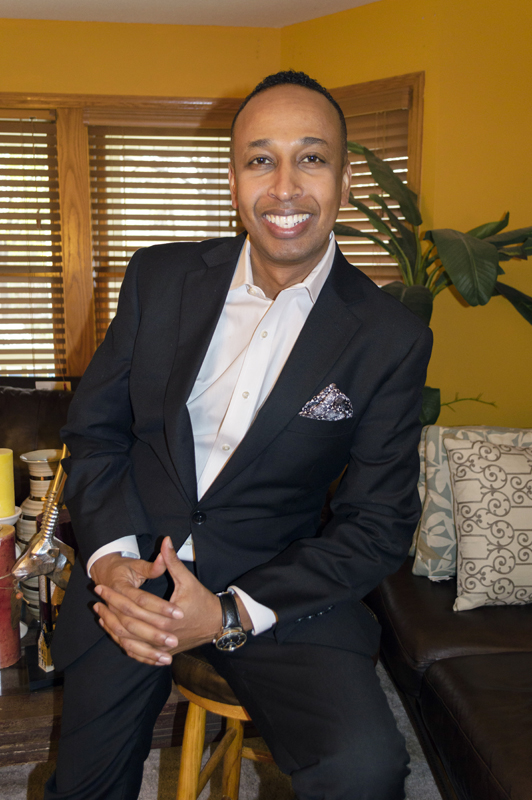
Longtime Twin Cities realtor is now a broker and has opened his own real estate firm. Photo: Bethel Gessesse/Mshale
Longtime Twin Cities realtor is now a broker and has opened his own real estate firm. Photo: Bethel Gessesse/MshaleLongtime Twin Cities realtor is now a broker and has opened his own real estate firm. Photo: Bethel Gessesse/Mshale
The National Association of Realtors released its monthly membership report at the end of April and said it has just over 1.2 million members. Of those just over 18,000 are in Minnesota. Virtually all realtors and brokers belong to the association.
The association’s numbers are in line with the official Bureau of Labor Statistics (BLS) which puts employment in the real estate sector at over 1.5 million as of the end of 2016, a number that lumps in even those not involved in the actual selling of property such as support staff.
BLS further breaks down the numbers to indicate there are over 46,000 classified as brokers or 3% of the industry.
Brokers are the folks who own real estate companies or can run one and are responsible for the actions of their realtors. Realtors have to work under a real estate broker by law.
Not many people of color are real estate brokers. Many home buyers have worked with minority realtors but that realtor most times than not will be under a broker that is not from their community.
One of those blazing the trail to become a real estate broker is Ahmed Farah who just recently got his broker’s license and has set up his own firm. I met up with him at his office in Uptown for an interview. With a deep passion for serving his community and an unrivaled work ethic, the urbane Ahmed Farah worked in the banking sector for over seventeen years before going onto real estate. With his new change in position, Ahmed hopes to continue down the path of service and increase the rate of homeowners in the African community.
Q: How did you become a broker?
A: I have always been passionate about helping others. I have worked in the banking sector for over seventeen years but I realized I was not using my full potential. So I told myself, “You know what? Why don’t you go try and change careers to create that rewarding job and help others succeed?” I decided to leave my old six-figure job and enter into real estate. After working as a realtor and helping many into homeownership becoming a broker was a natural progression from that. At first it was trial and error but things just progressed from there.
Q: What is the state of home ownership in the African immigrant community?
A: By my estimate only about 25% of our community is homeowners. Outside of the financial objective that for many homeownership makes sense, traditionally as you know we have larger family sizes; it’s become so difficult finding a rental for a family of six or seven or eight so I strongly encourage and do a lot of outreach to inform and educate the community at large so they can become homeowners so that they have room they need for their families. Homeownership is also you save for your future by building equity. That’s how you become a stakeholder part of the society. There’s a political system in the United States and you have to have a voice. You have a home, you have an address, and then you have a voice. You’ll have a say in how the politics of the area you buy in is run. I know for a fact that homeowners are taken much more seriously by the politicians and local leaders. Your voice means a lot so I encourage our community every moment I get like this one to invest in real estate. If you think of many successful individuals in the United States, that’s how they started their business and built wealth.
Can you talk more about the benefits of owning a home versus renting?
Sure, there are a lot of benefits. One would be a tax benefit. When you file your taxes, your mortgage interest is deductible which means money in your pocket. Your mortgage company at the end of the year send you a statement telling you how much interest you paid that year which for most people you can deduct. In other words unlike renting, the money you are paying each month for your mortgage is for property you own. When you want to sell it, that’s cash that’s waiting for you. Also, there is a peace of mind that comes with owning. You have much more control with your living quarters. You can change the layout of your home — what color you want your wall to be or if you want to build a garden, a three car garage — anything you want without calling a landlord. I believe everyone who is renting a one bedroom apartment can afford to own it for the same or less than what he or she is paying for. What advice would you give someone before becoming a homeowner and deciding on a realtor?
That is a good question but a loaded one. You want a realtor that will really look out for your interests. Take the first step by assessing your situation as regards income, your credit and your employment. Then find a lender who will to sit down and go over your finances and tell you, “Okay, here’s your income and here’s how much you’re capable of owning,” and that’s very simple information. A majority of lenders don’t go more than fifty percent of what’s going out. So that would be one. Another thing would be to enroll in a first-time home buyer seminar or workshop. Many of them are free, and by attending you will become a more educated buyer.
Now the second question was how you choose a realtor. Most important is to choose a licensed realtor. Don’t go with one you just saw on a poster somewhere. That’s not the best way to do it. Talk to your relatives, your friends, someone who bought a house. Ask them about their experience, what worked for them, what didn’t work, how the realtor was responsible, were they educated, did they have other jobs. Are they part-time realtors? Are they able to commit to your dreams and make sure you’re one-hundred percent satisfied?
I would strongly suggest you find a full-time realtor that has time for you in the morning, the afternoon, evening and will be more flexible, especially in this market today. Homes are coming in today and there are already multiple offers by the end of the day. You really need somebody who you can call and will look at the house, check the information that comes with the house, any liability, any other information that will help you decide if that’s really the right house for you to buy and make an offer, then, right away, help you put an offer. So again, I would suggest talking to one or two realtors and trying to see which one you have a connection with.
You mentioned first time homebuyer workshops. Do you know of any happening soon in the Twin Cities?
Oh, there are many. If you Google the city that you live in, any given month there’s a seminar. Either it’s free or there’s a small fee.
Vivian Mason (left), whose husband, the late Judge Jack Mason, the Law & Democracy Initiative is named after looks on as John Bessler speaks during Law Day on Monday, May 1 2017 at Fredrikson & Byron in Minneapolis where supporters gathered to raise funds for the Books for Africa Jack Mason Law & Democracy Initiative. To her left his son Peter Mason, wife Melinda, Sharon Sayles Belton of Thomson Reuters, Books for Africa board president Luanne Nyberg and Mark Essien, president of the Minnesota Black Lawyers Association which co-sponsored the event. Photo: Tom Gitaa/Mshale
Vivian Mason (left), whose husband, the late Judge Jack Mason, the Law & Democracy Initiative is named after looks on as John Bessler speaks during Law Day on Monday, May 1 2017 at Fredrikson & Byron in Minneapolis where supporters gathered to raise funds for the Books for Africa Jack Mason Law & Democracy Initiative. To her left his son Peter Mason, wife Melinda, Sharon Sayles Belton of Thomson Reuters, Books for Africa board president Luanne Nyberg and Mark Essien, president of the Minnesota Black Lawyers Association which co-sponsored the event. Photo: Tom Gitaa/MshaleVivian Mason, whose husband, the late Judge Jack Mason, the Law & Democracy Initiative is named after looks on as John Bessler speaks during Law Day on Monday, May 1 2017 at Fredrikson & Byron in Minneapolis where supporters gathered to raise funds for the Books for Africa Jack Mason Law & Democracy Initiative. To her left his son Peter Mason, wife Melinda, Sharon Sayles Belton of Thomson Reuters, Books for Africa board president Luanne Nyberg and Mark Essien, president of the Minnesota Black Lawyers Association which co-sponsored the event. Photo: Tom Gitaa/MshaleUniversity of Baltimore School of Law professor John Bessler (right) chats with Books for Africa board member Atare Agbamu; Tejiri Agbamu of the Books for Africa Youth Council and Isaac Owens before Bessler spoke at the Books for Africa Law & Democracy Initiative fundraiser in Minneapolis held on Monday, May 1 2017 at Fredrikson & Byron on the occasion of the nation’s Law Day observance. Photo: Tom Gitaa/MshaleJudge Tanya Bransford (back to camera) of Minnesota’s Fourth Judicial District shares a laugh with vice president Walter Mondale and Judge Michael Davis at the Books for Africa Law & Democracy Initiative fundraiser in Minneapolis held on Monday, May 1 2017 at Fredrikson & Byron on the occasion of the nation’s Law Day observance. Photo: Tom Gitaa/Mshale
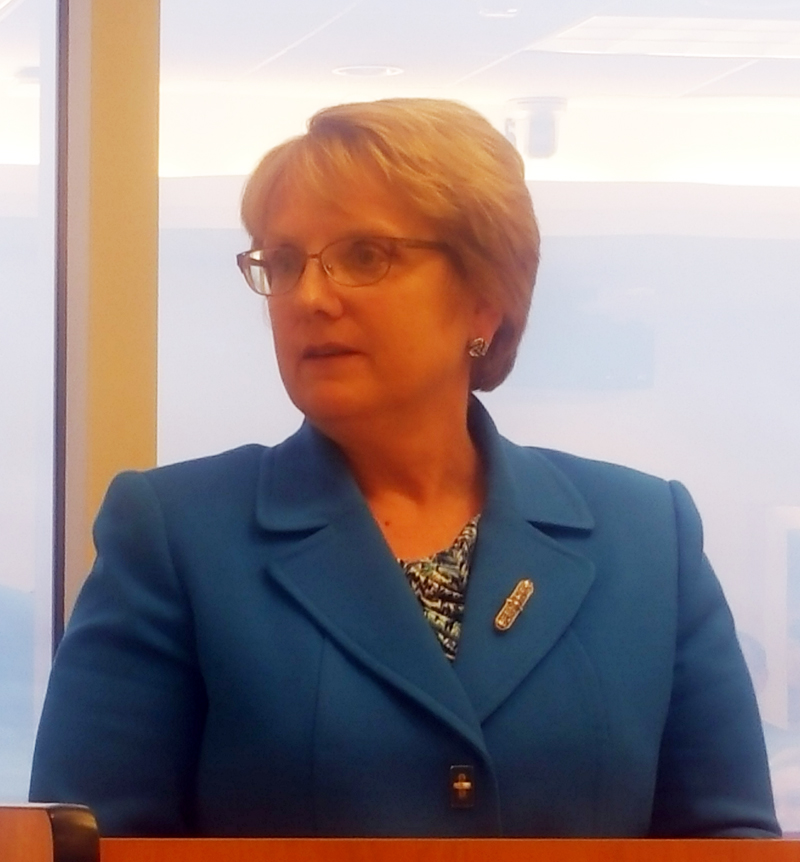
MINNEAPOLIS – The Chief Justice of the Minnesota Supreme Court, Lorie Skjerven Gildea, joined with former Vice president Walter Mondale and other top judicial officers to offer support to the rule of law in Africa during the annual celebration of Law Day, a national event established by President Dwight D. Eisenhower in 1958 as “a day of national dedication to the principles of government under law.”
The event, held at the 40th floor offices of Fredrikson & Byron (with 243 lawyers on staff its #2 in Minnesota Lawyer magazine Minnesota’s Largest Law Firms 2017 list) in Minneapolis, was a fundraiser for Books for Africa’s Jack Mason Law & Democracy Initiative. Fredrikson & Byron president, John Koneck emceed it. The initiative seeks to address the scarcity of law and human rights books in Africa to further the rule of law in Africa.
The initiative is co-chaired by former United Nations secretary general Kofi Annan and US vice president Walter Mondale. Among those who sit on its advisory board include Fatou Bensouda who is the chief prosecutor at the International Criminal Court at The Hague and judge Michael Davis, former chief judge of US Federal District of Minnesota.
The late Jack Mason whom the initiative is named after was a federal judge and Books for Africa board member. His wife Vivian was present at the Books for Africa Law Day observance.
Justice Gildea while remarking on the importance of Law Day as reminder to Americans on the
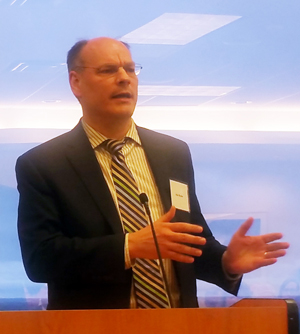
John Bessler, University of Baltimore School of Law professor. Photo: Tom Gitaa/Mshale
importance of the US courts in undergirding its democracy said “it is also a great reminder of the great work Books for Africa is doing in spreading the rule of law in Africa.” She added that the law books that are sent which are primarily donated by Thomson Reuters “are filled with legal knowledge, precedent and process” that are critical in the infrastructure that the rule of law depends on.
Gildea also urged those present to make “their voices heard” at the Minnesota legislature which is about to wrap up its session saying that the woefully underfunded Minnesota court system needs full funding to ensure that the administration of justice is not impeded. She said the public raising its voice on court funding is important as those who work at the courts “do not have cute kindergarteners to parade before the legislators to plead for funding.”
The chief justice was echoing court funding remarks that Robin Wolpert, president of the Minnesota Bar Association had made who she spoke before her.
The American Bar Association had set this year’s Law Day theme as “The 14th Amendment: Transforming American Democracy.”
Earlier, president Trump had issued a presidential proclamation to mark the day in which he said “Today, we celebrate Law Day, as we have since President Dwight D. Eisenhower first commemorated it in 1958, and reflect upon our great heritage of liberty, justice, and equality.”
John Bessler, the featured speaker at the Books for Africa Law Day event, discussed the book he recently edited –Justice Stephen Breyer’s Against the Death Penalty. Proceeds of the book, which he later signed for participants, will be donated to Books for Africa’s Law and Democracy Initiative.
Bessler said a number of African countries had already eliminated the death penalty and it is time for America to do the same. Bessler is a professor at the University of Baltimore School of Law and also the husband of United States Senator Amy Klobuchar of Minnesota.
The 14th Amendment to the US Constitution which was adopted in 1868, states that no state shall deny any person in its jurisdiction the equal protection of law.
“We have over 150 instances where people have been exonerated after being convicted and being on death row for years,” Bessler said.
Calling the death penalty cruel and unusual punishment, Bessler said it flies in the face of United Nations resolutions that condemn it.
Also speaking at Monday’s event was Judge Michael Davis who introduced Bessler to the podium. Davis is the former chief judge of the US Federal District Court in Minnesota.
Thomson Reuters, which is the primary provider of the new law books that are sent by Books for Africa pledged it continued support through remarks delivered at the event by its vice president of government affairs and community relations, Sharon Sayles Belton. Sayles Belton is also the former mayor of Minneapolis, the first female and black person to do so where she served two terms.
Lane Ayres, who administers the program for Books for Africa, said the initiative has shipped 72 law and human rights libraries to 20 African countries through the generosity of Thomson Reuters and others, such as those at the Law Day event.
“We appreciate the support that everyone continues to give,” Ayres said.